2. Game 1 - Westown Square High Goal PoloCrosse 2026
YouTube · South African PoloCrosse TV
Pages
On this page
Sport on Earth › Sports
Sport on Earth · Sport
Polo and lacrosse hybrid on horseback.
Every embed below was verified playable before listing — the network’s standing rule.
YouTube · South African PoloCrosse TV
YouTube · FTA Sport
YouTube · EquestrianChannel
Pages
On this page
No game on this site is made specifically for Polocrosse yet. The games below are the site's all-sport games, which honestly cover every sport — nothing from another sport has been dressed up as this sport's game.
A new set of questions every day, across every sport this site covers.
Real-athlete Top Sport on Earth decks built from the site’s verified board data.
Polocrosse's lab is the Physics Lab section on this page — the applied physics of its sport family, with a computed interactive where one honestly fits.
Physics Arena — the general biomechanics & physics teaching sandbox, shared by every sport.
The homepage sport explorer also carries a general Lab tab of small interactive experiments.
Calendar data not yet carried for Polocrosse — this site does not yet hold schedule data for it, so no dates are shown rather than invented.
Which section of this page should we expand first?
Votes are counted on the Sport on Earth server and the totals shown are every reader’s votes; your own choice is remembered in this browser.
Sport on Earth does not yet hold verified dated events for Polocrosse, and its carried record does not state the season's timing in words — so no calendar is shown rather than an invented one. What the site does carry for this sport is on this page: its verified record, its rules record and its history.
Animal sports run on quadruped biomechanics: gaits are repeating patterns of footfalls that trade stability for speed, and at the gallop the spine itself flexes and extends as part of the stride. Loads are large and measurable — a horse’s foreleg can carry well over its body’s weight at gallop, which is why conditioning is gradual and surfaces matter.
Jumping efforts are projectile motion for the combined horse-and-rider (or dog) system: take-off speed and angle set the arc, and the bascule — the rounded shape over a fence — is the body arranging itself around that arc. Sport on Earth offers an explainer here rather than a calculator: the honest inputs (take-off speeds, masses) vary by animal and are not carried in this sport’s verified record, so no numbers are printed that the record cannot back.
From this sport's own record: Polo and lacrosse hybrid on horseback. The lab above treats the physics of the sport's family; no measurement specific to this sport is printed, because the site's verified record for it carries none — parameters are never invented to fill a lab.
No calculator is offered for this sport — honestly, none fits without inventing parameters. The site's general Physics Arena remains the hands-on sandbox, with every formula printed.
The general teaching sandbox for every sport is the Physics Arena on the Games page — the same printed models, with a defender added.
The hands-on lab for Polocrosse, built entirely from the record this site carries for it — its documented rolls, its halls, its venues, its calendar and its census family. Every figure below is computed from that carried record at build time; nothing is estimated and nothing is pulled live. The companion Physics Lab on this page works the family's physics; this lab works the record.
The honest position: the record this site carries for Polocrosse is thin — no documented roll, hall, venue set or dated calendar is carried for it yet — so this entry’s lab is its family lab: the computed census of the family it belongs to. When the record grows, the lab grows with it; nothing here is estimated to fill the space.
Computed from the site census: the Animal sports family holds 23 entries on this site. Across the family, the carried record includes documented rolls for 0 of them, Hall of Fame data for 3, venue sets for 5, and dated calendars for 1.
Every other entry in the family: Audaryspak · Camel Racing · Carrera de Cintas · Charrería · Dog Agility · Equestrian · Flyball · Furusiyya · Greyhound Racing · Horse Racing · Horseball · Kambala · Kok-Boru · Pack Burro Racing · Pato · Pigeon Racing · Polo · Puppy Bowl · Rodeo and Bull Riding · Sheepdog Trials · Sled Dog Racing · Tent Pegging
Basis: the Sport on Earth census itself — the same 460-entry register the census page prints.
The desk has not verified a sponsorship record for Polocrosse from published sources, so none is printed. Sponsorship history is added only when a real published source supports it — sponsor by sponsor, deal by deal. Current sponsorship deals across sport are tracked on the Money Desk sponsorship page.
How this game is played, gathered from the record Sport on Earth already carries for Polocrosse, with the positions taken from the sourced chart cited in that section.
Sport on Earth carries no separate rules list for Polocrosse; the governing framework its record carries is this:
Polocrosse is governed by national associations under the Australian-written code (1939 tradition): lacrosse-style rackets on horses, sections of three riders, positional zones. A stable heritage code. No major documented rule change is carried for polocrosse.
Positions for Polocrosse are not yet sourced on Sport on Earth: no verified positions chart has been carried for this sport yet, so none is shown here rather than an invented one. That says nothing about whether the sport has positions — only that they have not been sourced for this page yet.
Its Playbook — its opening entries, the basic plays, are:
The full book carries 8 entries — in this page’s Playbook / Tactics & Strategy section, and at the Playbooks hub.
Sport on Earth's own analytics: every figure in this panel is computed at build time from the record this site itself carries, with the source named. No outside data is used, and no betting figures of any kind.
Census arithmetic: Polocrosse sits in the animal sports family — 23 census sports, of which 1 carry a qualifying champions roll in the site's record.
The carried record for Polocrosse is too thin for computed panels: no champions roll, hall-of-fame list or venue record is carried for it. This panel therefore prints the census arithmetic only — the honest answer rather than a manufactured figure.
How the laws of Polocrosse are governed today — the documented record, stated plainly.
Polocrosse is governed by national associations under the Australian-written code (1939 tradition): lacrosse-style rackets on horses, sections of three riders, positional zones. A stable heritage code. No major documented rule change is carried for polocrosse.
That framework summary is the whole documented record Sport on Earth can verify for this sport — no major dated rule changes are carried, rather than invent any.
Source basis: The governing body’s published framework as summarised in this section (see the framework text).
Sport on Earth carries no results feed for Polocrosse: no scores or fixtures are published here, rather than inventing them. The sport's documented record is in its history page and the History & Records section of this page.
The historical record for Polocrosse — past standings, champions, title history and all-time leaders, as deep as verifiable public records go.
Season-by-season standings, historical player statistics and title rolls are not carried for Polocrosse: no public archive publishes them in a form Sport on Earth can verify, and this site does not invent history. What is carried for this sport is its verified record, its rule-change history and its league history — elsewhere on this page.
The review and analysis videos from Polocrosse’s verified video pool — every embed below was identity-checked and probed playable before listing, the site’s standing rule. Nothing here is a show Sport on Earth produces; these are the review, post-game and breakdown videos the pool already carries for this sport.
No verified review-show video is carried for this sport yet.

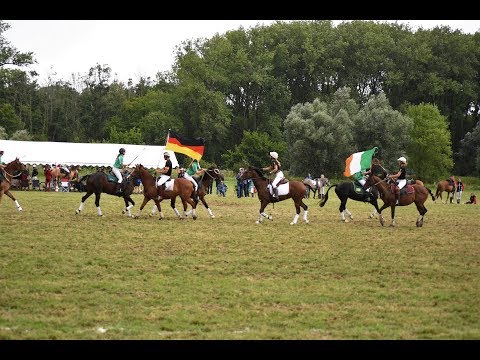
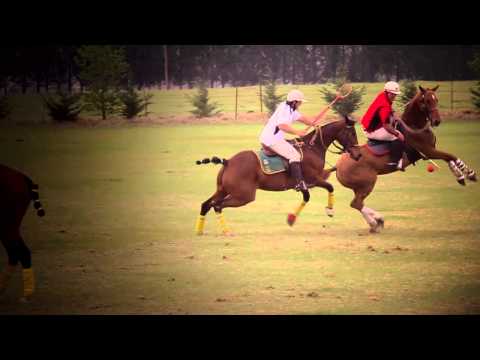
The filter sorts the Review Room embeds and the picture cards above by the keywords in their carried titles (review / analysis / recap and similar, or highlights). It runs entirely in your browser — nothing is sent anywhere.
No hall of fame with a published inductee list is carried for Polocrosse. Sport on Earth does not invent halls or inductees: where a recognised hall publishes its list in a form this site can carry, the full list will appear here with its source named.
Polo and lacrosse hybrid on horseback.
In the wider animal family of sports — four-legged locomotion and the jumping effort, the game turns on: The animal is an athlete: fitness, soundness and mood are monitored daily and outrank any calendar date.; Communication is trained, not assumed: aids and signals are installed gradually until they are invisible.; Course knowledge: walking or studying the course beforehand is part of performance in jumping, racing and driving.; Recovery and care decide careers: longevity in animal sports is built in the yard, not the arena.; Breeding is long-term tactics: bloodlines are selected generations ahead for the traits a discipline rewards — soundness first among them.; The warm-up is veterinary: gait, breathing and demeanour are checked before competition, and horsemen and handlers scratch animals the public never hears about..
Sport on Earth carries no team or player directory for this sport, because no structured public feed publishes a verifiable one. What is carried is the documented record on this page — history, rules, honours and the calendar — each with its source named.
The Polocrosse record book is still thin: beyond the standings, rules and calendar layers on this page, no verified winners roll or honours list is carried yet. The desk adds record material only when a published source can be named for it — never from memory or invention.
More from the desk: the expert guide to Polocrosse · the site-wide Writing Desk · every sport on Earth.
📖 The Polocrosse Playbook — every entry, plus the arcade strategy, at the foot of this page.
An arcade take on Polocrosse: set the angle, set the power, and land the ball in the goal. Five attempts; the closer to the middle, the more it scores. Arcade distances and a training arc — a game in the spirit of the sport, not a simulation of it.
This page’s own game is the arcade above. Everything else on the site that fits this sport is listed here — and anything borrowed from a similar sport is labelled as that sport’s game, never passed off as this one’s.
The tools on this site that honestly run on Polocrosse — its own record first, then the site-wide general tools that apply. The full Polocrosse toolkit prints the ones that do not apply, with the data reason why.
No bench tool yet computes from Polocrosse’s own carried record — the general tools below are the ones that honestly apply.
Site-wide tools, not built for Polocrosse alone: Tournament Planner · My Notebook · The Labs · Design Studio · The Makers’ Bench · Match Day Desk · Play It Near You · Myth-Check Desk · Governing Bodies · Heat & Safety Calculator (WBGT) · Hydration Calculator · Training-Load Planner · Game Clock & Timer · Custom Rulebook Generator · Scout Notes Parser.
The Playbook · set plays, systems & situations
polo’s book — the right of way is its law and its tactics: the line of the ball creates a road other players may not cross, and every play is drawn on that moving road.
8 entries, plus the arcade strategy below. All wording is original coaching-vocabulary prose; nothing is copied from any proprietary playbook.
Polo’s line of the ball — the path the ball is travelling and its extension — is the sport’s constitution: the player on the line owns it, opponents approach from the correct side, and the fouls are read from crossings of the line like offside from a line on grass.
When it’s used: The line is invisible, moving, and absolute: the umpires ride with whistles to police a geometry drawn at a gallop.
The sequence
The four positions are a formation: 1 the striker, 2 the midfield worker, 3 the pivot and captain, 4 the back (the last defender, whose long defensive hits turn defence into attack) — the pattern is fluid at the gallop but the responsibilities are numbered like a soccer team’s shirt numbers because they began as the same idea.
When it’s used: Polo’s numbers predate most sports’ numbering: the shirt is a job description.
The sequence
Each player brings a string of ponies (one per chukka at the top level, changed as they tire): the string is the team’s true squad, its selection per chukka is the manager’s tactic, and the pony’s welfare rules (rest between chukkas) are the sport’s rotation law.
When it’s used: Polo is played by two teams of four players and forty horses: the remount system is its substitution rule.
The sequence
Arena polo (three a side, a bigger ball, walls in play) and snow polo compress the book: the wall is a fifth player, the snow’s surface slows the ball and speeds the falls, and beach polo makes the sand its own surface — the family’s winter and indoor dialects.
When it’s used: The variants prove the line of the ball is portable: it survives walls, snow and sand.
The sequence
The chukka (7½ minutes) is polo’s period: ponies are changed between chukkas, the ends are swapped, and the game’s rhythm is the rotation’s — a team’s chukka plan is its pony string’s deployment schedule.
When it’s used: The pony change is polo’s substitution and its pit stop in one: the string’s manager works to the chukka’s clock.
The sequence
Polo’s penalties are numbered by severity, from a free hit to an undefended goal: the tariff is the rulebook’s price list for the line’s violations, and the umpires (two mounted, one on the sideline) are its cashiers.
When it’s used: The penalty 1 (an automatic goal) is polo’s red card converted directly into points.
The sequence
Polo restarts are its quiet plays: the throw-in (the umpire bowling the ball between the lined-up teams) after a goal or an out, and the penalty conversions taken under the whole field’s gallop-threat — the restart’s first ride-off is its snap count.
When it’s used: The throw-in’s line is a scrum of horses held at a walk: its explosion is the restart’s whole drama.
The sequence
Polocrosse swaps the mallet for a racquet with a net (the ball is scooped, carried and thrown): its book is polo’s line crossed with lacrosse’s stickwork, played in three sections of the field that players may not all enter — the sections are its offside geography.
When it’s used: The field’s three sections ration the players like netball’s thirds: the No. 1 (attack) and No. 3 (defence) never meet.
The sequence
The arcade cell · strategy
This page’s arcade cell: launch the ball at the goal from at roping range · 36 m (arcade scale). Angle, power, launch — five attempts, and the cell keeps your best.
When it’s used: On this page, in the Play section — and its strategy is the same craft as the book above it, miniaturised.
The sequence
Part of the Sport on Earth Playbooks — a book for every sport and every game on the site.
Behind the Play · From the carried record
Polo and lacrosse hybrid on horseback.
Behind the Play takes the decisive actions of Polocrosse apart: how the scoring play is built, which patterns the players are really running, and which rules remade the play into its modern shape.
Source basis: this sport’s carried record on this page (verified record, rule-changes dossier, history datasets) and the play patterns of its family as written in the site’s guides. Nothing here is invented.