INSANE Street Luge Final! WSDC Brinx Cup 2024 Champion Crowned!
YouTube · UNREEL
Pages
On this page
Sport on Earth › Sports
Sport on Earth · Sport
Racing downhill lying on a board.
Every embed below was verified playable before listing — the network’s standing rule.
YouTube · UNREEL
YouTube · Ell_The_Sinner
YouTube · Unbeaten Sport
YouTube · WDSC
YouTube · X Games
YouTube · Danny Strasser
YouTube · StreetLugeNetwork
YouTube · StreetLugeNetwork
YouTube · Danny Strasser
YouTube · WDSC
YouTube · StreetLugeNetwork
YouTube · Channel 4 Sport
YouTube · StreetlugePDX
YouTube · Yan Bertinati
YouTube · lord downhill
YouTube · StreetLugeNetwork
YouTube · Channel 4 Sport
YouTube · StreetlugePDX
YouTube · BroadbandTVEccentric
YouTube · Bagur Richard
YouTube · Justin Jenny
YouTube · Chrisile1983
YouTube · World Skate
YouTube · StreetLugeNetwork
YouTube · Olympic Games
YouTube · Britclip
YouTube · Billy Foss
YouTube · HeadNtheClouds
YouTube · Abe Lambright
YouTube · Ooobeeerhaaaaauseeen
YouTube · Julian Slaney
YouTube · StreetLugeNetwork
YouTube · Julian Slaney
YouTube · All Sports Television Network
YouTube · Lot48 Documentaries
YouTube · Dan Marks
YouTube · The Gadget Show
YouTube · streetlugehome
YouTube · Adventure Sports TV
YouTube · Luge World
YouTube · AVPMedia1
YouTube · Cory At Random
YouTube · Journeyman Footage
YouTube · Abdil Mahdzan
YouTube · Luge World
YouTube · Luge World
YouTube · WDSC
YouTube · WDSC
Pages
On this page
No game on this site is made specifically for Street Luge yet. The games below are the site's all-sport games, which honestly cover every sport — nothing from another sport has been dressed up as this sport's game.
A new set of questions every day, across every sport this site covers.
Real-athlete Top Sport on Earth decks built from the site’s verified board data.
Street Luge's lab is the Physics Lab section on this page — the applied physics of its sport family, with a computed interactive where one honestly fits.
Physics Arena — the general biomechanics & physics teaching sandbox, shared by every sport.
The homepage sport explorer also carries a general Lab tab of small interactive experiments.
Calendar data not yet carried for Street Luge — this site does not yet hold schedule data for it, so no dates are shown rather than invented.
Which section of this page should we expand first?
Votes are counted on the Sport on Earth server and the totals shown are every reader’s votes; your own choice is remembered in this browser.
Sport on Earth does not yet hold verified dated events for Street Luge, and its carried record does not state the season's timing in words — so no calendar is shown rather than an invented one. What the site does carry for this sport is on this page: its verified record, its rules record and its history.
A racing vehicle’s limits are set by friction: the tyres can deliver a total force of about μ × the load pressing them down, which is why aerodynamic downforce (load that costs no mass) transformed racing. Braking distance follows the same law as every friction stop — v²/(2μg) — and the calculator below runs it with tyre-on-asphalt coefficients (roughly 0.7–1.0 for road tyres on dry asphalt, more for racing rubber) and assumptions printed.
Drag obeys the square law: force rises with v², power with v³ — the reason top speeds plateau no matter the gearing, and why slipstreaming (sitting in the low-pressure wake) is worth car lengths. Cornering is a budget problem: steering, braking and accelerating all draw on the same friction circle.
From this sport's own record: Racing downhill lying on a board. The lab above treats the physics of the sport's family; no measurement specific to this sport is printed, because the site's verified record for it carries none — parameters are never invented to fill a lab.
Model: stopping distance d = v²/(2·μ·g), g = 9.81 m/s²; the maximum friction force is μ × the load. Assumptions: flat surface, constant μ, no air resistance, no braking technique — a pure physics floor/ceiling for the slide. Typical published ranges: steel blade on ice ≈ 0.003–0.01; waxed ski on snow ≈ 0.03–0.1; road tyre on dry asphalt ≈ 0.7–1.0. Explore the range; do not read a single value as a measurement of any real surface.
The general teaching sandbox for every sport is the Physics Arena on the Games page — the same printed models, with a defender added.
The hands-on lab for Street Luge, built entirely from the record this site carries for it — its documented rolls, its halls, its venues, its calendar and its census family. Every figure below is computed from that carried record at build time; nothing is estimated and nothing is pulled live. The companion Physics Lab on this page works the family's physics; this lab works the record.
The honest position: the record this site carries for Street Luge is thin — no documented roll, hall, venue set or dated calendar is carried for it yet — so this entry’s lab is its family lab: the computed census of the family it belongs to. When the record grows, the lab grows with it; nothing here is estimated to fill the space.
Computed from the site census: the Machine sports family holds 21 entries on this site. Across the family, the carried record includes documented rolls for 1 of them, Hall of Fame data for 6, venue sets for 1, and dated calendars for 0.
Every other entry in the family: Air Racing · Cyclecide / Tall Bike Jousting · Drone Racing · Drone Soccer · eSkootr · Formula 1 · Indoor Rowing · IndyCar · Lawn Mower Racing · Monster Truck Racing · MotoGP · Motorsport · NASCAR · Paramotoring · Powerboat and Jet Ski Racing · Robot Combat · Slot Car Racing · Soapbox Racing · Tractor Pulling · World Rally Championship
Basis: the Sport on Earth census itself — the same 460-entry register the census page prints.
The desk has not verified a sponsorship record for Street Luge from published sources, so none is printed. Sponsorship history is added only when a real published source supports it — sponsor by sponsor, deal by deal. Current sponsorship deals across sport are tracked on the Money Desk sponsorship page.
How this game is played, gathered from the record Sport on Earth already carries for Street Luge, with the positions taken from the sourced chart cited in that section.
Sport on Earth carries no separate rules list for Street Luge; the governing framework its record carries is this:
Street luge is governed by the IGSA/IDF gravity-sports tradition (standing since the X Games era): board and rider technical rules, leathers and full-face helmets mandated, mass-start and time-trial formats. Its law is safety specification. No major documented rule change is carried for street luge.
Street Luge has no fixed positions — its format designates no positional roles.
Format as carried in hidden_files/batchB-nov1/batchb_data.json: "Racing downhill lying on a board." The format carries no designated positional roles. (Source: Sport on Earth carried sport record.)
Its Tactics & Strategy book — its opening entries, the basic plays, are:
The full book carries 7 entries — in this page’s Playbook / Tactics & Strategy section, and at the Playbooks hub.
Sport on Earth's own analytics: every figure in this panel is computed at build time from the record this site itself carries, with the source named. No outside data is used, and no betting figures of any kind.
Census arithmetic: Street Luge sits in the machine sports family — 19 census sports, of which 3 carry a qualifying champions roll in the site's record.
The carried record for Street Luge is too thin for computed panels: no champions roll, hall-of-fame list or venue record is carried for it. This panel therefore prints the census arithmetic only — the honest answer rather than a manufactured figure.
How the laws of Street Luge are governed today — the documented record, stated plainly.
Street luge is governed by the IGSA/IDF gravity-sports tradition (standing since the X Games era): board and rider technical rules, leathers and full-face helmets mandated, mass-start and time-trial formats. Its law is safety specification. No major documented rule change is carried for street luge.
That framework summary is the whole documented record Sport on Earth can verify for this sport — no major dated rule changes are carried, rather than invent any.
Source basis: The governing body’s published framework as summarised in this section (see the framework text).
Sport on Earth carries no results feed for Street Luge: no scores or fixtures are published here, rather than inventing them. The sport's documented record is in its history page and the History & Records section of this page.
The historical record for Street Luge — past standings, champions, title history and all-time leaders, as deep as verifiable public records go.
Season-by-season standings, historical player statistics and title rolls are not carried for Street Luge: no public archive publishes them in a form Sport on Earth can verify, and this site does not invent history. What is carried for this sport is its verified record, its rule-change history and its league history — elsewhere on this page.
The review and analysis videos from Street Luge’s verified video pool — every embed below was identity-checked and probed playable before listing, the site’s standing rule. Nothing here is a show Sport on Earth produces; these are the review, post-game and breakdown videos the pool already carries for this sport.
YouTube · Lot48 Documentaries
YouTube · michel Landegent
YouTube · Olympic Games
YouTube · WDSC
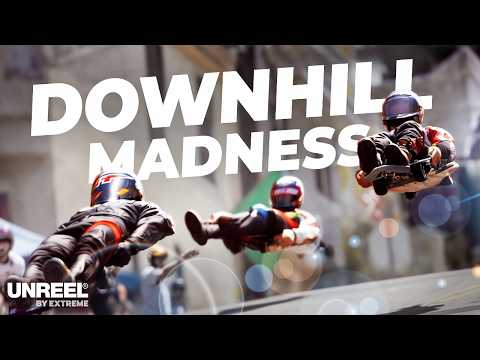

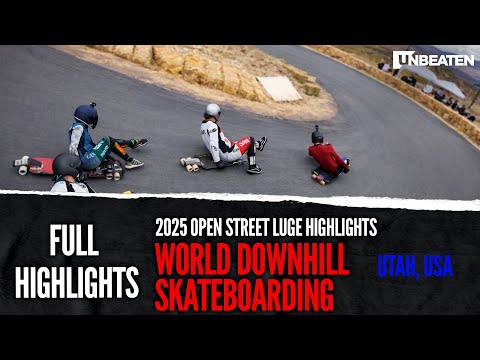
The filter sorts the Review Room embeds and the picture cards above by the keywords in their carried titles (review / analysis / recap and similar, or highlights). It runs entirely in your browser — nothing is sent anywhere.
No hall of fame with a published inductee list is carried for Street Luge. Sport on Earth does not invent halls or inductees: where a recognised hall publishes its list in a form this site can carry, the full list will appear here with its source named.
Racing downhill lying on a board.
In the wider machine family of sports — grip, downforce and the square law, the game turns on: Slow in, fast out: corners are won on exit speed, so braking and entry serve the acceleration that follows.; Grip is a budget: tyres offer a fixed total of grip; steering, braking and accelerating all spend from the same account.; Data closes the loop: telemetry and video review turn feelings into adjustments between sessions.; Racecraft is patience: positions are taken when the cost — tyres, risk, time — is lowest, not whenever a gap appears.; Tyres are the whole budget: every force a vehicle makes passes through four contact patches, and tyre state decides what the machinery is worth.; Traffic is a skill: winning pace includes passing slower vehicles without surrendering the lap the pass was meant to protect..
Sport on Earth carries no team or player directory for this sport, because no structured public feed publishes a verifiable one. What is carried is the documented record on this page — history, rules, honours and the calendar — each with its source named.
The Street Luge record book is still thin: beyond the standings, rules and calendar layers on this page, no verified winners roll or honours list is carried yet. The desk adds record material only when a published source can be named for it — never from memory or invention.
More from the desk: the expert guide to Street Luge · the site-wide Writing Desk · every sport on Earth.
📖 Street Luge — Tactics & Strategy — every entry, plus the arcade strategy, at the foot of this page.
An arcade take on Street Luge: set the angle, set the power, and land the practice pod in the far marker. Five attempts; the closer to the middle, the more it scores. Arcade distances and a training arc — a game in the spirit of the sport, not a simulation of it. Street Luge has no thrown object of its own, so the pod stands in — the launch, the arc and the landing are the game.
This page’s own game is the arcade above. Everything else on the site that fits this sport is listed here — and anything borrowed from a similar sport is labelled as that sport’s game, never passed off as this one’s.
The tools on this site that honestly run on Street Luge — its own record first, then the site-wide general tools that apply. The full Street Luge toolkit prints the ones that do not apply, with the data reason why.
No bench tool yet computes from Street Luge’s own carried record — the general tools below are the ones that honestly apply.
Site-wide tools, not built for Street Luge alone: Tournament Planner · My Notebook · The Labs · Design Studio · The Makers’ Bench · Match Day Desk · Play It Near You · Myth-Check Desk · Governing Bodies · Heat & Safety Calculator (WBGT) · Hydration Calculator · Training-Load Planner · Game Clock & Timer · Custom Rulebook Generator · Scout Notes Parser.
Tactics & Strategy — this sport’s book
the action sports’ shared book — judged sports whose ’plays’ are tricks, lines and runs, built like routines and priced by judges rather than clocks.
7 entries, plus the arcade strategy below. All wording is original coaching-vocabulary prose; nothing is copied from any proprietary playbook.
Skateboarding, freestyle BMX, surfing’s heat and snowboarding’s runs share the unit: the run — a timed performance of linked tricks judged on difficulty, execution, variety and flow. The run is built like a gymnastics routine, and its tactics are the same economics.
When it’s used: The run’s construction is the action sports’ universal page: bank the safe score, then spend the risk.
The sequence
In the street and park courses, the line is the run’s argument: the path linking obstacles so tricks flow without a push or a pause — the course is walked and skated in practice until the line is a sentence the rider can say at speed.
When it’s used: The line is chosen like a racing line, for flow rather than distance: speed kept is difficulty bought.
The sequence
Surfing’s heat is a tactics duel: two to four surfers, a wave count that keeps only the best two scores, and priority (the right to the next wave, allocated after each ride) — the game’s chess is wave selection and the priority’s use, including the decoy paddle that burns a rival’s priority.
When it’s used: The ocean deals the playing field wave by wave, and priority is the right to refuse the deal.
The sequence
Parkour’s competitive forms judge speed (a course run against the clock) and style (a judged line) — and chase tag turns the playground game into a 20-second evasion on an obstacle quad, where the chaser’s line-cutting geometry is the whole book.
When it’s used: Chase tag is tag with a stopwatch and a quad full of furniture: the evader’s juke is a route, the chaser’s is a shortcut.
The sequence
Freestyle football (juggling tricks judged in battles) and club swinging (the rhythmic swinging of Indian clubs in patterns, a 19th-century gymnastic art revived as a sport) close the family’s shelf: both are pattern sports, where the vocabulary of moves is named, sequenced and judged — the plays are the patterns themselves.
When it’s used: In the pattern sports the catalogue IS the playbook: the named move, performed clean, is the point.
The sequence
Across the judged action sports, the practice session is a resource: the course is open for limited hours, the body for fewer attempts — the athletes who win the session (learning the line in the fewest runs) win the contest’s hidden first round.
When it’s used: Course knowledge is rationed by the practice clock in every sport on this shelf.
The sequence
Boards, bikes and skates are tuned like instruments in this family — wheel hardness, truck tightness, tyre pressure, the trampoline’s bed: the set-up is a selection made before the run, and its wrongness is confessed in the run’s first seconds.
When it’s used: The athlete’s tools are chosen like a golfer’s clubs, for the course’s specific argument.
The sequence
The arcade cell · strategy
This page’s arcade cell: launch the practice pod at the far marker from the far marker · 50 m (arcade scale). Angle, power, launch — five attempts, and the cell keeps your best.
When it’s used: On this page, in the Play section — and its strategy is the same craft as the book above it, miniaturised.
The sequence
Part of the Sport on Earth Playbooks — a book for every sport and every game on the site.
Behind the Play · From the carried record
Racing downhill lying on a board.
Behind the Play takes the decisive actions of Street Luge apart: how the scoring play is built, which patterns the players are really running, and which rules remade the play into its modern shape.
Source basis: this sport’s carried record on this page (verified record, rule-changes dossier, history datasets) and the play patterns of its family as written in the site’s guides. Nothing here is invented.