Robot Wars - Series 5 - Most Destructive Battles
YouTube · NJGW
Pages
On this page
Sport on Earth › Sports
Sport on Earth · Sport
Remote-controlled armoured robots fight in an arena.
Every embed below was verified playable before listing — the network’s standing rule.
YouTube · NJGW
YouTube · Robot Combat Nerd
YouTube · The Construct Robotics Institute
YouTube · Chris Wabs
YouTube · NHRL
YouTube · T&R Productions
YouTube · NHRL
YouTube · NHRL
YouTube · news.com.au
YouTube · Robot Combat Nerd
YouTube · Robot Combat Nerd
YouTube · NJGW
YouTube · Robot Combat Nerd
YouTube · CNET
YouTube · NHRL
YouTube · NHRL
YouTube · NHRL
YouTube · Robot Wars
YouTube · Frankie LaPenna Vlogs and REK
YouTube · ExperiMENTAL
YouTube · NHRL
YouTube · Robot Combat Nerd
YouTube · NHRL
YouTube · See Jay See
YouTube · Mutually Assured Destruction
YouTube · Back In The Day
YouTube · Robo Tube
YouTube · BBC
YouTube · Robot Combat Nerd
YouTube · Extreme Docs
YouTube · BBC
YouTube · HISTORY
YouTube · Incredible Facts
YouTube · NHRL
YouTube · PaintChronicles
YouTube · Banijay History
YouTube · BBC
YouTube · DPCcars
YouTube · Team Croc Combat Robotics
YouTube · Chris Wabs
YouTube · CNET
YouTube · NextGen Humanoids
YouTube · Team Just ’Cuz Robotics
YouTube · Carter Hurd
YouTube · Team Just ’Cuz Robotics
YouTube · NOOBLETS
YouTube · Robert Cowan
YouTube · ElephantDogCat
Pages
On this page
No game on this site is made specifically for Robot Combat yet. The games below are the site's all-sport games, which honestly cover every sport — nothing from another sport has been dressed up as this sport's game.
A new set of questions every day, across every sport this site covers.
Real-athlete Top Sport on Earth decks built from the site’s verified board data.
Robot Combat's lab is the Physics Lab section on this page — the applied physics of its sport family, with a computed interactive where one honestly fits.
Physics Arena — the general biomechanics & physics teaching sandbox, shared by every sport.
The homepage sport explorer also carries a general Lab tab of small interactive experiments.
Calendar data not yet carried for Robot Combat — this site does not yet hold schedule data for it, so no dates are shown rather than invented.
Which section of this page should we expand first?
Votes are counted on the Sport on Earth server and the totals shown are every reader’s votes; your own choice is remembered in this browser.
Sport on Earth does not yet hold verified dated events for Robot Combat, and its carried record does not state the season's timing in words — so no calendar is shown rather than an invented one. What the site does carry for this sport is on this page: its verified record, its rules record and its history.
A racing vehicle’s limits are set by friction: the tyres can deliver a total force of about μ × the load pressing them down, which is why aerodynamic downforce (load that costs no mass) transformed racing. Braking distance follows the same law as every friction stop — v²/(2μg) — and the calculator below runs it with tyre-on-asphalt coefficients (roughly 0.7–1.0 for road tyres on dry asphalt, more for racing rubber) and assumptions printed.
Drag obeys the square law: force rises with v², power with v³ — the reason top speeds plateau no matter the gearing, and why slipstreaming (sitting in the low-pressure wake) is worth car lengths. Cornering is a budget problem: steering, braking and accelerating all draw on the same friction circle.
From this sport's own record: Remote-controlled armoured robots fight in an arena. The lab above treats the physics of the sport's family; no measurement specific to this sport is printed, because the site's verified record for it carries none — parameters are never invented to fill a lab.
Model: stopping distance d = v²/(2·μ·g), g = 9.81 m/s²; the maximum friction force is μ × the load. Assumptions: flat surface, constant μ, no air resistance, no braking technique — a pure physics floor/ceiling for the slide. Typical published ranges: steel blade on ice ≈ 0.003–0.01; waxed ski on snow ≈ 0.03–0.1; road tyre on dry asphalt ≈ 0.7–1.0. Explore the range; do not read a single value as a measurement of any real surface.
The general teaching sandbox for every sport is the Physics Arena on the Games page — the same printed models, with a defender added.
The hands-on lab for Robot Combat, built entirely from the record this site carries for it — its documented rolls, its halls, its venues, its calendar and its census family. Every figure below is computed from that carried record at build time; nothing is estimated and nothing is pulled live. The companion Physics Lab on this page works the family's physics; this lab works the record.
The honest position: the record this site carries for Robot Combat is thin — no documented roll, hall, venue set or dated calendar is carried for it yet — so this entry’s lab is its family lab: the computed census of the family it belongs to. When the record grows, the lab grows with it; nothing here is estimated to fill the space.
Computed from the site census: the Machine sports family holds 21 entries on this site. Across the family, the carried record includes documented rolls for 1 of them, Hall of Fame data for 6, venue sets for 1, and dated calendars for 0.
Every other entry in the family: Air Racing · Cyclecide / Tall Bike Jousting · Drone Racing · Drone Soccer · eSkootr · Formula 1 · Indoor Rowing · IndyCar · Lawn Mower Racing · Monster Truck Racing · MotoGP · Motorsport · NASCAR · Paramotoring · Powerboat and Jet Ski Racing · Slot Car Racing · Soapbox Racing · Street Luge · Tractor Pulling · World Rally Championship
Basis: the Sport on Earth census itself — the same 460-entry register the census page prints.
The desk has not verified a sponsorship record for Robot Combat from published sources, so none is printed. Sponsorship history is added only when a real published source supports it — sponsor by sponsor, deal by deal. Current sponsorship deals across sport are tracked on the Money Desk sponsorship page.
How this game is played, gathered from the record Sport on Earth already carries for Robot Combat, with the positions taken from the sourced chart cited in that section.
Sport on Earth carries no separate rules list for Robot Combat; the governing framework its record carries is this:
Robot combat is governed by event rulebooks (the FRA/BRA safety and design codes; television’s BattleBots house rules, which famously require every robot to carry an active weapon — a selection rule that shaped a generation of designs). Safety law (containment, failsafes, fuel and pressure limits) is the real rulebook. No single dated landmark change is carried for robot combat.
Robot Combat has no fixed positions — its format designates no positional roles.
Format as carried in hidden_files/batchB-nov1/batchb_data.json: "Remote-controlled armoured robots fight in an arena." The format carries no designated positional roles. (Source: Sport on Earth carried sport record.)
Its Tactics & Strategy book — its opening entries, the basic plays, are:
The full book carries 8 entries — in this page’s Playbook / Tactics & Strategy section, and at the Playbooks hub.
Sport on Earth's own analytics: every figure in this panel is computed at build time from the record this site itself carries, with the source named. No outside data is used, and no betting figures of any kind.
Census arithmetic: Robot Combat sits in the machine sports family — 19 census sports, of which 3 carry a qualifying champions roll in the site's record.
The carried record for Robot Combat is too thin for computed panels: no champions roll, hall-of-fame list or venue record is carried for it. This panel therefore prints the census arithmetic only — the honest answer rather than a manufactured figure.
How the laws of Robot Combat are governed today — the documented record, stated plainly.
Robot combat is governed by event rulebooks (the FRA/BRA safety and design codes; television’s BattleBots house rules, which famously require every robot to carry an active weapon — a selection rule that shaped a generation of designs). Safety law (containment, failsafes, fuel and pressure limits) is the real rulebook. No single dated landmark change is carried for robot combat.
That framework summary is the whole documented record Sport on Earth can verify for this sport — no major dated rule changes are carried, rather than invent any.
Source basis: The governing body’s published framework as summarised in this section (see the framework text).
Sport on Earth carries no results feed for Robot Combat: no scores or fixtures are published here, rather than inventing them. The sport's documented record is in its history page and the History & Records section of this page.
The historical record for Robot Combat — past standings, champions, title history and all-time leaders, as deep as verifiable public records go.
Season-by-season standings, historical player statistics and title rolls are not carried for Robot Combat: no public archive publishes them in a form Sport on Earth can verify, and this site does not invent history. What is carried for this sport is its verified record, its rule-change history and its league history — elsewhere on this page.
The review and analysis videos from Robot Combat’s verified video pool — every embed below was identity-checked and probed playable before listing, the site’s standing rule. Nothing here is a show Sport on Earth produces; these are the review, post-game and breakdown videos the pool already carries for this sport.
YouTube · BBC
YouTube · BBC
YouTube · BBC
YouTube · Jane Recaps
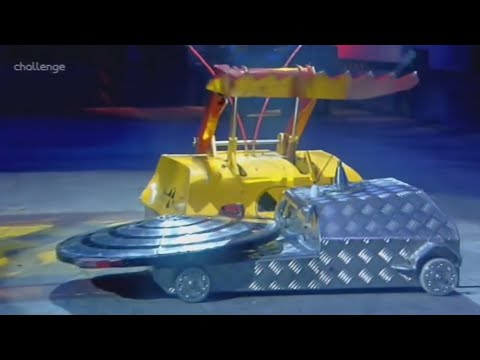
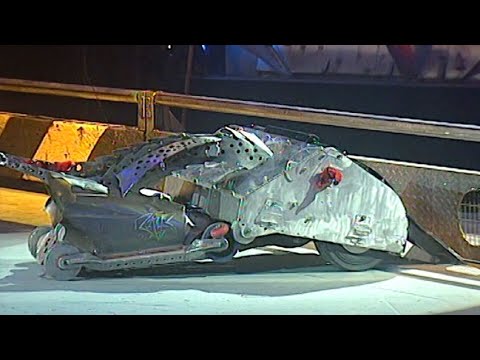
The filter sorts the Review Room embeds and the picture cards above by the keywords in their carried titles (review / analysis / recap and similar, or highlights). It runs entirely in your browser — nothing is sent anywhere.
No hall of fame with a published inductee list is carried for Robot Combat. Sport on Earth does not invent halls or inductees: where a recognised hall publishes its list in a form this site can carry, the full list will appear here with its source named.
Remote-controlled armoured robots fight in an arena.
In the wider machine family of sports — grip, downforce and the square law, the game turns on: Slow in, fast out: corners are won on exit speed, so braking and entry serve the acceleration that follows.; Grip is a budget: tyres offer a fixed total of grip; steering, braking and accelerating all spend from the same account.; Data closes the loop: telemetry and video review turn feelings into adjustments between sessions.; Racecraft is patience: positions are taken when the cost — tyres, risk, time — is lowest, not whenever a gap appears.; Tyres are the whole budget: every force a vehicle makes passes through four contact patches, and tyre state decides what the machinery is worth.; Traffic is a skill: winning pace includes passing slower vehicles without surrendering the lap the pass was meant to protect..
Sport on Earth carries no team or player directory for this sport, because no structured public feed publishes a verifiable one. What is carried is the documented record on this page — history, rules, honours and the calendar — each with its source named.
The Robot Combat record book is still thin: beyond the standings, rules and calendar layers on this page, no verified winners roll or honours list is carried yet. The desk adds record material only when a published source can be named for it — never from memory or invention.
More from the desk: the expert guide to Robot Combat · the site-wide Writing Desk · every sport on Earth.
📖 Robot Combat — Tactics & Strategy — every entry, plus the arcade strategy, at the foot of this page.
An arcade take on Robot Combat: set the angle, set the power, and land the practice pod in the far marker. Five attempts; the closer to the middle, the more it scores. Arcade distances and a training arc — a game in the spirit of the sport, not a simulation of it. Robot Combat has no thrown object of its own, so the pod stands in — the launch, the arc and the landing are the game.
This page’s own game is the arcade above. Everything else on the site that fits this sport is listed here — and anything borrowed from a similar sport is labelled as that sport’s game, never passed off as this one’s.
The tools on this site that honestly run on Robot Combat — its own record first, then the site-wide general tools that apply. The full Robot Combat toolkit prints the ones that do not apply, with the data reason why.
No bench tool yet computes from Robot Combat’s own carried record — the general tools below are the ones that honestly apply.
Site-wide tools, not built for Robot Combat alone: Tournament Planner · My Notebook · The Labs · Design Studio · The Makers’ Bench · Match Day Desk · Play It Near You · Myth-Check Desk · Governing Bodies · Heat & Safety Calculator (WBGT) · Hydration Calculator · Training-Load Planner · Game Clock & Timer · Custom Rulebook Generator · Scout Notes Parser.
Tactics & Strategy — this sport’s book
the wider motorsport book — oval racing’s draft, rallying’s notes, endurance racing’s night arithmetic and MotoGP’s slipstream: each branch writes its own chapter in the family’s hand.
8 entries, plus the arcade strategy below. All wording is original coaching-vocabulary prose; nothing is copied from any proprietary playbook.
On the ovals, the draft is the race: a following car gains speed in the leader’s wake, two cars together outrun one, and the ’line’ (the pack’s formation) is built, swapped and betrayed for three hours until the last lap’s run to the flag.
When it’s used: The superspeedway race is a chess game at 200 mph where the pieces are glued together by air.
The sequence
Stock car races are segmented (stages) and stopped (cautions): two tyres or four, fuel only or none, and the track position’s price against the tyre’s price is recomputed at every yellow — the crew chief is the sport’s play-caller, perched above the pits with the model.
When it’s used: The caution is the stock car race’s safety car with more costumes: it arrives often and reprices everything.
The sequence
The rally crew races a road it cannot see, read aloud by the co-driver from notes written in reconnaissance: the numbers (1–6 for corner severity) and the distances are a language the pair invented together, delivered at the exact second the corner needs it.
When it’s used: The pacenote is the only playbook in sport dictated live during the play, by a man sitting next to the player.
The sequence
Endurance races (6, 12, 24 hours) are run by rosters: driver stints are an energy budget, the night stints are given to the calm, and the car’s survival is a strategy — the fastest car in the garage at dawn is beaten by a slower one on the track.
When it’s used: To finish first, first you must finish: the garage door is the endurance race’s true opponent.
The sequence
A motorcycle’s draft is worth tenths at 350 km/h: qualifying’s tow game (riders hunting a fast wheel to follow) and the race’s slipstream pass are the bike book’s core, with tyre life managed by a right wrist instead of a pit wall.
When it’s used: The bike racer has no strategist on a radio in his ear for most of history: the book is carried in the rider’s head at full lean.
The sequence
Dirt track racing’s formats are a ladder: heats, dashes and the feature, with the inversion (fast qualifiers starting deep) as its drama machine — the track’s surface evolves (the cushion of loose dirt at the top) and the line moves up the banking as the night wears.
When it’s used: The dirt racer reads the track like a surfer reads a beach: the fast line is rebuilt by every race on it.
The sequence
The hillclimb is the purest format: one car, one road, one run — Pikes Peak’s 156 corners above the treeline, where the air thins and the downforce thins with it. The book is memorisation and a car built for a single mountain.
When it’s used: The mountain is the opponent; the other drivers are merely other witnesses.
The sequence
Robot combat is engineering as sport: the weapon matchups are rock-paper-scissors at 250 lb — the spinner’s kinetic energy, the flipper’s leverage, the crusher’s bite, the wedge’s low ground clearance — and the arena’s own weapons (the killsaws, the pulverizer) are hazards both drivers route around.
When it’s used: The fight is designed in the workshop months before: the pit is where the tactics are machined.
The sequence
The arcade cell · strategy
This page’s arcade cell: launch the practice pod at the far marker from the far marker · 50 m (arcade scale). Angle, power, launch — five attempts, and the cell keeps your best.
When it’s used: On this page, in the Play section — and its strategy is the same craft as the book above it, miniaturised.
The sequence
Part of the Sport on Earth Playbooks — a book for every sport and every game on the site.
Behind the Play · From the carried record
Remote-controlled armoured robots fight in an arena.
Behind the Play takes the decisive actions of Robot Combat apart: how the scoring play is built, which patterns the players are really running, and which rules remade the play into its modern shape.
Source basis: this sport’s carried record on this page (verified record, rule-changes dossier, history datasets) and the play patterns of its family as written in the site’s guides. Nothing here is invented.