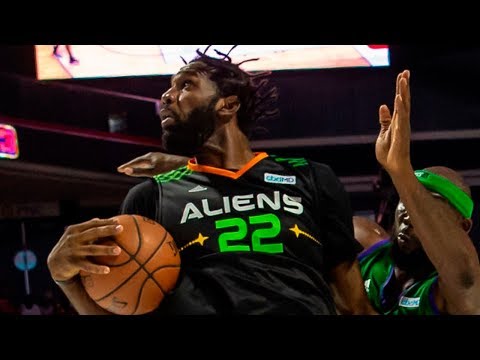
Greg Oden Full Season 3 Highlights | BIG3 Basketball
YouTube · STAY
Pages
On this page
Sport on Earth › Sports
Sport on Earth · Sport
Ice Cube’s professional 3-on-3 league — half-court, first to 50, with a four-point shot.
Sport on Earth’s daily and weekly video shows for BIG3 — every episode, newest first.
The first episode is in production and lands here the morning it is produced — no episode is listed until it exists.
Every embed below was verified playable before listing — the network’s standing rule.
YouTube · STAY
Pages
On this page
No game on this site is made specifically for BIG3 yet. The games below are the site's all-sport games, which honestly cover every sport — nothing from another sport has been dressed up as this sport's game.
A new set of questions every day, across every sport this site covers.
Real-athlete Top Sport on Earth decks built from the site’s verified board data.
BIG3's lab is the Physics Lab section on this page — the applied physics of its sport family, with a computed interactive where one honestly fits.
Physics Arena — the general biomechanics & physics teaching sandbox, shared by every sport.
The homepage sport explorer also carries a general Lab tab of small interactive experiments.
Calendar data not yet carried for BIG3 — this site does not yet hold schedule data for it, so no dates are shown rather than invented.
Which section of this page should we expand first?
Votes are counted on the Sport on Earth server and the totals shown are every reader’s votes; your own choice is remembered in this browser.
Sport on Earth does not yet hold verified dated events for BIG3, and its carried record does not state the season's timing in words — so no calendar is shown rather than an invented one. What the site does carry for this sport is on this page: its verified record, its rules record and its history.
A basketball shot is projectile motion with a forgiving twist: the rim (about 45 cm across) is nearly twice the ball’s diameter, so a shot arriving on a steep arc — entering at 45° or more — has a real margin for error, while a flat shot must be nearly perfect. The calculator below runs the core flight model (no air resistance, no spin, flat ground) — try the release speeds and angles and watch the entry conditions change.
Backspin is the shooter’s friend: it softens the bounce off rim and board (spin converts to friction at contact) and, through the Magnus effect, slightly steadies the flight. This sport also carries this site’s dedicated basketball labs — the Possession Lab and Hoops Lab linked from the Games page.
From this sport's own record: Ice Cube’s professional 3-on-3 league — half-court, first to 50, with a four-point shot. The lab above treats the physics of the sport's family; no measurement specific to this sport is printed, because the site's verified record for it carries none — parameters are never invented to fill a lab.
Model: R = v²·sin(2θ)/g, flight time T = 2·v·sin(θ)/g, apex H = (v·sin θ)²/(2g), g = 9.81 m/s². Assumptions: no air resistance, no spin, flat ground, launch and landing at the same height. Real balls and shuttles fly shorter and curve — drag and spin are exactly what this model leaves out, so treat the output as the gravity-only ceiling, not a prediction.
The general teaching sandbox for every sport is the Physics Arena on the Games page — the same printed models, with a defender added.
The hands-on lab for BIG3, built entirely from the record this site carries for it — its documented rolls, its halls, its venues, its calendar and its census family. Every figure below is computed from that carried record at build time; nothing is estimated and nothing is pulled live. The companion Physics Lab on this page works the family's physics; this lab works the record.
The honest position: the record this site carries for BIG3 is thin — no documented roll, hall, venue set or dated calendar is carried for it yet — so this entry’s lab is its family lab: the computed census of the family it belongs to. When the record grows, the lab grows with it; nothing here is estimated to fill the space.
Computed from the site census: the Court games family holds 10 entries on this site. Across the family, the carried record includes documented rolls for 1 of them, Hall of Fame data for 3, venue sets for 1, and dated calendars for 2.
Every other entry in the family: 3x3 Basketball · Aero-Ball · Basketball · Freestyle Basketball · Professional Dunking · Regball · SlamBall · Unrivaled · Wheelchair Basketball
Basis: the Sport on Earth census itself — the same 460-entry register the census page prints.
The desk has not verified a sponsorship record for BIG3 from published sources, so none is printed. Sponsorship history is added only when a real published source supports it — sponsor by sponsor, deal by deal. Current sponsorship deals across sport are tracked on the Money Desk sponsorship page.
How this game is played, gathered from the record Sport on Earth already carries for BIG3, with the positions taken from the sourced chart cited in that section.
The BIG3 is a professional 3-on-3 basketball league founded in 2017 by Ice Cube and entertainment executive Jeff Kwatinetz, built for former NBA and international players and played as a summer tour of American cities during the NBA offseason. Its ruleset is trademarked FIREBALL3: half-court, no game clock, and a race to 50 points. Since 2025 the teams have carried city identities, and Miami 305 won the 2025 championship, beating the Chicago Triplets 52–48 in the final.
FIREBALL3 — how it differs from basketball — the rules as this site's record carries them:
Positions for BIG3 are not yet sourced on Sport on Earth: no verified positions chart has been carried for this sport yet, so none is shown here rather than an invented one. That says nothing about whether the sport has positions — only that they have not been sourced for this page yet.
Its Playbook — its opening entries, the basic plays, are:
The full book carries 8 entries — in this page’s Playbook / Tactics & Strategy section, and at the Playbooks hub.
Sport on Earth's own analytics: every figure in this panel is computed at build time from the record this site itself carries, with the source named. No outside data is used, and no betting figures of any kind.
Census arithmetic: BIG3 sits in the basketball family family — 9 census sports, of which 1 carry a qualifying champions roll in the site's record.
The carried record for BIG3 is too thin for computed panels: no champions roll, hall-of-fame list or venue record is carried for it. This panel therefore prints the census arithmetic only — the honest answer rather than a manufactured figure.
The BIG3 is a professional 3-on-3 basketball league founded in 2017 by Ice Cube and entertainment executive Jeff Kwatinetz, built for former NBA and international players and played as a summer tour of American cities during the NBA offseason. Its ruleset is trademarked FIREBALL3: half-court, no game clock, and a race to 50 points. Since 2025 the teams have carried city identities, and Miami 305 won the 2025 championship, beating the Chicago Triplets 52–48 in the final.
Eight teams tour together, playing a slate of games in a different city each week of the summer season.
Games have no clock: the first team to 50 points wins, and must win by two. The first half ends as soon as a team reaches 25.
The league’s city-based teams since 2025 include Miami 305, the Chicago Triplets, the Boston Ball Hogs, the Los Angeles Riot, the Detroit Amps and the Dallas Power.
The BIG3 publishes no structured data feed this site can mirror, so Sport on Earth carries no fixtures, results or player statistics for it; the format and team facts above are the verified record as of November 2026.
Sources, verified November 1, 2026: Fubo News — BIG3 format and how to watch · Tallahassee Democrat — Nasir Core’s BIG3 scoring record, with the format explained
The BIG3’s founding gimmick is a shot worth more than the three-pointer — a rules invention as brand identity.
Before: Basketball’s scoring ladder stopped at three points (the ABA having invented the three in 1967); half-court 3-on-3 games to a target score used the standard ladder.
The change: Ice Cube and Jeff Kwatinetz’s BIG3 (2017) added three marked four-point circles, 30 feet from the basket: a shot from inside one counts FOUR. The league plays half-court, first to 50 (win by two), with the four-pointer as its signature geometry.
Why it happened: The rule is marketing as mechanism — a retired-stars league needed a visual trademark and a comeback lever (four points erases deficits fast in a race to 50). It worked as branding: the circles are the league’s logo made literal.
In practice today: The four-pointer remains BIG3’s identity and a recurring (so far resisted) suggestion in mainstream rules debates — the ABA three-pointer’s own history says today’s gimmick is sometimes tomorrow’s law.
Source basis: BIG3 league rules (2017 founding); contemporary coverage.
Sport on Earth carries no results feed for BIG3: no scores or fixtures are published here, rather than inventing them. The sport's documented record is in its history page and the History & Records section of this page.
The historical record for BIG3 — past standings, champions, title history and all-time leaders, as deep as verifiable public records go.
Season-by-season standings, historical player statistics and title rolls are not carried for BIG3: no public archive publishes them in a form Sport on Earth can verify, and this site does not invent history. What is carried for this sport is its verified record, its rule-change history and its league history — elsewhere on this page.
The review and analysis videos from BIG3’s verified video pool — every embed below was identity-checked and probed playable before listing, the site’s standing rule. Nothing here is a show Sport on Earth produces; these are the review, post-game and breakdown videos the pool already carries for this sport.
No verified review-show video is carried for this sport yet.
The filter sorts the Review Room embeds and the picture cards above by the keywords in their carried titles (review / analysis / recap and similar, or highlights). It runs entirely in your browser — nothing is sent anywhere.
No hall of fame with a published inductee list is carried for BIG3. Sport on Earth does not invent halls or inductees: where a recognised hall publishes its list in a form this site can carry, the full list will appear here with its source named.
Ice Cube’s professional 3-on-3 league — half-court, first to 50, with a four-point shot.
The format, from this sport's verified record:
The BIG3 record book, as this site carries it: its rule-changes dossier records 1 dated changes and named rules. Every figure above is computed from the lists and dossiers printed on this page, each with its source basis named beside it.
More from the desk: the expert guide to BIG3 · the site-wide Writing Desk · every sport on Earth.
📖 The BIG3 Playbook — every entry, plus the arcade strategy, at the foot of this page.
An arcade take on BIG3: set the angle, set the power, and land the ball in the hoop. Five attempts; the closer to the middle, the more it scores. Arcade distances and a training arc — a game in the spirit of the sport, not a simulation of it.
This page’s own game is the arcade above. Everything else on the site that fits this sport is listed here — and anything borrowed from a similar sport is labelled as that sport’s game, never passed off as this one’s.
The tools on this site that honestly run on BIG3 — its own record first, then the site-wide general tools that apply. The full BIG3 toolkit prints the ones that do not apply, with the data reason why.
Site-wide tools, not built for BIG3 alone: Tournament Planner · My Notebook · The Labs · Design Studio · The Makers’ Bench · Match Day Desk · Play It Near You · Myth-Check Desk · Governing Bodies · Heat & Safety Calculator (WBGT) · Hydration Calculator · Training-Load Planner · Game Clock & Timer · Custom Rulebook Generator · Scout Notes Parser.
The Playbook · set plays, systems & situations
the variant codes’ own books — SlamBall’s trampolines, the BIG3’s four-point circles and half-court 3-on-3, Unrivaled’s compressed professional 3-on-3, and freestyle basketball’s scored artistry, each described as its own game, not as basketball with decorations.
8 entries, plus the arcade strategy below. All wording is original coaching-vocabulary prose; nothing is copied from any proprietary playbook.
SlamBall’s scoring runs through the trampolines set in the court: the handler builds speed, hits the launch bed in stride and attacks the rim in the air, where the stopper — the defence’s goalie with pads — meets him under full-contact rules.
When it’s used: The slam zones turn the drive into an aerial collision sport; timing the launch is the core skill.
The sequence
Defence is anchored by the stopper at the rim and the handlers’ checks on the trampoline approaches: the defence concedes the floor game to own the air lanes.
When it’s used: SlamBall defence is air-traffic control: the stopper’s crease is the kingdom.
The sequence
The BIG3’s four-point circles, 30 feet out, pay four for a shot with any part of the shooter’s body touching the circle — the half-court 3-on-3 game’s signature gamble, defended like a second arc.
When it’s used: A four-point shot reprices every late-game decision in the BIG3’s book.
The sequence
The BIG3 lets a coach challenge a foul call by sending the players to settle it one-on-one — ’Bring the Fire’ — the only code in basketball where a disputed call becomes a duel with the possession at stake.
When it’s used: A rule that creates a play: the one-on-one is a rehearsed speciality, not a brawl.
The sequence
Unrivaled plays 3-on-3 on a compressed full court (72 by 49.2 feet) with a short clock and a target-score fourth quarter: end-to-end 3-on-3 at professional speed, where the two-man game is played running, not walking.
When it’s used: The league’s format rewards the transition two-man game above all half-court craft.
The sequence
Freestyle basketball is judged performance: routines are choreographed combinations of dribble tricks, spins and ball manipulation scored on difficulty, execution and originality — the ’play’ is the combination itself, built like a gymnastics routine.
When it’s used: The honest entry in this book: freestyle’s plays are routines, and they are built as routines are.
The sequence
Every 3-on-3 code converges on the same endgame: the two-man game at the top, the arc’s double value, and a last play drawn for the shooter the whole game has been hiding.
When it’s used: Half-court basketball’s universal closing argument, whatever the league’s decorations.
The sequence
Both codes allow defensive contact the parent game forbids — the BIG3’s hand-checking era rules, SlamBall’s full-contact stops — so their books teach playing through contact as a core skill, not an edge case.
When it’s used: Contact is written into these rulebooks; the craft is absorbing it productively.
The sequence
The arcade cell · strategy
This page’s arcade cell: launch the ball at the hoop from beyond the arc · 34 m (arcade scale). Angle, power, launch — five attempts, and the cell keeps your best.
When it’s used: On this page, in the Play section — and its strategy is the same craft as the book above it, miniaturised.
The sequence
Part of the Sport on Earth Playbooks — a book for every sport and every game on the site.
Behind the Play · Full treatment — from this sport’s own record
Ice Cube’s professional 3-on-3 league — half-court, first to 50, with a four-point shot.
Behind the Play takes the decisive actions of BIG3 apart: how the scoring play is built, which patterns the players are really running, and which rules remade the play into its modern shape.
The format, from this sport's verified record:
The Four-Point Shot (2017). Ice Cube and Jeff Kwatinetz’s BIG3 (2017) added three marked four-point circles, 30 feet from the basket: a shot from inside one counts FOUR. The league plays half-court, first to 50 (win by two), with the four-pointer as its signature geometry.
The four-pointer remains BIG3’s identity and a recurring (so far resisted) suggestion in mainstream rules debates — the ABA three-pointer’s own history says today’s gimmick is sometimes tomorrow’s law.
From this page’s Rule Changes & Named Rules dossier, where every entry names its source.
Source basis: this sport’s carried record on this page (verified record, rule-changes dossier, history datasets) and the play patterns of its family as written in the site’s guides. Nothing here is invented.