Episode 1 — Amsterdam RABOBANK win in Zaisan, 21-15 over DeQing in the final
Ep. 1 — the week ending Saturday, November 21, 2026 · 1:28
Pages
On this page
Sport on Earth › Sports
Sport on Earth · Sport
Half-court basketball with a 12-second shot clock.
News stories from around the world, gathered and sourced by the Sport on Earth desk.
3x3 Basketball is carried on the program for Los Angeles 2028 Olympic Games, 14 – 30 July 2028, in Los Angeles, USA. Half-court basketball with a 12-second shot clock. The desk carries the sport’s full record — guide, calendar and history — on its own page.
LA28 / IOC · Nov 2026
Written by Sport on Earth’s journalists — columns, features and interviews from the desk.
No columns or stories filed for this sport yet.
Everything the desk has published for 3x3 Basketball, organised by section.
From the News Desk · all news, every sport →
Sport on Earth’s daily and weekly video shows for 3x3 Basketball — every episode, newest first.
Ep. 1 — the week ending Saturday, November 21, 2026 · 1:28
Every embed below was verified playable before listing — the network’s standing rule.
YouTube · Olympic Games
YouTube · FIBA3x3 - The 3x3 Basketball Channel
YouTube · FIBA3x3 - The 3x3 Basketball Channel
YouTube · FIBA3x3 - The 3x3 Basketball Channel
3x3 Basketball is carried on the program for Los Angeles 2028 Olympic Games, 14 – 30 July 2028, in Los Angeles, USA. Half-court basketball with a 12-second shot clock. The desk carries the sport’s full record — guide, calendar and history — on its own page.
LA28 / IOC · Nov 2026
Pages
On this page
Playable on the Sport on Earth Games page.
Playable on the Sport on Earth Games page.
Playable on the Sport on Earth Games page.
Playable on the Sport on Earth Games page.
Playable on the Sport on Earth Games page.
Playable on the Sport on Earth Games page.
Playable on the Sport on Earth Games page.
Playable on the Sport on Earth Games page.
Playable on the Sport on Earth Games page.
WebXR game, embedded on the Sport on Earth Games page, with a playable non-VR preview.
WebXR game, embedded on the Sport on Earth Games page, with a playable non-VR preview.
WebXR game, embedded on the Sport on Earth Games page, with a playable non-VR preview.
Real pinball on a table themed for this sport — the game carries a Basketball theme.
A new set of questions every day, across every sport this site covers.
Real-athlete Top Sport on Earth decks built from the site’s verified board data.
The Possession Lab — a possession-by-possession engine with defences and fatigue, playable on the Games page.
The Hoops Lab widgets — the Games page's basketball lab cards (matchups, comparisons, picks explorer).
Physics Arena — the general biomechanics & physics teaching sandbox, shared by every sport.
Calendar data not yet carried for 3x3 Basketball — this site does not yet hold schedule data for it, so no dates are shown rather than invented.
Which section of this page should we expand first?
Votes are counted on the Sport on Earth server and the totals shown are every reader’s votes; your own choice is remembered in this browser.
Dated news entries for x19, newest first, dates exactly as carried in the site’s news data.
The flagship competitions on the calendar, with the dates for the current/upcoming cycle. Every date below was verified against the named source on 1 November 2026; dates change, and the source is the authority.
| Event | Dates | Where | Source |
|---|---|---|---|
| Los Angeles 2028 Olympic Games | 14 – 30 July 2028 | Los Angeles, USA | LA28 / IOC — Games dates |
A basketball shot is projectile motion with a forgiving twist: the rim (about 45 cm across) is nearly twice the ball’s diameter, so a shot arriving on a steep arc — entering at 45° or more — has a real margin for error, while a flat shot must be nearly perfect. The calculator below runs the core flight model (no air resistance, no spin, flat ground) — try the release speeds and angles and watch the entry conditions change.
Backspin is the shooter’s friend: it softens the bounce off rim and board (spin converts to friction at contact) and, through the Magnus effect, slightly steadies the flight. This sport also carries this site’s dedicated basketball labs — the Possession Lab and Hoops Lab linked from the Games page.
From this sport's own record: Half-court basketball with a 12-second shot clock. The lab above treats the physics of the sport's family; no measurement specific to this sport is printed, because the site's verified record for it carries none — parameters are never invented to fill a lab.
Model: R = v²·sin(2θ)/g, flight time T = 2·v·sin(θ)/g, apex H = (v·sin θ)²/(2g), g = 9.81 m/s². Assumptions: no air resistance, no spin, flat ground, launch and landing at the same height. Real balls and shuttles fly shorter and curve — drag and spin are exactly what this model leaves out, so treat the output as the gravity-only ceiling, not a prediction.
This sport also carries dedicated labs on the Games page: the Possession Lab and the Hoops Lab widgets.
The general teaching sandbox for every sport is the Physics Arena on the Games page — the same printed models, with a defender added.
The hands-on lab for 3x3 Basketball, built entirely from the record this site carries for it — its documented rolls, its halls, its venues, its calendar and its census family. Every figure below is computed from that carried record at build time; nothing is estimated and nothing is pulled live. The companion Physics Lab on this page works the family's physics; this lab works the record.
3x3 Basketball carries 1 hall in the site’s record — Naismith Memorial Basketball Hall of Fame — with 363 inductees carried, 0 of them with a full verified profile on this site.
Basis: the Hall of Fame record carried on this site — the same rolls and verified profiles the Hall of Fame books print. Inductees a hall lists but the site has not verified stay list-only, exactly as the books state.
Basis: the dated events this entry’s own record carries, as announced by the bodies named in the record. A sport whose record carries no fixed dated calendar says so on its calendar page rather than inventing one.
Computed from the site census: the Court games family holds 10 entries on this site. Across the family, the carried record includes documented rolls for 1 of them, Hall of Fame data for 3, venue sets for 1, and dated calendars for 2.
Every other entry in the family: Aero-Ball · Basketball · BIG3 · Freestyle Basketball · Professional Dunking · Regball · SlamBall · Unrivaled · Wheelchair Basketball
Basis: the Sport on Earth census itself — the same 460-entry register the census page prints.
The desk has not verified a sponsorship record for 3x3 Basketball from published sources, so none is printed. Sponsorship history is added only when a real published source supports it — sponsor by sponsor, deal by deal. Current sponsorship deals across sport are tracked on the Money Desk sponsorship page.
How this game is played, gathered from the record Sport on Earth already carries for 3x3 Basketball, with the positions taken from the sourced chart cited in that section.
3x3 was streetball until FIBA standardised it — and the standardisation IS the rule story: a first test code written in 2007 was thrown away and replaced in 2010 by the format designed in one document, for television and the Olympics.
The current rules, as the site's rule-change dossier records them:
The full dossier — every dated change and named rule, with its source basis — is in this page’s Rule Changes & Named Rules section.
Positions for 3x3 Basketball are not yet sourced on Sport on Earth: no verified positions chart has been carried for this sport yet, so none is shown here rather than an invented one. That says nothing about whether the sport has positions — only that they have not been sourced for this page yet.
Its Playbook — its opening entries, the basic plays, are:
The full book carries 8 entries — in this page’s Playbook / Tactics & Strategy section, and at the Playbooks hub.
Sport on Earth's own analytics: every figure in this panel is computed at build time from the record this site itself carries, with the source named. No outside data is used, and no betting figures of any kind.
Census arithmetic: 3x3 Basketball sits in the basketball family family — 9 census sports, of which 1 carry a qualifying champions roll in the site's record.
The carried record for 3x3 Basketball is too thin for computed panels: no champions roll, hall-of-fame list or venue record is carried for it. This panel therefore prints the census arithmetic only — the honest answer rather than a manufactured figure.
3x3 was streetball until FIBA standardised it — and the standardisation IS the rule story: a first test code written in 2007 was thrown away and replaced in 2010 by the format designed in one document, for television and the Olympics.
Before: Streetball 3-on-3 had no single code: playground games ran to local custom — check-ball or not, 1s and 2s or 2s and 3s, winners’ ball, arguments settled by volume. A federation wanting a world championship and an Olympic event had nothing to point at.
The change: FIBA’s final rules, adopted in 2010 and showcased on the World Tour from 2012, fixed one code: one basket on a half-court, three players plus one substitute, one 10-minute period, a 12-second shot clock, 1 point inside the arc and 2 beyond it, first to 21 wins outright, and overtime decided by the first team to score 2 points. Made baskets hand possession straight to the defence, who must clear the ball behind the arc — there are no throw-ins and no breaks after scores.
Why it happened: FIBA built the code backwards from its purpose: test events at the 2010 Youth Olympics in Singapore proved the format, and every parameter — the short clock, the no-break possession rule, the 21-point ceiling — was chosen to guarantee a complete, dramatic game in about fifteen minutes of real time for festival-style multi-court events.
In practice today: The 2010 code is the game the world now plays: it carried 3x3 into the Olympics at Tokyo 2020 unchanged in its essentials, and its 1-and-2 scoring and clear-the-arc geometry have become the default grammar of organised half-court basketball everywhere.
Before: FIBA’s first attempt at a 3-on-3 code, published in 2007 and trialled at that year’s Asian Indoor Games in Macau, was essentially shrunken basketball: play began with a jump ball, games ran two periods of eight minutes, the shot clock was 16 seconds, and scoring kept the parent game’s values.
The change: The prototype was scrapped wholesale. The 2010 rewrite abolished the jump ball (a coin flip now awards first possession — or first possession of overtime, at the winner’s choice), collapsed the game into a single 10-minute period, cut the shot clock to 12 seconds and halved scoring to 1s and 2s with the 21-point win line.
Why it happened: The Macau trial and the test events that followed convinced FIBA that a miniature of the 5-on-5 game inherited its dead time without its scale. The replacement code was designed as its own sport — faster than basketball’s arithmetic allows, and legible to a spectator who had never seen it in under a minute.
In practice today: Nothing of the 2007 code survives in the modern game; it stands as the documented first draft that FIBA itself rejected, and the reason 3x3’s rulebook reads as a single design rather than an accumulation of amendments.
Source basis: FIBA 3x3 Official Rules editions (the January 2019 edition’s full text) and FIBA/Wilson rules-history records of the 2007 Macau test rules and the final rules adopted in 2010, with the World Tour launched in 2012.
Sport on Earth carries no results feed for 3x3 Basketball: no scores or fixtures are published here, rather than inventing them. The sport's documented record is in its history page and the History & Records section of this page.
The historical record for 3x3 Basketball — past standings, champions, title history and all-time leaders, as deep as verifiable public records go.
Season-by-season standings, historical player statistics and title rolls are not carried for 3x3 Basketball: no public archive publishes them in a form Sport on Earth can verify, and this site does not invent history. What is carried for this sport is its verified record, its rule-change history and its league history — elsewhere on this page.
The review and analysis videos from 3x3 Basketball’s verified video pool — every embed below was identity-checked and probed playable before listing, the site’s standing rule. Nothing here is a show Sport on Earth produces; these are the review, post-game and breakdown videos the pool already carries for this sport.
No verified review-show video is carried for this sport yet.
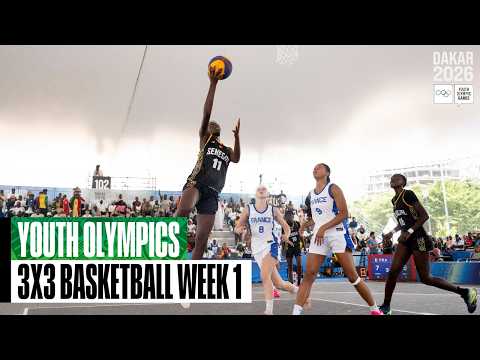

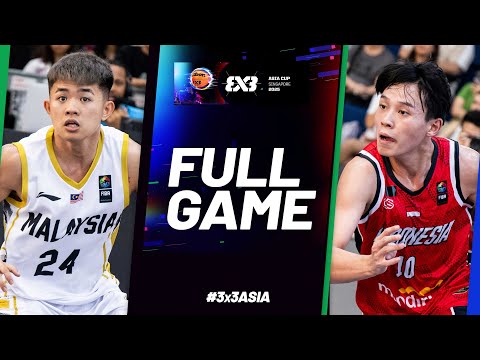
Chart basis: counts from Sport on Earth’s own carried data files at build time — verified videos carried for this sport (the verified pool: sport-videos.json + the desk league pools), news items carried (news.json), and league pages carried (desk.json). No external or estimated figures.
The filter sorts the Review Room embeds and the picture cards above by the keywords in their carried titles (review / analysis / recap and similar, or highlights). It runs entirely in your browser — nothing is sent anywhere.
3x3 basketball is honoured through basketball’s own hall — the Naismith Memorial Basketball Hall of Fame, carried in full on the Basketball page and summarised here.
Springfield, Massachusetts, United States
363 inductees. The full list is carried on the Basketball page.
Source basis: Wikipedia — "List of members of the Naismith Memorial Basketball Hall of Fame" (accessed Nov 1, 2026); parsed mechanically from the article’s published table; and Wikipedia — "List of players in the Naismith Memorial Basketball Hall of Fame" (accessed Nov 1, 2026); parsed mechanically from the article’s published table. Material from Wikipedia is used under CC BY-SA 4.0..
Also recognised: Naismith Memorial Basketball Hall of Fame (Springfield, Massachusetts, United States). Its published inductee list is not carried here in parsed form — the hall's own published list is the complete record.
Half-court basketball with a 12-second shot clock.
3x3 was streetball until FIBA standardised it — and the standardisation IS the rule story: a format designed in one document, for television and the Olympics.
Sport on Earth carries no team or player directory for this sport, because no structured public feed publishes a verifiable one. What is carried is the documented record on this page — history, rules, honours and the calendar — each with its source named.
📖 The 3x3 Basketball Playbook — every entry, plus the arcade strategy, at the foot of this page.
An arcade take on 3x3 Basketball: set the angle, set the power, and land the ball in the hoop. Five attempts; the closer to the middle, the more it scores. Arcade distances and a training arc — a game in the spirit of the sport, not a simulation of it.
This page’s own game is the arcade above. Everything else on the site that fits this sport is listed here — and anything borrowed from a similar sport is labelled as that sport’s game, never passed off as this one’s.
The tools on this site that honestly run on 3x3 Basketball — its own record first, then the site-wide general tools that apply. The full 3x3 Basketball toolkit prints the ones that do not apply, with the data reason why.
Site-wide tools, not built for 3x3 Basketball alone: Tournament Planner · My Notebook · The Labs · Design Studio · The Makers’ Bench · Match Day Desk · Play It Near You · Myth-Check Desk · Governing Bodies · Heat & Safety Calculator (WBGT) · Hydration Calculator · Training-Load Planner · Game Clock & Timer · Custom Rulebook Generator · Scout Notes Parser.
The Playbook · set plays, systems & situations
FIBA 3x3’s own playbook — half-court, 12-second clock, the clear and the check: the fastest codified form of basketball has its own genuine set plays.
8 entries, plus the arcade strategy below. All wording is original coaching-vocabulary prose; nothing is copied from any proprietary playbook.
After every score or defensive rebound, the ball must be cleared beyond the arc before attacking — 3x3’s defining rule turns every possession change into a designed clear: a dribble-out lane and a pass-out option, both rehearsed.
When it’s used: No other basketball code makes transition a rule; 3x3’s book starts there.
The sequence
With three a side, the pick and roll at the top of the arc is nearly the whole offence: the third attacker holds the corner as the tag-man’s dilemma, and the 12-second clock makes the action immediate.
When it’s used: 3x3 offence is the two-man game with a countdown.
The sequence
The dribble hand-off at the elbow, with the hand-off faked as often as given — in 3x3’s small space, the fake hand-off is a drive’s best friend.
When it’s used: Small court, big fakes: the hand-off exchange is a coin the defence must call.
The sequence
3x3 defence switches everything and helps almost never, because every help leaves a two-point arc shooter — the math of the arc (two points) bends the defence toward individual containment.
When it’s used: In 5-on-5 a three is worth 1.5 twos; in 3x3 the arc shot is worth double the inside basket — the defence is built backwards from that.
The sequence
Arc shots are the game’s currency: offences are designed to manufacture two-point attempts at volume, and the ’money’ possessions are the ones that end beyond the line with a shooter’s feet set.
When it’s used: 21 points or 10 minutes: the game is won by the arc’s arithmetic.
The sequence
Rolling subs at every dead ball make the fourth player a tactical weapon: fresh legs enter for specific possessions — the shooter for the last play, the defender for the stop.
When it’s used: 3x3’s bench is a chess piece, not a rest home.
The sequence
At 20-20 or down one late, the play is the arc shot for the win or the safe one for the tie — a decision priced by the clock, the fouls and which team owns the next possession’s clear.
When it’s used: The endgame’s arithmetic is printed on the scoreboard: 21 ends it, or the clock does.
The sequence
The scoring team may defend immediately — no check needed for the defence: the made-basket press harasses the clear for three seconds, often stealing the possession the score just conceded.
When it’s used: 3x3’s cruellest seconds: the team that just scored is already defending your clear.
The sequence
The arcade cell · strategy
This page’s arcade cell: launch the ball at the hoop from beyond the arc · 34 m (arcade scale). Angle, power, launch — five attempts, and the cell keeps your best.
When it’s used: On this page, in the Play section — and its strategy is the same craft as the book above it, miniaturised.
The sequence
Part of the Sport on Earth Playbooks — a book for every sport and every game on the site.
Behind the Play · Full treatment — from this sport’s own record
Half-court basketball with a 12-second shot clock.
Behind the Play takes the decisive actions of 3x3 Basketball apart: how the scoring play is built, which patterns the players are really running, and which rules remade the play into its modern shape.
3x3 was streetball until FIBA standardised it — and the standardisation IS the rule story: a format designed in one document, for television and the Olympics.
One Basket, 21 Points, Ten Minutes (standardised 2010–2012 (World Tour 2012)). FIBA’s 3x3 code: one hoop, a 12-second shot clock, shots worth 1 and 2, first to 21 or the leader after 10 minutes wins; no coach, a three-player team plus one sub, and ’check ball’ restarts instead of throw-ins. The FIBA 3x3 World Tour launched in 2012; the Olympics took it at Tokyo 2020.
3x3 is now a parallel basketball universe with its own rankings, stars and Olympic medals; its rulebook — written in living memory, for cameras — is the cleanest counterpoint to the 130-year accretion of the 5v5 game.
From this page’s Rule Changes & Named Rules dossier, where every entry names its source.
Source basis: this sport’s carried record on this page (verified record, rule-changes dossier, history datasets) and the play patterns of its family as written in the site’s guides. Nothing here is invented.