Sport on Earth › Sports
Sport on Earth · Sport
Cycling
How it’s played
Road, track, mountain bike, and BMX racing; road stage races reward overall time across days.
History
Racing started in the 1860s; the Tour de France began in 1903.
The pro scene
Professional: UCI WorldTour teams, Grand Tours, Classics, and track world cups.
College and school: University and school cycling circuits are growing in the US and Europe.
Grassroots and other: Club rides, gran fondos, gravel events.
Season calendar
Spring Classics; Giro in May; Tour de France in July; Vuelta in Aug and Sep.
Dates above are recurring patterns, not confirmed fixtures.
League histories
- UCI WorldTour — founded 1900. Men’s elite road cycling’s premier tour, organised by the UCI, cycling’s world governing body.
Leagues
UCI WorldTour Desk
UCI WorldTour
24 team views · 25 pieces · 12 videos
News Desk
News stories from around the world, gathered and sourced by the Sport on Earth desk.
Cycling on the program for Tour de France 2027
Cycling is carried on the program for Tour de France 2027, 2 – 25 July 2027, in Edinburgh to Paris. Road, track, mountain bike, and BMX racing; road stage races reward overall time across days. The desk carries the sport’s full record — guide, calendar and history — on its own page.
ASO route announcement, 22 October 2026 · Nov 2026
Cycling on the program for Los Angeles 2028 Olympic Games
Cycling is carried on the program for Los Angeles 2028 Olympic Games, 14 – 30 July 2028, in Los Angeles, USA. Road, track, mountain bike, and BMX racing; road stage races reward overall time across days. The desk carries the sport’s full record — guide, calendar and history — on its own page.
LA28 / IOC · Nov 2026
Columns & Stories
Written by Sport on Earth’s journalists — columns, features and interviews from the desk.
UCI WorldTour Desk · Column
Five, Five, Five: The Giro Keeps Giving the Same Answer
Ask the Tour de France roll a question and, lately, it answers in fives. Ask the Giro d’Italia roll the same question and it has been answering in fives for a century. Counted from the dataset this site carries — 118 Giro winners from Luigi Ganna in 1909 to Jonas Vingegaard in 2026 — the top of the table is a three-way tie that reads like a history of Italian cycling arguing with a Belgian: Alfredo Binda five, Fausto Coppi five, Eddy Merckx five. No one has six. The Vuelta roll, counted the same way, stops one short of the pattern: Primož Roglič leads it with four.
November 1, 2026
UCI WorldTour Desk · Column
The Roll Is the Argument: What Giro d’Italia winners Really Tells Us
Here is the column’s position, stated plainly: the giro d’italia winners roll — 110 editions, 1909 to 2026, counted from the record this site carries — is a better historian than any panel of experts. Panels argue about eras. The roll just keeps score, and its score says Alfredo Binda won 5 of those editions. 4.5% of a competition’s entire history is not a hot streak; it is a structural fact.
November 2, 2026
UCI WorldTour Desk · Column
The Roll Is the Argument: What Tour de France general classification winners Really Tells Us
Here is the column’s position, stated plainly: the tour de france general classification winners roll — 115 editions, 1903 to 2026, counted from the record this site carries — is a better historian than any panel of experts. Panels argue about eras. The roll just keeps score, and its score says No winner won 7 of those editions. 6.1% of a competition’s entire history is not a hot streak; it is a structural fact.
November 2, 2026
UCI WorldTour Desk · Column
The Roll Is the Argument: What UCI Road World Championships — men’s road race medalists Really Tells Us
Here is the column’s position, stated plainly: the uci road world championships — men’s road race medalists roll — 93 editions, 1927 to 2026, counted from the record this site carries — is a better historian than any panel of experts. Panels argue about eras. The roll just keeps score, and its score says Alfredo Binda won 3 of those editions. 3.2% of a competition’s entire history is not a hot streak; it is a structural fact.
November 2, 2026
UCI WorldTour Desk · Column
The Roll Is the Argument: What Vuelta a España winners Really Tells Us
Here is the column’s position, stated plainly: the vuelta a españa winners roll — 85 editions, 1935 to 2026, counted from the record this site carries — is a better historian than any panel of experts. Panels argue about eras. The roll just keeps score, and its score says Primož Roglič won 4 of those editions. 4.7% of a competition’s entire history is not a hot streak; it is a structural fact.
November 2, 2026
UCI WorldTour Desk · Column
Institutions Outlive Seasons: A Column on the UCI WorldTour
A column about a league should begin where the league began: Union Cycliste Internationale founded 14 April 1900 in Paris; the WorldTour took its modern form in 2011 when the ProTour and World Ranking fully merged.. The UCI WorldTour — Men’s elite road cycling’s premier tour, organized by the UCI, cycling’s world governing body. — has since been many things, but it has never stopped being that founding decision, renewed every season.
November 2, 2026
UCI WorldTour Desk · Column
The UCI WorldTour Notebook: A League in Its Own Image
Every league desk keeps a notebook that is not really about results. This is ours for the UCI WorldTour. The census record this site carries describes its sport in one line — Road, track, mountain bike, and BMX racing; road stage races reward overall time across days. — and files it under Athletics & endurance, in the endurance family of sports. One line is a discipline: before the desk argues about a league, it has to say what the league is.
November 2, 2026
UCI WorldTour Desk · Column
What the UCI WorldTour Record Asks of Its Next Season
A new season of the UCI WorldTour makes three quiet demands, and the record — not the hype — names them. It asks about the roll’s next line: Tadej Pogačar won the 2026 edition of the tour de france general classification winners, and Maurice Garin’s 123-year wait is the roll’s longest open one; the institution’s next chapter: a league founded in 1900 that has already survived every previous version of this argument.
November 2, 2026
UCI WorldTour Desk · Column
The Whole File: A Column on Cycling
A column about an entire sport, which is an immodest assignment, so begin with the file: this desk covers Cycling through 1 league desks, 7 news items and the rolls, halls and histories this site carries for it. The file is the column’s subject — what a sport looks like when you keep all of it in one place.
November 2, 2026
UCI WorldTour Desk · Feature
The Long Roll: Giro d’Italia winners and the Weight of Alfredo Binda
Every roll of honor is an argument about time, and the giro d’italia winners roll — 110 editions counted from the record this site carries, running from 1909 to 2026 — argues louder than most. At the top of it sits Alfredo Binda with 5 titles, 4.5% of every edition ever decided. The rest of the roll is the story of everyone who ever tried to move them.
November 2, 2026
UCI WorldTour Desk · Feature
The Long Roll: Tour de France general classification winners and the Weight of No winner
Every roll of honor is an argument about time, and the tour de france general classification winners roll — 115 editions counted from the record this site carries, running from 1903 to 2026 — argues louder than most. At the top of it sits No winner with 7 titles, 6.1% of every edition ever decided. The rest of the roll is the story of everyone who ever tried to move them.
November 2, 2026
UCI WorldTour Desk · Feature
The Long Roll: UCI Road World Championships — men’s road race medalists and the Weight of Alfredo Binda
Count the uci road world championships — men’s road race medalists roll the way this site carries it — 93 editions, 1927 to 2026 — and one name does the heavy lifting: Alfredo Binda, champions 3 times. That is 3.2% of the roll’s whole history, a share no argument about eras can explain away.
November 2, 2026
UCI WorldTour Desk · Feature
The Long Roll: Vuelta a España winners and the Weight of Primož Roglič
Every roll of honor is an argument about time, and the vuelta a españa winners roll — 85 editions counted from the record this site carries, running from 1935 to 2026 — argues louder than most. At the top of it sits Primož Roglič with 4 titles, 4.7% of every edition ever decided. The rest of the roll is the story of everyone who ever tried to move them.
November 2, 2026
UCI WorldTour Desk · Feature
The Waiting: Georges Ronsse and the 97-Year UCI Road World Championships — men’s road race medallists Drought
Count the uci road world championships — men’s road race medallists roll the way this site carries it — 93 editions, 1927 to 2026 — and its quietest line is a wait: Georges Ronsse last won it in 1929, 97 years before the roll’s latest edition. No other past champion on the roll has waited longer, and the roll measures the wait in public, one edition at a time.
November 6, 2026
UCI WorldTour Desk · Feature
100 Years On: The 1926 Giro d’Italia winners Final
This year marks 100 years since the 1926 edition of the giro d’italia winners — a line the roll this site carries (110 editions, 1909 to 2026) records plainly: Giovanni Brunero won it.
November 14, 2026
UCI WorldTour Desk · Feature
By the Decade: Who Owned the Giro d’Italia winners, Ten Years at a Time
Read the giro d’italia winners roll by decade instead of by champion and a different history appears. The roll this site carries runs 110 editions from 1909 to 2026, across 13 decades with a clear leader — and the decade table’s most frequent owner is Luigi Ganna, who led 1 of those decades.
November 22, 2026
UCI WorldTour Desk · Interview — the Sport on Earth desk, in its own words
Five Questions With the UCI WorldTour Desk
The Sport on Earth UCI WorldTour desk takes questions on the season’s end and the next Tour. The desk answers in its own words — no player is quoted, and nothing here is presented as anyone else’s statement.
UCI WorldTour Desk · Interview — the Sport on Earth desk, in its own words
Five Questions With the UCI WorldTour Desk: The Giro d’Italia winners Roll
The Sport on Earth UCI WorldTour Desk takes questions on the giro d’italia winners roll. The desk answers in its own words — no player, coach or official is quoted, and nothing here is presented as anyone else’s statement. 110 editions, 1909–2026; most titles Alfredo Binda (5); 74 distinct winners.
UCI WorldTour Desk · Interview — the Sport on Earth desk, in its own words
Five Questions With the UCI WorldTour Desk: The Tour de France general classification winners Roll
The Sport on Earth UCI WorldTour Desk takes questions on the tour de france general classification winners roll. The desk answers in its own words — no player, coach or official is quoted, and nothing here is presented as anyone else’s statement. 115 editions, 1903–2026; most titles No winner (7); 69 distinct winners.
UCI WorldTour Desk · Interview — the Sport on Earth desk, in its own words
Five Questions With the UCI WorldTour Desk: The UCI Road World Championships — men’s road race medalists Roll
The Sport on Earth UCI WorldTour Desk takes questions on the uci road world championships — men’s road race medalists roll. The desk answers in its own words — no player, coach or official is quoted, and nothing here is presented as anyone else’s statement. 93 editions, 1927–2026; most titles Alfredo Binda (3); 74 distinct winners.
UCI WorldTour Desk · Interview — the Sport on Earth desk, in its own words
Five Questions With the UCI WorldTour Desk: The Vuelta a España winners Roll
The Sport on Earth UCI WorldTour Desk takes questions on the vuelta a españa winners roll. The desk answers in its own words — no player, coach or official is quoted, and nothing here is presented as anyone else’s statement. 85 editions, 1935–2026; most titles Primož Roglič (4); 71 distinct winners.
UCI WorldTour Desk · Interview — the Sport on Earth desk, in its own words
Five Questions With the UCI WorldTour Desk: The UCI WorldTour File
The Sport on Earth UCI WorldTour Desk takes questions on the UCI WorldTour file. The desk answers in its own words — no player, coach or official is quoted, and nothing here is presented as anyone else’s statement. The answers draw on the league history this site carries.
UCI WorldTour Desk · Interview — the Sport on Earth desk, in its own words
Five Questions With the UCI WorldTour Desk: The UCI WorldTour Briefing
The Sport on Earth UCI WorldTour Desk takes questions on the UCI WorldTour. The desk answers in its own words — no player, coach or official is quoted, and nothing here is presented as anyone else’s statement. A standing briefing, refreshed from the files this site carries.
UCI WorldTour Desk · Interview — the Sport on Earth desk, in its own words
Five Questions With the UCI WorldTour Desk: UCI WorldTour by the Numbers
The Sport on Earth UCI WorldTour Desk takes questions on the UCI WorldTour in numbers. The desk answers in its own words — no player, coach or official is quoted, and nothing here is presented as anyone else’s statement. Every answer below is a count taken from the site’s own files.
UCI WorldTour Desk · Interview — the Sport on Earth desk, in its own words
Five Questions With the UCI WorldTour Desk: Giro d’Italia winners, Decade by Decade
The Sport on Earth UCI WorldTour Desk takes questions on the giro d’italia winners roll by decade. The desk answers in its own words — no player, coach or official is quoted, and nothing here is presented as anyone else’s statement. 110 editions, 1909–2026; most titles Alfredo Binda (5); 74 distinct winners.
Writing Desk
Everything the desk has published for Cycling, organised by section.
News
- Cycling on the program for Tour de France 2027
- Cycling on the program for Los Angeles 2028 Olympic Games
From the News Desk · all news, every sport →
Stories
- The Long Roll: Giro d’Italia winners and the Weight of Alfredo Binda UCI WorldTour Desk · November 2, 2026
- The Long Roll: Tour de France general classification winners and the Weight of No winner UCI WorldTour Desk · November 2, 2026
- The Long Roll: UCI Road World Championships — men’s road race medalists and the Weight of Alfredo Binda UCI WorldTour Desk · November 2, 2026
- The Long Roll: Vuelta a España winners and the Weight of Primož Roglič UCI WorldTour Desk · November 2, 2026
- The Waiting: Georges Ronsse and the 97-Year UCI Road World Championships — men’s road race medallists Drought UCI WorldTour Desk · November 6, 2026
- 100 Years On: The 1926 Giro d’Italia winners Final UCI WorldTour Desk · November 14, 2026
- By the Decade: Who Owned the Giro d’Italia winners, Ten Years at a Time UCI WorldTour Desk · November 22, 2026
All stories across every sport →
Columns
- Five, Five, Five: The Giro Keeps Giving the Same Answer UCI WorldTour Desk · November 1, 2026
- The Roll Is the Argument: What Giro d’Italia winners Really Tells Us UCI WorldTour Desk · November 2, 2026
- The Roll Is the Argument: What Tour de France general classification winners Really Tells Us UCI WorldTour Desk · November 2, 2026
- The Roll Is the Argument: What UCI Road World Championships — men’s road race medalists Really Tells Us UCI WorldTour Desk · November 2, 2026
- The Roll Is the Argument: What Vuelta a España winners Really Tells Us UCI WorldTour Desk · November 2, 2026
- Institutions Outlive Seasons: A Column on the UCI WorldTour UCI WorldTour Desk · November 2, 2026
- The UCI WorldTour Notebook: A League in Its Own Image UCI WorldTour Desk · November 2, 2026
- What the UCI WorldTour Record Asks of Its Next Season UCI WorldTour Desk · November 2, 2026
- The Whole File: A Column on Cycling UCI WorldTour Desk · November 2, 2026
All columns across every sport →
Interviews
- Five Questions With the UCI WorldTour Desk UCI WorldTour Desk
- Five Questions With the UCI WorldTour Desk: The Giro d’Italia winners Roll UCI WorldTour Desk
- Five Questions With the UCI WorldTour Desk: The Tour de France general classification winners Roll UCI WorldTour Desk
- Five Questions With the UCI WorldTour Desk: The UCI Road World Championships — men’s road race medalists Roll UCI WorldTour Desk
- Five Questions With the UCI WorldTour Desk: The Vuelta a España winners Roll UCI WorldTour Desk
- Five Questions With the UCI WorldTour Desk: The UCI WorldTour File UCI WorldTour Desk
- Five Questions With the UCI WorldTour Desk: The UCI WorldTour Briefing UCI WorldTour Desk
- Five Questions With the UCI WorldTour Desk: UCI WorldTour by the Numbers UCI WorldTour Desk
- Five Questions With the UCI WorldTour Desk: Giro d’Italia winners, Decade by Decade UCI WorldTour Desk
Shows
Sport on Earth’s daily and weekly video shows for Cycling — every episode, newest first.
Cycling A Day Daily show
Episode 2 — Casasola’s perfect weekend — Nys makes it four from four in Beringen
Ep. 2 — Monday, November 23, 2026 · 2:51
Episode 1 — Nys makes it three from three in Hamme — Brand wins her seventh
Ep. 1 — Monday, November 16, 2026 · 1:32
Videos
Every embed below was verified playable before listing — the network’s standing rule.
Tadej Pogačar
Tadej Pogacar’s Top 5 Attacks of 2025
#1 on the board · UAE Team Emirates - XRG
Isaac del Toro
10 MINUTES of Isaac del Toro’s Best Highlights in Tour de France 2026
#2 on the board · UAE Team Emirates - XRG
Remco Evenepoel
Remco Evenepoel’s Top 10 Most ICONIC Attacks
#3 on the board · Red Bull - BORA - hansgrohe
Jonas Vingegaard
JONAS VINGEGAARD | TOP 10 Cycling Unbelievable Moments
#4 on the board · Team Visma | Lease a Bike
Tom Pidcock
Five times Tom Pidcock shocked the cycling world (before he was famous)
#5 on the board · Pinarello Q36.5 Pro Cycling Team
View all videos (12)Show fewer videos
Wout van Aert
Wout van Aert’s Top 10 Wins of All Time 🏆 (Out of 50!)
#6 on the board · Team Visma | Lease a Bike
Mathieu van der Poel
BEST OF CYCLING | MATHIEU VAN DER POEL 2024
#7 on the board · Alpecin - Premier Tech
Mads Pedersen
MIGHTY MADS PEDERSEN 🏆🤯 Tour de France 2026 Stage 4 Highlights
#8 on the board · Lidl - Trek
HUGE ATTACK UNLEASHED! 🔥 | 2026 Men’s Elite Zeddam Highlights | European Cyclocross Championship
YouTube · TNT Sports Cycling
2 LAPS TO GO… MCNULTY ATTACKS?! | Saitama Criterium 2026 | Highlights
YouTube · Live Cycling
FINAL LAP SURGE 🔥 | 2026 Men’s Cyclo-cross Superprestige Niel Highlights | TNT Sports Cycling
YouTube · TNT Sports Cycling
2026 Vuelta a España Stage 9 | EXTENDED HIGHLIGHTS | 8/30/2026 | Cycling on NBC Sports
YouTube · NBC Sports
Everything for Cycling
Pages
On this page
- How it’s played
- History
- The pro scene
- Season calendar
- League histories
- Leagues
- News Desk
- Columns & Stories
- Writing Desk
- Videos
- Reader comments
- Games, Lab & Calendar
- Story extras
- Season Calendar
- The Physics Lab
- The Record Lab
- Sponsorship History
- How to Play Cycling
- Equipment Through Time — Cycling
- Analytics — Cycling
- Rule Changes & Named Rules
- Results & Fixtures
- History & Records
- Review Room — in-game and post-game review & analysis
- Cycling in pictures & numbers
- Hall of Fame
- Stories from the Record
- Training by attribute
- On screen
- Tools for Cycling
- Player & referee associations
- Cycling — Tactics & Strategy
- Behind the Play
Games, Lab & Calendar
Games for this sport
No game on this site is made specifically for Cycling yet. The games below are the site's all-sport games, which honestly cover every sport — nothing from another sport has been dressed up as this sport's game.
Daily Trivia
A new set of questions every day, across every sport this site covers.
Top Sport on Earth
Real-athlete Top Sport on Earth decks built from the site’s verified board data.
The Lab
Cycling's lab is the Physics Lab section on this page — the applied physics of its sport family, with a computed interactive where one honestly fits.
Physics Arena — the general biomechanics & physics teaching sandbox, shared by every sport.
The homepage sport explorer also carries a general Lab tab of small interactive experiments.
Season calendar
Calendar data not yet carried for Cycling — this site does not yet hold schedule data for it, so no dates are shown rather than invented.
Story extras
Fan poll
Which desk story should we follow up?
Votes are counted on the Sport on Earth server and the totals shown are every reader’s votes; your own choice is remembered in this browser.
Key numbers — The Long Roll: Giro d’Italia winners and the Weight of Alfredo Binda
Bars use only the metrics in the desk's summary data whose values are purely numeric; labels and values are shown verbatim.
How this story developed
Dated news entries for Cycling, newest first, dates exactly as carried in the site’s news data.
- Nov 2026 — Cycling on the program for Tour de France 2027 (ASO route announcement, 22 October 2026)
- Nov 2026 — Cycling on the program for Los Angeles 2028 Olympic Games (LA28 / IOC)
Season Calendar
Flagship dates — verified
The flagship competitions on the calendar, with the dates for the current/upcoming cycle. Every date below was verified against the named source on 1 November 2026; dates change, and the source is the authority.
| Event | Dates | Where | Source |
|---|---|---|---|
| Tour de France 2027 | 2 – 25 July 2027 | Edinburgh to Paris | ASO route announcement, 22 October 2026 |
| Los Angeles 2028 Olympic Games | 14 – 30 July 2028 | Los Angeles, USA | LA28 / IOC — Games dates |
The season in words
Spring Classics; Giro in May; Tour de France in July; Vuelta in Aug and Sep.
The Physics Lab
Drag is the tax on every metre
Above modest speeds, air resistance is the main cost of endurance sport: drag force grows with the square of speed, and the power to overcome it with the cube — doubling speed takes roughly eight times the power against the air. The calculator below shows drag and power against speed for air and water with the model’s assumptions printed (standard densities, a fixed drag-area you set).
In water the same equation bites a thousand times harder per unit speed because water is about 800 times denser than air — which is why streamlining, not strength, is the first skill of swimming, and why drafting behind another athlete is worth so much in both media.
From this sport's own record: Road, track, mountain bike, and BMX racing; road stage races reward overall time across days. The lab above treats the physics of the sport's family; no measurement specific to this sport is printed, because the site's verified record for it carries none — parameters are never invented to fill a lab.
Try it: drag & power calculator
Model: drag force F = ½·ρ·CdA·v²; power against drag P = F·v. Assumptions: constant drag area, no waves, no rolling or internal resistance — drag only. CdA is the athlete-and-equipment drag area: a tucked cyclist is roughly 0.2–0.3 m²; treat other values as exploration, not measurement.
The general teaching sandbox for every sport is the Physics Arena on the Games page — the same printed models, with a defender added.
The Record Lab
The hands-on lab for Cycling, built entirely from the record this site carries for it — its documented rolls, its halls, its venues, its calendar and its census family. Every figure below is computed from that carried record at build time; nothing is estimated and nothing is pulled live. The companion Physics Lab on this page works the family's physics; this lab works the record.
Champions explorer — Tour de France general classification winners
Computed from the roll itself: 124 editions carried (1903–2026). Most titles in the carried roll:
- — — 9 titles
- No winner — 7 titles
- Jacques Anquetil — 5 titles
- Eddy Merckx — 5 titles
- Bernard Hinault — 5 titles
Basis: the documented dataset “Tour de France general classification winners” carried on this site (Sport on Earth’s documented datasets). Counts are computed from the carried rows only — editions the roll does not carry are not estimated.
Hall of Fame explorer
Cycling carries 1 hall in the site’s record — UCI Hall of Fame — with 57 inductees carried, 55 of them with a full verified profile on this site.
Basis: the Hall of Fame record carried on this site — the same rolls and verified profiles the Hall of Fame books print. Inductees a hall lists but the site has not verified stay list-only, exactly as the books state.
Venue explorer
The carried global venue dataset holds 29 venues for Cycling across 18 countries. The largest capacity the dataset records for this sport is 15,500 — Olympiahalle, .
Basis: the global venue dataset carried on this site (6,438 venues with coordinates; the venue explorer on the sports index and the stadium sun table work the same data). Countries beyond the 25 largest are counted in the totals above but not listed here.
The carried calendar
- Tour de France 2027 — 2 – 25 July 2027, Edinburgh to Paris
- Los Angeles 2028 Olympic Games — 14 – 30 July 2028, Los Angeles, USA
Basis: the dated events this entry’s own record carries, as announced by the bodies named in the record. A sport whose record carries no fixed dated calendar says so on its calendar page rather than inventing one.
The family lab — Endurance sports
Computed from the site census: the Endurance sports family holds 29 entries on this site. Across the family, the carried record includes documented rolls for 1 of them, Hall of Fame data for 3, venue sets for 3, and dated calendars for 4.
Every other entry in the family: Adventure Racing · Athletics (Track & Field) · Bed Racing · Competitive Eating · Cooper’s Hill Cheese-Rolling · CrossFit · Firefighter Combat Challenge · Heiné Kuputisü · Hyrox · Jump Rope · Kick Stick Racing · Lari Balok · Make the Stick Jump · Marathon and Road Running · Modern Pentathlon · Mountaineering · Ninja Warrior · Nordic Walking · Obstacle Course Racing · Orienteering · Quadrobics · Ringolevio · Tau’a · Tower Running · Triathlon · Ultrarunning and Trail Racing · Wife Carrying · Xikrin Log Race
Basis: the Sport on Earth census itself — the same 460-entry register the census page prints.
Sponsorship History
The sponsorship record of Cycling — title sponsors, jersey and kit deals, venue naming rights, firsts and record deals — from published sources only. Current deals are tracked on the Money Desk sponsorship page.
LCL and the yellow jersey since 1987 1981-present
LCL, formerly Credit Lyonnais, has been a Tour de France partner since 1981 and sponsor of the yellow jersey since 1987. The Tour's official site says LCL renewed through 2028, covering five further editions of the Tour de France and Tour de France Femmes avec Zwift.
Green jersey: PMU for 25 years, then Skoda 1953-present
The green points jersey, first introduced in 1953, was sponsored by PMU for 25 years before Skoda took over from 2015. Skoda, a Volkswagen Group brand, had been involved with the Tour since 2000 in other roles.
Polka-dot jersey: from Chocolate Poulain to E.Leclerc 1975-present
The polka-dot mountains jersey was introduced in 1975, its red dots said to come from the packaging of first sponsor Chocolate Poulain. Current sponsor E.Leclerc took over from rival Carrefour in 2019.
Team naming sponsors as the sport’s financial engine 1960s-present
Professional cycling teams are named for their title sponsors, so the sponsor becomes the team's identity in commentary, results and headlines, changing when sponsorship changes. Examples cited in research include La Vie Claire in the 1980s, US Postal in the 2000s and Sky in the 2010s, after national teams dominated the Tour from 1930 to 1962.
Sponsor dependence: about 80-87% of team income 2024-2026 data
EDHEC research estimates title sponsors contribute an average of 80% of a top-division team's budget, at an estimated 20 to 50 million euros a year. Pelotonomics, citing UCI figures reported by La Gazzetta dello Sport and Cyclingnews, puts combined 2026 budgets for 20 men's teams at about 663 million euros, with about 87% of WorldTour team revenues coming from sponsors.
Modern title-sponsor examples 2026
Current WorldTour names illustrate the model, including Lidl-Trek, Red Bull-BORA-hansgrohe, UAE Team Emirates-XRG and DECATHLON CMA CGM. Of 30 men's WorldTour title sponsors in 2026, only two were classified as bike and equipment brands, showing most backing now comes from outside cycling.
Sponsorship sources: LeTour.fr - LCL rides in yellow through 2028 · Domestique Cycling - Sponsors of the Tour de France and its teams · Pelotonomics - Cycling Sponsorship: Who Pays for the Peloton? · EDHEC - Are professional cycling teams too dependent on their sponsors?
How to Play Cycling
How this game is played, gathered from the record Sport on Earth already carries for Cycling, with the positions taken from the sourced chart cited in that section.
The game in brief
Road, track, mountain bike, and BMX racing; road stage races reward overall time across days.
Core rules
Road cycling’s rulebook is mostly race regulations and equipment codes; its single most consequential law was written in grief in 2003.
The current rules, as the site's rule-change dossier records them:
- Mandatory Helmets (UCI (professional road racing), May 2003): After Kazakh rider Andrei Kivilev died of head injuries from a crash at Paris–Nice in March 2003, the UCI made helmets compulsory in professional racing (implemented within weeks, formalised that May), ending riders’ discretion at every level of the elite sport.
The full dossier — every dated change and named rule, with its source basis — is in this page’s Rule Changes & Named Rules section.
Positions & basic plays
Cycling has no fixed positions — its format designates no positional roles.
Format as carried in hidden_files/batchB-nov1/batchb_data.json: "Road, track, mountain bike, and BMX racing; road stage races reward overall time across days." The format carries no designated positional roles. (Source: Sport on Earth carried sport record.)
Its Tactics & Strategy book — its opening entries, the basic plays, are:
- The Draft (the Peloton’s Physics) — A rider in the bunch spends a third less energy than the rider in the wind: everything in road racing — breaks, chases, sprints — is the economics of that saving, spent and hoarded by teams. When it’s used: The draft is cycling’s ball: you cannot understand a single play without it.
- The Breakaway and the Chase — A small group escapes; the peloton calculates its danger to the minute and the chase is organised by the teams with the most to lose — the break’s survival is a negotiation conducted at threshold power for hours. When it’s used: The break and the chase are one play read from two ends.
- The Sprint Train (Lead-Out) — The sprinter is delivered by a train of team-mates who ride themselves empty in sequence, each faster and shorter than the last, until the sprinter launches at 200 metres with the wind already broken for him. When it’s used: The lead-out is a set play at 65 km/h, with human beings as its moving parts.
- The General Classification Game (GC Craft) — The stage race’s yellow jersey is defended by a team’s whole structure: domestiques fetch, pace and shelter; the leader spends nothing he can delegate; time is taken on the days the course favours him and defended on the days it doesn’t. When it’s used: GC racing is chess over three weeks with the board reprinted daily.
The full book carries 12 entries — in this page’s Playbook / Tactics & Strategy section, and at the Playbooks hub.
Equipment Through Time — Cycling
How this sport's equipment actually changed, entry by entry, from the sources named under each one. Dates a source gives only approximately are printed as c. or as an era, with the reason stated — never sharpened into a precision the record does not support.
1817 — Machine — draisine
Karl von Drais’s wooden draisine (1817) — two wheels in line, no pedals, pushed along by the feet — is the verifiable ancestor of the bicycle.
Why it changed: Origin machine; steering a two-wheeler was the invention.
Source: Wikipedia, ’Bicycle’, via EPFL DLab mirror (search result) — https://dlab.epfl.ch/wikispeedia/wpcd/wp/b/Bicycle.htm
1885 — Machine — safety bicycle
J. K. Starley’s 1885 Rover ’safety bicycle’ — diamond frame, two similar-sized wheels, chain drive to the rear wheel, rider’s feet within reach of the ground — is usually described as the first recognisably modern bicycle, replacing the dangerous high-wheel ordinary.
Why it changed: Safety + efficiency: the modern configuration dates from here.
Source: Cycling Weekly, ’The top 10 road bike innovations’ (search result) — https://www.cyclingweekly.com/news/product-news/the-top-10-road-bike-innovations-176384
1888 — Tyres — pneumatic
John Boyd Dunlop’s practical pneumatic tyre (developed 1887, introduced 1888 in the accounts used) replaced solid rubber/iron-shod wheels, transforming comfort and speed; the rear freewheel followed in the same golden-age years.
Why it changed: Materials: air as suspension.
Source: Wikipedia, ’Bicycle’, via EPFL DLab mirror (search result) — https://dlab.epfl.ch/wikispeedia/wpcd/wp/b/Bicycle.htm
1937 — Gears — derailleur admitted to the Tour
Derailleur systems, developed from the late 1800s, were first permitted in the Tour de France in 1937; before that, riders stopped and flipped the rear wheel to change gear. Campagnolo’s Gran Sport parallelogram derailleur followed in 1949.
Why it changed: Rule-driven admission to racing, then mechanism refinement.
Source: Cycling Weekly, ’The top 10 road bike innovations’ (search result) — https://www.cyclingweekly.com/news/product-news/the-top-10-road-bike-innovations-176384
mid-1980s — Frame — carbon fibre
Look, working with TVT, produced the first reliable carbon-fibre road racing frames in the mid-1980s; carbon became the material of choice for stiffness-to-weight at the top of the sport.
Why it changed: Materials: weight, stiffness, aerodynamics.
Source: Cycling Weekly, ’The top 10 road bike innovations’ (search result) — https://www.cyclingweekly.com/news/product-news/the-top-10-road-bike-innovations-176384
Companion tool: the Equipment Size Visualiser draws today's balls for eight sports at true relative scale — this section is how they got that way.
Analytics — Cycling
Sport on Earth's own analytics: every figure in this panel is computed at build time from the record this site itself carries, with the source named. No outside data is used, and no betting figures of any kind.
Champions-roll concentration
- Tour de France general classification winners: 115 carried editions (1903–2026), 69 different champions; most successful No winner — 7 (6.1%); concentration HHI 0.0234, effective champions 42.80.
- Vuelta a España winners: 85 carried editions (1935–2026), 71 different champions; most successful Primož Roglič — 4 (4.7%); concentration HHI 0.0170, effective champions 58.74.
- Giro d’Italia winners: 110 carried editions (1909–2026), 74 different champions; most successful Alfredo Binda — 5 (4.5%) (tied: Eddy Merckx, Fausto Coppi — 5 each); concentration HHI 0.0188, effective champions 53.07.
- UCI Road World Championships — men’s road race medallists: 93 carried editions (1927–2026), 74 different champions; most successful Alfredo Binda — 3 (3.2%) (tied: Eddy Merckx, Peter Sagan, Rik Van Steenbergen, Óscar Freire — 3 each); concentration HHI 0.0163, effective champions 61.34.
Computed from the site's documented champions datasets — the same rolls behind the Parity Tracker.
Hall of Fame record carried: 57 inductees across 1 hall(s).
Source: the site's carried hall-of-fame record (historical-players.json).
Venues carried: 29 in 18 countries; the largest carried capacity is 15,500 (Olympiahalle).
Source: the site's global venue record (venues-global.json); a capacity is printed only where the record carries a verified one.
Census arithmetic: Cycling sits in the endurance sports family — 29 census sports, of which 2 carry a qualifying champions roll in the site's record.
Rule Changes & Named Rules
Road cycling’s rulebook is mostly race regulations and equipment codes; its single most consequential law was written in grief in 2003.
Mandatory Helmets
Before: Helmets were recommended but optional, and most professionals raced bare-headed — a mix of tradition, heat, and the peloton’s fatalism. Riders had removed helmets on mountain finishes for decades with the authorities’ blessing.
The change: After Kazakh rider Andrei Kivilev died of head injuries from a crash at Paris–Nice in March 2003, the UCI made helmets compulsory in professional racing (implemented within weeks, formalised that May), ending riders’ discretion at every level of the elite sport.
Why it happened: Kivilev’s death — a slow-speed crash, a fractured skull, a coma — was the second such loss in a decade (Fabio Casartelli, 1995, had failed to move the rule). The accumulation, plus the Wouter Weylandt-era safety debate to come, marks 2003 as the point the peloton’s culture flipped from resistance to acceptance.
In practice today: The bare-headed pro is now unthinkable; helmet design (and later, concussion protocols and race-neutralisation debates) is cycling’s standing safety frontier, all downstream of the 2003 mandate.
Source basis: UCI regulation records (2003 helmet mandate); the Kazkah record of the 2003 Paris–Nice fatality.
Results & Fixtures
Sport on Earth carries no results feed for Cycling: no scores or fixtures are published here, rather than inventing them. The sport's documented record is in its history page and the History & Records section of this page.
History & Records
The historical record for Cycling — past standings, champions, title history and all-time leaders, as deep as verifiable public records go.
Tour de France general classification winners — 124 entries
| Year | Winner | Team |
|---|---|---|
| 1903 | Maurice Garin | La Française |
| 1904 | Henri Cornet | Conte |
| 1905 | Louis Trousselier | Peugeot–Wolber |
| 1906 | René Pottier | Peugeot–Wolber |
| 1907 | Lucien Petit-Breton | Peugeot–Wolber |
| 1908 | Lucien Petit-Breton | Peugeot–Wolber |
| 1909 | François Faber | Alcyon–Dunlop |
| 1910 | Octave Lapize | Alcyon–Dunlop |
| 1911 | Gustave Garrigou | Alcyon–Dunlop |
| 1912 | Odile Defraye | Alcyon–Dunlop |
| 1913 | Philippe Thys | Peugeot–Wolber |
| 1914 | Philippe Thys | Peugeot–Wolber |
| 1915 | ~ Not contested due to World War I | — |
| 1916 | — | — |
| 1917 | — | — |
| 1918 | — | — |
| 1919 | Firmin Lambot | La Sportive |
| 1920 | Philippe Thys | La Sportive |
| 1921 | Léon Scieur | La Sportive |
| 1922 | Firmin Lambot | Peugeot–Wolber |
| 1923 | Henri Pélissier | Automoto–Hutchinson |
| 1924 | Ottavio Bottecchia | Automoto |
| 1925 | Ottavio Bottecchia | Automoto–Hutchinson |
| 1926 | Lucien Buysse | Automoto–Hutchinson |
| 1927 | Nicolas Frantz | Alcyon–Dunlop |
| 1928 | Nicolas Frantz | Alcyon–Dunlop |
| 1929 | Maurice De Waele | Alcyon–Dunlop |
| 1930 | André Leducq | France |
| 1931 | Antonin Magne | France |
| 1932 | André Leducq | France |
| 1933 | Georges Speicher | France |
| 1934 | Antonin Magne | France |
| 1935 | Romain Maes | Belgium |
| 1936 | Sylvère Maes | Belgium |
| 1937 | Roger Lapébie | France |
| 1938 | Gino Bartali | Italy |
| 1939 | Sylvère Maes | Belgium |
| 1940 | ~ Not contested due to World War II | — |
| 1941 | — | — |
| 1942 | — | — |
| 1943 | — | — |
| 1944 | — | — |
| 1945 | — | — |
| 1946 | — | — |
| 1947 | Jean Robic | France |
| 1948 | Gino Bartali | Italy |
| 1949 | Fausto Coppi | Italy |
| 1950 | Ferdinand Kübler | Switzerland |
| 1951 | Hugo Koblet | Switzerland |
| 1952 | Fausto Coppi | Italy |
| 1953 | Louison Bobet | France |
| 1954 | Louison Bobet | France |
| 1955 | Louison Bobet | France |
| 1956 | Roger Walkowiak | France |
| 1957 | Jacques Anquetil | France |
| 1958 | Charly Gaul | Luxembourg |
| 1959 | Federico Bahamontes | Spain |
| 1960 | Gastone Nencini | Italy |
| 1961 | Jacques Anquetil | France |
| 1962 | Jacques Anquetil | Saint-Raphaël–Helyett–Hutchinson |
| 1963 | Jacques Anquetil | Saint-Raphaël–Gitane–R. Geminiani |
| 1964 | Jacques Anquetil | Saint-Raphaël–Gitane–Dunlop |
| 1965 | Felice Gimondi | Salvarani |
| 1966 | Lucien Aimar | Ford France–Hutchinson |
| 1967 | Roger Pingeon | Peugeot–BP–Michelin |
| 1968 | Jan Janssen | Pelforth–Sauvage–Lejeune |
| 1969 | Eddy Merckx | Faema |
| 1970 | Eddy Merckx | Faemino–Faema |
| 1971 | Eddy Merckx | Molteni |
| 1972 | Eddy Merckx | Molteni |
| 1973 | Luis Ocaña | Bic |
| 1974 | Eddy Merckx | Molteni |
| 1975 | Bernard Thévenet | Peugeot–BP–Michelin |
| 1976 | Lucien Van Impe | Gitane–Campagnolo |
| 1977 | Bernard Thévenet | Peugeot–Esso–Michelin |
| 1978 | Bernard Hinault | Renault–Gitane–Campagnolo |
| 1979 | Bernard Hinault | Renault–Gitane |
| 1980 | Joop Zoetemelk | TI–Raleigh–Creda |
| 1981 | Bernard Hinault | Renault–Elf–Gitane |
| 1982 | Bernard Hinault | Renault–Elf–Gitane |
| 1983 | Laurent Fignon # | Renault–Elf |
| 1984 | Laurent Fignon | Renault–Elf |
| 1985 | Bernard Hinault | La Vie Claire |
| 1986 | Greg LeMond | La Vie Claire |
| 1987 | Stephen Roche | Carrera Jeans–Vagabond |
| 1988 | Pedro Delgado | Reynolds |
| 1989 | Greg LeMond | AD Renting–W-Cup–Bottecchia |
| 1990 | Greg LeMond | Z–Tomasso |
| 1991 | Miguel Induráin | Banesto |
| 1992 | Miguel Induráin | Banesto |
| 1993 | Miguel Induráin | Banesto |
| 1994 | Miguel Induráin | Banesto |
| 1995 | Miguel Induráin | Banesto |
| 1996 | Bjarne Riis | Team Telekom |
| 1997 | Jan Ullrich # | Team Telekom |
| 1998 | Marco Pantani | Mercatone Uno–Bianchi |
| 1999 | No winner | — |
| 2000 | No winner | — |
| 2001 | No winner | — |
| 2002 | No winner | — |
| 2003 | No winner | — |
| 2004 | No winner | — |
| 2005 | No winner | — |
| 2006 | Óscar Pereiro | Caisse d’Epargne–Illes Balears |
| 2007 | Alberto Contador # | Discovery Channel |
| 2008 | Carlos Sastre | Team CSC |
| 2009 | Alberto Contador | Astana |
| 2010 | Andy Schleck # | Team Saxo Bank |
| 2011 | Cadel Evans | BMC Racing Team |
| 2012 | Bradley Wiggins | Team Sky |
| 2013 | Chris Froome | Team Sky |
| 2014 | Vincenzo Nibali | Astana |
| 2015 | Chris Froome | Team Sky |
| 2016 | Chris Froome | Team Sky |
| 2017 | Chris Froome | Team Sky |
| 2018 | Geraint Thomas | Team Sky |
| 2019 | Egan Bernal # | Team INEOS |
| 2020 | Tadej Pogačar | UAE Team Emirates |
| 2021 | Tadej Pogačar | UAE Team Emirates |
| 2022 | Jonas Vingegaard | Team Jumbo–Visma |
| 2023 | Jonas Vingegaard | Team Jumbo–Visma |
| 2024 | Tadej Pogačar | UAE Team Emirates |
| 2025 | Tadej Pogačar | UAE Team Emirates XRG |
| 2026 | Tadej Pogačar | UAE Team Emirates XRG |
Source basis: Wikipedia — “List of Tour de France general classification winners” (accessed Nov 1, 2026); parsed mechanically from the article’s published table. Material from Wikipedia is used under CC BY-SA 4.0..
UCI Road World Championships — men’s road race medallists — 93 entries
| Year | Gold | Silver | Bronze |
|---|---|---|---|
| 1927 | Alfredo Binda | Costante Girardengo | Domenico Piemontesi |
| 1928 | Georges Ronsse | Herbert Nebe | Bruno Wolke |
| 1929 | Georges Ronsse | Nicolas Frantz | Alfredo Binda |
| 1930 | Alfredo Binda | Learco Guerra | Georges Ronsse |
| 1931 | Learco Guerra | Ferdinand Le Drogo | Albert Büchi |
| 1932 | Alfredo Binda | Remo Bertoni | Nicolas Frantz |
| 1933 | Georges Speicher | Antonin Magne | Marinus Valentijn |
| 1934 | Karel Kaers | Learco Guerra | Gustave Danneels |
| 1935 | Jean Aerts | Luciano Montero | Gustave Danneels |
| 1936 | Antonin Magne | Aldo Bini | Theo Middelkamp |
| 1937 | Éloi Meulenberg | Emil Kijewski | Paul Egli |
| 1938 | Marcel Kint | Paul Egli | Leo Amberg |
| 1946 | Hans Knecht | Marcel Kint | Rik Van Steenbergen |
| 1947 | Theo Middelkamp | Albert Sercu | Sjefke Janssen |
| 1948 | Briek Schotte | Apo Lazaridès | Lucien Teisseire |
| 1949 | Rik Van Steenbergen | Ferdinand Kübler | Fausto Coppi |
| 1950 | Briek Schotte | Theo Middelkamp | Ferdinand Kübler |
| 1951 | Ferdinand Kübler | Fiorenzo Magni | Antonio Bevilacqua |
| 1952 | Heinz Müller | Gottfried Weilenmann Jr. | Ludwig Hörmann |
| 1953 | Fausto Coppi | Germain Derycke | Stan Ockers |
| 1954 | Louison Bobet | Fritz Schaer | Charly Gaul |
| 1955 | Stan Ockers | Jean-Pierre Schmitz | Germain Derycke |
| 1956 | Rik Van Steenbergen | Rik Van Looy | Gerrit Schulte |
| 1957 | Rik Van Steenbergen | Louison Bobet | André Darrigade |
| 1958 | Ercole Baldini | Louison Bobet | André Darrigade |
| 1959 | André Darrigade | Michele Gismondi | Noël Foré |
| 1960 | Rik Van Looy | André Darrigade | Pino Cerami |
| 1961 | Rik Van Looy | Nino Defilippis | Raymond Poulidor |
| 1962 | Jean Stablinski | Shay Elliott | Jos Hoevenaers |
| 1963 | Benoni Beheyt | Rik Van Looy | Jo de Haan |
| 1964 | Jan Janssen | Vittorio Adorni | Raymond Poulidor |
| 1965 | Tom Simpson | Rudi Altig | Roger Swerts |
| 1966 | Rudi Altig | Jacques Anquetil | Raymond Poulidor |
| 1967 | Eddy Merckx | Jan Janssen | Ramón Sáez |
| 1968 | Vittorio Adorni | Herman Van Springel | Michele Dancelli |
| 1969 | Harm Ottenbros | Julien Stevens | Michele Dancelli |
| 1970 | Jean-Pierre Monseré | Leif Mortensen | Felice Gimondi |
| 1971 | Eddy Merckx | Felice Gimondi | Cyrille Guimard |
| 1972 | Marino Basso | Franco Bitossi | Cyrille Guimard |
| 1973 | Felice Gimondi | Freddy Maertens | Luis Ocaña |
| 1974 | Eddy Merckx | Raymond Poulidor | Mariano Martínez |
| 1975 | Hennie Kuiper | Roger De Vlaeminck | Jean-Pierre Danguillaume |
| 1976 | Freddy Maertens | Francesco Moser | Tino Conti |
| 1977 | Francesco Moser | Dietrich Thurau | Franco Bitossi |
| 1978 | Gerrie Knetemann | Francesco Moser | Jørgen Marcussen |
| 1979 | Jan Raas | Dietrich Thurau | Jean-René Bernaudeau |
| 1980 | Bernard Hinault | Gianbattista Baronchelli | Juan Fernández |
| 1981 | Freddy Maertens | Giuseppe Saronni | Bernard Hinault |
| 1982 | Giuseppe Saronni | Greg LeMond | Sean Kelly |
| 1983 | Greg LeMond | Adri van der Poel | Stephen Roche |
| 1984 | Claude Criquielion | Claudio Corti | Steve Bauer |
| 1985 | Joop Zoetemelk | Greg LeMond | Moreno Argentin |
| 1986 | Moreno Argentin | Charly Mottet | Giuseppe Saronni |
| 1987 | Stephen Roche | Moreno Argentin | Juan Fernández |
| 1988 | Maurizio Fondriest | Martial Gayant | Juan Fernández |
| 1989 | Greg LeMond | Dimitri Konychev | Sean Kelly |
| 1990 | Rudy Dhaenens | Dirk De Wolf | Gianni Bugno |
| 1991 | Gianni Bugno | Steven Rooks | Miguel Induráin |
| 1992 | Gianni Bugno | Laurent Jalabert | Dimitri Konychev |
| 1993 | Lance Armstrong | Miguel Induráin | Olaf Ludwig |
| 1994 | Luc Leblanc | Claudio Chiappucci | Richard Virenque |
| 1995 | Abraham Olano | Miguel Induráin | Marco Pantani |
| 1996 | Johan Museeuw | Mauro Gianetti | Michele Bartoli |
| 1997 | Laurent Brochard | Bo Hamburger | Léon van Bon |
| 1998 | Oscar Camenzind | Peter Van Petegem | Michele Bartoli |
| 1999 | Óscar Freire | Markus Zberg | Jean-Cyril Robin |
| 2000 | Romāns Vainšteins | Zbigniew Spruch | Óscar Freire |
| 2001 | Óscar Freire | Paolo Bettini | Andrej Hauptman |
| 2002 | Mario Cipollini | Robbie McEwen | Erik Zabel |
| 2003 | Igor Astarloa | Alejandro Valverde | Peter Van Petegem |
| 2004 | Óscar Freire | Erik Zabel | Luca Paolini |
| 2005 | Tom Boonen | Alejandro Valverde | Anthony Geslin |
| 2006 | Paolo Bettini | Erik Zabel | Alejandro Valverde |
| 2007 | Paolo Bettini | Alexandr Kolobnev | Stefan Schumacher |
| 2008 | Alessandro Ballan | Damiano Cunego | Matti Breschel |
| 2009 | Cadel Evans | Alexandr Kolobnev | Joaquim Rodríguez |
| 2010 | Thor Hushovd | Matti Breschel | Allan Davis |
| 2011 | Mark Cavendish | Matthew Goss | André Greipel |
| 2012 | Philippe Gilbert | Edvald Boasson Hagen | Alejandro Valverde |
| 2013 | Rui Costa | Joaquim Rodríguez | Alejandro Valverde |
| 2014 | Michał Kwiatkowski | Simon Gerrans | Alejandro Valverde |
| 2015 | Peter Sagan | Michael Matthews | Ramūnas Navardauskas |
| 2016 | Peter Sagan | Mark Cavendish | Tom Boonen |
| 2017 | Peter Sagan | Alexander Kristoff | Michael Matthews |
| 2018 | Alejandro Valverde | Romain Bardet | Michael Woods |
| 2019 | Mads Pedersen | Matteo Trentin | Stefan Küng |
| 2020 | Julian Alaphilippe | Wout van Aert | Marc Hirschi |
| 2021 | Julian Alaphilippe | Dylan van Baarle | Michael Valgren |
| 2022 | Remco Evenepoel | Christophe Laporte | Michael Matthews |
| 2023 | Mathieu van der Poel | Wout van Aert | Tadej Pogačar |
| 2024 | Tadej Pogačar | Ben O’Connor | Mathieu van der Poel |
| 2025 | Tadej Pogačar | Remco Evenepoel | Ben Healy |
| 2026 | Brandon McNulty | Michael Matthews | Mathieu van der Poel |
Source basis: Wikipedia — “UCI Road World Championships – Men’s road race” (accessed Nov 1, 2026); parsed mechanically from the article’s published table. Material from Wikipedia is used under CC BY-SA 4.0..
Giro d’Italia winners — 118 entries
| Year | Winner | Team |
|---|---|---|
| 1909 | Luigi Ganna | Atala–Dunlop |
| 1910 | Carlo Galetti | Atala–Continental |
| 1911 | Carlo Galetti | Bianchi |
| 1912 | — | Atala–Dunlop |
| 1913 | Carlo Oriani | Maino |
| 1914 | Alfonso Calzolari | Stucchi–Dunlop |
| 1915 | ~ Not contested due to World War I | — |
| 1916 | — | — |
| 1917 | — | — |
| 1918 | — | — |
| 1919 | Costante Girardengo | Stucchi–Dunlop |
| 1920 | Gaetano Belloni | Bianchi |
| 1921 | Giovanni Brunero | Legnano–Pirelli |
| 1922 | Giovanni Brunero | Legnano–Pirelli |
| 1923 | Costante Girardengo | Maino |
| 1924 | Giuseppe Enrici | — |
| 1925 | Alfredo Binda | Legnano–Pirelli |
| 1926 | Giovanni Brunero | Legnano–Pirelli |
| 1927 | Alfredo Binda | Legnano–Pirelli |
| 1928 | Alfredo Binda | Wolsit–Pirelli |
| 1929 | Alfredo Binda | Legnano–Torpedo |
| 1930 | Luigi Marchisio | Legnano–Pirelli |
| 1931 | Francesco Camusso | Gloria–Hutchinson |
| 1932 | Antonio Pesenti | Wolsit–Hutchinson |
| 1933 | Alfredo Binda | Legnano–Clément |
| 1934 | Learco Guerra | Maino–Clément |
| 1935 | Vasco Bergamaschi | Maino–Girardengo |
| 1936 | Gino Bartali | Legnano–Wolsit |
| 1937 | Gino Bartali | Legnano |
| 1938 | Giovanni Valetti | Fréjus |
| 1939 | Giovanni Valetti | Fréjus |
| 1940 | Fausto Coppi | Legnano |
| 1941 | ~ Not contested due to World War II | — |
| 1942 | — | — |
| 1943 | — | — |
| 1944 | — | — |
| 1945 | — | — |
| 1946 | Gino Bartali | Legnano–Pirelli |
| 1947 | Fausto Coppi | Bianchi |
| 1948 | Fiorenzo Magni | Wilier Triestina |
| 1949 | Fausto Coppi | Bianchi–Ursus |
| 1950 | Hugo Koblet | Guerra–Ursus |
| 1951 | Fiorenzo Magni | Ganna–Ursus |
| 1952 | Fausto Coppi | Bianchi–Pirelli |
| 1953 | Fausto Coppi | Bianchi–Pirelli |
| 1954 | Carlo Clerici | Guerra–Ursus |
| 1955 | Fiorenzo Magni | Clément–Fuchs |
| 1956 | Charly Gaul | Faema–Guerra |
| 1957 | Gastone Nencini | Leo–Chlorodont |
| 1958 | Ercole Baldini | Legnano |
| 1959 | Charly Gaul | EMI |
| 1960 | Jacques Anquetil | Fynsec–Helyett |
| 1961 | Arnaldo Pambianco | Fides |
| 1962 | Franco Balmamion | Carpano |
| 1963 | Franco Balmamion | Carpano |
| 1964 | Jacques Anquetil | Saint-Raphaël–Gitane–Dunlop |
| 1965 | Vittorio Adorni | Salvarani |
| 1966 | Gianni Motta | Molteni |
| 1967 | Felice Gimondi | Salvarani |
| 1968 | Eddy Merckx | Faema |
| 1969 | Felice Gimondi | Salvarani |
| 1970 | Eddy Merckx | Faemino–Faema |
| 1971 | Gösta Pettersson | Ferretti |
| 1972 | Eddy Merckx | Molteni |
| 1973 | Eddy Merckx | Molteni |
| 1974 | Eddy Merckx | Molteni |
| 1975 | Fausto Bertoglio | Jollj Ceramica |
| 1976 | Felice Gimondi | Bianchi–Campagnolo |
| 1977 | Michel Pollentier | Flandria–Velda–Latina Assicurazioni |
| 1978 | Johan De Muynck | Bianchi–Faema |
| 1979 | Giuseppe Saronni | Scic–Bottecchia |
| 1980 | Bernard Hinault | Renault–Gitane |
| 1981 | Giovanni Battaglin | Inoxpran |
| 1982 | Bernard Hinault | Renault–Elf–Gitane |
| 1983 | Giuseppe Saronni | Del Tongo–Colnago |
| 1984 | Francesco Moser | Gis Gelati–Tuc Lu |
| 1985 | Bernard Hinault | La Vie Claire–Look |
| 1986 | Roberto Visentini | Carrera Jeans–Vagabond |
| 1987 | Stephen Roche | Carrera Jeans–Vagabond |
| 1988 | Andrew Hampsten | 7-Eleven–Hoonved |
| 1989 | Laurent Fignon | Super U–Raleigh–Fiat |
| 1990 | Gianni Bugno | Chateau d’Ax–Salotti |
| 1991 | Franco Chioccioli | Del Tongo–MG Boys |
| 1992 | Miguel Indurain | Banesto |
| 1993 | Miguel Indurain | Banesto |
| 1994 | Evgeni Berzin # | Gewiss–Ballan |
| 1995 | Tony Rominger | Mapei–GB–Latexco |
| 1996 | Pavel Tonkov | Panaria–Vinavil |
| 1997 | Ivan Gotti | Saeco–Estro |
| 1998 | Marco Pantani | Mercatone Uno–Bianchi |
| 1999 | Ivan Gotti | Team Polti |
| 2000 | Stefano Garzelli | Mercatone Uno–Albacom |
| 2001 | Gilberto Simoni | Lampre–Daikin |
| 2002 | Paolo Savoldelli | Index–Alexia Alluminio |
| 2003 | Gilberto Simoni | Saeco |
| 2004 | Damiano Cunego | Saeco |
| 2005 | Paolo Savoldelli | Discovery Channel |
| 2006 | Ivan Basso | Team CSC |
| 2007 | Danilo Di Luca | Liquigas |
| 2008 | Alberto Contador | Astana |
| 2009 | Denis Menchov | Rabobank |
| 2010 | Ivan Basso | Liquigas–Doimo |
| 2011 | Michele Scarponi | Lampre–ISD |
| 2012 | Ryder Hesjedal | Garmin–Barracuda |
| 2013 | Vincenzo Nibali | Astana |
| 2014 | Nairo Quintana # | Movistar Team |
| 2015 | Alberto Contador | Tinkoff–Saxo |
| 2016 | Vincenzo Nibali | Astana |
| 2017 | Tom Dumoulin | Team Sunweb |
| 2018 | Chris Froome | Team Sky |
| 2019 | Richard Carapaz | Movistar Team |
| 2020 | Tao Geoghegan Hart # | INEOS Grenadiers |
| 2021 | Egan Bernal # | INEOS Grenadiers |
| 2022 | Jai Hindley | Bora–Hansgrohe |
| 2023 | Primož Roglič | Team Jumbo–Visma |
| 2024 | Tadej Pogačar | UAE Team Emirates |
| 2025 | Simon Yates | Visma–Lease a Bike |
| 2026 | Jonas Vingegaard | Visma–Lease a Bike |
Source basis: Wikipedia — “List of Giro d’Italia general classification winners” (accessed Nov 1, 2026); parsed mechanically from the article’s published table. Material from Wikipedia is used under CC BY-SA 4.0..
Vuelta a España winners — 92 entries
| Year | Winner | Team |
|---|---|---|
| 1935 | Gustaaf Deloor | — |
| 1936 | Gustaaf Deloor | — |
| 1937 | ~ Not contested due to the Spanish Civil War | — |
| 1938 | — | — |
| 1939 | — | — |
| 1940 | — | — |
| 1941 | Julián Berrendero | — |
| 1942 | Julián Berrendero | — |
| 1943 | ~ Not contested due to World War II | — |
| 1944 | — | — |
| 1945 | Delio Rodríguez | — |
| 1946 | Dalmacio Langarica | — |
| 1947 | Edward Van Dijck | — |
| 1948 | Bernardo Ruiz | Udsans–Portaminas Alas Color |
| 1949 | ~ Not contested | — |
| 1950 | Emilio Rodríguez | — |
| 1951 | ~ Not contested | — |
| 1952 | — | — |
| 1953 | — | — |
| 1954 | — | — |
| 1955 | Jean Dotto | France |
| 1956 | Angelo Conterno | Italy |
| 1957 | Jesús Loroño | Spain |
| 1958 | Jean Stablinski | France |
| 1959 | Antonio Suárez | Licor 43 |
| 1960 | Frans De Mulder | Groene Leeuw–Sinalco–SAS |
| 1961 | Angelino Soler | Faema |
| 1962 | Rudi Altig | Saint-Raphaël–Helyett–Hutchinson |
| 1963 | Jacques Anquetil | Saint-Raphaël–Gitane–R. Geminiani |
| 1964 | Raymond Poulidor | Mercier–BP–Hutchinson |
| 1965 | Rolf Wolfshohl | Mercier–BP–Hutchinson |
| 1966 | Francisco Gabica | Kas–Kaskol |
| 1967 | Jan Janssen | Pelforth–Sauvage–Lejeune |
| 1968 | Felice Gimondi | Salvarani |
| 1969 | Roger Pingeon | Peugeot–BP–Michelin |
| 1970 | Luis Ocaña | Bic |
| 1971 | Ferdinand Bracke | Peugeot–BP–Michelin |
| 1972 | José Manuel Fuente # | Kas–Kaskol |
| 1973 | Eddy Merckx & | Molteni |
| 1974 | José Manuel Fuente | Kas–Kaskol |
| 1975 | Agustín Tamames | Super Ser |
| 1976 | José Pesarrodona | Kas–Campagnolo |
| 1977 | Freddy Maertens | Flandria–Velda–Latina Assicurazioni |
| 1978 | Bernard Hinault | Renault–Gitane–Campagnolo |
| 1979 | Joop Zoetemelk | Miko–Mercier–Vivagel |
| 1980 | Faustino Rupérez | Zor–Vereco |
| 1981 | Giovanni Battaglin | Inoxpran |
| 1982 | Ángel Arroyo Marino Lejarreta | Teka |
| 1983 | Bernard Hinault | Renault–Elf |
| 1984 | Éric Caritoux | Skil–Reydel–Sem–Mavic |
| 1985 | Pedro Delgado | Orbea–Gin MG |
| 1986 | Álvaro Pino | Zor–BH |
| 1987 | Luis Herrera | Café de Colombia–Varta |
| 1988 | Sean Kelly | Kas–Canal 10 |
| 1989 | Pedro Delgado | Reynolds |
| 1990 | Marco Giovannetti | Seur |
| 1991 | Melcior Mauri | ONCE |
| 1992 | Tony Rominger | CLAS–Cajastur |
| 1993 | Tony Rominger | CLAS–Cajastur |
| 1994 | Tony Rominger | Mapei–CLAS |
| 1995 | Laurent Jalabert | ONCE |
| 1996 | Alex Zülle | ONCE |
| 1997 | Alex Zülle | ONCE |
| 1998 | Abraham Olano | Banesto |
| 1999 | Jan Ullrich | Team Telekom |
| 2000 | Roberto Heras | Kelme–Costa Blanca |
| 2001 | Ángel Casero | Festina |
| 2002 | Aitor González | Kelme–Costa Blanca |
| 2003 | Roberto Heras | U.S. Postal Service |
| 2004 | Roberto Heras # | Liberty Seguros |
| 2005 | Roberto Heras | Liberty Seguros–Würth |
| 2006 | Alexander Vinokourov # | Astana |
| 2007 | Denis Menchov # | Rabobank |
| 2008 | Alberto Contador # | Astana |
| 2009 | Alejandro Valverde # | Caisse d’Epargne |
| 2010 | Vincenzo Nibali # | Liquigas–Doimo |
| 2011 | Juan José Cobo Chris Froome # | Team Sky |
| 2012 | Alberto Contador | Saxo Bank–Tinkoff Bank |
| 2013 | Chris Horner # | RadioShack–Leopard |
| 2014 | Alberto Contador # | Tinkoff–Saxo |
| 2015 | Fabio Aru | Astana |
| 2016 | Nairo Quintana # | Movistar Team |
| 2017 | Chris Froome & | Team Sky |
| 2018 | Simon Yates # | Mitchelton–Scott |
| 2019 | Primož Roglič | Team Jumbo–Visma |
| 2020 | Primož Roglič | Team Jumbo–Visma |
| 2021 | Primož Roglič | Team Jumbo–Visma |
| 2022 | Remco Evenepoel | Quick-Step Alpha Vinyl Team |
| 2023 | Sepp Kuss | Team Jumbo–Visma |
| 2024 | Primož Roglič | Red Bull–Bora–Hansgrohe |
| 2025 | Jonas Vingegaard | Visma–Lease a Bike |
| 2026 | Enric Mas | Movistar Team |
Source basis: Wikipedia — “List of Vuelta a España general classification winners” (accessed Nov 1, 2026); parsed mechanically from the article’s published table. Material from Wikipedia is used under CC BY-SA 4.0..
League history & records
- cycling — tour de france general classification winners
Review Room — in-game and post-game review & analysis
The review and analysis videos from Cycling’s verified video pool — every embed below was identity-checked and probed playable before listing, the site’s standing rule. Nothing here is a show Sport on Earth produces; these are the review, post-game and breakdown videos the pool already carries for this sport.
Wahoo Presents: Jasper Philipsen | Inside the Sprint
Cycling in pictures & numbers
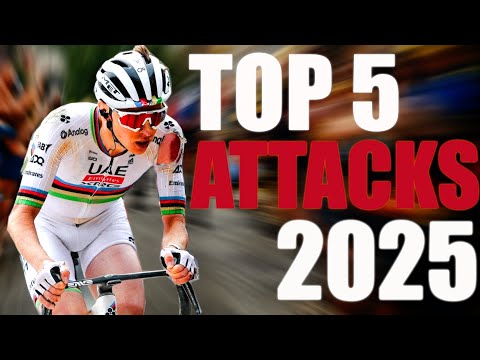
Tadej Pogacar’s Top 5 Attacks of 2025
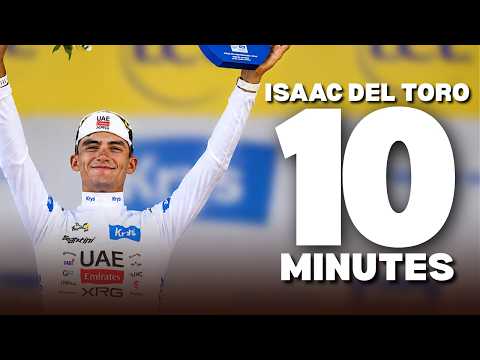
10 MINUTES of Isaac del Toro’s Best Highlights in Tour de France 2026
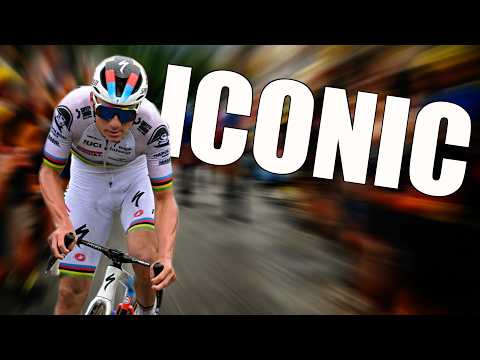
Remco Evenepoel’s Top 10 Most ICONIC Attacks
Chart basis: counts from Sport on Earth’s own carried data files at build time — verified videos carried for this sport (the verified pool: sport-videos.json + the desk league pools), news items carried (news.json), and league pages carried (desk.json). No external or estimated figures.
The filter sorts the Review Room embeds and the picture cards above by the keywords in their carried titles (review / analysis / recap and similar, or highlights). It runs entirely in your browser — nothing is sent anywhere.
Hall of Fame
UCI Hall of Fame
Administered by the Union Cycliste Internationale
57 inductees — every name on the hall's published list, grouped by class year.
Year not stated in the published list — Vittorio Adorni (Road) · Jacques Anquetil (Road) · Moreno Argentin (Road) · Federico Bahamontes (Road) · Ercole Baldini (Road) · Félicia Ballanger (Track) · Gino Bartali (Road) · Alfredo Binda (Road) · Louison Bobet (Road) · Gianni Bugno (Road) · Maria Canins (Road) · Eugène Christophe (Road) · Fausto Coppi (Road) · Erik De Vlaeminck (Cyclo-cross) · André Dufraisse (Cyclo-cross) · Urs Freuler (Track) · Maurice Garin (Road) · Charly Gaul (Road) · Felice Gimondi (Road) · Bernard Hinault (Road) · Michael Hübner (Track) · Miguel Indurain (Road) · Jan Janssen (Road) · Sean Kelly (Road) · Ferdinand Kübler (Road) · Hennie Kuiper (Road) · André Leducq (Road) · Greg LeMond (Road) · Lucien Lesna (Road) · Roland Liboton (Cyclo-cross) · Jeannie Longo (Road) · Renato Longo (Cyclo-cross) · Antonin Magne (Road) · Freddy Maertens (Road) · Fiorenzo Magni (Road) · Antonio Maspes (Track) · Eddy Merckx (Road) · Daniel Morelon (Track) · Francesco Moser (Road) · Ned Overend (Mountain bike) · Raymond Poulidor (Road) · Stephen Roche (Road) · Michel Rousseau (Track) · Giuseppe Saronni (Road) · Jef Scherens (Track) · Briek Schotte (Road) · Georges Speicher (Road) · Major Taylor (Track) · Klaus-Peter Thaler (Cyclo-cross) · Philippe Thys (Road) · Rik Van Looy (Road) · Rik Van Steenbergen (Road) · Rolf Wolfshohl (Cyclo-cross) · Arie van Vliet (Track) · Arthur Augustus Zimmerman (Track) · Joop Zoetemelk (Road) · Albert Zweifel (Cyclo-cross)
Source basis: Wikipedia — "UCI Hall of Fame" (accessed Nov 1, 2026); parsed mechanically from the article’s published table. Material from Wikipedia is used under CC BY-SA 4.0..
Full inductee profiles → 55 of the 57 inductees above carry a full verified profile — biography, induction record and verified video where one exists. The rest are list-only until a biography can be verified the same way.
📖 Cycling — Tactics & Strategy — every entry, plus the arcade strategy, at the foot of this page.
Cycling Arcade — Launch Lab
An arcade take on Cycling: set the angle, set the power, and land the practice pod in the far marker. Five attempts; the closer to the middle, the more it scores. Arcade distances and a training arc — a game in the spirit of the sport, not a simulation of it. Cycling has no thrown object of its own, so the pod stands in — the launch, the arc and the landing are the game.
More ways to play Cycling
This page’s own game is the arcade above. Everything else on the site that fits this sport is listed here — and anything borrowed from a similar sport is labelled as that sport’s game, never passed off as this one’s.
- Quiz track — 6 questions on Cycling, drawn from this site's own record for the sport: Quiz Tracks (choose “Cycling”).
- Top Sport on Earth — Cycling is one of the 455 sport cards in the SPORTS deck: play Top Sport on Earth.
- A similar sport’s game — Cycling has no thrown object of its own, so for a game built around a real implement, play Athletics (Track & Field) Arcade — The Throw, the game of Athletics (Track & Field), a similar sport in the same family. It is Athletics (Track & Field)’s game, offered here as the similar-sport option — not a Cycling game.
- Everything else the site runs lives on the Games hub.
Sport on Earth Arcade — Cycling games
Click to play — the game loads from the provider only when you press Play (verified to load and play on 2 November 2026). Open a game to play it here, or browse the whole collection in the Sport on Earth Arcade.
Play Mountain Bike Xtreme
Training by attribute
This sport's demands, broken down by attribute — the attributes it trains, why it demands them, and a sample week built from published coaching sources (general information, not medical advice): Training by Attribute — Cycling.
On screen
7 verified documentaries, films and series about this sport are listed in the site's screen guide: Sport on Screen — Cycling.
Tools for Cycling
The tools on this site that honestly run on Cycling — its own record first, then the site-wide general tools that apply. The full Cycling toolkit prints the ones that do not apply, with the data reason why.
Tools that run on Cycling’s own record
- You Are the Referee — Branching decision trees built from this sport’s own rule-changes dossier, each ruling cited to its rule.
- Signals in the Record — The officials’ signals extracted from the rule dossiers, this sport’s included where its dossier documents them.
- Venue Profiles — The venue directories the site carries name 29 venues for this sport, with the flagship grounds documented from the structured record.
General tools that also apply
Site-wide tools, not built for Cycling alone: Tournament Planner · My Notebook · The Labs · Design Studio · The Makers’ Bench · Match Day Desk · Play It Near You · Myth-Check Desk · Governing Bodies · Heat & Safety Calculator (WBGT) · Hydration Calculator · Training-Load Planner · Game Clock & Timer · Custom Rulebook Generator · Scout Notes Parser.
Player & referee associations
Officials: UCI Commissaires (federation arm) — Cycling’s race officials are commissaires who act as official representatives of the UCI, with international commissaire status awarded only by the UCI after training, examinations and shadowing, and events run by a commissaires panel led by its president.
Verified associations for this sport, from the sources listed on the players' associations and referees' associations pages.
Cycling — Tactics & Strategy
Tactics & Strategy — this sport’s book
road cycling’s book is the richest in endurance sport — a team game played at 45 km/h where the peloton’s physics (the draft) creates tactics no solo sport can imitate.
12 entries, plus the arcade strategy below. All wording is original coaching-vocabulary prose; nothing is copied from any proprietary playbook.
The Draft (the Peloton’s Physics)
A rider in the bunch spends a third less energy than the rider in the wind: everything in road racing — breaks, chases, sprints — is the economics of that saving, spent and hoarded by teams.
When it’s used: The draft is cycling’s ball: you cannot understand a single play without it.
The sequence
- Position in the first thirty of the bunch is the race’s rent — paid in constant small efforts.
- The echelon (the bunch fanned diagonally in a crosswind) is the draft’s geometry under attack: riders who miss the fan are in another race.
- A solo rider into a headwind is a donation; the books price him in minutes per hour.
The Breakaway and the Chase
A small group escapes; the peloton calculates its danger to the minute and the chase is organised by the teams with the most to lose — the break’s survival is a negotiation conducted at threshold power for hours.
When it’s used: The break and the chase are one play read from two ends.
The sequence
- The break cooperates until it doesn’t: the last 20 kilometres dissolve the alliance by increments.
- The chase’s arithmetic is public — a minute per ten kilometres is the peloton’s rough exchange rate into a headwind’s honesty.
- A break with a rider from every strong team is allowed to live; a break missing one is chased by that one’s whole squad.
The Sprint Train (Lead-Out)
The sprinter is delivered by a train of team-mates who ride themselves empty in sequence, each faster and shorter than the last, until the sprinter launches at 200 metres with the wind already broken for him.
When it’s used: The lead-out is a set play at 65 km/h, with human beings as its moving parts.
The sequence
- The train forms in the last ten kilometres and defends its position like a break in reverse.
- The last lead-out man is chosen for the final 500 metres’ violence; the sprinter’s launch is his obituary as a factor in the race.
- A sprinter who launches at 250 is brave; at 150, late; the train’s timing is the difference and it is rehearsed all winter.
The General Classification Game (GC Craft)
The stage race’s yellow jersey is defended by a team’s whole structure: domestiques fetch, pace and shelter; the leader spends nothing he can delegate; time is taken on the days the course favours him and defended on the days it doesn’t.
When it’s used: GC racing is chess over three weeks with the board reprinted daily.
The sequence
- The mountain stages are where time is made; the flat stages are where it is lost to a moment’s inattention — the leader’s vigilance is priced accordingly.
- Time bonuses, crosswind days and the short time trial all enter the leader’s calculus differently from the stage hunter’s.
- The third week is a separate race: the leader’s team is selected for it in the winter’s planning.
The Domestique System (the Team’s Economy)
Cycling is the only sport where most of the team exists to lose on purpose: domestiques carry bottles, give up wheels, pace the leader and chase — a labour economy whose stars are measured by their leaders’ wins.
When it’s used: The domestique is the play made flesh: a person as a tactic.
The sequence
- A wheel given up in a puncture saves minutes a chase cannot.
- The bottle run (back to the car, up through the bunch, laden) is the domestique’s visible shift; the invisible one is the wind he eats all day.
- Great teams are priced by their fifth rider, not their first.
The Mountain Stage (the Climbers’ Order)
In the high mountains the race becomes a climbing order: the teams set a tempo that sheds riders by category, the lieutenants burn off in sequence, and the leaders’ attacks are launched from the last lieutenant’s wheel.
When it’s used: The mountain is a filter with a schedule; the play is arriving at its steepest hour with your team intact.
The sequence
- Tempo riding (the ’train’ on a climb) is an attack by arithmetic: the pace that sheds everyone but the leaders, without a single acceleration.
- The attack is timed for the gradient’s steepest change or the rival’s known bad altitude, never for the cameras’ convenience.
- Descents are raced: a minute can be taken by the brave and the skilled, and the books count descending as a weapon, not a rest.
The Time Trial (the Race of Truth)
Alone against the clock, the time trial is pacing made visible: the effort is distributed by power meter and by feel — negative splits are the doctrine, and the aero position is a tax paid in watts saved.
When it’s used: No draft, no lies: the time trial is the sport’s confession.
The sequence
- The start is deliberately restrained — the trial is lost in its first five minutes by the eager.
- Corners are rehearsed from the reconnaissance: each is a second’s decision made the day before.
- The pacing plan is set by the course’s segments, not by the average: wind and gradient re-price every kilometre.
The Classics (Cobbles, Walls and Weather)
The one-day classics are won by position at the decisive sectors — the cobbled climb, the narrow lane, the crosswind plain: the race is a hundred small races to be in front at ten addresses.
When it’s used: In the classics, the course is the opponent and the start list is its weather.
The sequence
- The sector entries are raced like finishes: the team that enters the cobbles twentieth spends its leader’s legs for an hour.
- Mechanicals at the sector are the classics’ roulette: the spare bike’s position is a tactic decided in the team car.
- The early break in a classic is a move in a longer game — the favourites’ teams let it go to spend it later.
The Attack’s Timing (the ’Bridge’ and the Counter)
Attacks are timed to the race’s dead moments — just after a chase is caught, over a climb’s crest, in the feed zone’s edge of legality: the counterattack, launched as the caught break’s chasers sit up, is the sport’s classic dagger.
When it’s used: The moment after a catch is the peloton’s weakest second; champions live there.
The sequence
- The bridge (a solo chase to the break) is priced by the wind and the break’s cooperation: a minute is bridgeable, two is a fantasy.
- Attacks in the last kilometre of a climb spend the descent as their second half.
- The sit-up (the bunch’s collective breath after a catch) is a sound every winner can hear.
The Sprint’s Chaos (Position and the Rail)
Bunch sprints are a fight for the last wheel and the last gap: the sprinter’s craft is positioning under contact, reading the rails and the wind’s side, and holding a line the commissaires will defend.
When it’s used: The sprint begins five kilometres out; the last 200 metres merely publish its result.
The sequence
- The wind’s side is the sprint’s shelter: trains form on the lee side and launch across it.
- A sprinter boxed at 300 metres has lost a race he was fast enough to win — positioning is speed.
- The throw at the line (the bike thrown forward) is a whole technique, worth a tyre’s width and practiced like one.
Track Cycling’s Book (the Velodrome)
On the track, the sports multiply: the match sprint is a chess duel at walking pace then 70 km/h; the keirin hides behind a pacing motorbike; the Madison is a relay of hand-slings; the team pursuit is a four-rider machine with exchanges like a train’s couplings.
When it’s used: The velodrome is cycling’s laboratory, where its tactics are distilled.
The sequence
- The match sprint’s slow first laps are a negotiation for the rear position — the follower owns the sprint’s terms.
- The Madison’s hand-sling (partners throwing each other into the race) is the exchange that decides it: a botched sling is a lap’s funeral.
- The team pursuit’s changeovers are timed to the half-lap’s metre; the machine’s smoothness is its speed.
The Feed and the Car (Logistics)
Grand tour tactics run on logistics: the team car’s position in the convoy, the feed zone’s grab, the rain jacket delivered at the summit — races are lost in the caravan as surely as on the climbs.
When it’s used: The invisible race behind the race, with its own professionals.
The sequence
- The feed is taken at the car’s window or the zone’s line at full speed — a dropped bottle is a domestique’s extra hour of work.
- The convoy order (set by the standings) decides whose mechanical is reached first: position off the bike matters too.
- Radios (where allowed) make the car a second brain; where banned, the road captain’s authority is the book’s oldest chapter.
Playing the Game
Playing the Game — Launch Lab
The arcade cell · strategy
This page’s arcade cell: launch the practice pod at the far marker from the far marker · 48 m (arcade scale). Angle, power, launch — five attempts, and the cell keeps your best.
When it’s used: On this page, in the Play section — and its strategy is the same craft as the book above it, miniaturised.
The sequence
- Set the angle first. The target is the far marker, the far marker · 48 m (arcade scale) — the angle is chosen for where the practice pod must finish, not where it starts.
- Set the power second, on the sweeping meter: the scoring zone is a band, not a point, so aim for the middle of the band you can repeat, not the edge you can imagine.
- Launch, and read the result like a rangefinder: every attempt tells you the cell’s wind — there is none, so a miss is a measurement error, and it is yours to correct on the next attempt.
- You have 5 attempts. Even splits: attempt three should look exactly like attempt one — that sameness is the skill.
- The cell’s own honesty line applies: arcade distances; a game, not a simulation.
Part of the Sport on Earth Playbooks — a book for every sport and every game on the site.
Behind the Play
Behind the Play · Full treatment — from this sport’s own record
Road, track, mountain bike, and BMX racing; road stage races reward overall time across days.
Behind the Play takes the decisive actions of Cycling apart: how the scoring play is built, which patterns the players are really running, and which rules remade the play into its modern shape.
The shape of the play
Road cycling’s rulebook is mostly race regulations and equipment codes; its single most consequential law was written in grief in 2003.
The patterns behind the play
- Pacing is the race: even effort beats heroic starts; distribute energy so the last quarter is your fastest quarter.
- Fuel is a schedule: carbohydrate and fluid are taken to plan, before hunger and thirst report the deficit.
- Train the limiter: identify the system that fails first — aerobic engine, threshold, economy, durability — and build training around it.
- Recovery is part of the program: adaptation happens between sessions, not during them.
- Durability is trainable: the late-race limiter is usually not basic speed but how much of it survives hours of fatigue.
- The course is an opponent: gradient, altitude, heat and surface decide what a performance is worth — times only compare within conditions.
Rules that remade the play
Mandatory Helmets (May 2003). After Kazakh rider Andrei Kivilev died of head injuries from a crash at Paris–Nice in March 2003, the UCI made helmets compulsory in professional racing (implemented within weeks, formalised that May), ending riders’ discretion at every level of the elite sport.
The bare-headed pro is now unthinkable; helmet design (and later, concussion protocols and race-neutralisation debates) is cycling’s standing safety frontier, all downstream of the 2003 mandate.
From this page’s Rule Changes & Named Rules dossier, where every entry names its source.
The moves in the book
- Pace
- Speed expressed as time per unit distance — the number endurance athletes actually train and race by.
- Split
- The time for a segment of a race; comparing splits shows how effort was distributed.
- Negative split
- Racing the second half faster than the first — the classic sign of a controlled, well-judged effort.
- Drafting
- Sheltering behind another athlete (or a pack) to cut air or water resistance — legal and central in cycling and open-water swimming, restricted in some triathlon formats.
- Cadence
- Turnover rate — strides, pedal revolutions or strokes per minute.
Source basis: this sport’s carried record on this page (verified record, rule-changes dossier, history datasets) and the play patterns of its family as written in the site’s guides. Nothing here is invented.