Episode 1 — Kobe, Verona and Borobudur headline a big Sunday of marathon racing
Ep. 1 — the week ending Saturday, November 21, 2026 · 1:32
Pages
On this page
Sport on Earth › Sports
Sport on Earth · Sport
42.195 km road races, with the World Marathon Majors.
Sport on Earth’s daily and weekly video shows for Marathon and Road Running — every episode, newest first.
Ep. 1 — the week ending Saturday, November 21, 2026 · 1:32
Every embed below was verified playable before listing — the network’s standing rule.
YouTube · World Athletics
YouTube · World Athletics
YouTube · BPN
YouTube · World Athletics
YouTube · Global Triathlon Network
YouTube · Ben Parkes
YouTube · Virtual Running Zone
YouTube · World Athletics
YouTube · European Athletics
YouTube · World Athletics
YouTube · World Athletics
YouTube · World Athletics
YouTube · NYC Walking Tours
YouTube · World Athletics
YouTube · European Athletics
YouTube · World Athletics
YouTube · World Athletics
YouTube · World Athletics
YouTube · Rory Linkletter, OLY
YouTube · BuzzFeedVideo
YouTube · Alena the Explorer
YouTube · ESPN
YouTube · Eduardo Ramalho
YouTube · IIIWheels
YouTube · DankoTheExplorer
YouTube · Eduardo Ramalho
YouTube · GreatSportsMoment
YouTube · RUN & TRACK
YouTube · RunArnoRun
YouTube · Lowan
YouTube · Get on the Run
YouTube · Popcornflix
YouTube · BBC Archive
YouTube · Warwick Runs
YouTube · Mesh TC
YouTube · The Watt Life and WhyWeRun
YouTube · Smash Sports
YouTube · boso
YouTube · Stash - Free Documentaries
YouTube · Epic Tales
YouTube · Without Limits Originals
YouTube · Kelp and Fern
YouTube · eXtreme
YouTube · Find Your Feet Films
YouTube · Karel Sabbe
YouTube · The Audacious Report
YouTube · Total Running Productionz
YouTube · It’s khuzaima
Pages
On this page
No game on this site is made specifically for Marathon and Road Running yet. The games below are the site's all-sport games, which honestly cover every sport — nothing from another sport has been dressed up as this sport's game.
A new set of questions every day, across every sport this site covers.
Real-athlete Top Sport on Earth decks built from the site’s verified board data.
Marathon and Road Running's lab is the Physics Lab section on this page — the applied physics of its sport family, with a computed interactive where one honestly fits.
Physics Arena — the general biomechanics & physics teaching sandbox, shared by every sport.
The homepage sport explorer also carries a general Lab tab of small interactive experiments.
Calendar data not yet carried for Marathon and Road Running — this site does not yet hold schedule data for it, so no dates are shown rather than invented.
Which section of this page should we expand first?
Votes are counted on the Sport on Earth server and the totals shown are every reader’s votes; your own choice is remembered in this browser.
Sport on Earth does not yet hold verified dated events for Marathon and Road Running, and its carried record does not state the season's timing in words — so no calendar is shown rather than an invented one. What the site does carry for this sport is on this page: its verified record, its rules record and its history.
Above modest speeds, air resistance is the main cost of endurance sport: drag force grows with the square of speed, and the power to overcome it with the cube — doubling speed takes roughly eight times the power against the air. The calculator below shows drag and power against speed for air and water with the model’s assumptions printed (standard densities, a fixed drag-area you set).
In water the same equation bites a thousand times harder per unit speed because water is about 800 times denser than air — which is why streamlining, not strength, is the first skill of swimming, and why drafting behind another athlete is worth so much in both media.
From this sport's own record: 42.195 km road races, with the World Marathon Majors. The lab above treats the physics of the sport's family; no measurement specific to this sport is printed, because the site's verified record for it carries none — parameters are never invented to fill a lab.
Model: drag force F = ½·ρ·CdA·v²; power against drag P = F·v. Assumptions: constant drag area, no waves, no rolling or internal resistance — drag only. CdA is the athlete-and-equipment drag area: a tucked cyclist is roughly 0.2–0.3 m²; treat other values as exploration, not measurement.
The general teaching sandbox for every sport is the Physics Arena on the Games page — the same printed models, with a defender added.
The hands-on lab for Marathon and Road Running, built entirely from the record this site carries for it — its documented rolls, its halls, its venues, its calendar and its census family. Every figure below is computed from that carried record at build time; nothing is estimated and nothing is pulled live. The companion Physics Lab on this page works the family's physics; this lab works the record.
The honest position: the record this site carries for Marathon and Road Running is thin — no documented roll, hall, venue set or dated calendar is carried for it yet — so this entry’s lab is its family lab: the computed census of the family it belongs to. When the record grows, the lab grows with it; nothing here is estimated to fill the space.
Computed from the site census: the Endurance sports family holds 29 entries on this site. Across the family, the carried record includes documented rolls for 1 of them, Hall of Fame data for 3, venue sets for 3, and dated calendars for 4.
Every other entry in the family: Adventure Racing · Athletics (Track & Field) · Bed Racing · Competitive Eating · Cooper’s Hill Cheese-Rolling · CrossFit · Cycling · Firefighter Combat Challenge · Heiné Kuputisü · Hyrox · Jump Rope · Kick Stick Racing · Lari Balok · Make the Stick Jump · Modern Pentathlon · Mountaineering · Ninja Warrior · Nordic Walking · Obstacle Course Racing · Orienteering · Quadrobics · Ringolevio · Tau’a · Tower Running · Triathlon · Ultrarunning and Trail Racing · Wife Carrying · Xikrin Log Race
Basis: the Sport on Earth census itself — the same 460-entry register the census page prints.
The sponsorship record of Marathon and Road Running — title sponsors, jersey and kit deals, venue naming rights, firsts and record deals — from published sources only. Current deals are tracked on the Money Desk sponsorship page.
Abbott became the World Marathon Majors' first-ever title sponsor, with the series renamed the Abbott World Marathon Majors starting in 2015. At launch the series comprised Tokyo, Boston, London, Berlin, Chicago and New York City marathons, and Abbott has now been title sponsor for more than a decade.
The New York City Marathon was called the ING New York City Marathon from 2003 to 2014. Tata Consultancy Services (TCS) became its title sponsor and NYRR's year-round premier partner in 2014, renaming it the TCS New York City Marathon, and later renewed through 2029.
TCS anchors its endurance strategy as title partner for five of the seven Abbott World Marathon Majors in the mid-2020s, including the TCS London Marathon, TCS New York City Marathon and TCS Sydney Marathon, after first sponsoring a marathon in Amsterdam in 2011.
Sponsorship sources: World Marathon Majors · New York Road Runners · Tata Group
How this game is played, gathered from the record Sport on Earth already carries for Marathon and Road Running, with the positions taken from the sourced chart cited in that section.
Sport on Earth carries no separate rules list for Marathon and Road Running; the governing framework its record carries is this:
Road running is governed by World Athletics (label races, course measurement and record-ratification rules) and race organisers. Its one modern legal frontier is already told on the Athletics page: the 2020 shoe-technology rules govern marathon footwear too (the Vaporfly/Alphafly era and its regulation came from road racing). Athlete eligibility, prize and drafting rules vary by race and no single further dated law change is carried here.
Marathon and Road Running has no fixed positions — its format designates no positional roles.
Format as carried in hidden_files/batchB-nov1/batchb_data.json: "42.195 km road races, with the World Marathon Majors." The format carries no designated positional roles. (Source: Sport on Earth carried sport record.)
Its Tactics & Strategy book — its opening entries, the basic plays, are:
The full book carries 10 entries — in this page’s Playbook / Tactics & Strategy section, and at the Playbooks hub.
Sport on Earth's own analytics: every figure in this panel is computed at build time from the record this site itself carries, with the source named. No outside data is used, and no betting figures of any kind.
Census arithmetic: Marathon and Road Running sits in the endurance sports family — 29 census sports, of which 2 carry a qualifying champions roll in the site's record.
The carried record for Marathon and Road Running is too thin for computed panels: no champions roll, hall-of-fame list or venue record is carried for it. This panel therefore prints the census arithmetic only — the honest answer rather than a manufactured figure.
How the laws of Marathon and Road Running are governed today — the documented record, stated plainly.
Road running is governed by World Athletics (label races, course measurement and record-ratification rules) and race organisers. Its one modern legal frontier is already told on the Athletics page: the 2020 shoe-technology rules govern marathon footwear too (the Vaporfly/Alphafly era and its regulation came from road racing). Athlete eligibility, prize and drafting rules vary by race and no single further dated law change is carried here.
That framework summary is the whole documented record Sport on Earth can verify for this sport — no major dated rule changes are carried, rather than invent any.
Source basis: The governing body’s published framework as summarised in this section (see the framework text).
Sport on Earth carries no results feed for Marathon and Road Running: no scores or fixtures are published here, rather than inventing them. The sport's documented record is in its history page and the History & Records section of this page.
The historical record for Marathon and Road Running — past standings, champions, title history and all-time leaders, as deep as verifiable public records go.
Season-by-season standings, historical player statistics and title rolls are not carried for Marathon and Road Running: no public archive publishes them in a form Sport on Earth can verify, and this site does not invent history. What is carried for this sport is its verified record, its rule-change history and its league history — elsewhere on this page.
The review and analysis videos from Marathon and Road Running’s verified video pool — every embed below was identity-checked and probed playable before listing, the site’s standing rule. Nothing here is a show Sport on Earth produces; these are the review, post-game and breakdown videos the pool already carries for this sport.
YouTube · Abbott World Marathon Majors

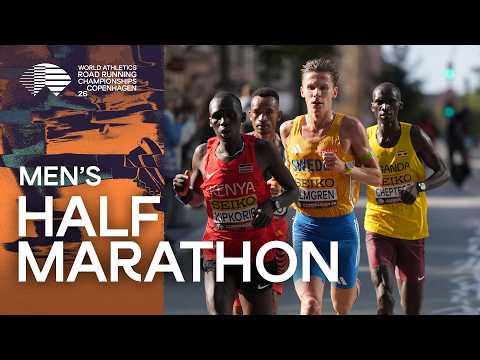
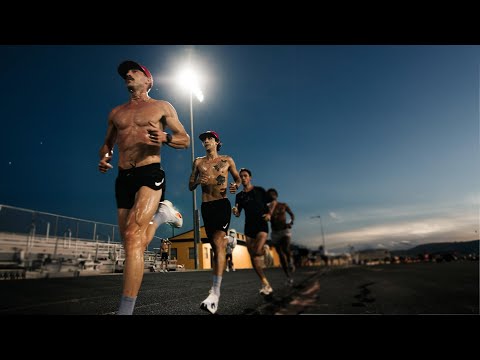
The filter sorts the Review Room embeds and the picture cards above by the keywords in their carried titles (review / analysis / recap and similar, or highlights). It runs entirely in your browser — nothing is sent anywhere.
No hall of fame with a published inductee list is carried for Marathon and Road Running. Sport on Earth does not invent halls or inductees: where a recognised hall publishes its list in a form this site can carry, the full list will appear here with its source named.
42.195 km road races, with the World Marathon Majors.
In the wider endurance family of sports — drag is the tax on every metre, the game turns on: Pacing is the race: even effort beats heroic starts; distribute energy so the last quarter is your fastest quarter.; Fuel is a schedule: carbohydrate and fluid are taken to plan, before hunger and thirst report the deficit.; Train the limiter: identify the system that fails first — aerobic engine, threshold, economy, durability — and build training around it.; Recovery is part of the program: adaptation happens between sessions, not during them.; Durability is trainable: the late-race limiter is usually not basic speed but how much of it survives hours of fatigue.; The course is an opponent: gradient, altitude, heat and surface decide what a performance is worth — times only compare within conditions..
Sport on Earth carries no team or player directory for this sport, because no structured public feed publishes a verifiable one. What is carried is the documented record on this page — history, rules, honours and the calendar — each with its source named.
The Marathon and Road Running record book is still thin: beyond the standings, rules and calendar layers on this page, no verified winners roll or honours list is carried yet. The desk adds record material only when a published source can be named for it — never from memory or invention.
More from the desk: the expert guide to Marathon and Road Running · the site-wide Writing Desk · every sport on Earth.
📖 Marathon and Road Running — Tactics & Strategy — every entry, plus the arcade strategy, at the foot of this page.
An arcade take on Marathon and Road Running: set the angle, set the power, and land the practice pod in the far marker. Five attempts; the closer to the middle, the more it scores. Arcade distances and a training arc — a game in the spirit of the sport, not a simulation of it. Marathon and Road Running has no thrown object of its own, so the pod stands in — the launch, the arc and the landing are the game.
This page’s own game is the arcade above. Everything else on the site that fits this sport is listed here — and anything borrowed from a similar sport is labelled as that sport’s game, never passed off as this one’s.
The tools on this site that honestly run on Marathon and Road Running — its own record first, then the site-wide general tools that apply. The full Marathon and Road Running toolkit prints the ones that do not apply, with the data reason why.
No bench tool yet computes from Marathon and Road Running’s own carried record — the general tools below are the ones that honestly apply.
Site-wide tools, not built for Marathon and Road Running alone: Tournament Planner · My Notebook · The Labs · Design Studio · The Makers’ Bench · Match Day Desk · Play It Near You · Myth-Check Desk · Governing Bodies · Heat & Safety Calculator (WBGT) · Hydration Calculator · Training-Load Planner · Game Clock & Timer · Custom Rulebook Generator · Scout Notes Parser.
Tactics & Strategy — this sport’s book
the distance family’s shared book — marathon and road running, ultrarunning and trail, tower running, Nordic walking and their kin: pacing is their formation, fuelling their substitution bench.
10 entries, plus the arcade strategy below. All wording is original coaching-vocabulary prose; nothing is copied from any proprietary playbook.
The distance runner’s founding doctrine: the second half run at the first half’s pace (even) or faster (negative) — because a fast start is repaid with interest the body always collects.
When it’s used: Pacing is the distance game’s formation: invisible, and it decides everything.
The sequence
At 30 kilometres the body’s glycogen is spent: the marathon’s second race is metabolic — fuelling during the run (gels, drinks, the stomach’s training) is a tactic rehearsed like a pit strategy.
When it’s used: The wall is a fuel gauge, not a fitness verdict; the books plan for its address.
The sequence
Road races are pack sports: a group shares the wind and the pacing, and the lone runner pays full price — the pack is selected as carefully as a cycling break, and for the same physics.
When it’s used: The marathon’s packs are its teams of the day, assembled by pace and dissolved by ambition.
The sequence
On trails and at ultra distances, the book changes: walk the climbs by strategy, run the descents by skill, eat like it’s your job, and treat the aid station as a pit stop with a crew and a checklist.
When it’s used: Ultra’s tactics are logistics wearing shoes: the race is a supply problem solved at speed.
The sequence
Tower running is a vertical sprint of hundreds of storeys: the tactics are the start’s spacing, the handrail’s pull on the turns, and a pacing curve that treats the building as a hill with landings.
When it’s used: The stairwell is a course with a hundred corners, all of them left turns (usually).
The sequence
Nordic walking’s races are technique-policed: the poles must plant and drive, one foot must touch, and the judges watch the walk’s honesty like race walking’s do — speed is built inside the technique’s letter.
When it’s used: A young championship book, written under its federation’s rulebook.
The sequence
Wife carrying’s championship course has defined obstacles — the water trap, the log hurdles — and defined carries (the fireman’s, the piggyback, the Estonian carry, legs over the carrier’s shoulders, head down his back): the course is run as a steeplechase with a partner.
When it’s used: The carry is chosen by the pair’s geometry, and the Estonian carry is the course’s famous answer.
The sequence
Distance racing’s venues write chapters of the book: heat is raced by core temperature management, altitude by blood and patience, and the championship marathon’s tactics are a negotiation with the weather before the runners.
When it’s used: The environment is the field’s strongest team in half the calendar’s races.
The sequence
Even in the longest races, the finish is a kick: the last mile’s surge is launched from the body’s remaining account, and the veteran knows his account’s balance to the stride.
When it’s used: Every distance race ends as a sprint whose length is the whole race.
The sequence
Obstacle racing, adventure racing and their kin borrow this book and add their own: burpee economies for failed obstacles, sleep strategy in expedition racing (where the fastest team is often the one that sleeps least badly), and navigation errors priced in hours.
When it’s used: The variants’ chapters, honestly appended to the family book.
The sequence
The arcade cell · strategy
This page’s arcade cell: launch the practice pod at the far marker from the far marker · 48 m (arcade scale). Angle, power, launch — five attempts, and the cell keeps your best.
When it’s used: On this page, in the Play section — and its strategy is the same craft as the book above it, miniaturised.
The sequence
Part of the Sport on Earth Playbooks — a book for every sport and every game on the site.
Behind the Play · From the carried record
42.195 km road races, with the World Marathon Majors.
Behind the Play takes the decisive actions of Marathon and Road Running apart: how the scoring play is built, which patterns the players are really running, and which rules remade the play into its modern shape.
Source basis: this sport’s carried record on this page (verified record, rule-changes dossier, history datasets) and the play patterns of its family as written in the site’s guides. Nothing here is invented.