FREERIDE: NO SECOND RUN | Episode 1: CALCULATED RISK
YouTube · FIS Freeride World Tour by Peak Performance and 3 more
Pages
On this page
Sport on Earth › Sports
Sport on Earth · Sport
Big-mountain skiing judged on line choice.
Every embed below was verified playable before listing — the network’s standing rule.
YouTube · FIS Freeride World Tour by Peak Performance and 3 more
YouTube · Red Bull Snow and Kai Jones
YouTube · Red Bull
Pages
On this page
No game on this site is made specifically for Freeride Skiing yet. The games below are the site's all-sport games, which honestly cover every sport — nothing from another sport has been dressed up as this sport's game.
A new set of questions every day, across every sport this site covers.
Real-athlete Top Sport on Earth decks built from the site’s verified board data.
Freeride Skiing's lab is the Physics Lab section on this page — the applied physics of its sport family, with a computed interactive where one honestly fits.
Physics Arena — the general biomechanics & physics teaching sandbox, shared by every sport.
The homepage sport explorer also carries a general Lab tab of small interactive experiments.
Calendar data not yet carried for Freeride Skiing — this site does not yet hold schedule data for it, so no dates are shown rather than invented.
Which section of this page should we expand first?
Votes are counted on the Sport on Earth server and the totals shown are every reader’s votes; your own choice is remembered in this browser.
Sport on Earth does not yet hold verified dated events for Freeride Skiing, and its carried record does not state the season's timing in words — so no calendar is shown rather than an invented one. What the site does carry for this sport is on this page: its verified record, its rules record and its history.
Winter sports exist because ice and snow offer the lowest-friction surfaces in everyday life: a steel blade on ice can have a friction coefficient around 0.003–0.01 (a thin pressure/friction-melted water layer lubricates it), a waxed ski on snow typically more. The calculator below turns that into stopping distances — pick a friction coefficient and a speed, and see how far the slide runs: v²/(2μg). Assumptions printed: flat surface, constant μ, no air resistance.
Turning is controlled friction: an edged ski or skate bites to create a centripetal force, and carving keeps that force smooth where skidding wastes it as heat and spray. Waxing, base structure and edge tuning are applied tribology — the science of friction — practised the night before the race.
From this sport's own record: Big-mountain skiing judged on line choice. The lab above treats the physics of the sport's family; no measurement specific to this sport is printed, because the site's verified record for it carries none — parameters are never invented to fill a lab.
Model: stopping distance d = v²/(2·μ·g), g = 9.81 m/s²; the maximum friction force is μ × the load. Assumptions: flat surface, constant μ, no air resistance, no braking technique — a pure physics floor/ceiling for the slide. Typical published ranges: steel blade on ice ≈ 0.003–0.01; waxed ski on snow ≈ 0.03–0.1; road tyre on dry asphalt ≈ 0.7–1.0. Explore the range; do not read a single value as a measurement of any real surface.
The general teaching sandbox for every sport is the Physics Arena on the Games page — the same printed models, with a defender added.
The hands-on lab for Freeride Skiing, built entirely from the record this site carries for it — its documented rolls, its halls, its venues, its calendar and its census family. Every figure below is computed from that carried record at build time; nothing is estimated and nothing is pulled live. The companion Physics Lab on this page works the family's physics; this lab works the record.
The honest position: the record this site carries for Freeride Skiing is thin — no documented roll, hall, venue set or dated calendar is carried for it yet — so this entry’s lab is its family lab: the computed census of the family it belongs to. When the record grows, the lab grows with it; nothing here is estimated to fill the space.
Computed from the site census: the Winter sports family holds 35 entries on this site. Across the family, the carried record includes documented rolls for 0 of them, Hall of Fame data for 4, venue sets for 14, and dated calendars for 0.
Every other entry in the family: Alpine Skiing · Arm Pull · Bandy · Biathlon · Blanket Toss · Bobsleigh · Broomball · Cross-Country Skiing · Ear Pull · Figure Skating · Freestyle Skiing · Grass Skiing · Ice Climbing · Ice Cross Downhill · Ice Stock Sport · Ice Yachting · Indian Stick Pull · Kneeling Jump · Knuckle Hop · Luge · Nordic Combined · One-Foot High Kick · Sandboarding · Short Track Speed Skating · Skeleton · Ski Jumping · Ski Mountaineering · Snow Snake · Snowboarding · Speed Skating · Telemark Skiing · Two-Foot High Kick · Yuki Gassen · Yukigassen
Basis: the Sport on Earth census itself — the same 460-entry register the census page prints.
The desk has not verified a sponsorship record for Freeride Skiing from published sources, so none is printed. Sponsorship history is added only when a real published source supports it — sponsor by sponsor, deal by deal. Current sponsorship deals across sport are tracked on the Money Desk sponsorship page.
How this game is played, gathered from the record Sport on Earth already carries for Freeride Skiing, with the positions taken from the sourced chart cited in that section.
Sport on Earth carries no separate rules list for Freeride Skiing; the governing framework its record carries is this:
Freeride skiing and snowboarding (the Freeride World Tour) is a judged format — riders scored on line choice, control, fluidity, technique and style on natural faces — under the FWT’s own code, taken into the FIS umbrella in recent seasons. Judged-format criteria, not match laws; no landmark dated change is carried for freeriding.
Freeride Skiing has no fixed positions — its format designates no positional roles.
Format as carried in hidden_files/batchB-nov1/batchb_data.json: "Big-mountain skiing judged on line choice." The format carries no designated positional roles. (Source: Sport on Earth carried sport record.)
Its Tactics & Strategy book — its opening entries, the basic plays, are:
The full book carries 7 entries — in this page’s Playbook / Tactics & Strategy section, and at the Playbooks hub.
Sport on Earth's own analytics: every figure in this panel is computed at build time from the record this site itself carries, with the source named. No outside data is used, and no betting figures of any kind.
Census arithmetic: Freeride Skiing sits in the winter sports family — 35 census sports, of which 1 carry a qualifying champions roll in the site's record.
The carried record for Freeride Skiing is too thin for computed panels: no champions roll, hall-of-fame list or venue record is carried for it. This panel therefore prints the census arithmetic only — the honest answer rather than a manufactured figure.
How the laws of Freeride Skiing are governed today — the documented record, stated plainly.
Freeride skiing and snowboarding (the Freeride World Tour) is a judged format — riders scored on line choice, control, fluidity, technique and style on natural faces — under the FWT’s own code, taken into the FIS umbrella in recent seasons. Judged-format criteria, not match laws; no landmark dated change is carried for freeriding.
That framework summary is the whole documented record Sport on Earth can verify for this sport — no major dated rule changes are carried, rather than invent any.
Source basis: The governing body’s published framework as summarised in this section (see the framework text).
Sport on Earth carries no results feed for Freeride Skiing: no scores or fixtures are published here, rather than inventing them. The sport's documented record is in its history page and the History & Records section of this page.
The historical record for Freeride Skiing — past standings, champions, title history and all-time leaders, as deep as verifiable public records go.
Season-by-season standings, historical player statistics and title rolls are not carried for Freeride Skiing: no public archive publishes them in a form Sport on Earth can verify, and this site does not invent history. What is carried for this sport is its verified record, its rule-change history and its league history — elsewhere on this page.
The review and analysis videos from Freeride Skiing’s verified video pool — every embed below was identity-checked and probed playable before listing, the site’s standing rule. Nothing here is a show Sport on Earth produces; these are the review, post-game and breakdown videos the pool already carries for this sport.
No verified review-show video is carried for this sport yet.
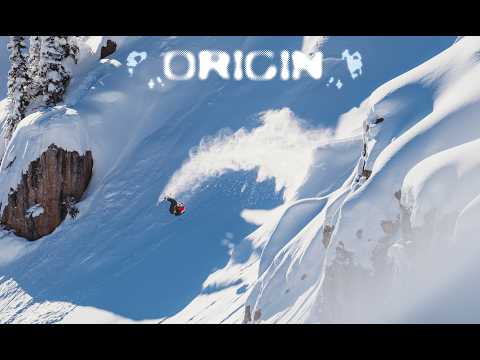

The filter sorts the Review Room embeds and the picture cards above by the keywords in their carried titles (review / analysis / recap and similar, or highlights). It runs entirely in your browser — nothing is sent anywhere.
No hall of fame with a published inductee list is carried for Freeride Skiing. Sport on Earth does not invent halls or inductees: where a recognised hall publishes its list in a form this site can carry, the full list will appear here with its source named.
Big-mountain skiing judged on line choice.
In the wider winter family of sports — engineered low friction — and its limits, the game turns on: The edge is the steering wheel: pressure and angle on the edge decide grip, turn and speed — everything else is commentary.; Line before speed: the fast line through gates or terrain is found slowly first, then skied or ridden at pace.; Wax and preparation are performance: friction is managed the night before as much as on the slope or track.; Cold changes everything: snow and ice temperature alter grip daily — elite performers adapt equipment and technique to the day’s surface.; Snow and ice are variables, not constants: the same course skis differently at −2° and at −15°, and wax and preparation answer for it.; Speed is a line problem first: the fastest descent is the shortest distance that keeps the edges gripping — bravado off the line is slower..
Sport on Earth carries no team or player directory for this sport, because no structured public feed publishes a verifiable one. What is carried is the documented record on this page — history, rules, honours and the calendar — each with its source named.
The Freeride Skiing record book is still thin: beyond the standings, rules and calendar layers on this page, no verified winners roll or honours list is carried yet. The desk adds record material only when a published source can be named for it — never from memory or invention.
More from the desk: the expert guide to Freeride Skiing · the site-wide Writing Desk · every sport on Earth.
📖 Freeride Skiing — Tactics & Strategy — every entry, plus the arcade strategy, at the foot of this page.
An arcade take on Freeride Skiing: set the angle, set the power, and land the skier in the landing zone. Five attempts; the closer to the middle, the more it scores. Arcade distances and a training arc — a game in the spirit of the sport, not a simulation of it.
This page’s own game is the arcade above. Everything else on the site that fits this sport is listed here — and anything borrowed from a similar sport is labelled as that sport’s game, never passed off as this one’s.
The tools on this site that honestly run on Freeride Skiing — its own record first, then the site-wide general tools that apply. The full Freeride Skiing toolkit prints the ones that do not apply, with the data reason why.
No bench tool yet computes from Freeride Skiing’s own carried record — the general tools below are the ones that honestly apply.
Site-wide tools, not built for Freeride Skiing alone: Tournament Planner · My Notebook · The Labs · Design Studio · The Makers’ Bench · Match Day Desk · Play It Near You · Myth-Check Desk · Governing Bodies · Heat & Safety Calculator (WBGT) · Hydration Calculator · Training-Load Planner · Game Clock & Timer · Custom Rulebook Generator · Scout Notes Parser.
Tactics & Strategy — this sport’s book
the ski family’s shared book — alpine racing’s line, freeride’s judged descent, telemark’s lunging turn and the grass and sand cousins who keep the book’s shape without its snow.
7 entries, plus the arcade strategy below. All wording is original coaching-vocabulary prose; nothing is copied from any proprietary playbook.
The race is won by the line — the path through the gates that trades the shortest distance against the highest speed: the ’high line’ enters a gate early to leave it fast, and inspection (walking the course before) is where the line is written.
When it’s used: Inspection is the racer’s film study, done on foot at walking pace for a race run at 130 km/h.
The sequence
Aerodynamics is a position: the tuck’s shape, the suit’s surface, the hands’ stillness — at downhill speeds the air is the main opponent, and the book prices every gesture in hundredths.
When it’s used: The downhill is a wind tunnel with a mountain inside it.
The sequence
Slalom is a rhythm event: the gates arrive faster than thought, so the run is a pattern — the cross-block (the outside hand clearing the pole) and the feet’s quickness are one technique, and losing the rhythm is the only real error.
When it’s used: A straddled gate or a rhythm lost costs the run; the slalom’s tactics are tempo management.
The sequence
Freeride is judged, not timed: the rider picks a line down a face — its difficulty, its exposure, its features — and is scored on line, control, fluidity, technique and air. The course walk is a creativity exam conducted through binoculars.
When it’s used: The only ski event where choosing the run IS the run’s first half.
The sequence
Telemark skiing turns on a lunge — the free heel lets the inside ski slide back, knee bent — and its races add skating, a jump whose landing must be telemarked, and a loom (a 360 banked turn): a technique preserved as a sport’s identity.
When it’s used: The telemark position is both the turn and the aesthetic: judges and rules police its depth.
The sequence
Grass skiing runs slalom courses on wheeled skis in summer; sandboarding descends dunes on boards waxed for grit: both keep the family’s book — the line, the edge, the fall — translated to surfaces that never melt and never forgive a fall the same way.
When it’s used: The cousins prove the book is about the descent, not the snow.
The sequence
Ski choice and preparation are tactics in every branch: flex and sidecut for the course, structure and wax for the snow’s temperature and wetness — the wax technician is the racing team’s unseen tactician.
When it’s used: More races are lost in the wax cabin than on the course, by the field’s own confession.
The sequence
The arcade cell · strategy
This page’s arcade cell: launch the skier at the landing zone from the K-point line · 50 m (arcade scale). Angle, power, launch — five attempts, and the cell keeps your best.
When it’s used: On this page, in the Play section — and its strategy is the same craft as the book above it, miniaturised.
The sequence
Part of the Sport on Earth Playbooks — a book for every sport and every game on the site.
Behind the Play · From the carried record
Big-mountain skiing judged on line choice.
Behind the Play takes the decisive actions of Freeride Skiing apart: how the scoring play is built, which patterns the players are really running, and which rules remade the play into its modern shape.
Source basis: this sport’s carried record on this page (verified record, rule-changes dossier, history datasets) and the play patterns of its family as written in the site’s guides. Nothing here is invented.