Ice Yachting - The fun and fear of 100kph
YouTube · The World Sailing Show
Pages
On this page
Sport on Earth › Sports
Sport on Earth · Sport
Iceboats — sailing craft on metal runners — race over ice, capable of speeds exceeding 60 miles per hour.
Every embed below was verified playable before listing — the network’s standing rule.
YouTube · The World Sailing Show
YouTube · Reuters Connect
YouTube · Yachting World
YouTube · Joanna dD
YouTube · Ryan Behan
YouTube · British Pathé
YouTube · Retroclips
YouTube · AP Archive
YouTube · Deb Whitehorse
YouTube · Cape Cod Maritime Museum
YouTube · Antique Boat Museum
YouTube · British Movietone
YouTube · British Pathé
YouTube · British Movietone
YouTube · British Pathé
YouTube · jrftempo119
YouTube · IceFlyingTim
YouTube · British Movietone
YouTube · 44Cup
YouTube · sdycsailing
YouTube · Sailing Everything and Anything
YouTube · Derek Grant
YouTube · Elgazin TV
YouTube · styleboston
YouTube · herbcrosby
YouTube · British Pathé
YouTube · The World Sailing Show
YouTube · 180DegreesExped
YouTube · The World Sailing Show
YouTube · The World Sailing Show
YouTube · Simonized213
YouTube · British Pathé
Pages
On this page
No game on this site is made specifically for Ice Yachting yet. The games below are the site's all-sport games, which honestly cover every sport — nothing from another sport has been dressed up as this sport's game.
A new set of questions every day, across every sport this site covers.
Real-athlete Top Sport on Earth decks built from the site’s verified board data.
Ice Yachting's lab is the Physics Lab section on this page — the applied physics of its sport family, with a computed interactive where one honestly fits.
Physics Arena — the general biomechanics & physics teaching sandbox, shared by every sport.
The homepage sport explorer also carries a general Lab tab of small interactive experiments.
Calendar data not yet carried for Ice Yachting — this site does not yet hold schedule data for it, so no dates are shown rather than invented.
Which section of this page should we expand first?
Votes are counted on the Sport on Earth server and the totals shown are every reader’s votes; your own choice is remembered in this browser.
Sport on Earth does not yet hold verified dated events for Ice Yachting, and its carried record does not state the season's timing in words — so no calendar is shown rather than an invented one. What the site does carry for this sport is on this page: its verified record, its rules record and its history.
Winter sports exist because ice and snow offer the lowest-friction surfaces in everyday life: a steel blade on ice can have a friction coefficient around 0.003–0.01 (a thin pressure/friction-melted water layer lubricates it), a waxed ski on snow typically more. The calculator below turns that into stopping distances — pick a friction coefficient and a speed, and see how far the slide runs: v²/(2μg). Assumptions printed: flat surface, constant μ, no air resistance.
Turning is controlled friction: an edged ski or skate bites to create a centripetal force, and carving keeps that force smooth where skidding wastes it as heat and spray. Waxing, base structure and edge tuning are applied tribology — the science of friction — practised the night before the race.
From this sport's own record: Iceboats — sailing craft on metal runners — race over ice, capable of speeds exceeding 60 miles per hour. The lab above treats the physics of the sport's family; no measurement specific to this sport is printed, because the site's verified record for it carries none — parameters are never invented to fill a lab.
Model: stopping distance d = v²/(2·μ·g), g = 9.81 m/s²; the maximum friction force is μ × the load. Assumptions: flat surface, constant μ, no air resistance, no braking technique — a pure physics floor/ceiling for the slide. Typical published ranges: steel blade on ice ≈ 0.003–0.01; waxed ski on snow ≈ 0.03–0.1; road tyre on dry asphalt ≈ 0.7–1.0. Explore the range; do not read a single value as a measurement of any real surface.
The general teaching sandbox for every sport is the Physics Arena on the Games page — the same printed models, with a defender added.
The hands-on lab for Ice Yachting, built entirely from the record this site carries for it — its documented rolls, its halls, its venues, its calendar and its census family. Every figure below is computed from that carried record at build time; nothing is estimated and nothing is pulled live. The companion Physics Lab on this page works the family's physics; this lab works the record.
The honest position: the record this site carries for Ice Yachting is thin — no documented roll, hall, venue set or dated calendar is carried for it yet — so this entry’s lab is its family lab: the computed census of the family it belongs to. When the record grows, the lab grows with it; nothing here is estimated to fill the space.
Computed from the site census: the Winter sports family holds 35 entries on this site. Across the family, the carried record includes documented rolls for 0 of them, Hall of Fame data for 4, venue sets for 14, and dated calendars for 0.
Every other entry in the family: Alpine Skiing · Arm Pull · Bandy · Biathlon · Blanket Toss · Bobsleigh · Broomball · Cross-Country Skiing · Ear Pull · Figure Skating · Freeride Skiing · Freestyle Skiing · Grass Skiing · Ice Climbing · Ice Cross Downhill · Ice Stock Sport · Indian Stick Pull · Kneeling Jump · Knuckle Hop · Luge · Nordic Combined · One-Foot High Kick · Sandboarding · Short Track Speed Skating · Skeleton · Ski Jumping · Ski Mountaineering · Snow Snake · Snowboarding · Speed Skating · Telemark Skiing · Two-Foot High Kick · Yuki Gassen · Yukigassen
Basis: the Sport on Earth census itself — the same 460-entry register the census page prints.
The desk has not verified a sponsorship record for Ice Yachting from published sources, so none is printed. Sponsorship history is added only when a real published source supports it — sponsor by sponsor, deal by deal. Current sponsorship deals across sport are tracked on the Money Desk sponsorship page.
How this game is played, gathered from the record Sport on Earth already carries for Ice Yachting, with the positions taken from the sourced chart cited in that section.
An iceboat, traditionally called an ice yacht, is a recreational or competition sailing craft supported on metal runners for travelling over ice, with one runner steerable. Because of low resistance to forward motion over ice, iceboats are capable of speeds exceeding 60 miles per hour and are used for both recreation and racing, with racing craft typically carrying one person.
The history of iceboating began in Europe where smooth ice was found in the bays of the Baltic Sea and the canals of the Netherlands during the Little Ice Age, initially for commerce before evolving into pleasure craft called ice yachts. Ice sailing came to North America, where the craft evolved into recreational and racing versions, first introduced on New York’s Hudson River in 1790.
The rules — the rules as this site's record carries them:
Ice Yachting has no fixed positions — its format designates no positional roles.
Format as carried in hidden_files/batchB-nov1/batchb_data.json: "Iceboats — sailing craft on metal runners — race over ice, capable of speeds exceeding 60 miles per hour." The format carries no designated positional roles. (Source: Sport on Earth carried sport record.)
Its Tactics & Strategy book — its opening entries, the basic plays, are:
The full book carries 6 entries — in this page’s Playbook / Tactics & Strategy section, and at the Playbooks hub.
Sport on Earth's own analytics: every figure in this panel is computed at build time from the record this site itself carries, with the source named. No outside data is used, and no betting figures of any kind.
Census arithmetic: Ice Yachting sits in the winter sports family — 35 census sports, of which 1 carry a qualifying champions roll in the site's record.
The carried record for Ice Yachting is too thin for computed panels: no champions roll, hall-of-fame list or venue record is carried for it. This panel therefore prints the census arithmetic only — the honest answer rather than a manufactured figure.
An iceboat, traditionally called an ice yacht, is a recreational or competition sailing craft supported on metal runners for travelling over ice, with one runner steerable. Because of low resistance to forward motion over ice, iceboats are capable of speeds exceeding 60 miles per hour and are used for both recreation and racing, with racing craft typically carrying one person.
The history of iceboating began in Europe where smooth ice was found in the bays of the Baltic Sea and the canals of the Netherlands during the Little Ice Age, initially for commerce before evolving into pleasure craft called ice yachts. Ice sailing came to North America, where the craft evolved into recreational and racing versions, first introduced on New York’s Hudson River in 1790.
A European ice sailing club formed first in Sweden in 1901, followed by the European Ice Yachting Union, which formed in 1928 with member states Latvia, Lithuania, Estonia, Sweden, Austria and Germany.
The first American Challenge Pennant occurred in 1881 on the Hudson River with five ice-yacht clubs competing, raced five times around a triangular course with one-mile legs.
The International DN is the most popular class in North America, Europe and Asia; its name derives from The Detroit News request in 1937 for a home-built iceboat design.
Boats as long as 69 feet sailed as fast as 107 miles per hour in 1885, a record exceeding any other conveyance at the time, set by the Icicle.
Ice yachting has no structured results feed this site can carry, so this page is the verified record only — its classes, the European Ice Yachting Union history and racing courses as verified in November 2026 — with no live results.
Sources, verified November 1, 2026: Ice yachting
Material from Wikipedia linked above is used under CC BY-SA 4.0.
How the laws of Ice Yachting are governed today — the documented record, stated plainly.
Ice yachting developed through club and class associations, including the European Ice Yachting Union formed in 1928 and the class associations for the DN, Skeeter and Monotype XV. Changes to boat design, from stern-steerers to front-steering craft in the 1930s, and to class sail limits have been refinements rather than dated landmark replacements of a single code. No major dated rule change is carried for ice yachting.
That framework summary is the whole documented record Sport on Earth can verify for this sport — no major dated rule changes are carried, rather than invent any.
Source basis: The governing body’s published framework as summarised in this section (see the framework text).
Sport on Earth carries no results feed for Ice Yachting: no scores or fixtures are published here, rather than inventing them. The sport's documented record is in its history page and the History & Records section of this page.
The historical record for Ice Yachting — past standings, champions, title history and all-time leaders, as deep as verifiable public records go.
Season-by-season standings, historical player statistics and title rolls are not carried for Ice Yachting: no public archive publishes them in a form Sport on Earth can verify, and this site does not invent history. What is carried for this sport is its verified record, its rule-change history and its league history — elsewhere on this page.
The review and analysis videos from Ice Yachting’s verified video pool — every embed below was identity-checked and probed playable before listing, the site’s standing rule. Nothing here is a show Sport on Earth produces; these are the review, post-game and breakdown videos the pool already carries for this sport.
No verified review-show video is carried for this sport yet.
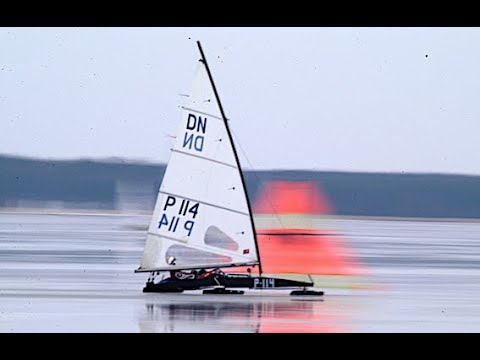

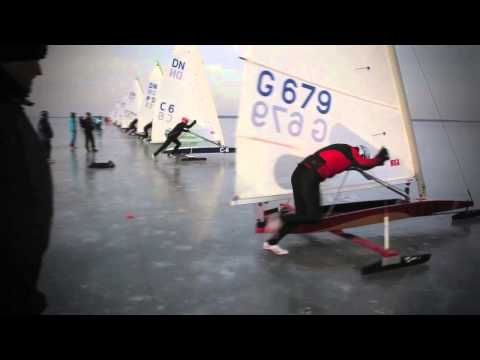
The filter sorts the Review Room embeds and the picture cards above by the keywords in their carried titles (review / analysis / recap and similar, or highlights). It runs entirely in your browser — nothing is sent anywhere.
No hall of fame with a published inductee list is carried for Ice Yachting. Sport on Earth does not invent halls or inductees: where a recognised hall publishes its list in a form this site can carry, the full list will appear here with its source named.
Iceboats — sailing craft on metal runners — race over ice, capable of speeds exceeding 60 miles per hour.
The format, from this sport's verified record:
The Ice Yachting record book is still thin: beyond the standings, rules and calendar layers on this page, no verified winners roll or honours list is carried yet. The desk adds record material only when a published source can be named for it — never from memory or invention.
More from the desk: the expert guide to Ice Yachting · the site-wide Writing Desk · every sport on Earth.
📖 Ice Yachting — Tactics & Strategy — every entry, plus the arcade strategy, at the foot of this page.
An arcade take on Ice Yachting: set the angle, set the power, and land the skier in the landing zone. Five attempts; the closer to the middle, the more it scores. Arcade distances and a training arc — a game in the spirit of the sport, not a simulation of it.
This page’s own game is the arcade above. Everything else on the site that fits this sport is listed here — and anything borrowed from a similar sport is labelled as that sport’s game, never passed off as this one’s.
The tools on this site that honestly run on Ice Yachting — its own record first, then the site-wide general tools that apply. The full Ice Yachting toolkit prints the ones that do not apply, with the data reason why.
No bench tool yet computes from Ice Yachting’s own carried record — the general tools below are the ones that honestly apply.
Site-wide tools, not built for Ice Yachting alone: Tournament Planner · My Notebook · The Labs · Design Studio · The Makers’ Bench · Match Day Desk · Play It Near You · Myth-Check Desk · Governing Bodies · Heat & Safety Calculator (WBGT) · Hydration Calculator · Training-Load Planner · Game Clock & Timer · Custom Rulebook Generator · Scout Notes Parser.
Tactics & Strategy — this sport’s book
the winter miscellany’s shared pages — the snow and ice sports whose own books follow in their extras: competitive ice climbing, ice cross, yuki gassen and ice yachting share a medium and a season, and borrow each other’s crafts.
6 entries, plus the arcade strategy below. All wording is original coaching-vocabulary prose; nothing is copied from any proprietary playbook.
Every sport in this miscellany is played on a surface that changes by the hour: the ice’s temperature, the snow’s wetness, the wind’s work on both — the reading of the medium is the family’s shared first skill.
When it’s used: The winter athlete is a meteorologist with a start time.
The sequence
Cold is a physiological opponent: the extremities’ protection, the warm-up’s timing (too early is as costly as too late), and the clothing systems are tactics in every sport shelved here.
When it’s used: The winter warm-up is a race against the athlete’s own cooling: it is timed to the start like a rocket window.
The sequence
Most of this miscellany began as festival folk sport — snowball fights codified in Japan, ice races on Dutch canals, snow games at winter carnivals — and keeps its festivals as its championships’ heartlands.
When it’s used: The folk winter’s events carry their villages with them: the championship is a homecoming with a start list.
The sequence
The winter miscellany builds its venues from the season itself — snow shelters for yuki gassen, ice walls for the climbers, a frozen lake’s measured course for the yachts: the venue is a construction project with a thaw for a deadline.
When it’s used: An ice venue is a building with a demolition date set by the sun.
The sequence
Ice yachts sail faster than the wind itself by apparent-wind sailing: the craft (a DN or a skeeter) accelerates until its own motion makes the wind it sails on, and the race’s tactics are sailing’s at three times the speed and a tenth of the reaction time.
When it’s used: The fastest sailing on earth happens on frozen lakes, at highway speed, inches above the ice.
The sequence
The ice yacht’s runners are its tyres and its skates in one: three blades, sharpened and aligned (the ’runner chatter’ at speed is a set-up confession), chosen for the ice’s temperature like a slider’s steel — the DN class’s one-design rules make the steel and the sailor the only variables.
When it’s used: The one-design’s purity is the ice yacht’s gift: the fastest sailor wins, measurably.
The sequence
The arcade cell · strategy
This page’s arcade cell: launch the skier at the landing zone from the K-point line · 50 m (arcade scale). Angle, power, launch — five attempts, and the cell keeps your best.
When it’s used: On this page, in the Play section — and its strategy is the same craft as the book above it, miniaturised.
The sequence
Part of the Sport on Earth Playbooks — a book for every sport and every game on the site.
Behind the Play · Full treatment — from this sport’s own record
Iceboats — sailing craft on metal runners — race over ice, capable of speeds exceeding 60 miles per hour.
Behind the Play takes the decisive actions of Ice Yachting apart: how the scoring play is built, which patterns the players are really running, and which rules remade the play into its modern shape.
The format, from this sport's verified record:
Source basis: this sport’s carried record on this page (verified record, rule-changes dossier, history datasets) and the play patterns of its family as written in the site’s guides. Nothing here is invented.