Episode 1 — Selevko makes Estonian history and Shimada stays perfect at Finlandia Trophy in Helsinki
Ep. 1 — the week of Wednesday, November 25, 2026 · 3:13
Pages
On this page
Sport on Earth › Sports
Sport on Earth · Sport
Judged artistic skating on ice, scored under the IJS since 2004.
Sport on Earth’s daily and weekly video shows for Figure Skating — every episode, newest first.
Ep. 1 — the week of Wednesday, November 25, 2026 · 3:13
Every embed below was verified playable before listing — the network’s standing rule.
YouTube · Olympic Games and Olympics Figure Skating
YouTube · U.S. Figure Skating
YouTube · Olympic Games
YouTube · Olympic Games
YouTube · Skating ISU
YouTube · Angelica Nero
YouTube · zombieboba
Pages
On this page
No game on this site is made specifically for Figure Skating yet. The games below are the site's all-sport games, which honestly cover every sport — nothing from another sport has been dressed up as this sport's game.
A new set of questions every day, across every sport this site covers.
Real-athlete Top Sport on Earth decks built from the site’s verified board data.
Figure Skating's lab is the Physics Lab section on this page — the applied physics of its sport family, with a computed interactive where one honestly fits.
Physics Arena — the general biomechanics & physics teaching sandbox, shared by every sport.
The homepage sport explorer also carries a general Lab tab of small interactive experiments.
Calendar data not yet carried for Figure Skating — this site does not yet hold schedule data for it, so no dates are shown rather than invented.
Which section of this page should we expand first?
Votes are counted on the Sport on Earth server and the totals shown are every reader’s votes; your own choice is remembered in this browser.
How this game is played, gathered from the record Sport on Earth already carries for Figure Skating, with the positions taken from the sourced chart cited in that section.
Figure skating executed its judging system after a scandal.
The current rules, as the site's rule-change dossier records them:
The full dossier — every dated change and named rule, with its source basis — is in this page’s Rule Changes & Named Rules section.
Figure Skating has no fixed positions — its format designates no positional roles.
Format as carried in hidden_files/batchB-nov1/batchb_data.json: "Judged artistic skating on ice, scored under the IJS since 2004." The format carries no designated positional roles. (Source: Sport on Earth carried sport record.)
Sport on Earth's own analytics: every figure in this panel is computed at build time from the record this site itself carries, with the source named. No outside data is used, and no betting figures of any kind.
Hall of Fame record carried: 273 inductees across 2 hall(s); inductions span 1976–2026; the largest induction decade is the 1990s (71 inductees).
Source: the site's carried hall-of-fame record (historical-players.json).
Venues carried: 37 in 17 countries; the largest carried capacity is 13,150 (Sportovní hala Fortuna).
Source: the site's global venue record (venues-global.json); a capacity is printed only where the record carries a verified one.
Census arithmetic: Figure Skating sits in the winter sports family — 35 census sports, of which 1 carry a qualifying champions roll in the site's record.
Sport on Earth does not yet hold verified dated events for Figure Skating, and its carried record does not state the season's timing in words — so no calendar is shown rather than an invented one. What the site does carry for this sport is on this page: its verified record, its rules record and its history.
Winter sports exist because ice and snow offer the lowest-friction surfaces in everyday life: a steel blade on ice can have a friction coefficient around 0.003–0.01 (a thin pressure/friction-melted water layer lubricates it), a waxed ski on snow typically more. The calculator below turns that into stopping distances — pick a friction coefficient and a speed, and see how far the slide runs: v²/(2μg). Assumptions printed: flat surface, constant μ, no air resistance.
Turning is controlled friction: an edged ski or skate bites to create a centripetal force, and carving keeps that force smooth where skidding wastes it as heat and spray. Waxing, base structure and edge tuning are applied tribology — the science of friction — practised the night before the race.
From this sport's own record: Judged artistic skating on ice, scored under the IJS since 2004. The lab above treats the physics of the sport's family; no measurement specific to this sport is printed, because the site's verified record for it carries none — parameters are never invented to fill a lab.
Model: stopping distance d = v²/(2·μ·g), g = 9.81 m/s²; the maximum friction force is μ × the load. Assumptions: flat surface, constant μ, no air resistance, no braking technique — a pure physics floor/ceiling for the slide. Typical published ranges: steel blade on ice ≈ 0.003–0.01; waxed ski on snow ≈ 0.03–0.1; road tyre on dry asphalt ≈ 0.7–1.0. Explore the range; do not read a single value as a measurement of any real surface.
The general teaching sandbox for every sport is the Physics Arena on the Games page — the same printed models, with a defender added.
The hands-on lab for Figure Skating, built entirely from the record this site carries for it — its documented rolls, its halls, its venues, its calendar and its census family. Every figure below is computed from that carried record at build time; nothing is estimated and nothing is pulled live. The companion Physics Lab on this page works the family's physics; this lab works the record.
Figure Skating carries 2 halls in the site’s record — World Figure Skating Hall of Fame · U.S. Figure Skating Hall of Fame — with 273 inductees carried, 0 of them with a full verified profile on this site.
Inductions by decade (computed from the carried induction years):
Basis: the Hall of Fame record carried on this site — the same rolls and verified profiles the Hall of Fame books print. Inductees a hall lists but the site has not verified stay list-only, exactly as the books state.
The carried global venue dataset holds 37 venues for Figure Skating across 17 countries. The largest capacity the dataset records for this sport is 13,150 — Sportovní hala Fortuna, .
Basis: the global venue dataset carried on this site (6,438 venues with coordinates; the venue explorer on the sports index and the stadium sun table work the same data). Countries beyond the 25 largest are counted in the totals above but not listed here.
Computed from the site census: the Winter sports family holds 35 entries on this site. Across the family, the carried record includes documented rolls for 0 of them, Hall of Fame data for 4, venue sets for 14, and dated calendars for 0.
Every other entry in the family: Alpine Skiing · Arm Pull · Bandy · Biathlon · Blanket Toss · Bobsleigh · Broomball · Cross-Country Skiing · Ear Pull · Freeride Skiing · Freestyle Skiing · Grass Skiing · Ice Climbing · Ice Cross Downhill · Ice Stock Sport · Ice Yachting · Indian Stick Pull · Kneeling Jump · Knuckle Hop · Luge · Nordic Combined · One-Foot High Kick · Sandboarding · Short Track Speed Skating · Skeleton · Ski Jumping · Ski Mountaineering · Snow Snake · Snowboarding · Speed Skating · Telemark Skiing · Two-Foot High Kick · Yuki Gassen · Yukigassen
Basis: the Sport on Earth census itself — the same 460-entry register the census page prints.
The desk has not verified a sponsorship record for Figure Skating from published sources, so none is printed. Sponsorship history is added only when a real published source supports it — sponsor by sponsor, deal by deal. Current sponsorship deals across sport are tracked on the Money Desk sponsorship page.
Figure skating executed its judging system after a scandal.
Before: Figure skating was judged on the 6.0 ordinal system — each judge ranked skaters, and majorities of placements decided medals. In the 2002 Salt Lake City pairs event, the French judge admitted she had been pressured to vote for the Russian pair; the scandal produced duplicate gold medals and destroyed the system’s legitimacy overnight.
The change: The International Judging System (adopted 2003–04, first used at the 2004 Worlds/Olympics cycle): every element has a published base value, judges grade execution from -5 to +5, components are scored in defined categories, and trimmed panels with anonymous... (anonymity was later reduced) judges produce an auditable arithmetic total instead of an ordinal mystery.
Why it happened: Salt Lake City forced it: a judging cartel story on the Olympics’ front pages left the ISU no survivable alternative. The system’s design — ’code of points’ on the gymnastics model — traded the old system’s narrative simplicity for defensible numbers.
In practice today: Modern skating is visibly the IJS’s creature: programs are element portfolios engineered for base value (the quad era is arithmetic before it is artistry), and fans argue over grades of execution with spreadsheets — a colder sport, by deliberate design.
Source basis: ISU records: 2004 International Judging System adoption after the 2002 Salt Lake City scandal.
Sport on Earth carries no results feed for Figure Skating: no scores or fixtures are published here, rather than inventing them. The sport's documented record is in its history page and the History & Records section of this page.
The historical record for Figure Skating — past standings, champions, title history and all-time leaders, as deep as verifiable public records go.
Season-by-season standings, historical player statistics and title rolls are not carried for Figure Skating: no public archive publishes them in a form Sport on Earth can verify, and this site does not invent history. What is carried for this sport is its verified record, its rule-change history and its league history — elsewhere on this page.
The review and analysis videos from Figure Skating’s verified video pool — every embed below was identity-checked and probed playable before listing, the site’s standing rule. Nothing here is a show Sport on Earth produces; these are the review, post-game and breakdown videos the pool already carries for this sport.
No verified review-show video is carried for this sport yet.

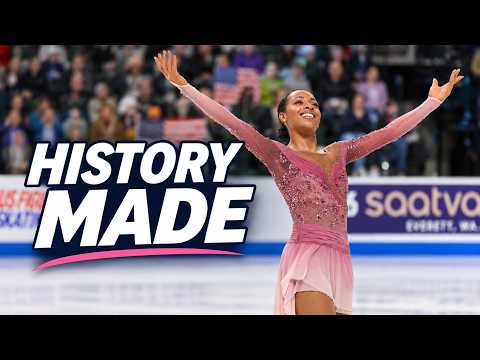
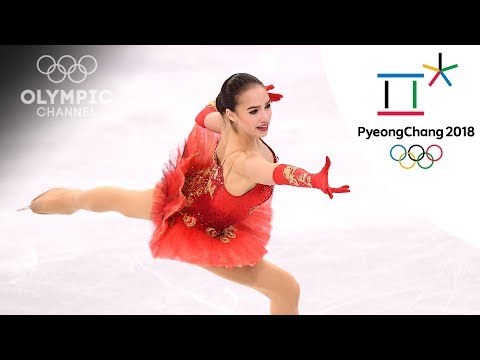
The filter sorts the Review Room embeds and the picture cards above by the keywords in their carried titles (review / analysis / recap and similar, or highlights). It runs entirely in your browser — nothing is sent anywhere.
The World Figure Skating Hall of Fame honours the figure skating disciplines.
Colorado Springs, Colorado, United States
125 inductees — every name on the hall's published list, grouped by class year.
1976 — Tenley Albright · Andrée Joly / Pierre Brunet · Dick Button · Peggy Fleming · Gillis Grafström · Carol Heiss · Sonja Henie · David Jenkins · T. D. Richardson · Jacques Gerschwiler · Jackson Haines · Gustave Lussi · Hayes Alan Jenkins · Axel Paulsen · Ulrich Salchow · Karl Schäfer · Reginald Wilkie · Howard Nicholson · Edi Scholdan · Montgomery Wilson
1977 — Willy Böckl · Jean Westwood / Lawrence Demmy · Donald Jackson
1978 — Ludmila Belousova / Oleg Protopopov
1979 — Maxi Herber / Ernst Baier · Barbara Ann Scott
1980 — Cecilia Colledge · Barbara Wagner / Robert Paul
1981 — Madge Syers · Willie Frick · William Hickok
1982 — Herma Szabo
1984 — Louis Rubenstein · Werner Groebli · Frances Dafoe / Norris Bowden (Pairs)
1985 — Charlotte Oelschlägel · Arnold Gerschwiler
1986 — F. Ritter Shumway · Courtney Jones
1988 — Lyudmila Pakhomova / Aleksandr Gorshkov
1989 — Irina Rodnina · Jayne Torvill / Christopher Dean
1990 — Scott Hamilton
1991 — John Curry
1993 — Jeannette Altwegg · Richard Dwyer · Ria Falk / Paul Falk · Jacques Favart · Georg Hasler · Ronald Robertson · Diane Towler / Bernard Ford
1994 — James Koch
1995 — Ekaterina Gordeeva / Sergei Grinkov · William Tutt · Katarina Witt
1996 — Brian Boitano · Herbert Clarke · Sheldon Galbraith
1997 — Carlo Fassi · Lily Kronberger · Benjamin Wright
1998 — Tom Collins · Josef Dědič · Felix Kaspar · Kristi Yamaguchi
1999 — Ronald Ludington · Gladys Hogg
2000 — Dorothy Hamill (Ladies’ Singles) · Marina Klimova / Sergei Ponomarenko (Ice Dance) · John Nicks (Coach)
2001 — Janet Lynn (Ladies’ Singles)
2002 — Maribel Vinson (Ladies’ Singles and Pairs)
2004 — Jutta Müller (Coach) · Toller Cranston (Men’s Singles) · Midori Ito (Ladies’ Singles)
2005 — Robin Cousins (Men’s Singles Creative/Professional role) · Tamara Moskvina (Pairs and Ladies’ Singles Coach) · Donald Gilchrist (Non-athletic role)
2006 — Kurt Browning (Men’s Singles) · Frank Zamboni (Skating Pioneer)
2007 — Frank Carroll (Coach)
2008 — Tatiana Tarasova (Coach)
2009 — Wilhelm Bietak (Creative/Professional role) · Joyce Hisey (Non-athletic role Judge) · Brian Orser (Men’s Singles Coach) · Nikolai Panin (Special Figures) · Barbara Underhill / Paul Martini (Pairs) · Alena Vrzáňová (Ladies’ Singles)
2010 — Nobuo Satō (Coach)
2012 — Michelle Kwan (Ladies’ Singles)
2013 — Viktor Balck (Non-athletic role ISU President) · Sjoukje Dijkstra (Ladies’ Singles) · Ludowika Eilers-Jakobsson / Walter Jakobsson (Pairs)
2014 — Denise Biellmann (Ladies’ Singles) · Lori Nichol (Choreographer) · Anna Hübler / Heinrich Burger (Pairs) · Friedrich Kachler (Men’s Singles Non-athletic role)
2015 — Sonia Bianchetti Garbato (Non-athletic role) · Artur Dmitriev / Natalia Mishkutionok / Oksana Kazakova (Pairs) · Doreen Denny (Ice dance) · Eduard Engelmann Jr. (Skating pioneer) · June Markham (Ice dance) · Henry Eugene Vandervell (Skating pioneer)
2017 — Sarah Kawahara (Choreographer) · Alexei Mishin (Coach) · Trixi Schuba (Ladies’ Singles) · Shen Xue / Zhao Hongbo (Pairs) · Alexei Yagudin (Men’s Singles) · Vivi-Anne Hultén (Ladies’ Singles Coach) · Phyllis Johnson / James H. Johnson (Pairs) · Werner Rittberger (Skating pioneer) · Hans-Rudi Mauch (Creative/Professional role)
2018 — Shizuka Arakawa · Sandra Bezic · Emmerich Danzer · Irina Moiseeva & Andrei Minenkov · Viktor Petrenko · Richard Porter · Elena Valova & Oleg Vasiliev · Bin Yao
2019 — Natalya Bestemyanova & Andrey Bukin · Ondrej Nepela · Eva Romanova *** and Pavel Roman · Gabriele Seyfert · Yelena Tchaikovskaya
Source basis: Wikipedia — "World Figure Skating Hall of Fame" (accessed Nov 1, 2026); parsed mechanically from the article’s published table. Material from Wikipedia is used under CC BY-SA 4.0..
Colorado Springs, Colorado, United States
148 inductees — every name on the hall's published list, grouped by class year.
1976 — Tenley Albright · Sherwin Badger · Theresa Weld Blanchard · Irving Brokaw · Richard Button · Peggy Fleming · Jackson Haines · Carol Heiss · David Jenkins · Hayes Alan Jenkins · Oscar Johnson · Howard Nicholson · Maribel Vinson Owen · Eddie Shipstad · A. Winsor Weld
1977 — Henry M. Beatty · Beatrix Loughran · Heaton R. Robertson
1978 — Nathaniel W. Niles
1981 — Harold Hartshorne · William O. Hickok IV
1983 — George H. Browne · Eugene Turner
1986 — F. Ritter Shumway
1990 — Scott Hamilton
1991 — Tai Babilonia & Randy Gardner · James Grogan · Dorothy Hamill · Karol Kennedy & Peter Kennedy · Ardelle Sanderson · Judy Schwomeyer & James Sladky · Charles Tickner · Lois Waring & Michael McGean · William Thayer Tutt · Yvonne Sherman Tutt
1993 — Richard Dywer · Linda Fratianne · Harry N. Keighley · Nancy Ludington Graham & Ronald Ludington · John Nicks · Colleen O’Connor & Jim Millns · Walter S. Powell · Ronnie Robertson · Tim Wood
1994 — Carlo Fassi · Janet Lynn · JoJo Starbuck & Kenneth Shelley · Roger F. Turner · Maribel Y. Vinson Owen & George E.B. Hill
1995 — Cynthia Kauffman Marshall & Ronald Kauffman · Robin Lee · Roy Shipstad
1996 — Judy Blumberg & Michael Seibert · Brian Boitano · Frank Carroll · Joseph L. Serafine · Jane Vaughn Sullivan
1997 — Andree Anderson & Donald Jacoby · Joan Tozzer Cave · Mabel Fairbanks · Frederick C. LeFevre · Barbara Roles Williams · Benjamin T. Wright
1998 — Tom Collins · Oscar Iobst · Gordon McKellen Jr · Evy Scotvold & Mary Scotvold · Kristi Yamaguchi
1999 — Caitlin Carruthers & Peter Carruthers · John Misha Petkevich
2000 — Scott Ethan Allen · Gretchen Merrill · Debi Thomas · Frank Zamboni
2001 — Gary Visconti · Rosalynn Sumners · Don Laws · Arthur Vaughn
2002 — Elizabeth Punsalan & Jerod Swallow · Jill Trenary · Slavka Kohout Button · Margaretta Drake
2003 — Skippy Baxter · Chuck Foster · Doug Wilson · Elaine Zayak
2004 — Jill Watson & Peter Oppegard · Norma Sahlin & Wally Sahlin · Hugh C. Graham, Jr · Nancy Kerrigan
2005 — Mary Louise Wright · Catherine Machado
2006 — Tara Lipinski
2007 — Charles M. Schulz · Paul Wylie · Janet Gerhauser Carpenter
2008 — Charles DeMore · Todd Eldredge
2009 — Sonya Klopfer Dunfield · Nancy Meiss · Marjorie Parker Smith · Joseph Savage · Vera Wang
2010 — Sarah Hughes · Jenni Meno & Todd Sand · Robert Turk
2011 — 1961 U.S. World Team
2012 — Michelle Kwan
2013 — Rudy Galindo · Lori Nichol
2014 — Albert Beard · Lynn Benson · Terry Kubicka
2015 — Anne Gerli · Ricki Harris · David Santee
2016 — Tanith Belbin & Ben Agosto · Sasha Cohen · Gustave F. Lussi · Evan Lysacek
2017 — Peter Burrows
2018 — Claire Ferguson · Kyoko Ina & John Zimmerman · Sarah Kawahara · Michael Weiss
2019 — Carol Fox & Richard Dalley · Timothy Goebel · Julie Lynn Holmes
2020 — Meryl Davis & Charlie White · Kimmie Meissner · Kathy Casey
2021 — Johnny Weir · Sandra Lamb · Gale Tanger
2022 — Lucy Brennan · Tiffany Chin · Vicki Korn
2023 — Paul E. George · Maia Shibutani & Alex Shibutani
2024 — Charlie Cyr · Christa Fassi · Vivian Joseph & Ronald Joseph
2025 — Albertina Noyes , and · Renée Roca · Robert Horen
2026 — Nathan Chen · Rafael Arutyunyan · Joseph Inman
Source basis: Wikipedia — "U.S. Figure Skating Hall of Fame" (accessed Nov 1, 2026); parsed mechanically from the article’s published table. Material from Wikipedia is used under CC BY-SA 4.0..
Judged artistic skating on ice, scored under the IJS since 2004.
Figure skating executed its judging system after a scandal.
Sport on Earth carries no team or player directory for this sport, because no structured public feed publishes a verifiable one. What is carried is the documented record on this page — history, rules, honours and the calendar — each with its source named.
The Figure Skating record book, as this site carries it: the World Figure Skating Hall of Fame list carries 125 inductees (classes 1976–2019); the U.S. Figure Skating Hall of Fame list carries 148 inductees (classes 1976–2026); its rule-changes dossier records 1 dated changes and named rules. Every figure above is computed from the lists and dossiers printed on this page, each with its source basis named beside it.
More from the desk: the expert guide to Figure Skating · the site-wide Writing Desk · every sport on Earth.
An arcade take on Figure Skating: set the angle, set the power, and land the skier in the landing zone. Five attempts; the closer to the middle, the more it scores. Arcade distances and a training arc — a game in the spirit of the sport, not a simulation of it.
This page’s own game is the arcade above. Everything else on the site that fits this sport is listed here — and anything borrowed from a similar sport is labelled as that sport’s game, never passed off as this one’s.
The tools on this site that honestly run on Figure Skating — its own record first, then the site-wide general tools that apply. The full Figure Skating toolkit prints the ones that do not apply, with the data reason why.
Site-wide tools, not built for Figure Skating alone: Tournament Planner · My Notebook · The Labs · Design Studio · The Makers’ Bench · Match Day Desk · Play It Near You · Myth-Check Desk · Governing Bodies · Heat & Safety Calculator (WBGT) · Hydration Calculator · Training-Load Planner · Game Clock & Timer · Custom Rulebook Generator · Scout Notes Parser.
Behind the Play · Full treatment — from this sport’s own record
Judged artistic skating on ice, scored under the IJS since 2004.
Behind the Play takes the decisive actions of Figure Skating apart: how the scoring play is built, which patterns the players are really running, and which rules remade the play into its modern shape.
Figure skating executed its judging system after a scandal.
The 6.0 System Dies (the IJS) (2004). The International Judging System (adopted 2003–04, first used at the 2004 Worlds/Olympics cycle): every element has a published base value, judges grade execution from -5 to +5, components are scored in defined categories, and trimmed panels with anonymous... (anonymity was later reduced) judges produce an auditable arithmetic total instead of an ordinal mystery.
Modern skating is visibly the IJS’s creature: programs are element portfolios engineered for base value (the quad era is arithmetic before it is artistry), and fans argue over grades of execution with spreadsheets — a colder sport, by deliberate design.
From this page’s Rule Changes & Named Rules dossier, where every entry names its source.
Source basis: this sport’s carried record on this page (verified record, rule-changes dossier, history datasets) and the play patterns of its family as written in the site’s guides. Nothing here is invented.