Women’s Floor Exercise Highlights |OM| All-Japan Gymnastics 2017
YouTube · gym愛
Pages
On this page
Sport on Earth › Sports
Sport on Earth · Sport
Artistic, rhythmic and trampoline disciplines judged under the Code of Points.
News stories from around the world, gathered and sourced by the Sport on Earth desk.
Gymnastics is carried on the program for Los Angeles 2028 Olympic Games, 14 – 30 July 2028, in Los Angeles, USA. Artistic, rhythmic and trampoline disciplines judged under the Code of Points. The desk carries the sport’s full record — guide, calendar and history — on its own page.
LA28 / IOC · Nov 2026
Written by Sport on Earth’s journalists — columns, features and interviews from the desk.
No columns or stories filed for this sport yet.
Everything the desk has published for Gymnastics, organised by section.
From the News Desk · all news, every sport →
Sport on Earth’s daily and weekly video shows for Gymnastics — every episode, newest first.
The first episode is in production and lands here the morning it is produced — no episode is listed until it exists.
Every embed below was verified playable before listing — the network’s standing rule.
YouTube · gym愛
YouTube · Olympic Games
Gymnastics is carried on the program for Los Angeles 2028 Olympic Games, 14 – 30 July 2028, in Los Angeles, USA. Artistic, rhythmic and trampoline disciplines judged under the Code of Points. The desk carries the sport’s full record — guide, calendar and history — on its own page.
LA28 / IOC · Nov 2026
Pages
On this page
No game on this site is made specifically for Gymnastics yet. The games below are the site's all-sport games, which honestly cover every sport — nothing from another sport has been dressed up as this sport's game.
A new set of questions every day, across every sport this site covers.
Real-athlete Top Sport on Earth decks built from the site’s verified board data.
Gymnastics's lab is the Physics Lab section on this page — the applied physics of its sport family, with a computed interactive where one honestly fits.
Physics Arena — the general biomechanics & physics teaching sandbox, shared by every sport.
The homepage sport explorer also carries a general Lab tab of small interactive experiments.
Calendar data not yet carried for Gymnastics — this site does not yet hold schedule data for it, so no dates are shown rather than invented.
Which section of this page should we expand first?
Votes are counted on the Sport on Earth server and the totals shown are every reader’s votes; your own choice is remembered in this browser.
Dated news entries for x162, newest first, dates exactly as carried in the site’s news data.
The flagship competitions on the calendar, with the dates for the current/upcoming cycle. Every date below was verified against the named source on 1 November 2026; dates change, and the source is the authority.
| Event | Dates | Where | Source |
|---|---|---|---|
| Los Angeles 2028 Olympic Games | 14 – 30 July 2028 | Los Angeles, USA | LA28 / IOC — Games dates |
Once airborne, an athlete is a projectile: the centre of mass follows a parabola nothing can change (the calculator below models it — no air resistance, flat landing). Everything else is rotation: angular momentum is fixed at take-off, but tucking pulls mass toward the axis and spins the body faster — the same conservation law that speeds a spinning skater’s pirouette.
Judged aerial sports are therefore a budgeting problem in physics: height buys time, time buys rotation, and the difficulty tariff prices the exchange. Landings convert the fall’s kinetic energy through bent joints and surfaces over time — longer absorption, lower peak force.
From this sport's own record: Artistic, rhythmic and trampoline disciplines judged under the Code of Points. The lab above treats the physics of the sport's family; no measurement specific to this sport is printed, because the site's verified record for it carries none — parameters are never invented to fill a lab.
Model: R = v²·sin(2θ)/g, flight time T = 2·v·sin(θ)/g, apex H = (v·sin θ)²/(2g), g = 9.81 m/s². Assumptions: no air resistance, no spin, flat ground, launch and landing at the same height. Real balls and shuttles fly shorter and curve — drag and spin are exactly what this model leaves out, so treat the output as the gravity-only ceiling, not a prediction.
The general teaching sandbox for every sport is the Physics Arena on the Games page — the same printed models, with a defender added.
The hands-on lab for Gymnastics, built entirely from the record this site carries for it — its documented rolls, its halls, its venues, its calendar and its census family. Every figure below is computed from that carried record at build time; nothing is estimated and nothing is pulled live. The companion Physics Lab on this page works the family's physics; this lab works the record.
Gymnastics carries 1 hall in the site’s record — International Gymnastics Hall of Fame — with 125 inductees carried, 114 of them with a full verified profile on this site.
Inductions by decade (computed from the carried induction years):
Basis: the Hall of Fame record carried on this site — the same rolls and verified profiles the Hall of Fame books print. Inductees a hall lists but the site has not verified stay list-only, exactly as the books state.
The carried global venue dataset holds 8 venues for Gymnastics across 4 countries. The largest capacity the dataset records for this sport is 17,950 — Xfinity Center, .
Basis: the global venue dataset carried on this site (6,438 venues with coordinates; the venue explorer on the sports index and the stadium sun table work the same data). Countries beyond the 25 largest are counted in the totals above but not listed here.
Basis: the dated events this entry’s own record carries, as announced by the bodies named in the record. A sport whose record carries no fixed dated calendar says so on its calendar page rather than inventing one.
Computed from the site census: the Aerial & acrobatic sports family holds 35 entries on this site. Across the family, the carried record includes documented rolls for 0 of them, Hall of Fame data for 3, venue sets for 3, and dated calendars for 3.
Every other entry in the family: BASE Jumping · BMX · Breaking · Chase Tag · Club Swinging · Competitive Cheerleading · DanceSport · Fierljeppen · Fingerboarding · Freestyle Football · Gliding · Guts · Hang gliding · Indoor Skydiving · Irish Step Dance · Jiving · Jultagi / Tightrope Performance Racing · Line Dance · Mallakhamb · Ondol Jumping / Neouttwigi · Parachuting · Paragliding · Parkour and Freerunning · Roller Derby · Roller Sports · Skateboarding · Slackwire · Speed Skamania / High-Speed Grass Boarding · Sport Climbing · Tightrope Walking · Tricking · Ultimate Frisbee · Wingsuit Flying · Yoyoing
Basis: the Sport on Earth census itself — the same 460-entry register the census page prints.
The desk has not verified a sponsorship record for Gymnastics from published sources, so none is printed. Sponsorship history is added only when a real published source supports it — sponsor by sponsor, deal by deal. Current sponsorship deals across sport are tracked on the Money Desk sponsorship page.
How this game is played, gathered from the record Sport on Earth already carries for Gymnastics, with the positions taken from the sourced chart cited in that section.
Gymnastics is the oldest of the modern judged sports: artistic gymnastics has been on the Olympic program since the first modern Games in 1896, and the sport’s disciplines now span artistic, rhythmic, trampoline, acrobatic and aerobic competition.
Sport on Earth adds gymnastics to complete the Olympic program: until this pass the site carried the Games’ other judged disciplines (figure skating, diving’s cliff cousin) but not the sport that fills arenas at every Olympics.
How gymnastics is scored — the rules as this site's record carries them:
Gymnastics has no fixed positions — its format designates no positional roles.
Format as carried in hidden_files/batchB-nov1/batchb_data.json: "Artistic, rhythmic and trampoline disciplines judged under the Code of Points." The format carries no designated positional roles. (Source: Sport on Earth carried sport record.)
Its Tactics & Strategy book — its opening entries, the basic plays, are:
The full book carries 7 entries — in this page’s Playbook / Tactics & Strategy section, and at the Playbooks hub.
How the core actions of Gymnastics are performed, and how to improve them — the layer between this page's How to Play section (the rules) and its training and physics sections.
The handstand is the single most important position in gymnastics: handsprings on vault pass through it, bar work (casts, giants) is organised around it, and tumbling skills chain through it. The body forms one straight line — hands flat with fingers spread and actively gripping the floor, arms straight and pushed tall through the shoulders (’shrug’ the ears with the shoulders), ribs pulled in, pelvis tucked so the body holds the hollow shape, legs together, toes pointed. Balance is made by the fingers: pressure through the fingertips corrects a fall forward, pressure through the heel of the hand corrects a fall back, in constant small adjustments rather than one frozen pose.
The round-off is tumbling’s power converter: it takes forward running speed and turns it into backward power for the skills that follow. It is a cartwheel variation with a quarter-turn of the first hand before it reaches the floor; the hands land in sequence (first hand turned in, second hand placed further and perpendicular), the body passes through a tight handstand, and the legs snap down together — the ’snap-down’ — landing with feet together slightly in front of the body, chest up, so the rebound drives backward and upward into a back handspring or salto. On vault, the same action performed onto the springboard/table area is the entry for round-off (Yurchenko-family) vaults.
A vault is four linked phases. The run: up to 25 metres of runway, accelerating to full controlled speed — coaches can read the vault from the run-up alone. The board: the last step is long and low, and the gymnast punches the springboard with the balls of the feet and a tight body, converting horizontal speed upward. The block: hands reach the table fast and push powerfully through straight arms and shoulders at the handstand position — the block begins during the handstand, not after it — creating the second flight. The flight and landing: tight body shapes rotate the salto, the body opens in time, and the landing is absorbed through the legs with the chest up.
Safety: Gymnastics skills carry inherent risk and are learned only with a qualified coach, proper matting and staged progressions. This material explains technique; it is not a learn-at-home manual.
Mechanics sources consulted: Gymnastics fundamentals training manual (handstand, cast, round-off) via SlideShare; Sportmentary — Gymnastics Vault Explained: Families, Scoring and Technique (FIG Code of Points basis); Gym Drill Pro — Roundoff Vault (technical breakdown and drills).
Sport on Earth's own analytics: every figure in this panel is computed at build time from the record this site itself carries, with the source named. No outside data is used, and no betting figures of any kind.
Hall of Fame record carried: 125 inductees across 1 hall(s); inductions span 1988–2026; the largest induction decade is the 2000s (47 inductees).
Source: the site's carried hall-of-fame record (historical-players.json).
Venues carried: 8 in 4 countries; the largest carried capacity is 17,950 (Xfinity Center).
Source: the site's global venue record (venues-global.json); a capacity is printed only where the record carries a verified one.
Census arithmetic: Gymnastics sits in the aerial & judged sports family — 35 census sports, of which 0 carry a qualifying champions roll in the site's record.
Gymnastics is the oldest of the modern judged sports: artistic gymnastics has been on the Olympic program since the first modern Games in 1896, and the sport’s disciplines now span artistic, rhythmic, trampoline, acrobatic and aerobic competition.
Sport on Earth adds gymnastics to complete the Olympic program: until this pass the site carried the Games’ other judged disciplines (figure skating, diving’s cliff cousin) but not the sport that fills arenas at every Olympics.
The international federation was founded in 1881 in Liège — the oldest international sports federation — and is known today as World Gymnastics (formerly the FIG).
The flagship events are the Olympic tournament and the annual World Championships (first held in 1903), plus the Apparatus World Cup series.
Artistic gymnastics decides team, all-around and apparatus titles; rhythmic gymnastics is contested with rope-free apparatus work (hoop, ball, clubs, ribbon) by women; trampoline joined the Olympics in 2000.
Sport on Earth carries no live gymnastics feed: no fixtures, results or rankings are published for the sport here — this page is the verified record of the sport’s structure, and it will say so rather than invent scores.
Sources, verified November 1, 2026: World Gymnastics (gymnastics.sport) · Olympics.com — Gymnastics
Gymnastics changed the two things it was most famous for — the perfect 10 and the springy vaulting horse — within five years of each other, under pressure from scandal and injury.
Before: Vault was performed over the ’long horse’ — a narrow leather body essentially unchanged since the 19th century — whose thin surface offered no margin: at the 2000 Sydney Olympics the horse was set 5 cm too low for the early rotations, gymnasts crashed and fell in sequence, and the apparatus itself became the story of the Games.
The change: From 2001 the horse was replaced by the vaulting TABLE: a broad, sloped, padded surface offering a far larger, safer blocking area. Sydney’s debacle (the mis-height, discovered mid-competition) supplied the final push for a replacement already in development.
Why it happened: Safety and spectacle aligned: the table lets gymnasts block harder and attempt the high-difficulty vaults that now define the event, while removing the knife-edge surface that punished small errors with injury.
In practice today: The table is universal and the horse extinct at elite level; vault difficulty (and its injury frontier) has climbed steadily on the platform the table provides.
Before: Scoring rewarded execution toward a 10.0 ceiling: the ’perfect 10’ (Nadia Comăneci, 1976) was the sport’s brand, but difficulty had nowhere to go — elite routines all crowded under the same ceiling, and judging controversies (the 2004 Athens men’s all-around and high-bar scandals) exposed a code that could neither separate the best nor defend its marks.
The change: The 2006 Code split the score: a D-score (difficulty, open-ended — every element’s value summed) plus an E-score (execution, from 10 down for faults). Totals like 15.800 replaced the perfect 10; difficulty became a currency gymnasts could chase without limit.
Why it happened: Athens 2004 was the breaking point (the FIG even suspended judges and revised a result’s procedure afterwards). The open-ended code deliberately trades the public’s beloved 10 for competitive logic — rewarding the difficulty arms race that defines the modern sport, for better (Simone Biles’ eponymous skills) and worse (injury risk is the standing critique).
In practice today: Gymnastics now lives in the D-score economy: routines are engineered spreadsheets of difficulty, eponymous skills proliferate, and ’perfect 10’ survives in the NCAA college game (which kept the old code) as a living fossil fans can still watch.
Source basis: FIG records: 2001 vaulting table introduction; 2006 Code of Points (open-ended scoring).
Sport on Earth carries no results feed for Gymnastics: no scores or fixtures are published here, rather than inventing them. The sport's documented record is in its history page and the History & Records section of this page.
The historical record for Gymnastics — past standings, champions, title history and all-time leaders, as deep as verifiable public records go.
Season-by-season standings, historical player statistics and title rolls are not carried for Gymnastics: no public archive publishes them in a form Sport on Earth can verify, and this site does not invent history. What is carried for this sport is its verified record, its rule-change history and its league history — elsewhere on this page.
The review and analysis videos from Gymnastics’s verified video pool — every embed below was identity-checked and probed playable before listing, the site’s standing rule. Nothing here is a show Sport on Earth produces; these are the review, post-game and breakdown videos the pool already carries for this sport.
No verified review-show video is carried for this sport yet.
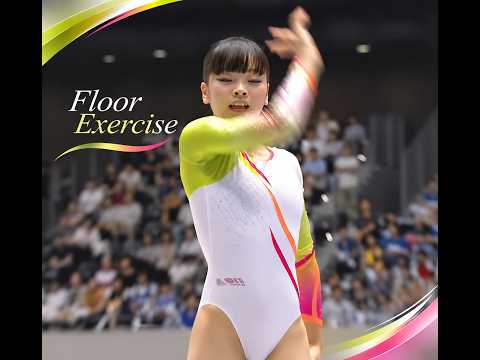
Chart basis: counts from Sport on Earth’s own carried data files at build time — verified videos carried for this sport (the verified pool: sport-videos.json + the desk league pools), news items carried (news.json), and league pages carried (desk.json). No external or estimated figures.
The filter sorts the Review Room embeds and the picture cards above by the keywords in their carried titles (review / analysis / recap and similar, or highlights). It runs entirely in your browser — nothing is sent anywhere.
Oklahoma City, Oklahoma, United States
125 inductees — every name on the hall's published list, grouped by class year.
1988 — Olga Korbut
1993 — Nadia Comăneci
1997 — Masao Takemoto · Leon Štukelj · Cathy Rigby · Mary Lou Retton · Béla Károlyi · Jack Günthard · Arthur Gander · Bart Conner
1998 — Peter Vidmar · Ludmilla Tourischeva · Takashi Ono · Larisa Latynina · Savino Guglielmetti · Věra Čáslavská
1999 — Yuri Titov · Eugen Mack · Nellie Kim · Yukio Endo · Miroslav Cerar · Frank Bare Sr.
2000 — Haruhiro Yamashita · Ecaterina Szabo (Katalin Szabó) · Li Ning · Maxi Gnauck
2001 — Teodora Ungureanu · William Thoresson · Sawao Kato · Bruno Grandi · Lyubov Burda · Nikolai Andrianov
2002 — Berthe Villancher · Daniela Silivaș · Boris Shakhlin · Ágnes Keleti · Keiko Tanaka-Ikeda · Polina Astakhova
2003 — Kurt Thomas · Franco Menichelli · Karin Büttner-Janz · Dmitry Bilozerchev · Max Bangerter
2004 — Yelena Shushunova · Heikki Savolainen · Helena Rakoczy · Takuji Hayata · Alexander Dityatin
2005 — Erika Zuchold · Akinori Nakayama · Valeri Liukin · Svetlana Boginskaya
2006 — Shannon Miller · Natalia Kuchinskaya · Eizo Kenmotsu · Vladimir Artemov
2007 — Shigeru Kasamatsu · Eberhard Gienger · Yelena Davydova · Simona Amânar
2008 — Ma Yanhong · Shuji Tsurumi · Lilia Podkopayeva · Stoyan Deltchev
2009 — Vitaly Scherbo · Elvira Saadi · Dominique Dawes · Viktor Chukarin · Octavian Bellu
2010 — Mikhail Voronin · Yuri Korolev · Henrietta Ónodi
2011 — Steffi Kräker · Leonid Arkayev · Aleksandr Tkachyov · Lavinia Miloșovici
2012 — Natalia Shaposhnikova · Kim Zmeskal · Zoltán Magyar
2013 — Gina Gogean · Albert Azaryan
2014 — Natalia Yurchenko · Li Yuejiu · Klaus Köste · Jackie Fie
2015 — Elena Zamolodchikova · Valery Belenky
2016 — Ihor Korobchynskyi · Tatiana Lysenko · Jordan Jovtchev · Aurelia Dobre
2017 — Alexei Nemov · Alicia Sacramone · Oksana Chusovitina · Shun Fujimoto
2018 — Nastia Liukin · Andreea Răducan · Paul Hamm
2019 — Ivan Ivankov · Li Xiaopeng · Maria Filatova · Shawn Johnson
2021 — Maria Gorokhovskaya · Margit Korondi · Tamara Manina · Olga Tass · Sofia Muratova · Yelena Mukhina
2022 — Tatiana Gutsu · Fabian Hambüchen · Chellsie Memmel · Cătălina Ponor
2023 — Mitch Gaylord · Kōji Gushiken · Oksana Omelianchik
2024 — Julianne McNamara · Carly Patterson · Rustam Sharipov · Josef Stalder
2025 — Beth Tweddle · Andreas Wecker
2026 — Cristina Bontaș · Yuri Chechi · Vanessa Ferrari · Yang Wei
Source basis: Wikipedia — "International Gymnastics Hall of Fame" (accessed Nov 1, 2026); parsed mechanically from the article’s published table. Material from Wikipedia is used under CC BY-SA 4.0..
Full inductee profiles → 114 of the 125 inductees above carry a full verified profile — biography, induction record and verified video where one exists. The rest are list-only until a biography can be verified the same way.
Artistic, rhythmic and trampoline disciplines judged under the Code of Points.
The format, from this sport's verified record:
📖 Gymnastics — Tactics & Strategy — every entry, plus the arcade strategy, at the foot of this page.
An arcade take on Gymnastics: set the angle, set the power, and land the flyer in the landing mat. Five attempts; the closer to the middle, the more it scores. Arcade distances and a training arc — a game in the spirit of the sport, not a simulation of it.
This page’s own game is the arcade above. Everything else on the site that fits this sport is listed here — and anything borrowed from a similar sport is labelled as that sport’s game, never passed off as this one’s.
3 verified documentaries, films and series about this sport are listed in the site's screen guide: Sport on Screen — Gymnastics.
The tools on this site that honestly run on Gymnastics — its own record first, then the site-wide general tools that apply. The full Gymnastics toolkit prints the ones that do not apply, with the data reason why.
Site-wide tools, not built for Gymnastics alone: Tournament Planner · My Notebook · The Labs · Design Studio · The Makers’ Bench · Match Day Desk · Play It Near You · Myth-Check Desk · Governing Bodies · Heat & Safety Calculator (WBGT) · Hydration Calculator · Training-Load Planner · Game Clock & Timer · Custom Rulebook Generator · Scout Notes Parser.
Tactics & Strategy — this sport’s book
gymnastics’ book — the routine is a constructed argument: difficulty (the D-score) against execution (the E-score), built element by element from the Code of Points.
7 entries, plus the arcade strategy below. All wording is original coaching-vocabulary prose; nothing is copied from any proprietary playbook.
Every routine is two scores: D (the difficulty sum of its elements and connections) and E (execution from 10, deductions per flaw). The routine is constructed like a diving list — the connection bonus (extra tenths for linking elements) is its compound interest.
When it’s used: The Code of Points is the sport’s rulebook and its catalogue: every element has a price, and the routine is a shopping list with a body’s budget.
The sequence
The vault is gymnastics’ single play: a springboard, a table, one flight of twists and somersaults, judged on the run’s commitment, the block off the table, the flight and the stuck landing — each vault family (Yurchenko, handspring, Tsukahara) is an entry in the catalogue with its own D-price.
When it’s used: The vault’s run is 25 metres of intent: the event is decided by the time the gymnast leaves the table.
The sequence
The uneven and high bars are flight events: release moves (the gymnast lets go and re-catches) carry the D-score’s glamour, named for their inventors (the Def, the Tkatchev, the Shaposhnikova) — gymnastics is the sport that names its plays after people, permanently, in the Code.
When it’s used: To have an element named for you in the Code of Points is gymnastics’ patent of immortality.
The sequence
The floor exercise is a 70–90 second program of tumbling passes corner to corner, with dance and choreography (for women, to music) woven between: the passes’ placement is stamina’s budgeting, and the last pass is bought with the first three’s economy.
When it’s used: The floor’s corners are its geography: each pass begins where the last one’s landing left the gymnast.
The sequence
Rhythmic gymnastics adds apparatus (hoop, ball, clubs, ribbon) handled while the body performs — its book is object manipulation at dance’s tempo — and trampoline is a ten-skill routine of linked somersaults where the bed’s rebound is the engine and the travel across it the tax.
When it’s used: The rhythmic gymnast’s apparatus must never rest: a dropped ribbon is a fumble in a sport without fumbles.
The sequence
The competition formats (qualification, all-around, team, apparatus finals) make the season’s tactics: specialists peak for one apparatus final, all-arounders manage a portfolio across days, and the team’s three-scores-count format prices consistency over brilliance in selection.
When it’s used: Selection is the coach’s tactics: the team’s third score on its weakest apparatus is worth more than its star’s bonus on its strongest.
The sequence
Acrobatic gymnastics (pairs and groups throwing and balancing flyers) and TeamGym (a squad’s floor, tumbling and trampet runs scored as one) close the gymnastics shelf: the acro pair’s tempo and the balance’s stillness are two judged tempos of the same trust.
When it’s used: The acro flyer is gymnastics’ thrown athlete: the bases’ catch is the skill the score is built on.
The sequence
The arcade cell · strategy
This page’s arcade cell: launch the flyer at the landing mat from the landing mat · 38 m (arcade scale). Angle, power, launch — five attempts, and the cell keeps your best.
When it’s used: On this page, in the Play section — and its strategy is the same craft as the book above it, miniaturised.
The sequence
Part of the Sport on Earth Playbooks — a book for every sport and every game on the site.
Behind the Play · Full treatment — from this sport’s own record
Artistic, rhythmic and trampoline disciplines judged under the Code of Points.
Behind the Play takes the decisive actions of Gymnastics apart: how the scoring play is built, which patterns the players are really running, and which rules remade the play into its modern shape.
The format, from this sport's verified record:
The Vaulting Table Replaces the Horse (2001). From 2001 the horse was replaced by the vaulting TABLE: a broad, sloped, padded surface offering a far larger, safer blocking area. Sydney’s debacle (the mis-height, discovered mid-competition) supplied the final push for a replacement already in development.
The table is universal and the horse extinct at elite level; vault difficulty (and its injury frontier) has climbed steadily on the platform the table provides.
The End of the Perfect 10 (Open-Ended Scoring) (2006 Code of Points). The 2006 Code split the score: a D-score (difficulty, open-ended — every element’s value summed) plus an E-score (execution, from 10 down for faults). Totals like 15.800 replaced the perfect 10; difficulty became a currency gymnasts could chase without limit.
Gymnastics now lives in the D-score economy: routines are engineered spreadsheets of difficulty, eponymous skills proliferate, and ’perfect 10’ survives in the NCAA college game (which kept the old code) as a living fossil fans can still watch.
From this page’s Rule Changes & Named Rules dossier, where every entry names its source.
Source basis: this sport’s carried record on this page (verified record, rule-changes dossier, history datasets) and the play patterns of its family as written in the site’s guides. Nothing here is invented.