Episode 1 — Regional Oireachtas championships held in Anaheim and Birmingham — official results not yet published
Ep. 1 — the week of Wednesday, November 25, 2026 · 1:54
Pages
On this page
Sport on Earth › Sports
Sport on Earth · Sport
Governed worldwide by CLRG since 1930, Irish step dance runs from local feiseanna to the annual World Championships first held in Dublin in 1970.
News stories from around the world, gathered and sourced by the Sport on Earth desk.
Governed worldwide by CLRG since 1930, Irish step dance runs from local feiseanna to the annual World Championships first held in Dublin in 1970. The site carries a rule-change dossier of 3 entries for it. 16 verified-playable videos sit in its pool. Record-desk brief — the news desk’s reported items are listed separately.
Sport on Earth record desk — census file · Nov 2026
Written by Sport on Earth’s journalists — columns, features and interviews from the desk.
No columns or stories filed for this sport yet.
Everything the desk has published for Irish Step Dance, organised by section.
From the News Desk · all news, every sport →
Sport on Earth’s daily and weekly video shows for Irish Step Dance — every episode, newest first.
Ep. 1 — the week of Wednesday, November 25, 2026 · 1:54
Every embed below was verified playable before listing — the network’s standing rule.
YouTube · fritz51286
YouTube · Cairde
YouTube · Eric Homan I Media Works
YouTube · The Cafe (Archive)
YouTube · David Geaney
YouTube · Riverdance
YouTube · CBC Kids
YouTube · FusionFighters
Governed worldwide by CLRG since 1930, Irish step dance runs from local feiseanna to the annual World Championships first held in Dublin in 1970. The site carries a rule-change dossier of 3 entries for it. 16 verified-playable videos sit in its pool. Record-desk brief — the news desk’s reported items are listed separately.
Sport on Earth record desk — census file · Nov 2026
Pages
On this page
No game on this site is made specifically for Irish Step Dance yet. The games below are the site's all-sport games, which honestly cover every sport — nothing from another sport has been dressed up as this sport's game.
A new set of questions every day, across every sport this site covers.
Real-athlete Top Sport on Earth decks built from the site’s verified board data.
Irish Step Dance's lab is the Physics Lab section on this page — the applied physics of its sport family, with a computed interactive where one honestly fits.
Physics Arena — the general biomechanics & physics teaching sandbox, shared by every sport.
The homepage sport explorer also carries a general Lab tab of small interactive experiments.
Calendar data not yet carried for Irish Step Dance — this site does not yet hold schedule data for it, so no dates are shown rather than invented.
Which section of this page should we expand first?
Votes are counted on the Sport on Earth server and the totals shown are every reader’s votes; your own choice is remembered in this browser.
Dated news entries for x478, newest first, dates exactly as carried in the site’s news data.
How this game is played, gathered from the record Sport on Earth already carries for Irish Step Dance, with the positions taken from the sourced chart cited in that section.
Irish step dance is a competitive percussive dance form governed worldwide by An Coimisiún le Rincí Gaelacha (CLRG, the Irish Dancing Commission), based in Dublin, whose stated objective is to preserve and promote Irish dancing — step dancing, céilí dancing and other team dancing — and the Irish language. CLRG grew out of a Commission of Enquiry set up by Conradh na Gaeilge (the Gaelic League) in 1927 and was established as a permanent body in 1930; CLRG’s own site describes it as the standard bearer for Irish dance since 1932 through examinations and premiere championships. It registers and examines teachers (TCRG) and adjudicators (ADCRG), runs a grade-exam system of a preliminary grade plus 12 grades, and sanctions the feis circuit: local competitions called feiseanna where dancers progress through grades — Bun Grád (beginner), Tús Grád (primary), Meán Grád (intermediate) and Ard Grád (open) in Ireland and Britain, with Beginner, Novice and Prizewinner grades feeding Preliminary and Open Championships in North America.
The summit is Oireachtas Rince na Cruinne, the CLRG World Irish Dancing Championships, held annually in Easter week since 1970 and reached only by qualifying at a regional Oireachtas or a secondary national qualifier such as the All-Ireland Championships or the North American Irish Dance Championships. Solo champions dance three rounds — a heavy-shoe round (heavy jig or hornpipe), a soft-shoe round (reel or slip jig) and a recalled set dance — alongside céilí, figure and dance-drama team championships. The 2025 edition at the Convention Centre Dublin drew about 4,000 dancers from 26 countries; the 2026 edition followed at the Renaissance Schaumburg Convention Center Hotel in Schaumburg, Illinois, from 29 March to 5 April 2026, where Faye Clarke of the Carson Academy defended her Under 17 title for a second world crown.
How Irish step dance competition works — the rules as this site's record carries them:
Irish Step Dance has no fixed positions — its format designates no positional roles.
Format as carried in hidden_files/batchB-nov1/batchb_data.json: "Governed worldwide by CLRG since 1930, Irish step dance runs from local feiseanna to the annual World Championships first held in Dublin in 1970." The format carries no designated positional roles. (Source: Sport on Earth carried sport record.)
Sport on Earth's own analytics: every figure in this panel is computed at build time from the record this site itself carries, with the source named. No outside data is used, and no betting figures of any kind.
Census arithmetic: Irish Step Dance sits in the aerial & judged sports family — 35 census sports, of which 0 carry a qualifying champions roll in the site's record.
The carried record for Irish Step Dance is too thin for computed panels: no champions roll, hall-of-fame list or venue record is carried for it. This panel therefore prints the census arithmetic only — the honest answer rather than a manufactured figure.
Sport on Earth does not yet hold verified dated events for Irish Step Dance, and its carried record does not state the season's timing in words — so no calendar is shown rather than an invented one. What the site does carry for this sport is on this page: its verified record, its rules record and its history.
Once airborne, an athlete is a projectile: the centre of mass follows a parabola nothing can change (the calculator below models it — no air resistance, flat landing). Everything else is rotation: angular momentum is fixed at take-off, but tucking pulls mass toward the axis and spins the body faster — the same conservation law that speeds a spinning skater’s pirouette.
Judged aerial sports are therefore a budgeting problem in physics: height buys time, time buys rotation, and the difficulty tariff prices the exchange. Landings convert the fall’s kinetic energy through bent joints and surfaces over time — longer absorption, lower peak force.
From this sport's own record: Governed worldwide by CLRG since 1930, Irish step dance runs from local feiseanna to the annual World Championships first held in Dublin in 1970. The lab above treats the physics of the sport's family; no measurement specific to this sport is printed, because the site's verified record for it carries none — parameters are never invented to fill a lab.
Model: R = v²·sin(2θ)/g, flight time T = 2·v·sin(θ)/g, apex H = (v·sin θ)²/(2g), g = 9.81 m/s². Assumptions: no air resistance, no spin, flat ground, launch and landing at the same height. Real balls and shuttles fly shorter and curve — drag and spin are exactly what this model leaves out, so treat the output as the gravity-only ceiling, not a prediction.
The general teaching sandbox for every sport is the Physics Arena on the Games page — the same printed models, with a defender added.
The hands-on lab for Irish Step Dance, built entirely from the record this site carries for it — its documented rolls, its halls, its venues, its calendar and its census family. Every figure below is computed from that carried record at build time; nothing is estimated and nothing is pulled live. The companion Physics Lab on this page works the family's physics; this lab works the record.
The honest position: the record this site carries for Irish Step Dance is thin — no documented roll, hall, venue set or dated calendar is carried for it yet — so this entry’s lab is its family lab: the computed census of the family it belongs to. When the record grows, the lab grows with it; nothing here is estimated to fill the space.
Computed from the site census: the Aerial & acrobatic sports family holds 35 entries on this site. Across the family, the carried record includes documented rolls for 0 of them, Hall of Fame data for 3, venue sets for 3, and dated calendars for 3.
Every other entry in the family: BASE Jumping · BMX · Breaking · Chase Tag · Club Swinging · Competitive Cheerleading · DanceSport · Fierljeppen · Fingerboarding · Freestyle Football · Gliding · Guts · Gymnastics · Hang gliding · Indoor Skydiving · Jiving · Jultagi / Tightrope Performance Racing · Line Dance · Mallakhamb · Ondol Jumping / Neouttwigi · Parachuting · Paragliding · Parkour and Freerunning · Roller Derby · Roller Sports · Skateboarding · Slackwire · Speed Skamania / High-Speed Grass Boarding · Sport Climbing · Tightrope Walking · Tricking · Ultimate Frisbee · Wingsuit Flying · Yoyoing
Basis: the Sport on Earth census itself — the same 460-entry register the census page prints.
The desk has not verified a sponsorship record for Irish Step Dance from published sources, so none is printed. Sponsorship history is added only when a real published source supports it — sponsor by sponsor, deal by deal. Current sponsorship deals across sport are tracked on the Money Desk sponsorship page.
Irish step dance is a competitive percussive dance form governed worldwide by An Coimisiún le Rincí Gaelacha (CLRG, the Irish Dancing Commission), based in Dublin, whose stated objective is to preserve and promote Irish dancing — step dancing, céilí dancing and other team dancing — and the Irish language. CLRG grew out of a Commission of Enquiry set up by Conradh na Gaeilge (the Gaelic League) in 1927 and was established as a permanent body in 1930; CLRG’s own site describes it as the standard bearer for Irish dance since 1932 through examinations and premiere championships. It registers and examines teachers (TCRG) and adjudicators (ADCRG), runs a grade-exam system of a preliminary grade plus 12 grades, and sanctions the feis circuit: local competitions called feiseanna where dancers progress through grades — Bun Grád (beginner), Tús Grád (primary), Meán Grád (intermediate) and Ard Grád (open) in Ireland and Britain, with Beginner, Novice and Prizewinner grades feeding Preliminary and Open Championships in North America.
The summit is Oireachtas Rince na Cruinne, the CLRG World Irish Dancing Championships, held annually in Easter week since 1970 and reached only by qualifying at a regional Oireachtas or a secondary national qualifier such as the All-Ireland Championships or the North American Irish Dance Championships. Solo champions dance three rounds — a heavy-shoe round (heavy jig or hornpipe), a soft-shoe round (reel or slip jig) and a recalled set dance — alongside céilí, figure and dance-drama team championships. The 2025 edition at the Convention Centre Dublin drew about 4,000 dancers from 26 countries; the 2026 edition followed at the Renaissance Schaumburg Convention Center Hotel in Schaumburg, Illinois, from 29 March to 5 April 2026, where Faye Clarke of the Carson Academy defended her Under 17 title for a second world crown.
CLRG was established in 1930 after a 1927 Gaelic League Commission of Enquiry, is headquartered in Dublin, and is the central authority for teacher (TCRG) and adjudicator (ADCRG) accreditation and for dancer grade exams — a preliminary grade plus 12 grades, all 12 required before a dancer may sit the TCRG teaching exam.
The first Oireachtas Rince na Cruinne was held in Dublin in 1970; the Worlds have run annually in Easter week since, held permanently in Ireland until 1999 and since 2000 in rotation, including Northern Ireland, Scotland, England, the United States and Canada.
Dublin 2025, the most recent Worlds with a fully published results list, ran 13–20 April 2025 at the Convention Centre Dublin: Senior Ladies (over 23) champion Erin-Grace Cooke of Hennigan Irish Dance, Southern England, and Senior Men (over 21) champion Cameron Lambert of the Joanne Kavanagh school, Leinster.
CLRG works through regional councils in over 20 countries across six continents; its qualifying regions include Ireland’s four provinces (Connacht, Leinster, Munster, Ulster), Scotland and four English regions, seven North American regions, Australia’s states, New Zealand, and Continental Europe and Asia.
There is no single central, machine-readable CLRG results feed: the official Oireachtas site publishes recalls and results as per-competition PDFs with heavily degraded text extraction, and the only permanent full results record is Irish Dancing Magazine’s published lists — so this site can carry verified headline and senior results (complete for Dublin 2025, partial for Schaumburg 2026) but cannot honestly publish a complete all-category 2026 results table or an official all-time titles table, neither of which CLRG publishes in open form.
Sources, verified November 1, 2026: CLRG — official site: mission, history since 1932, Oireachtas · CLRG Premiere Events — Oireachtas Rince na Cruinne 2026, Schaumburg, 29 March–5 April 2026; 2026 lists, recalls and results · Irish Dancing Magazine — full published results, 2025 CLRG World Championships, Convention Centre Dublin, 13–20 April 2025 · IDTANA Glossary — feis, Oireachtas, grades, dances, Irish Points, TCRG/ADCRG and grade exams · Glorious Sport — Beyond the Bling: backstage at the Dublin Worlds, 30 April 2026 (scale, three-round format, Ár Rince Foirne, six continents)
Competitive Irish step dance was standardised in the twentieth century by An Coimisiún le Rincí Gaelacha (CLRG), and its published rules still change by dated ruling. Three dated changes below are each traceable to a published source opened for this pack.
Before: The competitive ladder peaked at regional and national championships, such as the All-Ireland Championships, with no single world title event.
The change: CLRG stages Oireachtas Rince na Cruinne, an annual World Championships held in Easter week, open only to dancers who qualify through regional and national championships.
Why it happened: To give a by then worldwide organisation — with teachers and dancers far beyond Ireland — one common summit event judged to one standard.
In practice today: Created the modern qualification ladder: local feiseanna feed regional Oireachtais, which feed national championships and the Worlds; the event has run annually since, reaching about 4,000 dancers in Dublin in 2025.
Before: Published feis rules carried no CLRG-wide denier requirement for adult women dancers’ tights.
The change: Female adult dancers in competitions titled adult championship and/or adult grade competition, solo and team, are required to wear tights of a denier no less than 70 — stated in feis rules as a CLRG ruling of March 2015.
Why it happened: A published modesty standard for adult competition dress, applied uniformly worldwide.
In practice today: Feis organisers and adjudicators enforce the same tights standard at every CLRG feis that reproduces the rule.
Before: Costume length was governed by general modesty principles without a dated, enforceable on-the-day remedy in the published rule text.
The change: Costumes must adhere to principles of modesty and allow safe execution of steps; adjudicators who judge a costume too short may require the dancer to change into black tights of not less than 70 denier to continue competing — effective date given in the rule as 1 February 2020.
Why it happened: To make the modesty standard enforceable by adjudicators during competition rather than only by dressmakers beforehand.
In practice today: The rule, with its effective date, is reproduced verbatim in current feis syllabi worldwide, including 2026 syllabi opened for this pack.
Source basis: Irish Times obituary of Tomás Ó Faircheallaigh (CLRG president) for the 1970 Worlds; CLRG feis rules as reproduced in published 2026 feis syllabi (Claraithe feis rules PDF and Bucharest Feis / RCCEA syllabus) quoting the March 2015 CLRG ruling and the costume rule effective 1 February 2020; Glorious Sport backstage report, 30 April 2026, for the Worlds running since 1970
Sport on Earth carries no results feed for Irish Step Dance: no scores or fixtures are published here, rather than inventing them. The sport's documented record is in its history page and the History & Records section of this page.
The historical record for Irish Step Dance — past standings, champions, title history and all-time leaders, as deep as verifiable public records go.
Season-by-season standings, historical player statistics and title rolls are not carried for Irish Step Dance: no public archive publishes them in a form Sport on Earth can verify, and this site does not invent history. What is carried for this sport is its verified record, its rule-change history and its league history — elsewhere on this page.
The review and analysis videos from Irish Step Dance’s verified video pool — every embed below was identity-checked and probed playable before listing, the site’s standing rule. Nothing here is a show Sport on Earth produces; these are the review, post-game and breakdown videos the pool already carries for this sport.
No verified review-show video is carried for this sport yet.

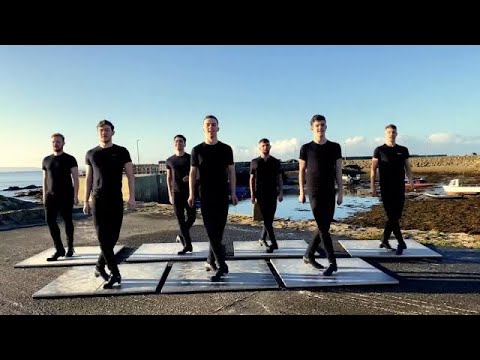
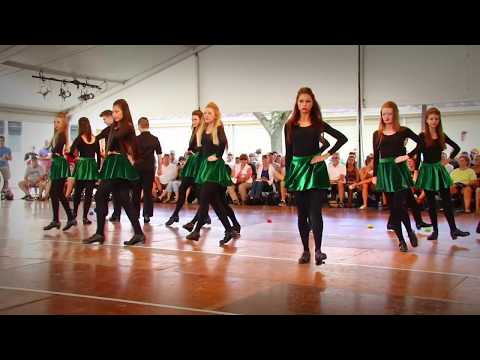
Chart basis: counts from Sport on Earth’s own carried data files at build time — verified videos carried for this sport (the verified pool: sport-videos.json + the desk league pools), news items carried (news.json), and league pages carried (desk.json). No external or estimated figures.
The filter sorts the Review Room embeds and the picture cards above by the keywords in their carried titles (review / analysis / recap and similar, or highlights). It runs entirely in your browser — nothing is sent anywhere.
No hall of fame with a published inductee list is carried for Irish Step Dance. Sport on Earth does not invent halls or inductees: where a recognised hall publishes its list in a form this site can carry, the full list will appear here with its source named.
Governed worldwide by CLRG since 1930, Irish step dance runs from local feiseanna to the annual World Championships first held in Dublin in 1970.
The format, from this sport's verified record:
An arcade take on Irish Step Dance: set the angle, set the power, and land the flyer in the landing mat. Five attempts; the closer to the middle, the more it scores. Arcade distances and a training arc — a game in the spirit of the sport, not a simulation of it.
This page’s own game is the arcade above. Everything else on the site that fits this sport is listed here — and anything borrowed from a similar sport is labelled as that sport’s game, never passed off as this one’s.
The tools on this site that honestly run on Irish Step Dance — its own record first, then the site-wide general tools that apply. The full Irish Step Dance toolkit prints the ones that do not apply, with the data reason why.
Site-wide tools, not built for Irish Step Dance alone: Tournament Planner · My Notebook · The Labs · Design Studio · The Makers’ Bench · Match Day Desk · Play It Near You · Myth-Check Desk · Governing Bodies · Heat & Safety Calculator (WBGT) · Hydration Calculator · Training-Load Planner · Game Clock & Timer · Custom Rulebook Generator · Scout Notes Parser.
Behind the Play · Full treatment — from this sport’s own record
Governed worldwide by CLRG since 1930, Irish step dance runs from local feiseanna to the annual World Championships first held in Dublin in 1970.
Behind the Play takes the decisive actions of Irish Step Dance apart: how the scoring play is built, which patterns the players are really running, and which rules remade the play into its modern shape.
The format, from this sport's verified record:
First World Championships — Oireachtas Rince na Cruinne created (1970). CLRG stages Oireachtas Rince na Cruinne, an annual World Championships held in Easter week, open only to dancers who qualify through regional and national championships.
Created the modern qualification ladder: local feiseanna feed regional Oireachtais, which feed national championships and the Worlds; the event has run annually since, reaching about 4,000 dancers in Dublin in 2025.
Adult modesty ruling — 70-denier tights required (March 2015). Female adult dancers in competitions titled adult championship and/or adult grade competition, solo and team, are required to wear tights of a denier no less than 70 — stated in feis rules as a CLRG ruling of March 2015.
Feis organisers and adjudicators enforce the same tights standard at every CLRG feis that reproduces the rule.
Costume-length modesty rule takes effect (1 February 2020). Costumes must adhere to principles of modesty and allow safe execution of steps; adjudicators who judge a costume too short may require the dancer to change into black tights of not less than 70 denier to continue competing — effective date given in the rule as 1 February 2020.
The rule, with its effective date, is reproduced verbatim in current feis syllabi worldwide, including 2026 syllabi opened for this pack.
From this page’s Rule Changes & Named Rules dossier, where every entry names its source.
Source basis: this sport’s carried record on this page (verified record, rule-changes dossier, history datasets) and the play patterns of its family as written in the site’s guides. Nothing here is invented.