Artistic Swimming Team Free Routine | Paris Champions
YouTube · Olympic Games
Pages
On this page
Sport on Earth › Sports
Sport on Earth · Sport
Choreographed routines in deep water — the renamed synchronised swimming.
News stories from around the world, gathered and sourced by the Sport on Earth desk.
Artistic Swimming is carried on the program for World Aquatics Championships 2027 (Artistic Swimming), 10 – 17 July 2027, in Budapest, Hungary. Choreographed routines in deep water — the renamed synchronised swimming. The desk carries the sport’s full record — guide, calendar and history — on its own page.
World Aquatics · Nov 2026
Artistic Swimming is carried on the program for Los Angeles 2028 Olympic Games, 14 – 30 July 2028, in Los Angeles, USA. Choreographed routines in deep water — the renamed synchronised swimming. The desk carries the sport’s full record — guide, calendar and history — on its own page.
LA28 / IOC · Nov 2026
Written by Sport on Earth’s journalists — columns, features and interviews from the desk.
No columns or stories filed for this sport yet.
Everything the desk has published for Artistic Swimming, organised by section.
From the News Desk · all news, every sport →
Every embed below was verified playable before listing — the network’s standing rule.
YouTube · Olympic Games
YouTube · Matthew Andrew
YouTube · Olympic Games and Olympics Aquatics
Artistic Swimming is carried on the program for World Aquatics Championships 2027 (Artistic Swimming), 10 – 17 July 2027, in Budapest, Hungary. Choreographed routines in deep water — the renamed synchronised swimming. The desk carries the sport’s full record — guide, calendar and history — on its own page.
World Aquatics · Nov 2026
Artistic Swimming is carried on the program for Los Angeles 2028 Olympic Games, 14 – 30 July 2028, in Los Angeles, USA. Choreographed routines in deep water — the renamed synchronised swimming. The desk carries the sport’s full record — guide, calendar and history — on its own page.
LA28 / IOC · Nov 2026
Pages
On this page
No game on this site is made specifically for Artistic Swimming yet. The games below are the site's all-sport games, which honestly cover every sport — nothing from another sport has been dressed up as this sport's game.
A new set of questions every day, across every sport this site covers.
Real-athlete Top Sport on Earth decks built from the site’s verified board data.
Artistic Swimming's lab is the Physics Lab section on this page — the applied physics of its sport family, with a computed interactive where one honestly fits.
Physics Arena — the general biomechanics & physics teaching sandbox, shared by every sport.
The homepage sport explorer also carries a general Lab tab of small interactive experiments.
Calendar data not yet carried for Artistic Swimming — this site does not yet hold schedule data for it, so no dates are shown rather than invented.
Which item should we follow up?
Votes are counted on the Sport on Earth server and the totals shown are every reader’s votes; your own choice is remembered in this browser.
Dated news entries for x164, newest first, dates exactly as carried in the site’s news data.
The flagship competitions on the calendar, with the dates for the current/upcoming cycle. Every date below was verified against the named source on 1 November 2026; dates change, and the source is the authority.
| Event | Dates | Where | Source |
|---|---|---|---|
| World Aquatics Championships 2027 (Artistic Swimming) | 10 – 17 July 2027 | Budapest, Hungary | World Aquatics — Budapest 2027 competition schedule |
| Los Angeles 2028 Olympic Games | 14 – 30 July 2028 | Los Angeles, USA | LA28 / IOC — Games dates |
Water’s density (about 1,000 kg/m³ against air’s 1.225) makes every physics effect enormous: drag grows with the square of speed, so small gains in streamlining beat large gains in strength. The calculator below runs the drag model with water as the default medium and assumptions printed.
Propulsion is the mirror image: the hand, blade or hull pushes water backward, and the reaction pushes the athlete forward (Newton’s third law) — efficient strokes maximise the water ’held’ per stroke (a firm catch) rather than the water slipped. Waves add a second ceiling for displacement craft: a hull’s practical top speed relates to its waterline length, because it must climb its own bow wave.
From this sport's own record: Choreographed routines in deep water — the renamed synchronised swimming. The lab above treats the physics of the sport's family; no measurement specific to this sport is printed, because the site's verified record for it carries none — parameters are never invented to fill a lab.
Model: drag force F = ½·ρ·CdA·v²; power against drag P = F·v. Assumptions: constant drag area, no waves, no rolling or internal resistance — drag only. CdA is the athlete-and-equipment drag area: a tucked cyclist is roughly 0.2–0.3 m²; treat other values as exploration, not measurement.
The general teaching sandbox for every sport is the Physics Arena on the Games page — the same printed models, with a defender added.
The hands-on lab for Artistic Swimming, built entirely from the record this site carries for it — its documented rolls, its halls, its venues, its calendar and its census family. Every figure below is computed from that carried record at build time; nothing is estimated and nothing is pulled live. The companion Physics Lab on this page works the family's physics; this lab works the record.
Artistic Swimming carries 1 hall in the site’s record — International Swimming Hall of Fame — with 814 inductees carried, 0 of them with a full verified profile on this site.
Basis: the Hall of Fame record carried on this site — the same rolls and verified profiles the Hall of Fame books print. Inductees a hall lists but the site has not verified stay list-only, exactly as the books state.
Basis: the dated events this entry’s own record carries, as announced by the bodies named in the record. A sport whose record carries no fixed dated calendar says so on its calendar page rather than inventing one.
Computed from the site census: the Water sports family holds 29 entries on this site. Across the family, the carried record includes documented rolls for 0 of them, Hall of Fame data for 6, venue sets for 7, and dated calendars for 9.
Every other entry in the family: Bodyboarding · Bog Snorkelling · Canoe Polo · Canoeing and Kayaking · Cliff Diving · Diving · Dragon Boat Racing · Finswimming · Freediving · Kiteboarding · Log Rolling · Ocean Rowing · Outrigger Canoeing · Plunge for Distance · Rowing · Sailing · Spearfishing · Sport Diving · Sport Fishing · Surf Lifesaving · Surfing · Swimming · Underwater Hockey · Underwater Rugby · Water Jousting · Water Polo · Waterball / Water Fights · Waterskiing and Wakeboarding
Basis: the Sport on Earth census itself — the same 460-entry register the census page prints.
The desk has not verified a sponsorship record for Artistic Swimming from published sources, so none is printed. Sponsorship history is added only when a real published source supports it — sponsor by sponsor, deal by deal. Current sponsorship deals across sport are tracked on the Money Desk sponsorship page.
How this game is played, gathered from the record Sport on Earth already carries for Artistic Swimming, with the positions taken from the sourced chart cited in that section.
Artistic swimming — known for most of its history as synchronised swimming, renamed by the world federation in 2017 — is choreography performed in deep water: routines mix lifts, throws and underwater figures performed without touching the pool floor.
It has been an Olympic sport since 1984, and the mixed duet era has opened the sport to men at world level.
How artistic swimming works — the rules as this site's record carries them:
Artistic Swimming has no fixed positions — its format designates no positional roles.
Format as carried in hidden_files/batchB-nov1/batchb_data.json: "Choreographed routines in deep water — the renamed synchronised swimming." The format carries no designated positional roles. (Source: Sport on Earth carried sport record.)
Its Tactics & Strategy book — its opening entries, the basic plays, are:
The full book carries 10 entries — in this page’s Playbook / Tactics & Strategy section, and at the Playbooks hub.
Sport on Earth's own analytics: every figure in this panel is computed at build time from the record this site itself carries, with the source named. No outside data is used, and no betting figures of any kind.
Census arithmetic: Artistic Swimming sits in the water sports family — 29 census sports, of which 0 carry a qualifying champions roll in the site's record.
The carried record for Artistic Swimming is too thin for computed panels: no champions roll, hall-of-fame list or venue record is carried for it. This panel therefore prints the census arithmetic only — the honest answer rather than a manufactured figure.
Artistic swimming — known for most of its history as synchronised swimming, renamed by the world federation in 2017 — is choreography performed in deep water: routines mix lifts, throws and underwater figures performed without touching the pool floor.
It has been an Olympic sport since 1984, and the mixed duet era has opened the sport to men at world level.
World Aquatics governs the sport; the season runs through the Artistic Swimming World Cup to the World Championships and the Olympics.
Russia’s two-decade Olympic winning streak ended when the team was excluded after 2022; China won the team gold at Paris 2024.
The 2023 judging overhaul replaced the old single score with element, artistic impression and execution panels plus declared difficulty — routines now carry a difficulty card that can be marked down (a ’base mark’) if elements are not performed as declared.
Sport on Earth carries no artistic swimming results feed — this page is the verified record of the sport, with no results or rankings invented.
Sources, verified November 1, 2026: World Aquatics — Artistic Swimming · Olympics.com — Artistic Swimming
Artistic swimming (synchronised swimming until 2017) rebuilt its scoring in 2023 — the biggest judging upheaval in its history.
Before: Routines were scored holistically by panels (execution, artistic impression, difficulty judged by eye) — a system insiders called impressionistic, in which a routine’s planned difficulty was never formally declared and could not be directly rewarded or audited.
The change: The 2023 system rebuilt scoring around declaration: coaches submit a ’coach card’ listing each element’s declared degree of difficulty in advance; technical controllers verify what was actually performed and apply base-mark deductions for anything short of the declaration, while separate panels score execution and artistic impression. Acrobatics gained formal valuation, and the system punishes failed ambition arithmetically rather than by vibe.
Why it happened: World Aquatics wanted the sport’s judging defensible (its Olympic neighbours — gymnastics with its D-score, diving with its DD table — had declaration systems) and its name change era (2017) completed with a credibility era. Early 2023 meets produced chaos (huge base-mark penalties, favourites buried) as teams learned to declare honestly.
In practice today: Declared difficulty is now the sport’s grammar: routines are engineered on paper before they are swum, and the 2023 code — softened in application since — remains the framework through the current cycle.
Source basis: World Aquatics artistic swimming rule changes (2023 scoring system); FINA’s 2017 renaming of the sport as background.
Sport on Earth carries no results feed for Artistic Swimming: no scores or fixtures are published here, rather than inventing them. The sport's documented record is in its history page and the History & Records section of this page.
The historical record for Artistic Swimming — past standings, champions, title history and all-time leaders, as deep as verifiable public records go.
Season-by-season standings, historical player statistics and title rolls are not carried for Artistic Swimming: no public archive publishes them in a form Sport on Earth can verify, and this site does not invent history. What is carried for this sport is its verified record, its rule-change history and its league history — elsewhere on this page.
The review and analysis videos from Artistic Swimming’s verified video pool — every embed below was identity-checked and probed playable before listing, the site’s standing rule. Nothing here is a show Sport on Earth produces; these are the review, post-game and breakdown videos the pool already carries for this sport.
No verified review-show video is carried for this sport yet.
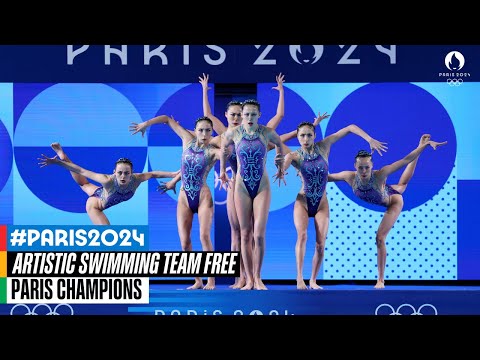
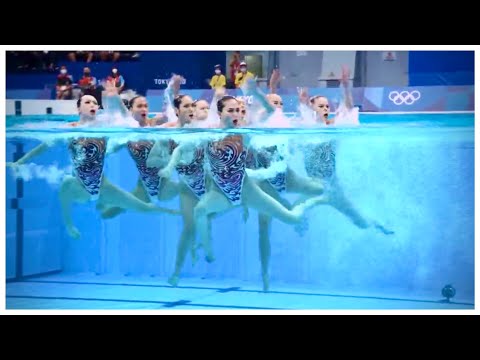
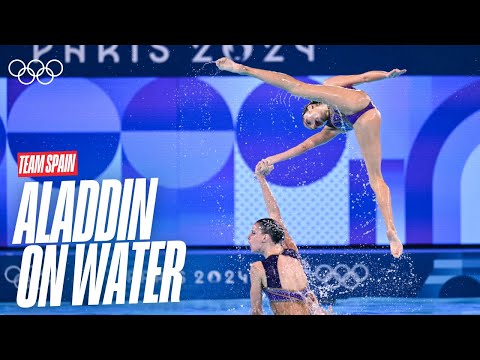
Chart basis: counts from Sport on Earth’s own carried data files at build time — verified videos carried for this sport (the verified pool: sport-videos.json + the desk league pools), news items carried (news.json), and league pages carried (desk.json). No external or estimated figures.
The filter sorts the Review Room embeds and the picture cards above by the keywords in their carried titles (review / analysis / recap and similar, or highlights). It runs entirely in your browser — nothing is sent anywhere.
Artistic swimming is one of the disciplines honoured by the International Swimming Hall of Fame; the full list is carried on the Swimming page and summarised here.
Fort Lauderdale, Florida, United States
814 inductees. The full list is carried on the Swimming page.
Source basis: Wikipedia — "List of members of the International Swimming Hall of Fame" (accessed Nov 1, 2026); parsed mechanically from the article’s published table. Material from Wikipedia is used under CC BY-SA 4.0..
Choreographed routines in deep water — the renamed synchronised swimming.
The format, from this sport's verified record:
📖 Artistic Swimming — Tactics & Strategy — every entry, plus the arcade strategy, at the foot of this page.
An arcade take on Artistic Swimming: set the angle, set the power, and land the diver in a clean entry. Five attempts; the closer to the middle, the more it scores. Arcade distances and a training arc — a game in the spirit of the sport, not a simulation of it.
This page’s own game is the arcade above. Everything else on the site that fits this sport is listed here — and anything borrowed from a similar sport is labelled as that sport’s game, never passed off as this one’s.
The tools on this site that honestly run on Artistic Swimming — its own record first, then the site-wide general tools that apply. The full Artistic Swimming toolkit prints the ones that do not apply, with the data reason why.
Site-wide tools, not built for Artistic Swimming alone: Tournament Planner · My Notebook · The Labs · Design Studio · The Makers’ Bench · Match Day Desk · Play It Near You · Myth-Check Desk · Governing Bodies · Heat & Safety Calculator (WBGT) · Hydration Calculator · Training-Load Planner · Game Clock & Timer · Custom Rulebook Generator · Scout Notes Parser.
Tactics & Strategy — this sport’s book
swimming’s race book — pacing by distance, the turn as a weapon, and the finish’s last five metres, in a sport where the tactics are measured in hundredths.
10 entries, plus the arcade strategy below. All wording is original coaching-vocabulary prose; nothing is copied from any proprietary playbook.
The 400 and up are won from behind: the even or negative split is the doctrine, because the swimmer who leads at halfway has usually spent the gold medal’s money by the 300.
When it’s used: Distance swimming’s version of the marathon’s law, enforced by lactate.
The sequence
The short races are two plays: the start and turn (the underwater phase, where the fastest swimming in the race happens, out to the 15-metre mark) and the surface sprint that follows.
When it’s used: Underwater is the sprint’s first event: dolphin kicks at speeds the surface cannot match.
The sequence
Every wall is a free acceleration for the swimmer who turns well: the tumble turn’s somersault and push-off convert the approach’s speed into the next length’s lead.
When it’s used: In a 1500 there are 29 turns in a short-course pool: the turn is the distance race’s recurring set play.
The sequence
Butterfly, backstroke, breaststroke, freestyle: the individual medley is four races with three transitions, and its tactics are the management of the breaststroke leg, where medleys are won and lost by seconds, not strokes.
When it’s used: The medley’s famous truth: the breaststroker wins it, because that leg’s spread of speeds is the widest.
The sequence
Relay takeovers are timed to hundredths with the incoming swimmer’s touch as the trigger: the exchange’s margin (the reaction time, published to the hundredth) is a duel of nerve, where the fastest exchanges flirt with the disqualification line.
When it’s used: The exchange is the relay’s set play: three of them decide most relays.
The sequence
The 10k marathon swim is a pack race in a washing machine: drafting at the hips and feet, feeds taken from pontoons without stopping, and a finish sprint decided by the last buoy’s positioning.
When it’s used: Open water is road cycling in a wetsuit-less medium: the draft, the pack and the surge all translate.
The sequence
Swimming’s draft is real and priced: behind the feet it is worth the most, at the hip nearly as much — pool racers use the lane rope’s edge of the leader’s wake, open-water swimmers build their whole race on it.
When it’s used: In the pool, one lane apart, the wake still pays — the middle lanes’ seeding is partly a draft map.
The sequence
Races end at the wall’s touch, and the finish is a technique: the last stroke timed to arrive extended, the head down, no breath in the final five metres of a sprint — the flags are the finish’s starting gun.
When it’s used: The finish is rehearsed more than any other five metres, because it is where the hundredths live.
The sequence
Artistic swimming is judged performance in the water: the routine’s choreography, difficulty (the hybrids and connections), and synchronisation are built like a gymnastics floor routine that must be performed while holding its breath.
When it’s used: The routine is a play with no opponent but the standard — and the clock in the lungs.
The sequence
Routines are built around the breath: the long underwater sequences are placed by the choreographer where the swimmers’ lungs, not the music’s drama, dictate — the lungs are the routine’s editor.
When it’s used: Every artistic swimming tactic is downstream of one fact: the performers cannot breathe during the best parts.
The sequence
The arcade cell · strategy
This page’s arcade cell: launch the diver at a clean entry from off the board · 36 m (arcade scale). Angle, power, launch — five attempts, and the cell keeps your best.
When it’s used: On this page, in the Play section — and its strategy is the same craft as the book above it, miniaturised.
The sequence
Part of the Sport on Earth Playbooks — a book for every sport and every game on the site.
Behind the Play · Full treatment — from this sport’s own record
Choreographed routines in deep water — the renamed synchronised swimming.
Behind the Play takes the decisive actions of Artistic Swimming apart: how the scoring play is built, which patterns the players are really running, and which rules remade the play into its modern shape.
The format, from this sport's verified record:
The 2023 Scoring Overhaul (Declared Difficulty) (2023). The 2023 system rebuilt scoring around declaration: coaches submit a ’coach card’ listing each element’s declared degree of difficulty in advance; technical controllers verify what was actually performed and apply base-mark deductions for anything short of the declaration, while separate panels score execution and artistic impression. Acrobatics gained formal valuation, and the system punishes failed ambition…
Declared difficulty is now the sport’s grammar: routines are engineered on paper before they are swum, and the 2023 code — softened in application since — remains the framework through the current cycle.
From this page’s Rule Changes & Named Rules dossier, where every entry names its source.
Source basis: this sport’s carried record on this page (verified record, rule-changes dossier, history datasets) and the play patterns of its family as written in the site’s guides. Nothing here is invented.