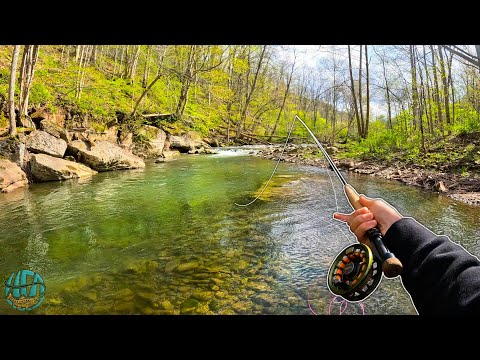
3 Days of INCREDIBLE FLY FISHING! (BIG Brown, brook, and Rainbow Trout!)
YouTube · Hardman Fishing Adventures
Pages
On this page
Sport on Earth › Sports
Sport on Earth · Sport
Recreational fishing for leisure, exercise or competition, usually with rod, reel, line and hook rather than nets or traps.
Every embed below was verified playable before listing — the network’s standing rule.
YouTube · Hardman Fishing Adventures
Pages
On this page
No game on this site is made specifically for Sport Fishing yet. The games below are the site's all-sport games, which honestly cover every sport — nothing from another sport has been dressed up as this sport's game.
A new set of questions every day, across every sport this site covers.
Real-athlete Top Sport on Earth decks built from the site’s verified board data.
Sport Fishing's lab is the Physics Lab section on this page — the applied physics of its sport family, with a computed interactive where one honestly fits.
Physics Arena — the general biomechanics & physics teaching sandbox, shared by every sport.
The homepage sport explorer also carries a general Lab tab of small interactive experiments.
Calendar data not yet carried for Sport Fishing — this site does not yet hold schedule data for it, so no dates are shown rather than invented.
Which section of this page should we expand first?
Votes are counted on the Sport on Earth server and the totals shown are every reader’s votes; your own choice is remembered in this browser.
Sport on Earth does not yet hold verified dated events for Sport Fishing, and its carried record does not state the season's timing in words — so no calendar is shown rather than an invented one. What the site does carry for this sport is on this page: its verified record, its rules record and its history.
Water’s density (about 1,000 kg/m³ against air’s 1.225) makes every physics effect enormous: drag grows with the square of speed, so small gains in streamlining beat large gains in strength. The calculator below runs the drag model with water as the default medium and assumptions printed.
Propulsion is the mirror image: the hand, blade or hull pushes water backward, and the reaction pushes the athlete forward (Newton’s third law) — efficient strokes maximise the water ’held’ per stroke (a firm catch) rather than the water slipped. Waves add a second ceiling for displacement craft: a hull’s practical top speed relates to its waterline length, because it must climb its own bow wave.
From this sport's own record: Recreational fishing for leisure, exercise or competition, usually with rod, reel, line and hook rather than nets or traps. The lab above treats the physics of the sport's family; no measurement specific to this sport is printed, because the site's verified record for it carries none — parameters are never invented to fill a lab.
Model: drag force F = ½·ρ·CdA·v²; power against drag P = F·v. Assumptions: constant drag area, no waves, no rolling or internal resistance — drag only. CdA is the athlete-and-equipment drag area: a tucked cyclist is roughly 0.2–0.3 m²; treat other values as exploration, not measurement.
The general teaching sandbox for every sport is the Physics Arena on the Games page — the same printed models, with a defender added.
The hands-on lab for Sport Fishing, built entirely from the record this site carries for it — its documented rolls, its halls, its venues, its calendar and its census family. Every figure below is computed from that carried record at build time; nothing is estimated and nothing is pulled live. The companion Physics Lab on this page works the family's physics; this lab works the record.
The honest position: the record this site carries for Sport Fishing is thin — no documented roll, hall, venue set or dated calendar is carried for it yet — so this entry’s lab is its family lab: the computed census of the family it belongs to. When the record grows, the lab grows with it; nothing here is estimated to fill the space.
Computed from the site census: the Water sports family holds 29 entries on this site. Across the family, the carried record includes documented rolls for 0 of them, Hall of Fame data for 6, venue sets for 7, and dated calendars for 9.
Every other entry in the family: Artistic Swimming · Bodyboarding · Bog Snorkelling · Canoe Polo · Canoeing and Kayaking · Cliff Diving · Diving · Dragon Boat Racing · Finswimming · Freediving · Kiteboarding · Log Rolling · Ocean Rowing · Outrigger Canoeing · Plunge for Distance · Rowing · Sailing · Spearfishing · Sport Diving · Surf Lifesaving · Surfing · Swimming · Underwater Hockey · Underwater Rugby · Water Jousting · Water Polo · Waterball / Water Fights · Waterskiing and Wakeboarding
Basis: the Sport on Earth census itself — the same 460-entry register the census page prints.
The desk has not verified a sponsorship record for Sport Fishing from published sources, so none is printed. Sponsorship history is added only when a real published source supports it — sponsor by sponsor, deal by deal. Current sponsorship deals across sport are tracked on the Money Desk sponsorship page.
How this game is played, gathered from the record Sport on Earth already carries for Sport Fishing, with the positions taken from the sourced chart cited in that section.
Recreational fishing, also called sport fishing or game fishing, is fishing for leisure, exercise or competition, contrasted with commercial fishing for profit and subsistence fishing for survival. Sport fishing focuses on the physical exertion and thrilling experience of subduing a hard-fighting fish, providing the challenge of a good sport or game and a sense of achievement after a successful catch.
The most common form is angling with rod, reel, line, hooks and baits or lures, while big-game fishing targets large open-water fish such as tuna, billfishes, grouper and shark, typically from yachts. Big-game fishing started as a sport after the invention of the motorized boat, pioneered in 1898 by Dr Charles Frederick Holder, a marine biologist and early conservationist.
The rules — the rules as this site's record carries them:
Sport Fishing has no fixed positions — its format designates no positional roles.
Format as carried in hidden_files/batchB-nov1/batchb_data.json: "Recreational fishing for leisure, exercise or competition, usually with rod, reel, line and hook rather than nets or traps." The format carries no designated positional roles. (Source: Sport on Earth carried sport record.)
Its Tactics & Strategy book — its opening entries, the basic plays, are:
The full book carries 10 entries — in this page’s Playbook / Tactics & Strategy section, and at the Playbooks hub.
Sport on Earth's own analytics: every figure in this panel is computed at build time from the record this site itself carries, with the source named. No outside data is used, and no betting figures of any kind.
Census arithmetic: Sport Fishing sits in the water sports family — 29 census sports, of which 0 carry a qualifying champions roll in the site's record.
The carried record for Sport Fishing is too thin for computed panels: no champions roll, hall-of-fame list or venue record is carried for it. This panel therefore prints the census arithmetic only — the honest answer rather than a manufactured figure.
Recreational fishing, also called sport fishing or game fishing, is fishing for leisure, exercise or competition, contrasted with commercial fishing for profit and subsistence fishing for survival. Sport fishing focuses on the physical exertion and thrilling experience of subduing a hard-fighting fish, providing the challenge of a good sport or game and a sense of achievement after a successful catch.
The most common form is angling with rod, reel, line, hooks and baits or lures, while big-game fishing targets large open-water fish such as tuna, billfishes, grouper and shark, typically from yachts. Big-game fishing started as a sport after the invention of the motorized boat, pioneered in 1898 by Dr Charles Frederick Holder, a marine biologist and early conservationist.
The International Game Fish Association (IGFA) makes and oversees a set of voluntary guidelines, typically prohibiting nets and catching fish with hooks not in the mouth.
Sport fishing competitions involve individuals from land and usually teams from boats, in specified times and areas, with a score awarded for each fish depending on its weight and species.
Recreational fishing competitions evolved from local contests into large competitive circuits, especially in North America, with prizes based on total weight of a given species caught within a predetermined time.
Big-game fishing was pioneered in 1898 by Dr Charles Frederick Holder after the invention of the motorized boat.
Sport fishing has no structured results feed this site can carry, so this page is the verified record only — IGFA guidelines, competitions and game-fish record as verified in November 2026 — with no live results.
Sources, verified November 1, 2026: Sport fishing
Material from Wikipedia linked above is used under CC BY-SA 4.0.
How the laws of Sport Fishing are governed today — the documented record, stated plainly.
Sport fishing is guided by the International Game Fish Association, which makes and oversees voluntary guidelines, alongside government regulations for licensing and conservation. Changes to lures, baits, hook limits and catch-and-release practice described on the page are refinements of that framework rather than dated landmark replacements. No major dated rule change is carried for sport fishing.
That framework summary is the whole documented record Sport on Earth can verify for this sport — no major dated rule changes are carried, rather than invent any.
Source basis: The governing body’s published framework as summarised in this section (see the framework text).
Sport on Earth carries no results feed for Sport Fishing: no scores or fixtures are published here, rather than inventing them. The sport's documented record is in its history page and the History & Records section of this page.
The historical record for Sport Fishing — past standings, champions, title history and all-time leaders, as deep as verifiable public records go.
Season-by-season standings, historical player statistics and title rolls are not carried for Sport Fishing: no public archive publishes them in a form Sport on Earth can verify, and this site does not invent history. What is carried for this sport is its verified record, its rule-change history and its league history — elsewhere on this page.
The review and analysis videos from Sport Fishing’s verified video pool — every embed below was identity-checked and probed playable before listing, the site’s standing rule. Nothing here is a show Sport on Earth produces; these are the review, post-game and breakdown videos the pool already carries for this sport.
No verified review-show video is carried for this sport yet.
The filter sorts the Review Room embeds and the picture cards above by the keywords in their carried titles (review / analysis / recap and similar, or highlights). It runs entirely in your browser — nothing is sent anywhere.
No hall of fame with a published inductee list is carried for Sport Fishing. Sport on Earth does not invent halls or inductees: where a recognised hall publishes its list in a form this site can carry, the full list will appear here with its source named.
Recreational fishing for leisure, exercise or competition, usually with rod, reel, line and hook rather than nets or traps.
The format, from this sport's verified record:
The Sport Fishing record book is still thin: beyond the standings, rules and calendar layers on this page, no verified winners roll or honours list is carried yet. The desk adds record material only when a published source can be named for it — never from memory or invention.
More from the desk: the expert guide to Sport Fishing · the site-wide Writing Desk · every sport on Earth.
📖 Sport Fishing — Tactics & Strategy — every entry, plus the arcade strategy, at the foot of this page.
An arcade take on Sport Fishing: set the angle, set the power, and land the diver in a clean entry. Five attempts; the closer to the middle, the more it scores. Arcade distances and a training arc — a game in the spirit of the sport, not a simulation of it.
This page’s own game is the arcade above. Everything else on the site that fits this sport is listed here — and anything borrowed from a similar sport is labelled as that sport’s game, never passed off as this one’s.
The tools on this site that honestly run on Sport Fishing — its own record first, then the site-wide general tools that apply. The full Sport Fishing toolkit prints the ones that do not apply, with the data reason why.
No bench tool yet computes from Sport Fishing’s own carried record — the general tools below are the ones that honestly apply.
Site-wide tools, not built for Sport Fishing alone: Tournament Planner · My Notebook · The Labs · Design Studio · The Makers’ Bench · Match Day Desk · Play It Near You · Myth-Check Desk · Governing Bodies · Heat & Safety Calculator (WBGT) · Hydration Calculator · Training-Load Planner · Game Clock & Timer · Custom Rulebook Generator · Scout Notes Parser.
Tactics & Strategy — this sport’s book
the precision family’s shared tactics book — archery, shooting, throws and place-games whose contest is the repeatable delivery under rising pressure: the routine is their common play.
10 entries, plus the arcade strategy below. All wording is original coaching-vocabulary prose; nothing is copied from any proprietary playbook.
Every precision sport converges on the same play: a fixed pre-delivery routine — breath, stance, visual target picture, release cue — repeated until the delivery is the routine’s output, not the moment’s invention.
When it’s used: The routine is the only play in these sports that is called on every single attempt.
The sequence
Outdoors, the wind is read off grass, flags, mirage and the last shot’s error: the craft is a running estimate, updated by every attempt and never finally known.
When it’s used: From archery’s field to the shooter’s range, the wind is the defence every competitor shares.
The sequence
Precision is calibrated, not wished: the group (the pattern of shots) is moved by the sights, and the group’s size is the honest measure of the day — the craft is reading a group like a sentence.
When it’s used: A tight group in the wrong place is good news wearing a disguise; a loose group centred is the opposite.
The sequence
Series are budgeted: time per shot, breaths per end, the deliberate slowness that keeps the last attempt identical to the first — fatigue in precision sport is a tremor that arrives by schedule.
When it’s used: The last shot of the final is lost in the first shots’ haste more often than in its own moment.
The sequence
Reads & counters
Finals are built to end on one delivery: the last attempt’s craft is the routine unchanged, the target picture accepted as imperfect, and the refusal to steer the shot in — the steering is how finals are lost.
When it’s used: The last attempt is the routine’s examination; nothing new is admitted to the exam room.
The sequence
Where the rules offer target choices — distances, zones, bonus rings — the competitor climbs a ladder priced by the standing: bank the safe score, spend risk only where the table pays for it.
When it’s used: From axe throwing’s clutch to archery’s field rounds, the ladder is the tactics layer over the technique.
The sequence
The thrown-placement branch of the family plays for ground, not targets: kubb’s baton throws knock down the opponent’s kubbs before the king may be attempted; horseshoes score by proximity and ringers; cornhole’s bags slide, block and airmail; marbles are won by shooting the opponent’s out of the ring.
When it’s used: Placement games are the bowls family’s wilder children: the ground is won, not the bullseye.
The sequence
Earth, clay, sand and boards each give the thrown object a different last metre: the precision family’s ground games are scouted like greens — where the bounce dies, where the slide runs, where the roll breaks.
When it’s used: The surface is the placement game’s silent partner, and it plays for the home side.
The sequence
Competitive angling — bass tournaments, fly casting, match fishing — is a reading contest: structure (the underwater features fish hold to), the weather’s effect on the fish’s mood, and the pattern (the lure and presentation that works today) found faster than the field.
When it’s used: The pattern is the day’s play, discovered in practice and defended in the tournament.
The sequence
Bass competition is a limit game — five fish, weighed: culling (replacing the smallest) is its roster management, and the livewell’s care is the day’s quiet tactic, because dead fish are penalised.
When it’s used: The limit makes it a selection contest: the day’s five are a team picked one fish at a time.
The sequence
The arcade cell · strategy
This page’s arcade cell: launch the diver at a clean entry from off the board · 36 m (arcade scale). Angle, power, launch — five attempts, and the cell keeps your best.
When it’s used: On this page, in the Play section — and its strategy is the same craft as the book above it, miniaturised.
The sequence
Part of the Sport on Earth Playbooks — a book for every sport and every game on the site.
Behind the Play · Full treatment — from this sport’s own record
Recreational fishing for leisure, exercise or competition, usually with rod, reel, line and hook rather than nets or traps.
Behind the Play takes the decisive actions of Sport Fishing apart: how the scoring play is built, which patterns the players are really running, and which rules remade the play into its modern shape.
The format, from this sport's verified record:
Source basis: this sport’s carried record on this page (verified record, rule-changes dossier, history datasets) and the play patterns of its family as written in the site’s guides. Nothing here is invented.