Professional women’s dragon boat teams highlight race in South China city
YouTube · CGTN
Pages
On this page
Sport on Earth › Sports
Sport on Earth · Sport
Twenty paddlers, a drummer and a steer — racing to one stroke.
Every embed below was verified playable before listing — the network’s standing rule.
YouTube · CGTN
YouTube · Amusing Animals
Pages
On this page
No game on this site is made specifically for Dragon Boat Racing yet. The games below are the site's all-sport games, which honestly cover every sport — nothing from another sport has been dressed up as this sport's game.
A new set of questions every day, across every sport this site covers.
Real-athlete Top Sport on Earth decks built from the site’s verified board data.
Dragon Boat Racing's lab is the Physics Lab section on this page — the applied physics of its sport family, with a computed interactive where one honestly fits.
Physics Arena — the general biomechanics & physics teaching sandbox, shared by every sport.
The homepage sport explorer also carries a general Lab tab of small interactive experiments.
Calendar data not yet carried for Dragon Boat Racing — this site does not yet hold schedule data for it, so no dates are shown rather than invented.
Which section of this page should we expand first?
Votes are counted on the Sport on Earth server and the totals shown are every reader’s votes; your own choice is remembered in this browser.
Sport on Earth does not yet hold verified dated events for Dragon Boat Racing, and its carried record does not state the season's timing in words — so no calendar is shown rather than an invented one. What the site does carry for this sport is on this page: its verified record, its rules record and its history.
Water’s density (about 1,000 kg/m³ against air’s 1.225) makes every physics effect enormous: drag grows with the square of speed, so small gains in streamlining beat large gains in strength. The calculator below runs the drag model with water as the default medium and assumptions printed.
Propulsion is the mirror image: the hand, blade or hull pushes water backward, and the reaction pushes the athlete forward (Newton’s third law) — efficient strokes maximise the water ’held’ per stroke (a firm catch) rather than the water slipped. Waves add a second ceiling for displacement craft: a hull’s practical top speed relates to its waterline length, because it must climb its own bow wave.
From this sport's own record: Twenty paddlers, a drummer and a steer — racing to one stroke. The lab above treats the physics of the sport's family; no measurement specific to this sport is printed, because the site's verified record for it carries none — parameters are never invented to fill a lab.
Model: drag force F = ½·ρ·CdA·v²; power against drag P = F·v. Assumptions: constant drag area, no waves, no rolling or internal resistance — drag only. CdA is the athlete-and-equipment drag area: a tucked cyclist is roughly 0.2–0.3 m²; treat other values as exploration, not measurement.
The general teaching sandbox for every sport is the Physics Arena on the Games page — the same printed models, with a defender added.
The hands-on lab for Dragon Boat Racing, built entirely from the record this site carries for it — its documented rolls, its halls, its venues, its calendar and its census family. Every figure below is computed from that carried record at build time; nothing is estimated and nothing is pulled live. The companion Physics Lab on this page works the family's physics; this lab works the record.
The honest position: the record this site carries for Dragon Boat Racing is thin — no documented roll, hall, venue set or dated calendar is carried for it yet — so this entry’s lab is its family lab: the computed census of the family it belongs to. When the record grows, the lab grows with it; nothing here is estimated to fill the space.
Computed from the site census: the Water sports family holds 29 entries on this site. Across the family, the carried record includes documented rolls for 0 of them, Hall of Fame data for 6, venue sets for 7, and dated calendars for 9.
Every other entry in the family: Artistic Swimming · Bodyboarding · Bog Snorkelling · Canoe Polo · Canoeing and Kayaking · Cliff Diving · Diving · Finswimming · Freediving · Kiteboarding · Log Rolling · Ocean Rowing · Outrigger Canoeing · Plunge for Distance · Rowing · Sailing · Spearfishing · Sport Diving · Sport Fishing · Surf Lifesaving · Surfing · Swimming · Underwater Hockey · Underwater Rugby · Water Jousting · Water Polo · Waterball / Water Fights · Waterskiing and Wakeboarding
Basis: the Sport on Earth census itself — the same 460-entry register the census page prints.
The desk has not verified a sponsorship record for Dragon Boat Racing from published sources, so none is printed. Sponsorship history is added only when a real published source supports it — sponsor by sponsor, deal by deal. Current sponsorship deals across sport are tracked on the Money Desk sponsorship page.
How this game is played, gathered from the record Sport on Earth already carries for Dragon Boat Racing, with the positions taken from the sourced chart cited in that section.
Dragon boat racing pairs twenty paddlers in a long, narrow boat with a drummer at the bow and a steerer at the stern — a racing format with two-thousand-year roots in China that is now one of Asia’s biggest team sports and a fixture of the Asian Games.
Crews win and lose on synchronisation: twenty paddles entering the water as one.
How dragon boat racing works — the rules as this site's record carries them:
The positions for Dragon Boat Racing, as carried from the source cited below:
Positions source: International Dragon Boat Federation (IDBF) — IDBF standard racing crew of 22: 20 paddlers, 1 drummer and 1 steerer/sweep; the front paddlers are the strokes who set the pace.
Its Playbook — its opening entries, the basic plays, are:
The full book carries 7 entries — in this page’s Playbook / Tactics & Strategy section, and at the Playbooks hub.
Sport on Earth's own analytics: every figure in this panel is computed at build time from the record this site itself carries, with the source named. No outside data is used, and no betting figures of any kind.
Census arithmetic: Dragon Boat Racing sits in the water sports family — 29 census sports, of which 0 carry a qualifying champions roll in the site's record.
The carried record for Dragon Boat Racing is too thin for computed panels: no champions roll, hall-of-fame list or venue record is carried for it. This panel therefore prints the census arithmetic only — the honest answer rather than a manufactured figure.
Dragon boat racing pairs twenty paddlers in a long, narrow boat with a drummer at the bow and a steerer at the stern — a racing format with two-thousand-year roots in China that is now one of Asia’s biggest team sports and a fixture of the Asian Games.
Crews win and lose on synchronisation: twenty paddles entering the water as one.
The International Dragon Boat Federation (IDBF) was founded in 1991 in Hong Kong and runs the World Nations Championships and the Club Crew World Championships in alternating years.
The sport is a full medal sport at the Asian Games and has been demonstrated at the Olympics (Tokyo 2020, as an exhibition).
Premier racing uses 22-person crews (20 paddlers, drummer, steer); small-boat racing uses 12.
Sport on Earth carries no dragon boat results feed — this page is the verified record of the sport; no results are invented.
Sources, verified November 1, 2026: International Dragon Boat Federation · Olympics.com — Dragon Boat (Asian Games sport)
How the laws of Dragon Boat Racing are governed today — the documented record, stated plainly.
Dragon boat racing is governed by the IDBF under standard race rules (20 paddlers, drummer, steer, fixed boat specifications and distance classes) maintained since the federation’s founding in 1991 — a codification of a two-thousand-year-old festival tradition that has been stable in the modern era. No major documented rule change is carried for dragon boat racing.
That framework summary is the whole documented record Sport on Earth can verify for this sport — no major dated rule changes are carried, rather than invent any.
Source basis: The governing body’s published framework as summarised in this section (see the framework text).
Sport on Earth carries no results feed for Dragon Boat Racing: no scores or fixtures are published here, rather than inventing them. The sport's documented record is in its history page and the History & Records section of this page.
The historical record for Dragon Boat Racing — past standings, champions, title history and all-time leaders, as deep as verifiable public records go.
Season-by-season standings, historical player statistics and title rolls are not carried for Dragon Boat Racing: no public archive publishes them in a form Sport on Earth can verify, and this site does not invent history. What is carried for this sport is its verified record, its rule-change history and its league history — elsewhere on this page.
The review and analysis videos from Dragon Boat Racing’s verified video pool — every embed below was identity-checked and probed playable before listing, the site’s standing rule. Nothing here is a show Sport on Earth produces; these are the review, post-game and breakdown videos the pool already carries for this sport.
No verified review-show video is carried for this sport yet.
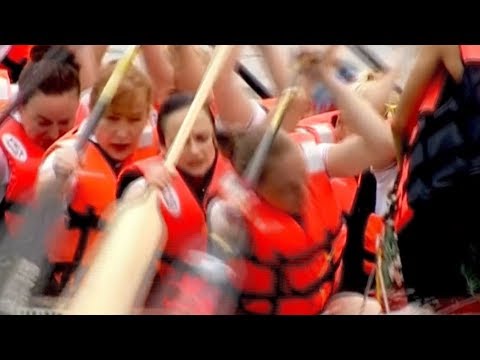
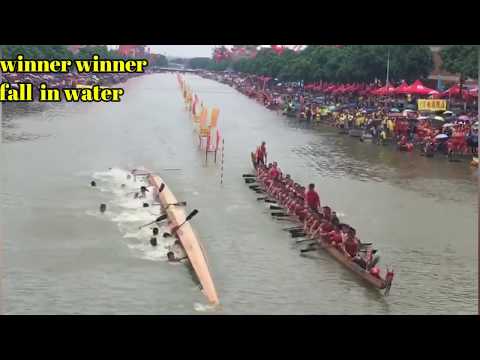
The filter sorts the Review Room embeds and the picture cards above by the keywords in their carried titles (review / analysis / recap and similar, or highlights). It runs entirely in your browser — nothing is sent anywhere.
No hall of fame with a published inductee list is carried for Dragon Boat Racing. Sport on Earth does not invent halls or inductees: where a recognised hall publishes its list in a form this site can carry, the full list will appear here with its source named.
Twenty paddlers, a drummer and a steer — racing to one stroke.
The format, from this sport's verified record:
The Dragon Boat Racing record book is still thin: beyond the standings, rules and calendar layers on this page, no verified winners roll or honours list is carried yet. The desk adds record material only when a published source can be named for it — never from memory or invention.
More from the desk: the expert guide to Dragon Boat Racing · the site-wide Writing Desk · every sport on Earth.
📖 The Dragon Boat Racing Playbook — every entry, plus the arcade strategy, at the foot of this page.
An arcade take on Dragon Boat Racing: set the angle, set the power, and land the diver in a clean entry. Five attempts; the closer to the middle, the more it scores. Arcade distances and a training arc — a game in the spirit of the sport, not a simulation of it.
This page’s own game is the arcade above. Everything else on the site that fits this sport is listed here — and anything borrowed from a similar sport is labelled as that sport’s game, never passed off as this one’s.
The tools on this site that honestly run on Dragon Boat Racing — its own record first, then the site-wide general tools that apply. The full Dragon Boat Racing toolkit prints the ones that do not apply, with the data reason why.
No bench tool yet computes from Dragon Boat Racing’s own carried record — the general tools below are the ones that honestly apply.
Site-wide tools, not built for Dragon Boat Racing alone: Tournament Planner · My Notebook · The Labs · Design Studio · The Makers’ Bench · Match Day Desk · Play It Near You · Myth-Check Desk · Governing Bodies · Heat & Safety Calculator (WBGT) · Hydration Calculator · Training-Load Planner · Game Clock & Timer · Custom Rulebook Generator · Scout Notes Parser.
The Playbook · set plays, systems & situations
the paddle family’s shared book — canoe and kayak racing’s wash-riding and dragon boat’s drum: the paddle sports share the water’s draft and the stroke’s geometry.
7 entries, plus the arcade strategy below. All wording is original coaching-vocabulary prose; nothing is copied from any proprietary playbook.
A paddler on another’s wash — the V of water behind and beside a leading boat — rides with measurably less effort: wash-riding (within the rules’ letter) is the flatwater race’s team play and its controversy in one.
When it’s used: The wash is the peloton’s draft in a single lane’s width.
The sequence
The 200/500/1000 starts are explosive set pieces — the first 20 strokes at a rate the finish cannot imagine — followed by the settle to race pace, exactly like rowing’s, because the physiology is rowing’s cousin.
When it’s used: The sprint canoe/kayak race is rowing’s plan translated to a single blade.
The sequence
Canoe marathons include portages — running with the boat around weirs and locks: the portage is a transition sport of its own, with the entry and exit as its T1 and T2.
When it’s used: Races are won on land by crews who rehearsed being pedestrians.
The sequence
Twenty paddlers, one drum: the dragon boat’s drummer sets the stroke rate from the bow, the steersman holds the line from the stern, and the crew’s synchrony is the boat’s engine — a caught crab of timing costs more than any paddler’s strength buys.
When it’s used: The drum is the coach inside the race: its beat is the game plan made audible.
The sequence
The whitewater branches add the river’s book: eddies as rest stops, the upstream gate’s ferry glide, and a line chosen from the bank before it is paddled — the river is read like a course map because it is one, drawn in foam.
When it’s used: Wildwater craft belongs in this book’s appendix and in the kayakers’ hearts.
The sequence
Canoe and kayak marathons are fed from the bank at set points (a bottle passed at speed, a gel in a deck bag): the feed is the marathon’s pit stop performed without stopping, and its fumble is the race’s classic unforced error.
When it’s used: The feed zone is the marathon’s ruck: boats converge, bottles fly, and positions change hands.
The sequence
The paddle family’s wild branch reads rivers: the hydraulic (the recirculating water below a drop), the strainer (the fallen tree, the river’s one unforgivable obstacle), and the throw line’s rescue — the river book’s safety chapter is the family’s most serious, because the river is its strongest opponent.
When it’s used: The strainer is the river’s red card: it does not forgive, and the book teaches its avoidance before any technique.
The sequence
The arcade cell · strategy
This page’s arcade cell: launch the diver at a clean entry from off the board · 36 m (arcade scale). Angle, power, launch — five attempts, and the cell keeps your best.
When it’s used: On this page, in the Play section — and its strategy is the same craft as the book above it, miniaturised.
The sequence
Part of the Sport on Earth Playbooks — a book for every sport and every game on the site.
Behind the Play · Full treatment — from this sport’s own record
Twenty paddlers, a drummer and a steer — racing to one stroke.
Behind the Play takes the decisive actions of Dragon Boat Racing apart: how the scoring play is built, which patterns the players are really running, and which rules remade the play into its modern shape.
The format, from this sport's verified record:
Source basis: this sport’s carried record on this page (verified record, rule-changes dossier, history datasets) and the play patterns of its family as written in the site’s guides. Nothing here is invented.