Episode 1 — The Abu Dhabi World Pro closes this week - no professional results published yet
Ep. 1 — the week ending Saturday, November 21, 2026 · 1:15
Pages
On this page
Sport on Earth › Sports
Sport on Earth · Sport
Submission grappling — position, then the finish.
Sport on Earth’s daily and weekly video shows for Brazilian Jiu-Jitsu — every episode, newest first.
Ep. 1 — the week ending Saturday, November 21, 2026 · 1:15
Every embed below was verified playable before listing — the network’s standing rule.
YouTube · Jakub Ceg
YouTube · FloGrappling
YouTube · ADCC Official
YouTube · Jiu-Jitsu Times
YouTube · FloGrappling
YouTube · FloGrappling
YouTube · FloGrappling
YouTube · Takedown Breakdown 👥
YouTube · Jiu Jitsu Doesn’t Work
YouTube · Takedown Breakdown 👥
YouTube · CultureXCafe
YouTube · Justin Lesko
YouTube · Knockem or Lockem
YouTube · Knockem or Lockem
YouTube · Knockem or Lockem
YouTube · Takedown Breakdown 👥
YouTube · Armbar4you
YouTube · HelloJapan05
YouTube · Jesse Enkamp
YouTube · Tyler Spangler
YouTube · FloGrappling
YouTube · JIU JITSU PELO MUNDO
YouTube · ngterr
YouTube · Jesse Enkamp
YouTube · Jedi Does Jiujitsu
YouTube · JoshRichBJJ
YouTube · Lex Clips
YouTube · MMA Leech
YouTube · stuartcooperfilms
YouTube · Eat Films
YouTube · Gabriel “The Grimey Gremlin” Godoy
YouTube · FloGrappling
YouTube · USDC by Rokas Leo
YouTube · Agon Combat Jiu Jitsu
YouTube · Art of One Dojo
YouTube · JRE Clips
YouTube · Eat Films
YouTube · Brandon Mccaghren and 10th Planet Network
YouTube · stuartcooperfilms
YouTube · BJJ
YouTube · FloGrappling
YouTube · Mason Fowler
YouTube · Teaching you MMA & BJJ
YouTube · Dominic Barry
YouTube · JiuJitsu FLO
YouTube · dylanclips
YouTube · Fit Flex
YouTube · Dominic Barry
Pages
On this page
No game on this site is made specifically for Brazilian Jiu-Jitsu yet. The games below are the site's all-sport games, which honestly cover every sport — nothing from another sport has been dressed up as this sport's game.
A new set of questions every day, across every sport this site covers.
Real-athlete Top Sport on Earth decks built from the site’s verified board data.
Brazilian Jiu-Jitsu's lab is the Physics Lab section on this page — the applied physics of its sport family, with a computed interactive where one honestly fits.
Physics Arena — the general biomechanics & physics teaching sandbox, shared by every sport.
The homepage sport explorer also carries a general Lab tab of small interactive experiments.
Calendar data not yet carried for Brazilian Jiu-Jitsu — this site does not yet hold schedule data for it, so no dates are shown rather than invented.
Which section of this page should we expand first?
Votes are counted on the Sport on Earth server and the totals shown are every reader’s votes; your own choice is remembered in this browser.
Sport on Earth does not yet hold verified dated events for Brazilian Jiu-Jitsu, and its carried record does not state the season's timing in words — so no calendar is shown rather than an invented one. What the site does carry for this sport is on this page: its verified record, its rules record and its history.
A strike’s effect is impulse: force applied over contact time, changing momentum (mass × velocity). The calculator below computes momentum and kinetic energy for a moving mass at a chosen speed — the two numbers behind every conversation about power. Real strikes add the effective mass of the body behind the limb, which is why technique (putting body mass into the blow) out-punches arm speed alone.
Throws and takedowns are rotation: a small force applied far from the opponent’s centre of mass produces a large turning effect (torque), which is why grips at the sleeve, collar or leg unbalance opponents who are stronger in a straight line. Grappling defence is the reverse — widen the base, lower the centre of mass, deny the lever.
From this sport's own record: Submission grappling — position, then the finish. The lab above treats the physics of the sport's family; no measurement specific to this sport is printed, because the site's verified record for it carries none — parameters are never invented to fill a lab.
Model: momentum p = m·v; kinetic energy KE = ½·m·v². Assumptions: a single rigid mass at one speed — a real strike or throw involves an effective mass larger than the limb alone (the body behind it) and a contact time that decides the peak force. The numbers show the scaling: energy grows with the square of speed, only linearly with mass.
The general teaching sandbox for every sport is the Physics Arena on the Games page — the same printed models, with a defender added.
The hands-on lab for Brazilian Jiu-Jitsu, built entirely from the record this site carries for it — its documented rolls, its halls, its venues, its calendar and its census family. Every figure below is computed from that carried record at build time; nothing is estimated and nothing is pulled live. The companion Physics Lab on this page works the family's physics; this lab works the record.
The honest position: the record this site carries for Brazilian Jiu-Jitsu is thin — no documented roll, hall, venue set or dated calendar is carried for it yet — so this entry’s lab is its family lab: the computed census of the family it belongs to. When the record grows, the lab grows with it; nothing here is estimated to fill the space.
Computed from the site census: the Combat sports family holds 49 entries on this site. Across the family, the carried record includes documented rolls for 0 of them, Hall of Fame data for 4, venue sets for 10, and dated calendars for 5.
Every other entry in the family: Alysh · Ashirma · Boxing · Canne de Combat · Capoeira · Chess Boxing · Chidaoba · Donga · Evala · Fencing · Glima · HEMA · Historical Medieval Battle · Inbuan · Ju-Jitsu · Judo · Karate · Karate Combat · Kendo · Khapkagay · Khuresh · Kickboxing · Kokoowa · Kurash · Kureash · Lethwei · Lotta Sardesca · Lucha Canaria · Lucha de Tolete · Lucha del Garrote · Mbor · Mixed Martial Arts · Moraingy · Muay Thai · Pencak Silat · Power Slap · Sambo · Savate · Schwingen · Sport Kobudo · Ssireum · Sumo · Taekkyeon · Taekwondo · Tahtib · Tarung Derajat · Wrestling · Wushu
Basis: the Sport on Earth census itself — the same 460-entry register the census page prints.
The desk has not verified a sponsorship record for Brazilian Jiu-Jitsu from published sources, so none is printed. Sponsorship history is added only when a real published source supports it — sponsor by sponsor, deal by deal. Current sponsorship deals across sport are tracked on the Money Desk sponsorship page.
How this game is played, gathered from the record Sport on Earth already carries for Brazilian Jiu-Jitsu, with the positions taken from the sourced chart cited in that section.
Brazilian jiu-jitsu (BJJ) is the grappling art built on leverage and ground fighting: take the fight down, advance position, and finish with a joint lock or choke — or win on points for position. Developed in Brazil from judo roots by the Gracie family, it became the ground-fighting foundation of modern MMA.
Its gi (uniform) and no-gi (submission grappling) branches run parallel world championships.
How BJJ scoring works — the rules as this site's record carries them:
Brazilian Jiu-Jitsu has no fixed positions — its format designates no positional roles.
Format as carried in hidden_files/batchB-nov1/batchb_data.json: "Submission grappling — position, then the finish." The format carries no designated positional roles. (Source: Sport on Earth carried sport record.)
Its Tactics & Strategy book — its opening entries, the basic plays, are:
The full book carries 12 entries — in this page’s Playbook / Tactics & Strategy section, and at the Playbooks hub.
Sport on Earth's own analytics: every figure in this panel is computed at build time from the record this site itself carries, with the source named. No outside data is used, and no betting figures of any kind.
Census arithmetic: Brazilian Jiu-Jitsu sits in the combat sports family — 49 census sports, of which 0 carry a qualifying champions roll in the site's record.
The carried record for Brazilian Jiu-Jitsu is too thin for computed panels: no champions roll, hall-of-fame list or venue record is carried for it. This panel therefore prints the census arithmetic only — the honest answer rather than a manufactured figure.
Brazilian jiu-jitsu (BJJ) is the grappling art built on leverage and ground fighting: take the fight down, advance position, and finish with a joint lock or choke — or win on points for position. Developed in Brazil from judo roots by the Gracie family, it became the ground-fighting foundation of modern MMA.
Its gi (uniform) and no-gi (submission grappling) branches run parallel world championships.
The International Brazilian Jiu-Jitsu Federation (IBJJF) runs the World Championship — the Mundials, held annually in California since 2007 after beginning in Rio de Janeiro in 1996 — plus the Pans, Europeans and Brazilian Nationals that make up the Grand Slam of gi competition.
The no-gi flagship is the ADCC Submission Fighting World Championship (held every two years since 1998), the most prestigious title in submission grappling.
Roger Gracie and Marcus ’Buchecha’ Almeida are the most decorated men’s world champions; Beatriz Mesquita leads the women’s titles list.
Sport on Earth carries no BJJ results feed — this page is the verified record of the sport; no results are invented.
Sources, verified November 1, 2026: IBJJF · ADCC Submission Fighting World Championship
Brazilian jiu-jitsu’s rules are its federation’s (IBJJF) point system — and its biggest modern change was admitting the submission the old code exiled.
Before: The IBJJF banned heel hooks (and reaping the knee) in all its competition for decades — the technique was deemed too dangerous, a career-ender applied faster than a tap can come — while submission-grappling rivals (ADCC, the pro sub-only scene) built their games around leg entanglements. IBJJF jiu-jitsu and modern leg-lock grappling diverged into separate sports in all but name.
The change: From 2021, the IBJJF legalised heel hooks (and knee reaping) in no-gi competition for brown and black belts — the elite tiers — while keeping them banned in the gi and at lower belts.
Why it happened: The federation faced irrelevance in no-gi: its champions were losing the leg-lock arms race to athletes from open-rules promotions, and fan attention followed the submissions. Legalisation at the top level only was the IBJJF’s characteristic compromise — the technique is admitted where experience can defend it.
In practice today: Elite no-gi divisions now train the full leg game; the gi game retains its traditional geometry, so BJJ’s two wardrobes have genuinely different rulebooks inside one federation — a split the sport now treats as natural.
Source basis: IBJJF rule book revisions (2021 nogi heel-hook legalisation for brown/black belts); ADCC rules as the counter-tradition.
Sport on Earth carries no results feed for Brazilian Jiu-Jitsu: no scores or fixtures are published here, rather than inventing them. The sport's documented record is in its history page and the History & Records section of this page.
The historical record for Brazilian Jiu-Jitsu — past standings, champions, title history and all-time leaders, as deep as verifiable public records go.
Season-by-season standings, historical player statistics and title rolls are not carried for Brazilian Jiu-Jitsu: no public archive publishes them in a form Sport on Earth can verify, and this site does not invent history. What is carried for this sport is its verified record, its rule-change history and its league history — elsewhere on this page.
The review and analysis videos from Brazilian Jiu-Jitsu’s verified video pool — every embed below was identity-checked and probed playable before listing, the site’s standing rule. Nothing here is a show Sport on Earth produces; these are the review, post-game and breakdown videos the pool already carries for this sport.
YouTube · Certified Jiu Jitsu
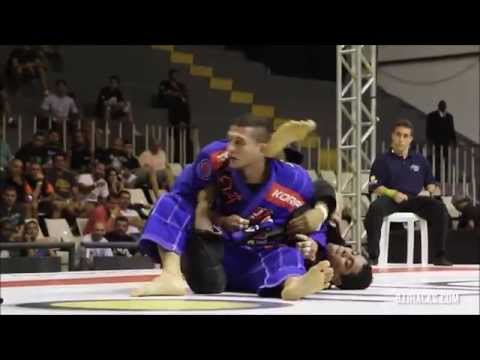
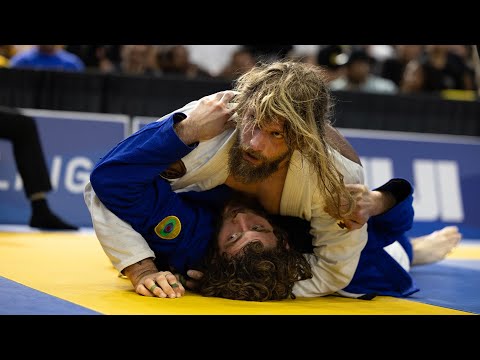

The filter sorts the Review Room embeds and the picture cards above by the keywords in their carried titles (review / analysis / recap and similar, or highlights). It runs entirely in your browser — nothing is sent anywhere.
No hall of fame with a published inductee list is carried for Brazilian Jiu-Jitsu. Sport on Earth does not invent halls or inductees: where a recognised hall publishes its list in a form this site can carry, the full list will appear here with its source named.
Submission grappling — position, then the finish.
The format, from this sport's verified record:
The Brazilian Jiu-Jitsu record book, as this site carries it: its rule-changes dossier records 1 dated changes and named rules. Every figure above is computed from the lists and dossiers printed on this page, each with its source basis named beside it.
More from the desk: the expert guide to Brazilian Jiu-Jitsu · the site-wide Writing Desk · every sport on Earth.
📖 Brazilian Jiu-Jitsu — Tactics & Strategy — every entry, plus the arcade strategy, at the foot of this page.
An arcade take on Brazilian Jiu-Jitsu: set the angle, set the power, and land the strike in the pad. Five attempts; the closer to the middle, the more it scores. Arcade distances and a training arc — a game in the spirit of the sport, not a simulation of it.
This page’s own game is the arcade above. Everything else on the site that fits this sport is listed here — and anything borrowed from a similar sport is labelled as that sport’s game, never passed off as this one’s.
The tools on this site that honestly run on Brazilian Jiu-Jitsu — its own record first, then the site-wide general tools that apply. The full Brazilian Jiu-Jitsu toolkit prints the ones that do not apply, with the data reason why.
Site-wide tools, not built for Brazilian Jiu-Jitsu alone: Tournament Planner · My Notebook · The Labs · Design Studio · The Makers’ Bench · Match Day Desk · Play It Near You · Myth-Check Desk · Governing Bodies · Heat & Safety Calculator (WBGT) · Hydration Calculator · Training-Load Planner · Game Clock & Timer · Custom Rulebook Generator · Scout Notes Parser.
Tactics & Strategy — this sport’s book
the grappling family’s shared book — wrestling, judo, Brazilian jiu-jitsu, sambo, kurash, alysh and the folk wrestlings: grip fighting, throws and the ground’s ladder, with each art’s signature entries following on its page.
12 entries, plus the arcade strategy below. All wording is original coaching-vocabulary prose; nothing is copied from any proprietary playbook.
Every grappling exchange begins with the grips: the hands fight for the collar, the sleeve, the belt or the tie-up that makes the throw possible — the throw is decided before it is attempted, in the grip fight’s small print.
When it’s used: Grips are the grappling family’s formations: they declare what may happen next.
The sequence
Judo named it: every throw begins by breaking the opponent’s balance in the direction of the throw — the eight directions of kuzushi are the family’s shared physics, whatever the art’s costume.
When it’s used: The throw is the third act: kuzushi first, entry second, the throw is the fall’s receipt.
The sequence
Wrestling’s takedowns begin below: the level change drops the hips, the penetration step enters the opponent’s space, and the finish drives through — the shot is a sprint’s first three steps, rehearsed like one.
When it’s used: The shot is grappling’s jab: everything in wrestling is built behind it.
The sequence
On the ground, the guard — legs around the opponent — is Brazilian jiu-jitsu’s invention of a fighting position from underneath, and passing it is the top game’s central problem: the guard is a fortress with submissions for gates.
When it’s used: The guard inverted a thousand years of top-is-good doctrine; the pass is its long answer.
The sequence
Central Asia’s wrestling family plays by the belt: kurash wins by throws alone (groundwork is forbidden), alysh grips the belt with both hands throughout — the belt is a handle the rules make sacred, and its grip fight is the whole preamble.
When it’s used: Where the grip is fixed by law, posture and footwork become the entire argument.
The sequence
The arts price throws differently — judo’s ippon for the perfect throw, wrestling’s grand amplitude points, kurash’s grades of completeness — and the tactics bend to the price list: the same entry is three different decisions in three codes.
When it’s used: A grappler changing codes must re-learn what a throw is worth before he re-learns how to throw it.
The sequence
Every grappling mat has an edge, and every code prices it: the push-out, the step-out, the throw that must land inside. Edge craft — herding, circling, the counter at the line — is a chapter in every member’s book.
When it’s used: The boundary is a defender who never tires; use him or be used by him.
The sequence
Where pins score (wrestling, judo’s osaekomi), the ground is a clock: hold for the count and win; the bottom game’s escapes are timed against it — bridge, turn, shrimp, each drilled to the count’s rhythm.
When it’s used: The pin is the ground’s goal line, and its clock is audible pressure.
The sequence
Grappling tournaments are single-elimination ladders wrestled in a day: the book includes the bracket’s management — the first match’s caution, the repechage’s second life, the final’s legs.
When it’s used: A tournament is a campaign of five fights wearing one day’s clothes.
The sequence
Referees return inactive grapplers to their feet or penalise passivity: the reset is a tactic — the losing grappler stalls for it, the winning one hunts inside its deadline.
When it’s used: Passivity rules make inaction a play with a price and a clock.
The sequence
BJJ’s ground attacks are chained systems: the triangle choke threatens, its defence opens the armbar, the armbar’s defence opens the omoplata — the chain is the technique, the finishes are its exits.
When it’s used: A single submission is a hope; the chain is a system the defence cannot answer in full.
The sequence
BJJ competition scores position — sweep, pass, knee-on-belly, mount, back — so its tactics are a climb priced in points, and the endgame is a count of advantages and seconds.
When it’s used: Points make the ladder visible; the ladder makes the tactics.
The sequence
The arcade cell · strategy
This page’s arcade cell: launch the strike at the pad from at striking range · 30 m (arcade scale). Angle, power, launch — five attempts, and the cell keeps your best.
When it’s used: On this page, in the Play section — and its strategy is the same craft as the book above it, miniaturised.
The sequence
Part of the Sport on Earth Playbooks — a book for every sport and every game on the site.
Behind the Play · Full treatment — from this sport’s own record
Submission grappling — position, then the finish.
Behind the Play takes the decisive actions of Brazilian Jiu-Jitsu apart: how the scoring play is built, which patterns the players are really running, and which rules remade the play into its modern shape.
The format, from this sport's verified record:
Heel Hooks Come In From the Cold (2021). From 2021, the IBJJF legalised heel hooks (and knee reaping) in no-gi competition for brown and black belts — the elite tiers — while keeping them banned in the gi and at lower belts.
Elite no-gi divisions now train the full leg game; the gi game retains its traditional geometry, so BJJ’s two wardrobes have genuinely different rulebooks inside one federation — a split the sport now treats as natural.
From this page’s Rule Changes & Named Rules dossier, where every entry names its source.
Source basis: this sport’s carried record on this page (verified record, rule-changes dossier, history datasets) and the play patterns of its family as written in the site’s guides. Nothing here is invented.