Canne de Combat with Jean-Pierre Julemont: Counters and Defense Against Empty Hand Attacker
YouTube · SNAKE BLOCKER
Pages
On this page
Sport on Earth › Sports
Sport on Earth · Sport
French cane fencing: fencers in padded armour duel with a light chestnut cane, scoring with controlled, pulled strikes.
Every embed below was verified playable before listing — the network’s standing rule.
YouTube · SNAKE BLOCKER
YouTube · schlager7
Pages
On this page
No game on this site is made specifically for Canne de Combat yet. The games below are the site's all-sport games, which honestly cover every sport — nothing from another sport has been dressed up as this sport's game.
A new set of questions every day, across every sport this site covers.
Real-athlete Top Sport on Earth decks built from the site’s verified board data.
Canne de Combat's lab is the Physics Lab section on this page — the applied physics of its sport family, with a computed interactive where one honestly fits.
Physics Arena — the general biomechanics & physics teaching sandbox, shared by every sport.
The homepage sport explorer also carries a general Lab tab of small interactive experiments.
Calendar data not yet carried for Canne de Combat — this site does not yet hold schedule data for it, so no dates are shown rather than invented.
Which section of this page should we expand first?
Votes are counted on the Sport on Earth server and the totals shown are every reader’s votes; your own choice is remembered in this browser.
How this game is played, gathered from the record Sport on Earth already carries for Canne de Combat, with the positions taken from the sourced chart cited in that section.
Canne de combat is the French art of cane fencing, developed in 19th-century France as a gentleman’s self-defence system and codified as a sport within the French savate federation. Fencers wear padded jackets, gloves and fencing masks, and fight with a light chestnut-wood cane, striking only with controlled blows that must be visibly pulled — power is a fault, not a virtue.
The sport is governed internationally through the savate movement’s structures, with world championships held under the International Savate Federation’s umbrella. Its sibling discipline, bâton français, applies the same principles to the heavier two-handed staff. Bouts are scored on valid touches to permitted targets, with style and control explicitly judged.
The rules — the rules as this site's record carries them:
Canne de Combat has no fixed positions — its format designates no positional roles.
Format as carried in hidden_files/batchB-nov1/batchb_data.json: "French cane fencing: fencers in padded armour duel with a light chestnut cane, scoring with controlled, pulled strikes." The format carries no designated positional roles. (Source: Sport on Earth carried sport record.)
Sport on Earth's own analytics: every figure in this panel is computed at build time from the record this site itself carries, with the source named. No outside data is used, and no betting figures of any kind.
Census arithmetic: Canne de Combat sits in the combat sports family — 49 census sports, of which 0 carry a qualifying champions roll in the site's record.
The carried record for Canne de Combat is too thin for computed panels: no champions roll, hall-of-fame list or venue record is carried for it. This panel therefore prints the census arithmetic only — the honest answer rather than a manufactured figure.
Sport on Earth does not yet hold verified dated events for Canne de Combat, and its carried record does not state the season's timing in words — so no calendar is shown rather than an invented one. What the site does carry for this sport is on this page: its verified record, its rules record and its history.
A strike’s effect is impulse: force applied over contact time, changing momentum (mass × velocity). The calculator below computes momentum and kinetic energy for a moving mass at a chosen speed — the two numbers behind every conversation about power. Real strikes add the effective mass of the body behind the limb, which is why technique (putting body mass into the blow) out-punches arm speed alone.
Throws and takedowns are rotation: a small force applied far from the opponent’s centre of mass produces a large turning effect (torque), which is why grips at the sleeve, collar or leg unbalance opponents who are stronger in a straight line. Grappling defence is the reverse — widen the base, lower the centre of mass, deny the lever.
From this sport's own record: French cane fencing: fencers in padded armour duel with a light chestnut cane, scoring with controlled, pulled strikes. The lab above treats the physics of the sport's family; no measurement specific to this sport is printed, because the site's verified record for it carries none — parameters are never invented to fill a lab.
Model: momentum p = m·v; kinetic energy KE = ½·m·v². Assumptions: a single rigid mass at one speed — a real strike or throw involves an effective mass larger than the limb alone (the body behind it) and a contact time that decides the peak force. The numbers show the scaling: energy grows with the square of speed, only linearly with mass.
The general teaching sandbox for every sport is the Physics Arena on the Games page — the same printed models, with a defender added.
The hands-on lab for Canne de Combat, built entirely from the record this site carries for it — its documented rolls, its halls, its venues, its calendar and its census family. Every figure below is computed from that carried record at build time; nothing is estimated and nothing is pulled live. The companion Physics Lab on this page works the family's physics; this lab works the record.
The honest position: the record this site carries for Canne de Combat is thin — no documented roll, hall, venue set or dated calendar is carried for it yet — so this entry’s lab is its family lab: the computed census of the family it belongs to. When the record grows, the lab grows with it; nothing here is estimated to fill the space.
Computed from the site census: the Combat sports family holds 49 entries on this site. Across the family, the carried record includes documented rolls for 0 of them, Hall of Fame data for 4, venue sets for 10, and dated calendars for 5.
Every other entry in the family: Alysh · Ashirma · Boxing · Brazilian Jiu-Jitsu · Capoeira · Chess Boxing · Chidaoba · Donga · Evala · Fencing · Glima · HEMA · Historical Medieval Battle · Inbuan · Ju-Jitsu · Judo · Karate · Karate Combat · Kendo · Khapkagay · Khuresh · Kickboxing · Kokoowa · Kurash · Kureash · Lethwei · Lotta Sardesca · Lucha Canaria · Lucha de Tolete · Lucha del Garrote · Mbor · Mixed Martial Arts · Moraingy · Muay Thai · Pencak Silat · Power Slap · Sambo · Savate · Schwingen · Sport Kobudo · Ssireum · Sumo · Taekkyeon · Taekwondo · Tahtib · Tarung Derajat · Wrestling · Wushu
Basis: the Sport on Earth census itself — the same 460-entry register the census page prints.
The desk has not verified a sponsorship record for Canne de Combat from published sources, so none is printed. Sponsorship history is added only when a real published source supports it — sponsor by sponsor, deal by deal. Current sponsorship deals across sport are tracked on the Money Desk sponsorship page.
Canne de combat is the French art of cane fencing, developed in 19th-century France as a gentleman’s self-defence system and codified as a sport within the French savate federation. Fencers wear padded jackets, gloves and fencing masks, and fight with a light chestnut-wood cane, striking only with controlled blows that must be visibly pulled — power is a fault, not a virtue.
The sport is governed internationally through the savate movement’s structures, with world championships held under the International Savate Federation’s umbrella. Its sibling discipline, bâton français, applies the same principles to the heavier two-handed staff. Bouts are scored on valid touches to permitted targets, with style and control explicitly judged.
Britannica’s cane fencing entry traces the parent art further back than the modern sport: the art of defending oneself with a walking stick developed in France by the 16th century, though it was little practised after the beginning of the 20th. Unlike singlestick, the thrust was as important as the cut, and cuts were usually delivered after one or more flourishes — moulinets, "twirls" — that confused an assailant and lent the cut momentum.
The modern sport’s international shape is set by the Federation Internationale de Savate (FISav): its 2022 World Championship in Milan even ran a mixed-team canne event, in which teams of three athletes — each team mixed, with at least one man and one woman — fight a single six-minute relay assaut, changing the athlete on the piste every minute if they choose, each athlete fighting exactly two minutes in total.
Cane fencing developed in France by the 16th century as walking-stick self-defence — thrust and cut together, the cut wound up with moulinet flourishes — faded after 1900, and was rebuilt in the 20th century as the codified, protective-gear sport of canne de combat now governed internationally through the savate federation.
Developed in 19th-century France as a self-defence art and codified inside the French savate federation.
World championships are held under the International Savate Federation.
Its sibling discipline is bâton français, fought with the heavier two-handed staff.
Strikes must be controlled and pulled — hitting with force is a fault.
The competition cane is specified by FISav: straight, slightly conical chestnut wood, 95 cm long, weighing 100-130 g, with a grip allowed over 20 cm from the heel.
The combat area is a 9-metre-diameter circle, with an inner 6-metre circle as a limit marker; assauts are fought on a firm sports floor — mats are prohibited.
Britannica records French canes of tough wood about three feet (one metre) long, tapered toward the point, with masks, gloves, padded vests and shin guards worn in practice matches.
Organised cane fighting today is overseen in France by the Comite National de Canne de Combat et Baton, in Paris (per Britannica).
Canne de combat has no structured results feed this site can carry, so this page is the verified record only — the art, its cane and its French federation as verified in November 2026 — with no live results.
Sources, verified November 1, 2026: Canne de combat · Encyclopaedia Britannica — Cane fencing · Federation Internationale de Savate — 2022 World Championship Canne de Combat mixed-team rules
Material from Wikipedia linked above is used under CC BY-SA 4.0.
How the laws of Canne de Combat are governed today — the documented record, stated plainly.
Canne de combat is governed by the French savate federation and internationally through the savate federation’s canne commission under a single codified rulebook descending from its 19th-century systematisation. No major dated rule change is carried for canne de combat.
That framework summary is the whole documented record Sport on Earth can verify for this sport — no major dated rule changes are carried, rather than invent any.
Source basis: The governing body’s published framework as summarised in this section (see the framework text).
Sport on Earth carries no results feed for Canne de Combat: no scores or fixtures are published here, rather than inventing them. The sport's documented record is in its history page and the History & Records section of this page.
The historical record for Canne de Combat — past standings, champions, title history and all-time leaders, as deep as verifiable public records go.
Season-by-season standings, historical player statistics and title rolls are not carried for Canne de Combat: no public archive publishes them in a form Sport on Earth can verify, and this site does not invent history. What is carried for this sport is its verified record, its rule-change history and its league history — elsewhere on this page.
The review and analysis videos from Canne de Combat’s verified video pool — every embed below was identity-checked and probed playable before listing, the site’s standing rule. Nothing here is a show Sport on Earth produces; these are the review, post-game and breakdown videos the pool already carries for this sport.
No verified review-show video is carried for this sport yet.
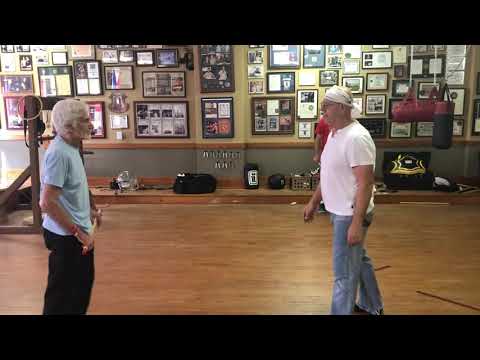
The filter sorts the Review Room embeds and the picture cards above by the keywords in their carried titles (review / analysis / recap and similar, or highlights). It runs entirely in your browser — nothing is sent anywhere.
No hall of fame with a published inductee list is carried for Canne de Combat. Sport on Earth does not invent halls or inductees: where a recognised hall publishes its list in a form this site can carry, the full list will appear here with its source named.
French cane fencing: fencers in padded armour duel with a light chestnut cane, scoring with controlled, pulled strikes.
The format, from this sport's verified record:
The Canne de Combat record book is still thin: beyond the standings, rules and calendar layers on this page, no verified winners roll or honours list is carried yet. The desk adds record material only when a published source can be named for it — never from memory or invention.
More from the desk: the expert guide to Canne de Combat · the site-wide Writing Desk · every sport on Earth.
An arcade take on Canne de Combat: set the angle, set the power, and land the strike in the pad. Five attempts; the closer to the middle, the more it scores. Arcade distances and a training arc — a game in the spirit of the sport, not a simulation of it.
This page’s own game is the arcade above. Everything else on the site that fits this sport is listed here — and anything borrowed from a similar sport is labelled as that sport’s game, never passed off as this one’s.
The tools on this site that honestly run on Canne de Combat — its own record first, then the site-wide general tools that apply. The full Canne de Combat toolkit prints the ones that do not apply, with the data reason why.
No bench tool yet computes from Canne de Combat’s own carried record — the general tools below are the ones that honestly apply.
Site-wide tools, not built for Canne de Combat alone: Tournament Planner · My Notebook · The Labs · Design Studio · The Makers’ Bench · Match Day Desk · Play It Near You · Myth-Check Desk · Governing Bodies · Heat & Safety Calculator (WBGT) · Hydration Calculator · Training-Load Planner · Game Clock & Timer · Custom Rulebook Generator · Scout Notes Parser.
Behind the Play · Full treatment — from this sport’s own record
French cane fencing: fencers in padded armour duel with a light chestnut cane, scoring with controlled, pulled strikes.
Behind the Play takes the decisive actions of Canne de Combat apart: how the scoring play is built, which patterns the players are really running, and which rules remade the play into its modern shape.
The format, from this sport's verified record:
Source basis: this sport’s carried record on this page (verified record, rule-changes dossier, history datasets) and the play patterns of its family as written in the site’s guides. Nothing here is invented.