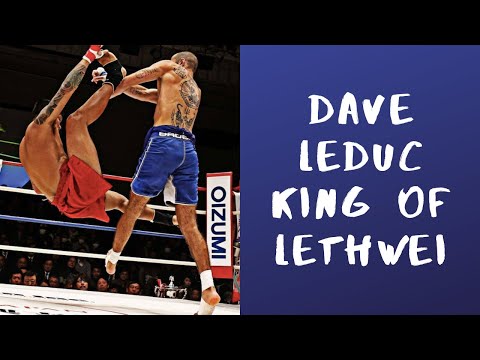
Dave Leduc King of Lethwei - Highlights
YouTube · Fiji Muay Thai
Pages
On this page
Sport on Earth › Sports
Sport on Earth · Sport
Burmese bareknuckle boxing from Myanmar, the ’Art of 9 Limbs’, in which headbutts are permitted alongside punches, kicks, knees and elbows.
Every embed below was verified playable before listing — the network’s standing rule.
YouTube · Fiji Muay Thai
YouTube · Leduc Lethwei
YouTube · Lollo Fight Channel
YouTube · InverseTranspose
YouTube · Fight Commentary Breakdowns
YouTube · World Lethwei Championship
YouTube · สรรหา วาไรตี้
YouTube · sonny245
YouTube · Lethwei Mania
YouTube · Rebel MMA and Leduc Lethwei
YouTube · World Lethwei Championship
YouTube · World Lethwei Championship
YouTube · Phyo Wai Thu
YouTube · Artur Saladiak
YouTube · Leduc Lethwei
YouTube · Nagar Lethwei
YouTube · The Modern Martial Artist
YouTube · Brett Pastore
YouTube · CNA
YouTube · Gabriel Varga
YouTube · Combat Chronicles
YouTube · boxing muay thai life
YouTube · ONE Championship
YouTube · STRIKING ARTS
YouTube · Tiger Muay Thai and MMA Training Camp, Phuket, Thailand
YouTube · Steve S.
YouTube · Joshua Dorfman
YouTube · The Karate Soul by Sam
YouTube · The Vanishing Flame
YouTube · Martial Arts Documentaries
YouTube · Martial Edge
YouTube · Maxime Chouinard
YouTube · Combat Culture
YouTube · あきとこch
YouTube · JRE Clips
YouTube · The Accent Podcast
YouTube · Lethwei World
YouTube · World Lethwei Championship
YouTube · lekkha moun
YouTube · HOT KAIJU THE SHINOBI
YouTube · Leduc Lethwei
YouTube · DAWNA THWAY Lethwei and Fitness Club
YouTube · 𝐆𝐅𝐀𝐌𝐌𝐀 - 𝐆𝐋𝐀𝐃𝐈𝐀𝐓𝐎𝐑 𝐅𝐈𝐆𝐇𝐓 𝐀𝐂𝐀𝐃𝐄𝐌𝐘
YouTube · Rio Sports MM
YouTube · fightTIPS
YouTube · Strike Sports
YouTube · Leduc Lethwei
YouTube · Leduc Lethwei
Pages
On this page
No game on this site is made specifically for Lethwei yet. The games below are the site's all-sport games, which honestly cover every sport — nothing from another sport has been dressed up as this sport's game.
A new set of questions every day, across every sport this site covers.
Real-athlete Top Sport on Earth decks built from the site’s verified board data.
Lethwei's lab is the Physics Lab section on this page — the applied physics of its sport family, with a computed interactive where one honestly fits.
Physics Arena — the general biomechanics & physics teaching sandbox, shared by every sport.
The homepage sport explorer also carries a general Lab tab of small interactive experiments.
Calendar data not yet carried for Lethwei — this site does not yet hold schedule data for it, so no dates are shown rather than invented.
Which section of this page should we expand first?
Votes are counted on the Sport on Earth server and the totals shown are every reader’s votes; your own choice is remembered in this browser.
Sport on Earth does not yet hold verified dated events for Lethwei, and its carried record does not state the season's timing in words — so no calendar is shown rather than an invented one. What the site does carry for this sport is on this page: its verified record, its rules record and its history.
A strike’s effect is impulse: force applied over contact time, changing momentum (mass × velocity). The calculator below computes momentum and kinetic energy for a moving mass at a chosen speed — the two numbers behind every conversation about power. Real strikes add the effective mass of the body behind the limb, which is why technique (putting body mass into the blow) out-punches arm speed alone.
Throws and takedowns are rotation: a small force applied far from the opponent’s centre of mass produces a large turning effect (torque), which is why grips at the sleeve, collar or leg unbalance opponents who are stronger in a straight line. Grappling defence is the reverse — widen the base, lower the centre of mass, deny the lever.
From this sport's own record: Burmese bareknuckle boxing from Myanmar, the ’Art of 9 Limbs’, in which headbutts are permitted alongside punches, kicks, knees and elbows. The lab above treats the physics of the sport's family; no measurement specific to this sport is printed, because the site's verified record for it carries none — parameters are never invented to fill a lab.
Model: momentum p = m·v; kinetic energy KE = ½·m·v². Assumptions: a single rigid mass at one speed — a real strike or throw involves an effective mass larger than the limb alone (the body behind it) and a contact time that decides the peak force. The numbers show the scaling: energy grows with the square of speed, only linearly with mass.
The general teaching sandbox for every sport is the Physics Arena on the Games page — the same printed models, with a defender added.
The hands-on lab for Lethwei, built entirely from the record this site carries for it — its documented rolls, its halls, its venues, its calendar and its census family. Every figure below is computed from that carried record at build time; nothing is estimated and nothing is pulled live. The companion Physics Lab on this page works the family's physics; this lab works the record.
The honest position: the record this site carries for Lethwei is thin — no documented roll, hall, venue set or dated calendar is carried for it yet — so this entry’s lab is its family lab: the computed census of the family it belongs to. When the record grows, the lab grows with it; nothing here is estimated to fill the space.
Computed from the site census: the Combat sports family holds 49 entries on this site. Across the family, the carried record includes documented rolls for 0 of them, Hall of Fame data for 4, venue sets for 10, and dated calendars for 5.
Every other entry in the family: Alysh · Ashirma · Boxing · Brazilian Jiu-Jitsu · Canne de Combat · Capoeira · Chess Boxing · Chidaoba · Donga · Evala · Fencing · Glima · HEMA · Historical Medieval Battle · Inbuan · Ju-Jitsu · Judo · Karate · Karate Combat · Kendo · Khapkagay · Khuresh · Kickboxing · Kokoowa · Kurash · Kureash · Lotta Sardesca · Lucha Canaria · Lucha de Tolete · Lucha del Garrote · Mbor · Mixed Martial Arts · Moraingy · Muay Thai · Pencak Silat · Power Slap · Sambo · Savate · Schwingen · Sport Kobudo · Ssireum · Sumo · Taekkyeon · Taekwondo · Tahtib · Tarung Derajat · Wrestling · Wushu
Basis: the Sport on Earth census itself — the same 460-entry register the census page prints.
The desk has not verified a sponsorship record for Lethwei from published sources, so none is printed. Sponsorship history is added only when a real published source supports it — sponsor by sponsor, deal by deal. Current sponsorship deals across sport are tracked on the Money Desk sponsorship page.
How this game is played, gathered from the record Sport on Earth already carries for Lethwei, with the positions taken from the sourced chart cited in that section.
Lethwei, also called Burmese boxing, is a full-contact combat sport originating from Myanmar and considered on the page to be one of the most brutal martial arts in the world. Fighters use stand-up striking techniques such as kicks, knees, elbows and punches, headbutts are also permitted, and fighters compete bareknuckle, wrapping their hands with only tape and gauze — the headbutt giving Lethwei its name of the ’Art of 9 Limbs’.
Although popular throughout Myanmar, Lethwei has been primarily and historically associated with the Karen peoples of Kayin State, and the vast majority of competitive fighters are ethnolinguistically of Karen descent as carried on the page. Its highest governing body is the World Lethwei Federation, and in 2016 Myanmar’s first international Lethwei promotion, the World Lethwei Championship (WLC), launched its events; in 2017 ONE Championship and the World Lethwei Championship entered a partnership to share athletes.
The rules — the rules as this site's record carries them:
Lethwei has no fixed positions — its format designates no positional roles.
Format as carried in hidden_files/batchB-nov1/batchb_data.json: "Burmese bareknuckle boxing from Myanmar, the ’Art of 9 Limbs’, in which headbutts are permitted alongside punches, kicks, knees and elbows." The format carries no designated positional roles. (Source: Sport on Earth carried sport record.)
Its Tactics & Strategy book — its opening entries, the basic plays, are:
The full book carries 10 entries — in this page’s Playbook / Tactics & Strategy section, and at the Playbooks hub.
Sport on Earth's own analytics: every figure in this panel is computed at build time from the record this site itself carries, with the source named. No outside data is used, and no betting figures of any kind.
Census arithmetic: Lethwei sits in the combat sports family — 49 census sports, of which 0 carry a qualifying champions roll in the site's record.
The carried record for Lethwei is too thin for computed panels: no champions roll, hall-of-fame list or venue record is carried for it. This panel therefore prints the census arithmetic only — the honest answer rather than a manufactured figure.
Lethwei, also called Burmese boxing, is a full-contact combat sport originating from Myanmar and considered on the page to be one of the most brutal martial arts in the world. Fighters use stand-up striking techniques such as kicks, knees, elbows and punches, headbutts are also permitted, and fighters compete bareknuckle, wrapping their hands with only tape and gauze — the headbutt giving Lethwei its name of the ’Art of 9 Limbs’.
Although popular throughout Myanmar, Lethwei has been primarily and historically associated with the Karen peoples of Kayin State, and the vast majority of competitive fighters are ethnolinguistically of Karen descent as carried on the page. Its highest governing body is the World Lethwei Federation, and in 2016 Myanmar’s first international Lethwei promotion, the World Lethwei Championship (WLC), launched its events; in 2017 ONE Championship and the World Lethwei Championship entered a partnership to share athletes.
Highest governing body carried on the page: World Lethwei Federation
World Lethwei Championship (WLC), Myanmar’s first international Lethwei promotion, launched its events in 2016 using tournament Lethwei rules
In 2017, ONE Championship and World Lethwei Championship officially entered a partnership to share athletes between the organisations
In traditional rules, each corner is allowed one two-minute timeout per fight to revive a knocked-out fighter, as carried on the page
As of 2022, the page lists Lethwei as legal only in a named set of countries including Myanmar, Japan, Thailand, the United Kingdom and, in the United States, only Wyoming
Lethwei has no structured results feed this site can carry, so this page is the verified record only — its World Lethwei Federation and Championship record and its traditional rules as verified in November 2026 — with no live results.
Sources, verified November 1, 2026: Lethwei
Material from Wikipedia linked above is used under CC BY-SA 4.0.
How the laws of Lethwei are governed today — the documented record, stated plainly.
Lethwei is governed at its top level by the World Lethwei Federation, with the World Lethwei Championship promoting under tournament rules since 2016 alongside the traditional rules carried on the page. Changes between those codes are refinements of timeout and promotion practice rather than dated landmark replacements of the bareknuckle art. No major dated rule change is carried for lethwei.
That framework summary is the whole documented record Sport on Earth can verify for this sport — no major dated rule changes are carried, rather than invent any.
Source basis: The governing body’s published framework as summarised in this section (see the framework text).
Sport on Earth carries no results feed for Lethwei: no scores or fixtures are published here, rather than inventing them. The sport's documented record is in its history page and the History & Records section of this page.
The historical record for Lethwei — past standings, champions, title history and all-time leaders, as deep as verifiable public records go.
Season-by-season standings, historical player statistics and title rolls are not carried for Lethwei: no public archive publishes them in a form Sport on Earth can verify, and this site does not invent history. What is carried for this sport is its verified record, its rule-change history and its league history — elsewhere on this page.
The review and analysis videos from Lethwei’s verified video pool — every embed below was identity-checked and probed playable before listing, the site’s standing rule. Nothing here is a show Sport on Earth produces; these are the review, post-game and breakdown videos the pool already carries for this sport.
YouTube · Mighty


The filter sorts the Review Room embeds and the picture cards above by the keywords in their carried titles (review / analysis / recap and similar, or highlights). It runs entirely in your browser — nothing is sent anywhere.
No hall of fame with a published inductee list is carried for Lethwei. Sport on Earth does not invent halls or inductees: where a recognised hall publishes its list in a form this site can carry, the full list will appear here with its source named.
Burmese bareknuckle boxing from Myanmar, the ’Art of 9 Limbs’, in which headbutts are permitted alongside punches, kicks, knees and elbows.
The format, from this sport's verified record:
The Lethwei record book is still thin: beyond the standings, rules and calendar layers on this page, no verified winners roll or honours list is carried yet. The desk adds record material only when a published source can be named for it — never from memory or invention.
More from the desk: the expert guide to Lethwei · the site-wide Writing Desk · every sport on Earth.
📖 Lethwei — Tactics & Strategy — every entry, plus the arcade strategy, at the foot of this page.
An arcade take on Lethwei: set the angle, set the power, and land the strike in the pad. Five attempts; the closer to the middle, the more it scores. Arcade distances and a training arc — a game in the spirit of the sport, not a simulation of it.
This page’s own game is the arcade above. Everything else on the site that fits this sport is listed here — and anything borrowed from a similar sport is labelled as that sport’s game, never passed off as this one’s.
The tools on this site that honestly run on Lethwei — its own record first, then the site-wide general tools that apply. The full Lethwei toolkit prints the ones that do not apply, with the data reason why.
No bench tool yet computes from Lethwei’s own carried record — the general tools below are the ones that honestly apply.
Site-wide tools, not built for Lethwei alone: Tournament Planner · My Notebook · The Labs · Design Studio · The Makers’ Bench · Match Day Desk · Play It Near You · Myth-Check Desk · Governing Bodies · Heat & Safety Calculator (WBGT) · Hydration Calculator · Training-Load Planner · Game Clock & Timer · Custom Rulebook Generator · Scout Notes Parser.
Tactics & Strategy — this sport’s book
the striking family’s shared book — kickboxing and Muay Thai, karate and its combat league, lethwei, savate, taekkyeon and taekwondo: the arts of the eight limbs, the point strike and the spinning kick, with each art’s signature entries following on its page.
10 entries, plus the arcade strategy below. All wording is original coaching-vocabulary prose; nothing is copied from any proprietary playbook.
Muay Thai fights with fists, elbows, knees and shins — eight weapons: its book is the combinations that flow between them, and its scoring prizes the visible effect of the strike above the count of strikes.
When it’s used: The Thai game is judged on effect: the strike that moves the man outweighs three that touch him.
The sequence
Karate’s sport game is a blitz for the point: explode from stillness, strike with control, and be gone — the scoring rewards the first clean technique delivered with form (kime) at the right distance.
When it’s used: Point karate is fencing with the whole body: the touch, judged and final.
The sequence
Taekwondo’s head kicks score highest, and its spinning and jumping techniques are the airborne library built to reach them: the back kick, the tornado kick, the jumping back kick — a game played at head height.
When it’s used: WT taekwondo’s scoring made the sport vertical: three and four points live upstairs.
The sequence
Lethwei, Myanmar’s bareknuckle art, permits the headbutt — a ninth weapon that changes the clinch’s entire geometry — and its bouts may be won only by knockout under the traditional rules, with a single injury timeout a career’s economy.
When it’s used: The headbutt makes lethwei’s clinch a different country from Muay Thai’s.
The sequence
Savate fights in shoes, and its kicks are a fencing of the legs — the fouetté (whip kick), the chassé (the piston kick) — scored for form and precision in its sportive form, with the shoe’s point as the weapon’s edge.
When it’s used: Savate is the kick as a duelling art: elegance is a scoring criterion with a history.
The sequence
Taekkyeon, Korea’s older art, moves in a flowing three-beat step (pumbalkki) from which its kicks — low sweeps, face kicks, and the nalchi kicks — are thrown: the dance-like rhythm is the defence, because the target never stills.
When it’s used: Taekkyeon’s step is its guard: a moving man in rhythm is its own technique.
The sequence
Across the family, combinations are built in threes: the opener that measures, the weapon that scores, the exit that protects — and the arts differ mainly in which limbs they cast in the roles.
When it’s used: One-two-three is the family’s shared grammar; the accents are the arts themselves.
The sequence
Striking defences are reads: the block answers the roundhouse, the slip answers the straight, the check answers the low kick — and the counter that follows each is drilled as the same technique’s second half.
When it’s used: Defence and counter are one technique photographed at two moments.
The sequence
Inside punching range, the family’s inside weapons — elbows in Thai and lethwei, the short knee, the karate game’s close strike — form the phone-booth chapter the arts share with boxing’s inside game.
When it’s used: The inside is a country with its own weapons and its own passport control (the clinch’s grips).
The sequence
Cutting the ring, the corner’s trap, the centre’s rent — the striking arts share boxing’s geography because they share its arena, and the book’s map is borrowed whole with the ropes’ permission.
When it’s used: The arts differ in weapons; the ring is the same size for all of them.
The sequence
The arcade cell · strategy
This page’s arcade cell: launch the strike at the pad from at striking range · 30 m (arcade scale). Angle, power, launch — five attempts, and the cell keeps your best.
When it’s used: On this page, in the Play section — and its strategy is the same craft as the book above it, miniaturised.
The sequence
Part of the Sport on Earth Playbooks — a book for every sport and every game on the site.
Behind the Play · Full treatment — from this sport’s own record
Burmese bareknuckle boxing from Myanmar, the ’Art of 9 Limbs’, in which headbutts are permitted alongside punches, kicks, knees and elbows.
Behind the Play takes the decisive actions of Lethwei apart: how the scoring play is built, which patterns the players are really running, and which rules remade the play into its modern shape.
The format, from this sport's verified record:
Source basis: this sport’s carried record on this page (verified record, rule-changes dossier, history datasets) and the play patterns of its family as written in the site’s guides. Nothing here is invented.