Boccia Highlights | Paris 2024 Paralympic Games ❤️💙💚
YouTube · Paralympic Games
Pages
On this page
Sport on Earth › Sports
Sport on Earth · Sport
Paralympic precision ball sport for athletes with severe physical disabilities, played toward a white jack.
News stories from around the world, gathered and sourced by the Sport on Earth desk.
Boccia is carried on the program for Los Angeles 2028 Paralympic Games, 15 – 27 August 2028, in Los Angeles, USA. Paralympic precision ball sport for athletes with severe physical disabilities, played toward a white jack. The desk carries the sport’s full record — guide, calendar and history — on its own page.
LA28 / IPC · Nov 2026
Written by Sport on Earth’s journalists — columns, features and interviews from the desk.
No columns or stories filed for this sport yet.
Everything the desk has published for Boccia, organised by section.
From the News Desk · all news, every sport →
Every embed below was verified playable before listing — the network’s standing rule.
YouTube · Paralympic Games
YouTube · Paralympic Games
YouTube · Paralympic Games
YouTube · Paralympic Games
YouTube · Paralympic Games
YouTube · Paralympic Games
YouTube · Paralympic Games
YouTube · Paralympic Games
YouTube · Paralympic Games
YouTube · Paralympic Games
YouTube · Paralympic Games
YouTube · 복지TV
YouTube · Paralympic Games
YouTube · Paralympic Games
YouTube · Paralympic Games
YouTube · Paralympic Games
YouTube · Paralympic Games
YouTube · Paralympic Games
YouTube · Paralympic Games
YouTube · Paralympic Games
YouTube · Paralympic Games
YouTube · Paralympic Games
YouTube · kwon cheolhyeon
YouTube · Paralympic Games
YouTube · Paralympic Games
YouTube · Paralympic Games
YouTube · Paralympic Games
YouTube · Paralympic Games
YouTube · Paralympic Games
YouTube · Paralympic Games
YouTube · kwon cheolhyeon
YouTube · kwon cheolhyeon
YouTube · JesusNmark
YouTube · Arcadia Vale
YouTube · Boccia England
YouTube · BOCCIA Waterproofing & Masonry Specialists
YouTube · BOCCIA Waterproofing & Masonry Specialists
YouTube · Boccia England
YouTube · Boccia UK
YouTube · British Pathé
YouTube · Sniper Alley Photo
YouTube · Paralympic Games
YouTube · Channel 4 News
YouTube · Canadian Paralympic Team
YouTube · Katy Booth
YouTube · European Para Championships
YouTube · Tokyo 2020
YouTube · HornbillTV
Boccia is carried on the program for Los Angeles 2028 Paralympic Games, 15 – 27 August 2028, in Los Angeles, USA. Paralympic precision ball sport for athletes with severe physical disabilities, played toward a white jack. The desk carries the sport’s full record — guide, calendar and history — on its own page.
LA28 / IPC · Nov 2026
Pages
On this page
No game on this site is made specifically for Boccia yet. The games below are the site's all-sport games, which honestly cover every sport — nothing from another sport has been dressed up as this sport's game.
A new set of questions every day, across every sport this site covers.
Real-athlete Top Sport on Earth decks built from the site’s verified board data.
Boccia's lab is the Physics Lab section on this page — the applied physics of its sport family, with a computed interactive where one honestly fits.
Physics Arena — the general biomechanics & physics teaching sandbox, shared by every sport.
The homepage sport explorer also carries a general Lab tab of small interactive experiments.
Calendar data not yet carried for Boccia — this site does not yet hold schedule data for it, so no dates are shown rather than invented.
Which section of this page should we expand first?
Votes are counted on the Sport on Earth server and the totals shown are every reader’s votes; your own choice is remembered in this browser.
Dated news entries for x194, newest first, dates exactly as carried in the site’s news data.
The flagship competitions on the calendar, with the dates for the current/upcoming cycle. Every date below was verified against the named source on 1 November 2026; dates change, and the source is the authority.
| Event | Dates | Where | Source |
|---|---|---|---|
| Los Angeles 2028 Paralympic Games | 15 – 27 August 2028 | Los Angeles, USA | LA28 / IPC — Games dates |
Every target sport is the same problem restated: deliver a projectile (or judge its pace) so that a repeatable physical action produces a repeatable outcome. For thrown and shot projectiles the flight model below applies — no air resistance, no spin, flat ground — and the spread of your groupings is the visible signature of tiny variations in release speed and angle.
In the judged-pace games (bowls, curling, petanque family) the physics is friction and the biased or swept path: a curling stone curls because of asymmetric friction under its running band, and sweeping momentarily lowers that friction to extend and straighten the path. In cue sports, collisions are near-elastic momentum transfers — the calculator’s companion model in the Physics Arena covers impact maths.
From this sport's own record: Paralympic precision ball sport for athletes with severe physical disabilities, played toward a white jack. The lab above treats the physics of the sport's family; no measurement specific to this sport is printed, because the site's verified record for it carries none — parameters are never invented to fill a lab.
Model: R = v²·sin(2θ)/g, flight time T = 2·v·sin(θ)/g, apex H = (v·sin θ)²/(2g), g = 9.81 m/s². Assumptions: no air resistance, no spin, flat ground, launch and landing at the same height. Real balls and shuttles fly shorter and curve — drag and spin are exactly what this model leaves out, so treat the output as the gravity-only ceiling, not a prediction.
The general teaching sandbox for every sport is the Physics Arena on the Games page — the same printed models, with a defender added.
The hands-on lab for Boccia, built entirely from the record this site carries for it — its documented rolls, its halls, its venues, its calendar and its census family. Every figure below is computed from that carried record at build time; nothing is estimated and nothing is pulled live. The companion Physics Lab on this page works the family's physics; this lab works the record.
Basis: the dated events this entry’s own record carries, as announced by the bodies named in the record. A sport whose record carries no fixed dated calendar says so on its calendar page rather than inventing one.
Computed from the site census: the Target & precision sports family holds 53 entries on this site. Across the family, the carried record includes documented rolls for 5 of them, Hall of Fame data for 6, venue sets for 8, and dated calendars for 6.
Every other entry in the family: Air Hockey · Airsoft · Archery · Asyk · Axe Throwing · Battle of the Oranges · Bocce · Boomerang Throwing · Calva · Carom Billiards · Carrom · Chunkey · Cornhole · Crokinole · Croquet · Crud · Curling · Darts · Disc Golf · FlingGolf · Footgolf · Gateball · Golf · Gorodki · Horseshoes · Jukskei · Klootschieten · Kolf · Kubb · Kyudo · Kyykkä · Lagori · Lawn Bowls · Marbles · Mölkky · Novuss · Paintball · Pool · Pétanque · Road Bowling · Roque · Shooting · Shuffleboard · Skully / Skelly · Snookball · Snooker · Sport stacking · Stone Skimming · Tejo · Ten-pin Bowling · Tiddlywinks · Woodball
Basis: the Sport on Earth census itself — the same 460-entry register the census page prints.
The desk has not verified a sponsorship record for Boccia from published sources, so none is printed. Sponsorship history is added only when a real published source supports it — sponsor by sponsor, deal by deal. Current sponsorship deals across sport are tracked on the Money Desk sponsorship page.
How this game is played, gathered from the record Sport on Earth already carries for Boccia, with the positions taken from the sourced chart cited in that section.
Boccia is a precision ball sport in the bowls and pétanque family, designed for athletes with severe physical disabilities. It was originally created for people with cerebral palsy and now includes athletes with other severe disabilities affecting motor skills.
It is one of only two Paralympic sports — with goalball — that have no counterpart in the Olympic program. The world governing body is World Boccia (formerly BISFed), which took over the sport from CPISRA on 1 January 2013.
How boccia is played — the rules as this site's record carries them:
Boccia has no fixed positions — its format designates no positional roles.
Format as carried in hidden_files/batchB-nov1/batchb_data.json: "Paralympic precision ball sport for athletes with severe physical disabilities, played toward a white jack." The format carries no designated positional roles. (Source: Sport on Earth carried sport record.)
Its Playbook — its opening entries, the basic plays, are:
The full book carries 10 entries — in this page’s Playbook / Tactics & Strategy section, and at the Playbooks hub.
Sport on Earth's own analytics: every figure in this panel is computed at build time from the record this site itself carries, with the source named. No outside data is used, and no betting figures of any kind.
Census arithmetic: Boccia sits in the target sports family — 53 census sports, of which 5 carry a qualifying champions roll in the site's record.
The carried record for Boccia is too thin for computed panels: no champions roll, hall-of-fame list or venue record is carried for it. This panel therefore prints the census arithmetic only — the honest answer rather than a manufactured figure.
Boccia is a precision ball sport in the bowls and pétanque family, designed for athletes with severe physical disabilities. It was originally created for people with cerebral palsy and now includes athletes with other severe disabilities affecting motor skills.
It is one of only two Paralympic sports — with goalball — that have no counterpart in the Olympic program. The world governing body is World Boccia (formerly BISFed), which took over the sport from CPISRA on 1 January 2013.
Boccia became a Paralympic sport in 1984, played in New York City and Stoke Mandeville with 19 athletes.
At Paris 2024 there were 11 boccia events. Hong Kong led the medal table with 3 golds and 5 medals in total, ahead of China (2 golds) and South Korea (1 gold, 3 silvers, 1 bronze). The individual champions included Hong Kong’s John Loung (men’s BC1), France’s Aurélie Aubert (women’s BC1 — France’s first-ever Paralympic boccia medal), Thailand’s Worawut Saengampa (men’s BC2), Portugal’s Cristina Gonçalves (women’s BC2), Hong Kong’s Yuen Kei Ho and South Korea’s Jeong Howon (BC3), and China’s Lin Ximei and Great Britain’s Stephen McGuire (BC4).
Paris 2024 also introduced gender-specific individual medal events for the first time; before 2024, all boccia events were mixed-gender.
The World Boccia Championships are held every four years. At Seoul 2026, 186 athletes from 48 nations contested 11 titles: Indonesia topped the medal table with 3 golds and a silver, Thailand took 2 golds, and Hong Kong collected the most medals overall with five.
Across the sport’s Paralympic history, Portugal have won more medals (26) than any other country, while South Korea hold the most golds (10).
Boccia has no structured results feed this site can carry, so this page is the verified record only — the Paralympic and world championship record as verified in November 2026 — with no live results or athlete statistics. Sources disagree on the year of the first World Championships, so no founding year for that event is asserted here.
Sources, verified November 1, 2026: Boccia · World Boccia — Seoul 2026 championships report · Paralympic.org — Paris 2024 boccia moments · World Boccia — Paris 2024 individual events report
Material from Wikipedia linked above is used under CC BY-SA 4.0.
How the laws of Boccia are governed today — the documented record, stated plainly.
Boccia is governed by World Boccia (formerly BISFed, which assumed governance from CPISRA on 1 January 2013) under the World Boccia Rules, built around the BC1–BC4 classification system. Its modern changes are classification and competition-format refinements — including gender-specific individual events introduced at Paris 2024 — rather than a dated law-change history. No major dated rule change is carried for boccia.
That framework summary is the whole documented record Sport on Earth can verify for this sport — no major dated rule changes are carried, rather than invent any.
Source basis: The governing body’s published framework as summarised in this section (see the framework text).
Sport on Earth carries no results feed for Boccia: no scores or fixtures are published here, rather than inventing them. The sport's documented record is in its history page and the History & Records section of this page.
The historical record for Boccia — past standings, champions, title history and all-time leaders, as deep as verifiable public records go.
Season-by-season standings, historical player statistics and title rolls are not carried for Boccia: no public archive publishes them in a form Sport on Earth can verify, and this site does not invent history. What is carried for this sport is its verified record, its rule-change history and its league history — elsewhere on this page.
The review and analysis videos from Boccia’s verified video pool — every embed below was identity-checked and probed playable before listing, the site’s standing rule. Nothing here is a show Sport on Earth produces; these are the review, post-game and breakdown videos the pool already carries for this sport.
No verified review-show video is carried for this sport yet.

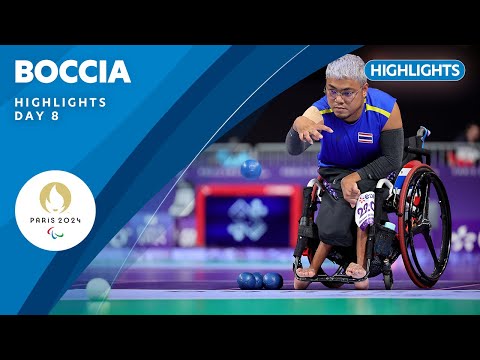

Chart basis: counts from Sport on Earth’s own carried data files at build time — verified videos carried for this sport (the verified pool: sport-videos.json + the desk league pools), news items carried (news.json), and league pages carried (desk.json). No external or estimated figures.
The filter sorts the Review Room embeds and the picture cards above by the keywords in their carried titles (review / analysis / recap and similar, or highlights). It runs entirely in your browser — nothing is sent anywhere.
No hall of fame with a published inductee list is carried for Boccia. Sport on Earth does not invent halls or inductees: where a recognised hall publishes its list in a form this site can carry, the full list will appear here with its source named.
Paralympic precision ball sport for athletes with severe physical disabilities, played toward a white jack.
The format, from this sport's verified record:
📖 The Boccia Playbook — every entry, plus the arcade strategy, at the foot of this page.
An arcade take on Boccia: set the angle, set the power, and land the boccia ball in the jack. Five attempts; the closer to the middle, the more it scores. Arcade distances and a training arc — a game in the spirit of the sport, not a simulation of it.
This page’s own game is the arcade above. Everything else on the site that fits this sport is listed here — and anything borrowed from a similar sport is labelled as that sport’s game, never passed off as this one’s.
The tools on this site that honestly run on Boccia — its own record first, then the site-wide general tools that apply. The full Boccia toolkit prints the ones that do not apply, with the data reason why.
No bench tool yet computes from Boccia’s own carried record — the general tools below are the ones that honestly apply.
Site-wide tools, not built for Boccia alone: Tournament Planner · My Notebook · The Labs · Design Studio · The Makers’ Bench · Match Day Desk · Play It Near You · Myth-Check Desk · Governing Bodies · Heat & Safety Calculator (WBGT) · Hydration Calculator · Training-Load Planner · Game Clock & Timer · Custom Rulebook Generator · Scout Notes Parser.
The Playbook · set plays, systems & situations
the bowls family’s shared book — bowls, bocce and pétanque, boccia and shuffleboard: draw, block and takeout on a rink, a court or a deck, the oldest target tactics in sport.
10 entries, plus the arcade strategy below. All wording is original coaching-vocabulary prose; nothing is copied from any proprietary playbook.
The foundational shot of the family: deliver the bowl/ball to rest at the jack/pallino — weight judged to the last metre of the green, the court or the deck.
When it’s used: Every other shot in the book exists because the draw does.
The sequence
A bowl left short in the target’s line guards the head behind it: the blocker is the draw’s screen, and the takeout that removes it must pay the blocker’s price.
When it’s used: From bowls’ blockers to shuffleboard’s guards, the family’s defence is a stone left in the road.
The sequence
The heavy shot: bowls’ drive, bocce’s raffa, pétanque’s tir — remove the opponent’s counting ball by force, accepting that your own may follow it out.
When it’s used: The family’s tackle: each code prices its violence differently, and the book knows each price.
The sequence
Pétanque divides its souls: the pointeur, who draws the boule to the cochonnet, and the tireur, who shoots the opponent’s away. Teams are built as the pairing of the two crafts.
When it’s used: Roles as clear as football’s: the pointer builds the head, the shooter defends it.
The sequence
Bocce’s volo and raffa add the air: the ball is thrown on the full or bounced in, over the blockers the ground game built — the family’s answer to its own guards.
When it’s used: When the road is blocked, the family takes to the air.
The sequence
Ends are counted by proximity, and the last bowl/ball of the end is played with the count in hand: the end’s whole strategy is the arithmetic of who lies shot and by how many.
When it’s used: The family’s endgame doctrine: never risk the shots you hold for one you might add beyond the count’s value.
The sequence
Boccia’s ramp players direct an assistant to aim the ramp by coded instruction, releasing the ball down its line: the sport’s tactics are a communication system under championship pressure.
When it’s used: The ramp makes the call the shot: the player’s voice is the bowler’s arm.
The sequence
Shuffleboard’s scoring triangle — 10, 8, 7 and the minus-10 foul zone — creates its own plays: the kitchen shot (landing in the 10-off) invites the knock-off that sends it into the penalty, and the guard at the line protects both.
When it’s used: The deck game’s book is its triangle’s geometry.
The sequence
Every member of the family is played on a surface with a pace and a borrow (the curve the ground gives): the morning’s first ends are reconnaissance, and the home surface’s secrets are a genuine home advantage.
When it’s used: The green, the court and the deck are the family’s undefeated extra player.
The sequence
The skip (or captain) calls the end’s shots with the whole head in view: his book is the count, the remaining bowls and the opponent’s known habits — the family’s chess is played standing over the head, deciding.
When it’s used: The skip’s authority is the family’s structure: the hand throws, the head decides.
The sequence
The arcade cell · strategy
This page’s arcade cell: launch the boccia ball at the jack from the putting green · 40 m (arcade scale). Angle, power, launch — five attempts, and the cell keeps your best.
When it’s used: On this page, in the Play section — and its strategy is the same craft as the book above it, miniaturised.
The sequence
Part of the Sport on Earth Playbooks — a book for every sport and every game on the site.
Behind the Play · Full treatment — from this sport’s own record
Paralympic precision ball sport for athletes with severe physical disabilities, played toward a white jack.
Behind the Play takes the decisive actions of Boccia apart: how the scoring play is built, which patterns the players are really running, and which rules remade the play into its modern shape.
The format, from this sport's verified record:
Source basis: this sport’s carried record on this page (verified record, rule-changes dossier, history datasets) and the play patterns of its family as written in the site’s guides. Nothing here is invented.