Sport on Earth › Sports
Sport on Earth · Sport
Ten-pin Bowling
Roll a ball to knock down pins.
League histories
- PBA Tour — founded 1958. Tenpin bowling’s major professional tour, operated by the Professional Bowlers Association.
Leagues
PBA Tour Desk
PBA Tour
4 team views · 8 pieces · 12 videos
News Desk
News stories from around the world, gathered and sourced by the Sport on Earth desk.
No news items filed for this sport yet — the News Desk adds them as the world reports them.
Columns & Stories
Written by Sport on Earth’s journalists — columns, features and interviews from the desk.
PBA Tour Desk · Column
Institutions Outlive Seasons: A Column on the PBA Tour
A column about a league should begin where the league began: Professional Bowlers Association established in 1958 by 33 founding members; its tour has run continuously since the inaugural 1959 season.. The PBA Tour — Tenpin bowling’s major professional tour, operated by the Professional Bowlers Association. — has since been many things, but it has never stopped being that founding decision, renewed every season.
November 2, 2026
PBA Tour Desk · Column
The PBA Tour Notebook: A League in Its Own Image
Every league desk keeps a notebook that is not really about results. This is ours for the PBA Tour. The census record this site carries describes its sport in one line — Roll a ball to knock down pins. — and files it under Target & precision, in the target family of sports. One line is a discipline: before the desk argues about a league, it has to say what the league is.
November 2, 2026
PBA Tour Desk · Column
What the PBA Tour Record Asks of Its Next Season
A new season of the PBA Tour makes three quiet demands, and the record — not the hype — names them. It asks about the institution’s next chapter: a league founded in 1958 that has already survived every previous version of this argument.
November 2, 2026
PBA Tour Desk · Feature
Counting from 1958: The PBA Tour at 68
The PBA Tour file this site carries opens with a single line: Professional Bowlers Association established in 1958 by 33 founding members; its tour has run continuously since the inaugural 1959 season. In 2026 that founding sits 68 years back — 68 years of seasons, champions and arguments, all of them interest on one decision.
November 9, 2026
PBA Tour Desk · Interview — the Sport on Earth desk, in its own words
Five Questions With the PBA Tour Desk
The Sport on Earth PBA Tour desk takes questions on Tackett, the rookies and the season. The desk answers in its own words — no player is quoted, and nothing here is presented as anyone else’s statement.
PBA Tour Desk · Interview — the Sport on Earth desk, in its own words
Five Questions With the PBA Tour Desk: The PBA Tour File
The Sport on Earth PBA Tour Desk takes questions on the PBA Tour file. The desk answers in its own words — no player, coach or official is quoted, and nothing here is presented as anyone else’s statement. The answers draw on the league history this site carries.
PBA Tour Desk · Interview — the Sport on Earth desk, in its own words
Five Questions With the PBA Tour Desk: The PBA Tour Briefing
The Sport on Earth PBA Tour Desk takes questions on the PBA Tour. The desk answers in its own words — no player, coach or official is quoted, and nothing here is presented as anyone else’s statement. A standing briefing, refreshed from the files this site carries.
PBA Tour Desk · Interview — the Sport on Earth desk, in its own words
Five Questions With the PBA Tour Desk: PBA Tour by the Numbers
The Sport on Earth PBA Tour Desk takes questions on the PBA Tour in numbers. The desk answers in its own words — no player, coach or official is quoted, and nothing here is presented as anyone else’s statement. Every answer below is a count taken from the site’s own files.
Writing Desk
Everything the desk has published for Ten-pin Bowling, organised by section.
Stories
- Counting from 1958: The PBA Tour at 68 PBA Tour Desk · November 9, 2026
All stories across every sport →
Columns
- Institutions Outlive Seasons: A Column on the PBA Tour PBA Tour Desk · November 2, 2026
- The PBA Tour Notebook: A League in Its Own Image PBA Tour Desk · November 2, 2026
- What the PBA Tour Record Asks of Its Next Season PBA Tour Desk · November 2, 2026
All columns across every sport →
Interviews
- Five Questions With the PBA Tour Desk PBA Tour Desk
- Five Questions With the PBA Tour Desk: The PBA Tour File PBA Tour Desk
- Five Questions With the PBA Tour Desk: The PBA Tour Briefing PBA Tour Desk
- Five Questions With the PBA Tour Desk: PBA Tour by the Numbers PBA Tour Desk
Shows
Sport on Earth’s daily and weekly video shows for Ten-pin Bowling — every episode, newest first.
Ten-pin Bowling Weekly Weekly show
The first episode is in production and lands here the morning it is produced — no episode is listed until it exists.
Videos
Every embed below was verified playable before listing — the network’s standing rule.
EJ Tackett
PBA Televised 300 Game Bonus: EJ Tackett
#1 on the board · USA
Jason Belmonte
Andrew Anderson vs. Jason Belmonte | 2026 PBA Tournament of Champions Highlights | Bowling on The CW
#2 on the board · Australia
Zach Wilkins
PBA Illinois Classic - Zach Wilkins 258 Game - Full Highlights
#3 on the board · Canada
Brandon Bonta
Brandon Bonta 2026 PBA Players Championship Highlights | Bowling on CW Sports
#4 on the board · USA
Anthony Simonsen
Patrick Dombrowski vs. Anthony Simonsen | PBA U.S. Open Highlights | Bowling on CW Sports
#5 on the board · USA
View all videos (10)Show fewer videos
Chris Via
Patrick Dombrowski vs. Chris Via | PBA U.S. Open Highlights | Bowling on CW Sports
#7 on the board · USA
Boog Krol
Boog Krol vs. Eric Jones | 2026 PBA USBC Masters Highlights | Bowling on The CW
#8 on the board · USA
Graham Fach
Graham Fach vs. Brandon Bonta | PBA Players Championship Highlights | Bowling on CW Sports
#9 on the board · Canada
INSANE bowling trick shots from PBA bowlers
YouTube · The Right Lane
Bowling 2026 Indiana MOMENT - Ryan Barnes VS. EJ Tackett
YouTube · Mr. YoH
Everything for Ten-pin Bowling
Pages
On this page
- Visit the Ten-pin Bowling Hub →
- League histories
- Leagues
- News Desk
- Columns & Stories
- Writing Desk
- Videos
- Reader comments
- Games, Lab & Calendar
- Story extras
- Season Calendar
- The Physics Lab
- The Record Lab
- Sponsorship History
- How to Play Ten-pin Bowling
- Analytics — Ten-pin Bowling
- Rule Changes & Named Rules
- Results & Fixtures
- History & Records
- Review Room — in-game and post-game review & analysis
- Ten-pin Bowling in pictures & numbers
- Hall of Fame
- The Sport in Depth
- Stories from the Record
- On screen
- Tools for Ten-pin Bowling
- Ten-pin Bowling — Tactics & Strategy
- Behind the Play
Games, Lab & Calendar
Games for this sport
No game on this site is made specifically for Ten-pin Bowling yet. The games below are the site's all-sport games, which honestly cover every sport — nothing from another sport has been dressed up as this sport's game.
Daily Trivia
A new set of questions every day, across every sport this site covers.
Top Sport on Earth
Real-athlete Top Sport on Earth decks built from the site’s verified board data.
The Lab
Ten-pin Bowling's lab is the Physics Lab section on this page — the applied physics of its sport family, with a computed interactive where one honestly fits.
Physics Arena — the general biomechanics & physics teaching sandbox, shared by every sport.
The homepage sport explorer also carries a general Lab tab of small interactive experiments.
Season calendar
Calendar data not yet carried for Ten-pin Bowling — this site does not yet hold schedule data for it, so no dates are shown rather than invented.
Story extras
Fan poll
Which desk story should we follow up?
Votes are counted on the Sport on Earth server and the totals shown are every reader’s votes; your own choice is remembered in this browser.
Key numbers — Counting from 1958: The PBA Tour at 68
In 2026 that founding sits 68 years back — 68 years of seasons, champions and arguments, all of them interest on one decision.In 2026 that founding
Figures exactly as carried in the desk's summary data for this piece.
How this story developed
Dated desk pieces for Ten-pin Bowling, newest first, dates exactly as carried in the desk data.
- November 9, 2026 — Counting from 1958: The PBA Tour at 68 (Ten-pin Bowling)
- November 2, 2026 — Institutions Outlive Seasons: A Column on the PBA Tour (Ten-pin Bowling)
Season Calendar
Sport on Earth does not yet hold verified dated events for Ten-pin Bowling, and its carried record does not state the season's timing in words — so no calendar is shown rather than an invented one. What the site does carry for this sport is on this page: its verified record, its rules record and its history.
The Physics Lab
Precision is applied physics repeated perfectly
Every target sport is the same problem restated: deliver a projectile (or judge its pace) so that a repeatable physical action produces a repeatable outcome. For thrown and shot projectiles the flight model below applies — no air resistance, no spin, flat ground — and the spread of your groupings is the visible signature of tiny variations in release speed and angle.
In the judged-pace games (bowls, curling, petanque family) the physics is friction and the biased or swept path: a curling stone curls because of asymmetric friction under its running band, and sweeping momentarily lowers that friction to extend and straighten the path. In cue sports, collisions are near-elastic momentum transfers — the calculator’s companion model in the Physics Arena covers impact maths.
From this sport's own record: Roll a ball to knock down pins. The lab above treats the physics of the sport's family; no measurement specific to this sport is printed, because the site's verified record for it carries none — parameters are never invented to fill a lab.
Try it: projectile flight calculator
Model: R = v²·sin(2θ)/g, flight time T = 2·v·sin(θ)/g, apex H = (v·sin θ)²/(2g), g = 9.81 m/s². Assumptions: no air resistance, no spin, flat ground, launch and landing at the same height. Real balls and shuttles fly shorter and curve — drag and spin are exactly what this model leaves out, so treat the output as the gravity-only ceiling, not a prediction.
The general teaching sandbox for every sport is the Physics Arena on the Games page — the same printed models, with a defender added.
The Record Lab
The hands-on lab for Ten-pin Bowling, built entirely from the record this site carries for it — its documented rolls, its halls, its venues, its calendar and its census family. Every figure below is computed from that carried record at build time; nothing is estimated and nothing is pulled live. The companion Physics Lab on this page works the family's physics; this lab works the record.
The family lab — Target & precision sports
The honest position: the record this site carries for Ten-pin Bowling is thin — no documented roll, hall, venue set or dated calendar is carried for it yet — so this entry’s lab is its family lab: the computed census of the family it belongs to. When the record grows, the lab grows with it; nothing here is estimated to fill the space.
Computed from the site census: the Target & precision sports family holds 53 entries on this site. Across the family, the carried record includes documented rolls for 5 of them, Hall of Fame data for 6, venue sets for 8, and dated calendars for 6.
Every other entry in the family: Air Hockey · Airsoft · Archery · Asyk · Axe Throwing · Battle of the Oranges · Bocce · Boccia · Boomerang Throwing · Calva · Carom Billiards · Carrom · Chunkey · Cornhole · Crokinole · Croquet · Crud · Curling · Darts · Disc Golf · FlingGolf · Footgolf · Gateball · Golf · Gorodki · Horseshoes · Jukskei · Klootschieten · Kolf · Kubb · Kyudo · Kyykkä · Lagori · Lawn Bowls · Marbles · Mölkky · Novuss · Paintball · Pool · Pétanque · Road Bowling · Roque · Shooting · Shuffleboard · Skully / Skelly · Snookball · Snooker · Sport stacking · Stone Skimming · Tejo · Tiddlywinks · Woodball
Basis: the Sport on Earth census itself — the same 460-entry register the census page prints.
Sponsorship History
The desk has not verified a sponsorship record for Ten-pin Bowling from published sources, so none is printed. Sponsorship history is added only when a real published source supports it — sponsor by sponsor, deal by deal. Current sponsorship deals across sport are tracked on the Money Desk sponsorship page.
How to Play Ten-pin Bowling
How this game is played, gathered from the record Sport on Earth already carries for Ten-pin Bowling, with the positions taken from the sourced chart cited in that section.
Core rules
Ten-pin bowling’s playing game does not change; its law lives in equipment specification, and that is where its dated changes are found — a USBC technology program that banned the balance hole, a cleaning rule that took chemistry out of the ball towel, and the certification of the string pinsetter as a category of its own.
The current rules, as the site's rule-change dossier records them:
- The Dry-Towel Rule (USBC, 1 August 2019): USBC Rule 18, effective 1 August 2019: once competition has started, a bowling ball’s surface may be cleaned only with a dry towel — no liquid cleaner may be used during play. (A COVID-era allowance to clean with isopropyl alcohol was rescinded effective 1 August 2022, reverting to the dry-towel standard.)
- The Balance-Hole Ban (USBC (equipment specifications), 1 August 2020): Balance holes are eliminated. A bowling ball may have up to five holes, all of them for gripping purposes, and all gripping holes must be used on every delivery — an unused thumb hole in a no-thumb bowler’s ball is itself an illegal balance hole. No-thumb bowlers must mark the intended centre of the palm with a scribed ’+’ near the grip. In compensation, from the 2018 phase-in, balls over 10 pounds drilled without a weight hole were allowed 3 ounces of side, thumb or finger weight instead of the previous 1-ounce allowance that applied with a weight hole.
- String Pinsetters Certified as Their Own Category (USBC (equipment certification), 1 August 2023): After its comprehensive research study, the USBC certified string pinsetters and string-pin bowling as a new category of equipment and competition effective 1 August 2023, under final specifications set by its Equipment Specifications Committee, including a minimum 54-inch string length. String-pinsetter averages were recorded and displayed separately from free-fall averages, and a centre switching to string machines mid-league had to end the free-fall league and start a new one.
The full dossier — every dated change and named rule, with its source basis — is in this page’s Rule Changes & Named Rules section.
Positions & basic plays
Ten-pin Bowling has no fixed positions — its format designates no positional roles.
Format as carried in hidden_files/batchB-nov1/batchb_data.json: "Roll a ball to knock down pins." The format carries no designated positional roles. (Source: Sport on Earth carried sport record.)
Its Tactics & Strategy book — its opening entries, the basic plays, are:
- Reading the Oil (the Lane as a Defence) — Oil is laid in a pattern — house shot or sport pattern — that governs the ball’s hook: the bowler reads the pattern’s length and shape from the ball’s motion, and the whole game is the reading. When it’s used: The lane is the opponent that moves: every ball thrown changes the oil it reads.
- The Strike Line and the Pocket — The strike is aimed at the pocket (between the 1 and 3 pins for the right-hander), entered at an angle of four to six degrees: the line is built backwards from that angle’s needs. When it’s used: Pin action is physics: the pocket and the angle do the striking; the bowler supplies the geometry.
- The Spare Systems (3-6-9 and the Cross-Lane) — Spares are shot by system: the 3-6-9 method moves the feet by counts for the common leaves, and the corner spares are taken cross-lane with a straighter ball to kill the hook’s opinion. When it’s used: The spare is bowling’s free throw: routine and system, drained of improvisation.
- Ball Changes and Surfaces — The arsenal is a playbook: balls of different cores and covers for the fresh, the transition and the burn, their surfaces (polished, sanded) tuned like a pitcher’s grips. When it’s used: Changing balls is a play call, and its timing is the professional’s separator.
The full book carries 8 entries — in this page’s Playbook / Tactics & Strategy section, and at the Playbooks hub.
Analytics — Ten-pin Bowling
Sport on Earth's own analytics: every figure in this panel is computed at build time from the record this site itself carries, with the source named. No outside data is used, and no betting figures of any kind.
Census arithmetic: Ten-pin Bowling sits in the target sports family — 53 census sports, of which 5 carry a qualifying champions roll in the site's record.
The carried record for Ten-pin Bowling is too thin for computed panels: no champions roll, hall-of-fame list or venue record is carried for it. This panel therefore prints the census arithmetic only — the honest answer rather than a manufactured figure.
Rule Changes & Named Rules
Ten-pin bowling’s playing game does not change; its law lives in equipment specification, and that is where its dated changes are found — a USBC technology program that banned the balance hole, a cleaning rule that took chemistry out of the ball towel, and the certification of the string pinsetter as a category of its own.
The Dry-Towel Rule
Before: A bowler could clean a ball with liquid cleaners around and during competition — a small act with a real effect, because wiping lane oil and conditioner off a modern reactive-resin ball changes how it grips the lane and hooks, and the ball’s surface could in effect be re-prepared between frames.
The change: USBC Rule 18, effective 1 August 2019: once competition has started, a bowling ball’s surface may be cleaned only with a dry towel — no liquid cleaner may be used during play. (A COVID-era allowance to clean with isopropyl alcohol was rescinded effective 1 August 2022, reverting to the dry-towel standard.)
Why it happened: Surface management had become an arms race conducted between frames. The rule’s principle is that the ball you start with is the ball you compete with: friction adjustments belong to practice, preparation and ball choice, not to the towel at the ball return.
In practice today: Ball-surface work is now pre-competition work. Lane-side chemistry is out of certified competition, and officials police a bright, checkable line — dry towel only — instead of arguing about what a cleaner did to a coverstock.
The Balance-Hole Ban
Before: Pro shops could drill an extra non-gripping hole — a balance hole, or weight hole — into a ball to fine-tune its static weights and its motion on the lane. It was a standard, legal piece of the ball-fitter’s craft, and bowlers (no-thumb and two-handed players among them) used hole placement away from the grip to shape a ball’s reaction, exploiting static imbalance the original specifications had never treated as a performance tool in itself.
The change: Balance holes are eliminated. A bowling ball may have up to five holes, all of them for gripping purposes, and all gripping holes must be used on every delivery — an unused thumb hole in a no-thumb bowler’s ball is itself an illegal balance hole. No-thumb bowlers must mark the intended centre of the palm with a scribed ’+’ near the grip. In compensation, from the 2018 phase-in, balls over 10 pounds drilled without a weight hole were allowed 3 ounces of side, thumb or finger weight instead of the previous 1-ounce allowance that applied with a weight hole.
Why it happened: The USBC’s multi-year Bowling Technology Study concluded that drilled static imbalance had become a designed performance variable beyond what the specifications intended to hand to the drill press. The package was announced in 2018 and phased — static-weight allowances first, the hole ban on 1 August 2020 — so that bowlers and pro shops had two seasons to adapt, alongside a new minimum oil-absorption specification for approved balls from the same date.
In practice today: A generation of drilled layouts became illegal in certified play on a single date. Ball motion is now set by the manufactured core and coverstock and by the gripping holes alone, and ’is every hole in that ball used on every shot?’ became a standard equipment-check question.
String Pinsetters Certified as Their Own Category
Before: Certified competition in the United States meant free-fall pinsetters: pins knocked down, gathered and respotted by machine, attached to nothing. String machines — each pin tethered to the pinsetter by a cord, and far cheaper and simpler to run — had been used in parts of the world for decades (the International Bowling Federation approved them for IBF competition in November 2020), but the USBC declined to certify them, and in 2020 expressly affirmed they could not be used in USBC-certified leagues and tournaments pending research.
The change: After its comprehensive research study, the USBC certified string pinsetters and string-pin bowling as a new category of equipment and competition effective 1 August 2023, under final specifications set by its Equipment Specifications Committee, including a minimum 54-inch string length. String-pinsetter averages were recorded and displayed separately from free-fall averages, and a centre switching to string machines mid-league had to end the free-fall league and start a new one.
Why it happened: Economics, tested against evidence. String machines cost centres far less to buy and maintain — a survival question for a sport losing centres — but the USBC’s own laboratory data showed string pinfall was statistically different from free-fall (its study found a strike percentage about 7.1% lower on string machines, worth as much as 10 pins of average), so certification came as a separate category with its own recorded averages rather than a pretence that the two games were identical.
In practice today: String bowling became legal certified competition in the United States for the first time, on its own recorded terms. The pinsetter — invisible infrastructure for a century of bowling — became part of the sport’s written law, and every average now carries the machine it was bowled on.
Source basis: United States Bowling Congress (USBC) records at BOWL.com: the USBC Bowling Technology Study ball-specification announcements (changes phased from 1 August 2018, balance holes eliminated 1 August 2020); USBC Rule 18 (dry-towel cleaning rule, effective 1 August 2019); USBC string-pinsetter certification announcement and specifications, effective 1 August 2023.
Results & Fixtures
Sport on Earth carries no results feed for Ten-pin Bowling: no scores or fixtures are published here, rather than inventing them. The sport's documented record is in its history page and the History & Records section of this page.
History & Records
The historical record for Ten-pin Bowling — past standings, champions, title history and all-time leaders, as deep as verifiable public records go.
Season-by-season standings, historical player statistics and title rolls are not carried for Ten-pin Bowling: no public archive publishes them in a form Sport on Earth can verify, and this site does not invent history. What is carried for this sport is its verified record, its rule-change history and its league history — elsewhere on this page.
Review Room — in-game and post-game review & analysis
The review and analysis videos from Ten-pin Bowling’s verified video pool — every embed below was identity-checked and probed playable before listing, the site’s standing rule. Nothing here is a show Sport on Earth produces; these are the review, post-game and breakdown videos the pool already carries for this sport.
No verified review-show video is carried for this sport yet.
Ten-pin Bowling in pictures & numbers
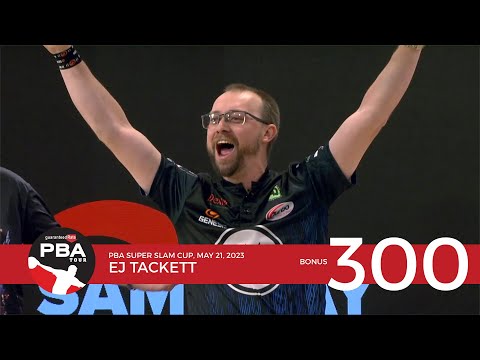
PBA Televised 300 Game Bonus: EJ Tackett
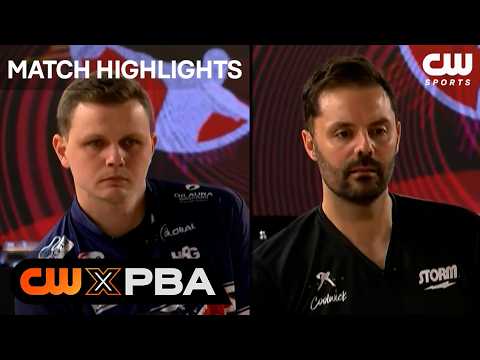
Andrew Anderson vs. Jason Belmonte | 2026 PBA Tournament of Champions Highlights | Bowling on The CW
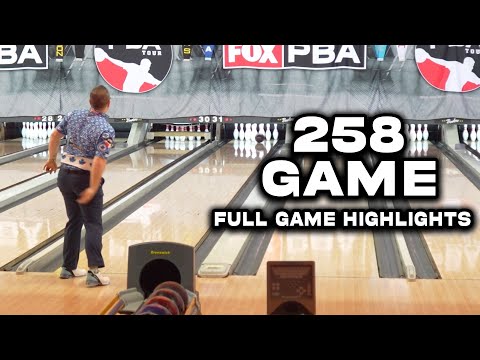
PBA Illinois Classic - Zach Wilkins 258 Game - Full Highlights
Chart basis: counts from Sport on Earth’s own carried data files at build time — verified videos carried for this sport (the verified pool: sport-videos.json + the desk league pools), news items carried (news.json), and league pages carried (desk.json). No external or estimated figures.
The filter sorts the Review Room embeds and the picture cards above by the keywords in their carried titles (review / analysis / recap and similar, or highlights). It runs entirely in your browser — nothing is sent anywhere.
Hall of Fame
No hall of fame with a published inductee list is carried for Ten-pin Bowling. Sport on Earth does not invent halls or inductees: where a recognised hall publishes its list in a form this site can carry, the full list will appear here with its source named.
The Sport in Depth
How it’s played
Roll a ball to knock down pins.
In the wider target family of sports — precision is applied physics repeated perfectly, the game turns on: Process over outcome: a repeatable routine — stance, aim, release, follow-through — because results follow process with a lag.; Read before you play: line, pace and conditions are decided before the delivery starts; changing mid-action is where errors live.; Grouping before centring: tighten the pattern of attempts first; then move the whole pattern onto the target.; One-ball-at-a-time scoring: target games punish carrying the last miss into the next attempt more than any single bad throw.; The shot routine is the skill: a repeatable pre-shot sequence holds technique together when the score starts to matter.; Conditions separate fields: wind, light and surface change the same delivery’s result — reading them is a scoring skill, not local knowledge..
The pro scene
Sport on Earth carries no team or player directory for this sport, because no structured public feed publishes a verifiable one. What is carried is the documented record on this page — history, rules, honours and the calendar — each with its source named.
📖 Ten-pin Bowling — Tactics & Strategy — every entry, plus the arcade strategy, at the foot of this page.
Ten-pin Bowling Arcade — The Strike
An arcade take on Ten-pin Bowling: set the angle, set the power, and land the ball in the pins. Five attempts; the closer to the middle, the more it scores. Arcade distances and a training arc — a game in the spirit of the sport, not a simulation of it.
More ways to play Ten-pin Bowling
This page’s own game is the arcade above. Everything else on the site that fits this sport is listed here — and anything borrowed from a similar sport is labelled as that sport’s game, never passed off as this one’s.
- Top Sport on Earth — Ten-pin Bowling is one of the 455 sport cards in the SPORTS deck: play Top Sport on Earth.
- More in this family — Disc Golf Arcade — The Chain Shot: the game of Disc Golf, a similar sport in Ten-pin Bowling’s family.
- Everything else the site runs lives on the Games hub.
On screen
3 verified documentaries, films and series about this sport are listed in the site's screen guide: Sport on Screen — Ten-pin Bowling.
Tools for Ten-pin Bowling
The tools on this site that honestly run on Ten-pin Bowling — its own record first, then the site-wide general tools that apply. The full Ten-pin Bowling toolkit prints the ones that do not apply, with the data reason why.
No bench tool yet computes from Ten-pin Bowling’s own carried record — the general tools below are the ones that honestly apply.
General tools that also apply
Site-wide tools, not built for Ten-pin Bowling alone: Tournament Planner · My Notebook · The Labs · Design Studio · The Makers’ Bench · Match Day Desk · Play It Near You · Myth-Check Desk · Governing Bodies · Heat & Safety Calculator (WBGT) · Hydration Calculator · Training-Load Planner · Game Clock & Timer · Custom Rulebook Generator · Scout Notes Parser.
Ten-pin Bowling — Tactics & Strategy
Tactics & Strategy — this sport’s book
ten-pin bowling’s book — lane reading is its play-calling: the oil pattern is a defence that changes as you play it.
8 entries, plus the arcade strategy below. All wording is original coaching-vocabulary prose; nothing is copied from any proprietary playbook.
Reading the Oil (the Lane as a Defence)
Oil is laid in a pattern — house shot or sport pattern — that governs the ball’s hook: the bowler reads the pattern’s length and shape from the ball’s motion, and the whole game is the reading.
When it’s used: The lane is the opponent that moves: every ball thrown changes the oil it reads.
The sequence
- The breakpoint (where the ball begins to hook) is chosen by the pattern’s length, not by preference.
- Carrydown and breakdown are the pattern’s second half: the line must migrate as the oil does.
- A sport pattern’s flatness punishes the house shot’s habits — the reading is the tournament’s first cut.
The Strike Line and the Pocket
The strike is aimed at the pocket (between the 1 and 3 pins for the right-hander), entered at an angle of four to six degrees: the line is built backwards from that angle’s needs.
When it’s used: Pin action is physics: the pocket and the angle do the striking; the bowler supplies the geometry.
The sequence
- The entry angle is created by the breakpoint’s distance, not by the release’s violence.
- Leaving the corner pin is an angle diagnosis, not bad luck — the book adjusts the feet, not the hopes.
- The strike line is re-derived every few frames as the lanes transition.
The Spare Systems (3-6-9 and the Cross-Lane)
Spares are shot by system: the 3-6-9 method moves the feet by counts for the common leaves, and the corner spares are taken cross-lane with a straighter ball to kill the hook’s opinion.
When it’s used: The spare is bowling’s free throw: routine and system, drained of improvisation.
The sequence
- One system, every spare: the feet move, the target stays — that is the system’s whole mercy.
- The 10-pin (and the 7 for left-handers) is shot with plastic and a straight line, across the lane’s full width.
- The split is attacked by its physics (slide one pin into the other) or conceded to the single pin — the count decides, not the pride.
Ball Changes and Surfaces
The arsenal is a playbook: balls of different cores and covers for the fresh, the transition and the burn, their surfaces (polished, sanded) tuned like a pitcher’s grips.
When it’s used: Changing balls is a play call, and its timing is the professional’s separator.
The sequence
- The fresh-oil ball reads early and strong; the burn ball must ignore the front and store its hook.
- A surface change is a half-step adjustment; a ball change is a full one — the book spends the smaller first.
- Two bowlers on a pair share a transition report: the pair’s reading doubles the data.
Match Play (the Head-to-Head Game)
In match play the opponent’s line is visible information: bowlers shadow each other’s arrows, steal the working line’s secret, and protect their own by disguising the adjustment that found it.
When it’s used: The match is a reading race held in public.
The sequence
- Watch the opponent’s ball motion, not his score — his strikes are your scouting report.
- When he finds the line first, follow his feet, then find your own version of his angle.
- The last frames are psychology’s: a spare made loudly is a shot across the next lane.
The Approach (the Repeatable Machine)
Four or five steps, a pendulum swing, a release at the foul line’s same inch: the approach is bowling’s closed skill, and its fidelity is what every reading stands on.
When it’s used: As in darts, the tactic is the motion’s repeatability; unlike darts, the lane answers back.
The sequence
- The approach’s tempo is set in practice and never negotiated mid-game.
- The release point’s consistency is measured in boards — one board is a different ball motion.
- A bowler whose approach wanders is reading lanes that don’t exist.
Team Baker Format (the Shared Game)
In Baker format, a team bowls one game in rotation, frame by frame: the order is a batting order, the anchor is the closer, and the team’s reading is a single shared document.
When it’s used: The Baker order is set like a lineup card: the anchor owns the tenth.
The sequence
- The lead-off’s job is the first reading, reported plainly.
- The anchor is chosen for spare certainty under noise, not for strike glamour.
- Frames are inherited mid-transition: each bowler’s first ball is the last bowler’s report made real.
The Tenth Frame (Closing)
The tenth’s bonus balls make it the game’s closing argument: the strike that earns two more, the spare that earns one — closers are chosen and games are managed backwards from it.
When it’s used: More matches turn on the tenth’s arithmetic than on any strike string before it.
The sequence
- The anchor’s first ball in the tenth is the game’s most valuable single shot — its line is the day’s best-known reading.
- A game within a spare is a spare game: the closer’s doctrine flips from strike-hunting to certainty.
- The count of the fill balls is the difference between the trophy and the story told about it.
Playing the Game
Playing the Game — The Strike
The arcade cell · strategy
This page’s arcade cell: launch the ball at the pins from the putting green · 40 m (arcade scale). Angle, power, launch — five attempts, and the cell keeps your best.
When it’s used: On this page, in the Play section — and its strategy is the same craft as the book above it, miniaturised.
The sequence
- Set the angle first. The target is the pins, the putting green · 40 m (arcade scale) — the angle is chosen for where the ball must finish, not where it starts.
- Set the power second, on the sweeping meter: the scoring zone is a band, not a point, so aim for the middle of the band you can repeat, not the edge you can imagine.
- Launch, and read the result like a rangefinder: every attempt tells you the cell’s wind — there is none, so a miss is a measurement error, and it is yours to correct on the next attempt.
- You have 5 attempts. This is a precision cell: the smallest repeatable power beats the biggest heroic one, every attempt.
- The cell’s own honesty line applies: arcade distances; a game, not a simulation.
Part of the Sport on Earth Playbooks — a book for every sport and every game on the site.
Behind the Play
Behind the Play · From the carried record
Roll a ball to knock down pins.
Behind the Play takes the decisive actions of Ten-pin Bowling apart: how the scoring play is built, which patterns the players are really running, and which rules remade the play into its modern shape.
The patterns behind the play
- Process over outcome: a repeatable routine — stance, aim, release, follow-through — because results follow process with a lag.
- Read before you play: line, pace and conditions are decided before the delivery starts; changing mid-action is where errors live.
- Grouping before centring: tighten the pattern of attempts first; then move the whole pattern onto the target.
- One-ball-at-a-time scoring: target games punish carrying the last miss into the next attempt more than any single bad throw.
- The shot routine is the skill: a repeatable pre-shot sequence holds technique together when the score starts to matter.
- Conditions separate fields: wind, light and surface change the same delivery’s result — reading them is a scoring skill, not local knowledge.
The moves in the book
- Line
- The intended path of the ball, stone, dart or shot toward the target — read before every attempt.
- Release
- The moment the projectile leaves the hand or implement; the point where most errors are made.
- Follow-through
- The completion of the delivery action after release; a consistent follow-through is the mark of a repeatable action.
- Grouping
- The pattern of several attempts on the target — tight groupings show a repeatable action even before they are centred.
- Draw weight
- In bowls and curling family games, the precise pace that lets the bowl or stone finish on the target.
Source basis: this sport’s carried record on this page (verified record, rule-changes dossier, history datasets) and the play patterns of its family as written in the site’s guides. Nothing here is invented.