Episode 1 — Five sweeps on Championship Sunday at the PPA Daytona Beach Open
Ep. 1 — the week of Monday, November 23, 2026 · 0:56
Pages
On this page
Sport on Earth › Sports
Sport on Earth · Sport
Paddle sport on a small court with a plastic ball.
Sport on Earth’s daily and weekly video shows for Pickleball — every episode, newest first.
Ep. 1 — the week of Monday, November 23, 2026 · 0:56
Every embed below was verified playable before listing — the network’s standing rule.
YouTube · PPA Tour
YouTube · The Kitchen Pickleball
YouTube · PPA Tour
YouTube · Pickleballtv
Pages
On this page
No game on this site is made specifically for Pickleball yet. The games below are the site's all-sport games, which honestly cover every sport — nothing from another sport has been dressed up as this sport's game.
A new set of questions every day, across every sport this site covers.
Real-athlete Top Sport on Earth decks built from the site’s verified board data.
Pickleball's lab is the Physics Lab section on this page — the applied physics of its sport family, with a computed interactive where one honestly fits.
Physics Arena — the general biomechanics & physics teaching sandbox, shared by every sport.
The homepage sport explorer also carries a general Lab tab of small interactive experiments.
Calendar data not yet carried for Pickleball — this site does not yet hold schedule data for it, so no dates are shown rather than invented.
Which section of this page should we expand first?
Votes are counted on the Sport on Earth server and the totals shown are every reader’s votes; your own choice is remembered in this browser.
Sport on Earth does not yet hold verified dated events for Pickleball, and its carried record does not state the season's timing in words — so no calendar is shown rather than an invented one. What the site does carry for this sport is on this page: its verified record, its rules record and its history.
Racket sports are projectile physics with extreme drag: a shuttlecock is the most drag-dominated projectile in sport, a table-tennis ball the lightest — and every ball between is steered by topspin and slice through the Magnus effect, which is why a heavy topspin shot dives late and a slice floats. The calculator below is the core flight model, with assumptions printed: no air resistance, no spin, flat ground — use it to see what gravity alone does, then credit drag and spin for the difference you see on court.
String-bed physics matters too: dwell time, string tension and racket flex set how much energy and spin a stroke can impart.
From this sport's own record: Paddle sport on a small court with a plastic ball. The lab above treats the physics of the sport's family; no measurement specific to this sport is printed, because the site's verified record for it carries none — parameters are never invented to fill a lab.
Model: R = v²·sin(2θ)/g, flight time T = 2·v·sin(θ)/g, apex H = (v·sin θ)²/(2g), g = 9.81 m/s². Assumptions: no air resistance, no spin, flat ground, launch and landing at the same height. Real balls and shuttles fly shorter and curve — drag and spin are exactly what this model leaves out, so treat the output as the gravity-only ceiling, not a prediction.
The general teaching sandbox for every sport is the Physics Arena on the Games page — the same printed models, with a defender added.
The hands-on lab for Pickleball, built entirely from the record this site carries for it — its documented rolls, its halls, its venues, its calendar and its census family. Every figure below is computed from that carried record at build time; nothing is estimated and nothing is pulled live. The companion Physics Lab on this page works the family's physics; this lab works the record.
The carried global venue dataset holds 2 venues for Pickleball across 2 countries. The largest capacity the dataset records for this sport is 4,000 — BallsportArena Dresden, .
Basis: the global venue dataset carried on this site (6,438 venues with coordinates; the venue explorer on the sports index and the stadium sun table work the same data). Countries beyond the 25 largest are counted in the totals above but not listed here.
Computed from the site census: the Racket sports family holds 18 entries on this site. Across the family, the carried record includes documented rolls for 1 of them, Hall of Fame data for 3, venue sets for 7, and dated calendars for 4.
Every other entry in the family: 360ball · Badminton · Crossminton · Frescobol · Gaelic Handball · Hanetsuki · Matkot · Padbol · Padel · Pelota and Jai Alai · Racketlon · Racquetball · Real Tennis · Squash · Table Tennis · Tamburello · Tennis
Basis: the Sport on Earth census itself — the same 460-entry register the census page prints.
The desk has not verified a sponsorship record for Pickleball from published sources, so none is printed. Sponsorship history is added only when a real published source supports it — sponsor by sponsor, deal by deal. Current sponsorship deals across sport are tracked on the Money Desk sponsorship page.
How this game is played, gathered from the record Sport on Earth already carries for Pickleball, with the positions taken from the sourced chart cited in that section.
Pickleball, the fastest-growing sport in America, spent 2021–2023 in a public fight about how a serve may legally start a rally — and quietly abolished the tennis-style let along the way. Its rulebook is rewritten every January, and the serve chapters of four straight editions tell the story.
The current rules, as the site's rule-change dossier records them:
The full dossier — every dated change and named rule, with its source basis — is in this page’s Rule Changes & Named Rules section.
Pickleball has no fixed positions — its format designates no positional roles.
Format as carried in hidden_files/batchB-nov1/batchb_data.json: "Paddle sport on a small court with a plastic ball." The format carries no designated positional roles. (Source: Sport on Earth carried sport record.)
Its Tactics & Strategy book — its opening entries, the basic plays, are:
The full book carries 13 entries — in this page’s Playbook / Tactics & Strategy section, and at the Playbooks hub.
Sport on Earth's own analytics: every figure in this panel is computed at build time from the record this site itself carries, with the source named. No outside data is used, and no betting figures of any kind.
Venues carried: 2 in 2 countries; the largest carried capacity is 4,000 (BallsportArena Dresden).
Source: the site's global venue record (venues-global.json); a capacity is printed only where the record carries a verified one.
Census arithmetic: Pickleball sits in the racket sports family — 18 census sports, of which 2 carry a qualifying champions roll in the site's record.
Pickleball, the fastest-growing sport in America, spent 2021–2023 in a public fight about how a serve may legally start a rally — and quietly abolished the tennis-style let along the way. Its rulebook is rewritten every January, and the serve chapters of four straight editions tell the story.
Before: Pickleball inherited tennis’s courtesy: a serve that clipped the net cord and landed in the correct service court was a ’let’ — replayed, no penalty either way, as often as it happened. In a sport mostly played without officials, the let depended entirely on players agreeing a serve had touched the net.
The change: From the 2021 rulebook (in force 25 January 2021) the service let no longer exists. A serve that touches the net and lands in the correct service court is a live, legal serve and must be played; stopping play for a phantom let is itself a fault. A serve that touches the net and lands out is simply a fault.
Why it happened: USA Pickleball’s stated reason, recorded in its own 2021 change documents, was to prevent conflict between players and referees — and outright cheating: a receiver beaten by a serve could claim a net cord nobody else heard and steal a replay. Removing the let removed the argument.
In practice today: Net-cord serves are now just serves, and pickleball diverged permanently from tennis on the point. Receivers must play dribblers off the tape, and the word ’let’ survives in the rulebook only for outside interference.
Before: Every serve had to be a volley serve hit from the hand under three technical tests: the paddle moving in an upward arc, the paddle head below the wrist at contact, and contact below the waist. The tests were a standing source of disputes in unofficiated play, where no referee could judge a wrist angle.
The change: The drop serve — release the ball and let it bounce, then hit it however you like, with none of the volley serve’s arc, wrist or waist restrictions applying — entered the rulebook as a provisional, one-year experiment in 2021 and was made a permanent, official alternative in the 2022 rulebook. The ball may not be forced down or tossed up; it must be dropped, and (from 2023) may not be spun on release.
Why it happened: The experiment was aimed at beginners, older players and players with limited mobility, for whom the volley serve’s technique rules were the game’s first barrier — and at ending serve-legality arguments, since a bounced ball carries its own evidence. A year of trial play convinced the rules committee to keep it.
In practice today: The drop serve is now a mainstream weapon, not an accommodation: advanced players use the bounce to set a drive serve at a height the volley serve forbids, and coaching teaches both serves from a player’s first season.
Before: Servers discovered that a ball could be spun violently before it was ever struck: rolling or flicking it against the paddle and palm — the ’chainsaw’ serve, popularised on the pro tours in 2021 — sent it into the bounce already rotating so hard that the struck serve kicked unpredictably sideways off the receiver’s paddle.
The change: The 2022 rulebook drew the first line: a server could still impart spin with the free (non-paddle) hand on a volley serve, but manipulating the ball with the paddle or paddle hand to spin it — the chainsaw motion — was prohibited.
Why it happened: The chainsaw had become the sport’s first equipment-of-the-hand controversy: a serve whose difficulty came from a pre-spin trick rather than the stroke itself, producing unreturnable serves at exactly the moment pickleball was selling itself as rally-friendly. The 2022 compromise tried to ban the trick while tolerating ordinary hand spin.
In practice today: The compromise lasted one season. Distinguishing paddle-spun from hand-spun balls proved unenforceable, and the 2022 half-measure led directly to the complete prohibition that followed it (below).
Before: After the 2022 compromise, a serve could still be legally pre-spun by the free hand: flick the ball into rotation as it left the fingers, then strike it, and the two spins compounded into serves that swerved and kicked in ways receivers described as a different sport.
The change: Rule 4.A.5 of the 2023 rulebook closed the gap completely: the serve must be made with only one hand releasing the ball, and ’the server shall not impart manipulation or spin on the ball with any part of the body immediately prior to the serve’ (natural rotation from an ordinary release excepted). A companion change (Rule Change 399) applied the same no-spin-on-release rule to the drop serve.
Why it happened: USA Pickleball’s rules committee concluded that pre-spinning had defeated the serve’s purpose — starting a rally, not ending it — and that the 2022 distinction between hands was unworkable for referees and impossible in self-officiated play. The so-called Morgan Evans serve and its imitators were legislated out of the sport.
In practice today: Pre-spun serves survive only in highlight reels from 2021–22. Modern serve coaching is built on paddle-applied spin at contact, which remains legal, and the 2023 wording has been carried forward, clarified but unchanged in substance, in every rulebook since.
Source basis: USA Pickleball Official Rulebook revisions and rule-change records (2021 let-serve removal and provisional drop serve; 2022 drop serve made permanent and the chainsaw-serve restriction; 2023 Rule 4.A.5 spin prohibition and Rule Change 399), with contemporary referee and tour reporting.
Sport on Earth carries no results feed for Pickleball: no scores or fixtures are published here, rather than inventing them. The sport's documented record is in its history page and the History & Records section of this page.
The historical record for Pickleball — past standings, champions, title history and all-time leaders, as deep as verifiable public records go.
Season-by-season standings, historical player statistics and title rolls are not carried for Pickleball: no public archive publishes them in a form Sport on Earth can verify, and this site does not invent history. What is carried for this sport is its verified record, its rule-change history and its league history — elsewhere on this page.
The review and analysis videos from Pickleball’s verified video pool — every embed below was identity-checked and probed playable before listing, the site’s standing rule. Nothing here is a show Sport on Earth produces; these are the review, post-game and breakdown videos the pool already carries for this sport.
No verified review-show video is carried for this sport yet.
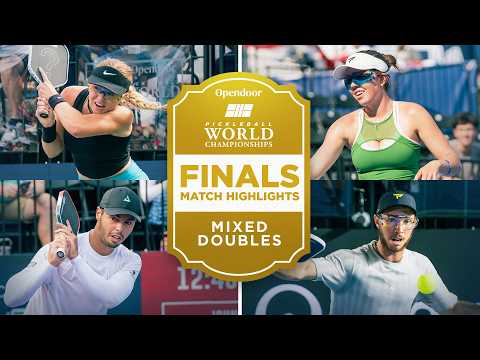
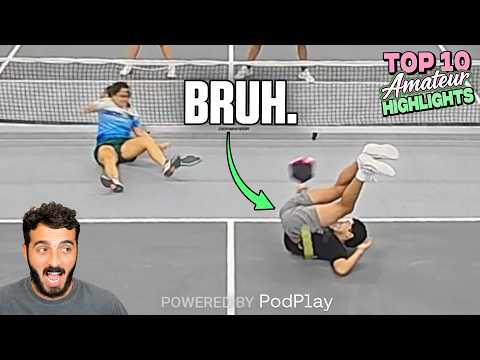

The filter sorts the Review Room embeds and the picture cards above by the keywords in their carried titles (review / analysis / recap and similar, or highlights). It runs entirely in your browser — nothing is sent anywhere.
No hall of fame with a published inductee list is carried for Pickleball. Sport on Earth does not invent halls or inductees: where a recognised hall publishes its list in a form this site can carry, the full list will appear here with its source named.
Paddle sport on a small court with a plastic ball.
Pickleball, the fastest-growing sport in America, spent 2021–2023 in a public fight about how a serve may legally start a rally.
Sport on Earth carries no team or player directory for this sport, because no structured public feed publishes a verifiable one. What is carried is the documented record on this page — history, rules, honours and the calendar — each with its source named.
The Pickleball record book, as this site carries it: its rule-changes dossier records 1 dated changes and named rules. Every figure above is computed from the lists and dossiers printed on this page, each with its source basis named beside it.
More from the desk: the expert guide to Pickleball · the site-wide Writing Desk · every sport on Earth.
📖 Pickleball — Tactics & Strategy — every entry, plus the arcade strategy, at the foot of this page.
An arcade take on Pickleball: set the angle, set the power, and land the shuttle in the far court. Five attempts; the closer to the middle, the more it scores. Arcade distances and a training arc — a game in the spirit of the sport, not a simulation of it.
This page’s own game is the arcade above. Everything else on the site that fits this sport is listed here — and anything borrowed from a similar sport is labelled as that sport’s game, never passed off as this one’s.
3 verified documentaries, films and series about this sport are listed in the site's screen guide: Sport on Screen — Pickleball.
The tools on this site that honestly run on Pickleball — its own record first, then the site-wide general tools that apply. The full Pickleball toolkit prints the ones that do not apply, with the data reason why.
Site-wide tools, not built for Pickleball alone: Tournament Planner · My Notebook · The Labs · Design Studio · The Makers’ Bench · Match Day Desk · Play It Near You · Myth-Check Desk · Governing Bodies · Heat & Safety Calculator (WBGT) · Hydration Calculator · Training-Load Planner · Game Clock & Timer · Custom Rulebook Generator · Scout Notes Parser.
Tactics & Strategy — this sport’s book
the racket family’s shared tactics book — the rally-construction craft common to tennis, badminton, table tennis, squash, padel, pickleball and their cousins: depth, width, and the attack on the weaker wing. Each sport’s own signature entries follow the shared book on its page.
13 entries, plus the arcade strategy below. All wording is original coaching-vocabulary prose; nothing is copied from any proprietary playbook.
The family’s first law: a shot hit deep pins the opponent to his back line and buys the court in front of him; width attempted from a short ball is a donation. Build the rally deep, then widen it.
When it’s used: Every rally’s foundation, in every racket code.
The sequence
Most players own one wing that defends worse, returns shorter, and breaks down third in long exchanges: the book says to live there — not exclusively, but as the rally’s home address.
When it’s used: The oldest tactic in the family, and still the default at every level.
The sequence
The rally is a rhythm until someone breaks it: the player who changes the ball’s direction first, from balance, wins the exchange’s geometry — changing it off balance is how errors are manufactured.
When it’s used: Direction changes are earned by footwork, never by hope.
The sequence
The family’s only closed skills are its first plays: the serve is hit to a called target with a called second shot behind it, and the return is positioned and aimed with the same deliberation — rallies are won before they are rallies.
When it’s used: Treat the first two shots as called plays, because they are the only ones you fully control.
The sequence
In the net codes (tennis, badminton’s front court, padel, pickleball’s kitchen line), the approach shot is a play: hit deep and down the line, close behind it, and make the passer hit the shot the volleyer has already covered.
When it’s used: Net play is a contract: the approach buys the volley its terms.
The sequence
The drop pulls the opponent forward; the lob sends him back; played in alternation they saw the opponent’s legs apart — the family’s gentlest and cruellest combination.
When it’s used: Every racket code has its version because every court’s geometry does.
The sequence
The ball’s flight is information you may falsify: heavy spin that looks flat, the slice that floats and skids, the change of pace that arrives a half-beat off the swing’s promise.
When it’s used: Deception in the family is physical, not theatrical — it lives in the ball.
The sequence
A ball driven at the opponent’s hip or dominant-side elbow jams both wings at once: he must choose a side in the time the ball needs to arrive, and either choice is late.
When it’s used: The family’s equaliser against bigger, faster opponents.
The sequence
Defence is a system of anticipation and recovery position: after every shot, recover toward the bisector of the opponent’s possible angles — the geometry of his next shot draws your home position.
When it’s used: The recovery step is the rally’s invisible shot; champions take it, club players admire the ball instead.
The sequence
Scoreboard points are not equal: the family’s closing craft is pattern discipline — your best patterns, served and returned to the scouting you did in the first games, with nothing new attempted at 6-6.
When it’s used: Big points are played from the book’s first pages, not its last.
The sequence
Pickleball’s defining play: the serving team’s third shot is dropped softly into the kitchen so they can advance to the non-volley line — because the return team is already there, and the game is won at that line.
When it’s used: The rally’s whole geometry is decided by this one shot’s softness.
The sequence
At the kitchen line, the soft game: dinks are traded cross-court at a walking pace, each aimed to bounce in the kitchen and die — until one pops up and the firefight begins. Patience is a weapon with a hair trigger.
When it’s used: The dink rally is pickleball’s siege warfare; it ends in a hand-speed battle it was designed to start on your terms.
The sequence
The court’s two famous escapes: the Erne, jumping the kitchen’s corner to volley beside the net; and the Around-The-Post shot, hit outside the net post at ankle height. Both are rehearsed answers to balls that should be unplayable.
When it’s used: Named shots, kept because the geometry rewards them a dozen times a match.
The sequence
The arcade cell · strategy
This page’s arcade cell: launch the shuttle at the far court from the back tramline · 44 m (arcade scale). Angle, power, launch — five attempts, and the cell keeps your best.
When it’s used: On this page, in the Play section — and its strategy is the same craft as the book above it, miniaturised.
The sequence
Part of the Sport on Earth Playbooks — a book for every sport and every game on the site.
Behind the Play · Full treatment — from this sport’s own record
Paddle sport on a small court with a plastic ball.
Behind the Play takes the decisive actions of Pickleball apart: how the scoring play is built, which patterns the players are really running, and which rules remade the play into its modern shape.
Pickleball, the fastest-growing sport in America, spent 2021–2023 in a public fight about how a serve may legally start a rally.
The Drop Serve — and the Spin-Serve Ban (2021 (drop serve); 2023 (spin serve prohibited)). In 2021 USA Pickleball provisionally legalised the DROP SERVE — dropping the ball and striking it after the bounce, free of the volley serve’s restrictions (it became permanent in 2022) — to make serving accessible to beginners and players with limited mobility. The same creativity then produced the ’chainsaw’ spin serve (imparting spin on the toss with the paddle/fingers before striking), which the federation…
Both serves are now standard knowledge: the drop serve is taught to beginners everywhere, the chainsaw is a trivia answer, and pickleball’s rulebook — revised annually, in the open — is itself a novelty in this dossier.
From this page’s Rule Changes & Named Rules dossier, where every entry names its source.
Source basis: this sport’s carried record on this page (verified record, rule-changes dossier, history datasets) and the play patterns of its family as written in the site’s guides. Nothing here is invented.