Real Tennis British Open 2026 - Round 2 - Levi Gale vs Robert Shenkman
YouTube · T&RA Media
Pages
On this page
Sport on Earth › Sports
Sport on Earth · Sport
The original tennis — its world championship, decided by challenge, is the oldest in sport, dating to about 1740.
Every embed below was verified playable before listing — the network’s standing rule.
YouTube · T&RA Media
YouTube · Tennis TV
YouTube · T&RA Media
Pages
On this page
No game on this site is made specifically for Real Tennis yet. The games below are the site's all-sport games, which honestly cover every sport — nothing from another sport has been dressed up as this sport's game.
A new set of questions every day, across every sport this site covers.
Real-athlete Top Sport on Earth decks built from the site’s verified board data.
Real Tennis's lab is the Physics Lab section on this page — the applied physics of its sport family, with a computed interactive where one honestly fits.
Physics Arena — the general biomechanics & physics teaching sandbox, shared by every sport.
The homepage sport explorer also carries a general Lab tab of small interactive experiments.
Calendar data not yet carried for Real Tennis — this site does not yet hold schedule data for it, so no dates are shown rather than invented.
Which section of this page should we expand first?
Votes are counted on the Sport on Earth server and the totals shown are every reader’s votes; your own choice is remembered in this browser.
Sport on Earth does not yet hold verified dated events for Real Tennis, and its carried record does not state the season's timing in words — so no calendar is shown rather than an invented one. What the site does carry for this sport is on this page: its verified record, its rules record and its history.
Racket sports are projectile physics with extreme drag: a shuttlecock is the most drag-dominated projectile in sport, a table-tennis ball the lightest — and every ball between is steered by topspin and slice through the Magnus effect, which is why a heavy topspin shot dives late and a slice floats. The calculator below is the core flight model, with assumptions printed: no air resistance, no spin, flat ground — use it to see what gravity alone does, then credit drag and spin for the difference you see on court.
String-bed physics matters too: dwell time, string tension and racket flex set how much energy and spin a stroke can impart.
From this sport's own record: The original tennis — its world championship, decided by challenge, is the oldest in sport, dating to about 1740. The lab above treats the physics of the sport's family; no measurement specific to this sport is printed, because the site's verified record for it carries none — parameters are never invented to fill a lab.
Model: R = v²·sin(2θ)/g, flight time T = 2·v·sin(θ)/g, apex H = (v·sin θ)²/(2g), g = 9.81 m/s². Assumptions: no air resistance, no spin, flat ground, launch and landing at the same height. Real balls and shuttles fly shorter and curve — drag and spin are exactly what this model leaves out, so treat the output as the gravity-only ceiling, not a prediction.
The general teaching sandbox for every sport is the Physics Arena on the Games page — the same printed models, with a defender added.
The hands-on lab for Real Tennis, built entirely from the record this site carries for it — its documented rolls, its halls, its venues, its calendar and its census family. Every figure below is computed from that carried record at build time; nothing is estimated and nothing is pulled live. The companion Physics Lab on this page works the family's physics; this lab works the record.
The carried global venue dataset holds 1 venues for Real Tennis across 1 countries.
Basis: the global venue dataset carried on this site (6,438 venues with coordinates; the venue explorer on the sports index and the stadium sun table work the same data). Countries beyond the 25 largest are counted in the totals above but not listed here.
Computed from the site census: the Racket sports family holds 18 entries on this site. Across the family, the carried record includes documented rolls for 1 of them, Hall of Fame data for 3, venue sets for 7, and dated calendars for 4.
Every other entry in the family: 360ball · Badminton · Crossminton · Frescobol · Gaelic Handball · Hanetsuki · Matkot · Padbol · Padel · Pelota and Jai Alai · Pickleball · Racketlon · Racquetball · Squash · Table Tennis · Tamburello · Tennis
Basis: the Sport on Earth census itself — the same 460-entry register the census page prints.
The desk has not verified a sponsorship record for Real Tennis from published sources, so none is printed. Sponsorship history is added only when a real published source supports it — sponsor by sponsor, deal by deal. Current sponsorship deals across sport are tracked on the Money Desk sponsorship page.
How this game is played, gathered from the record Sport on Earth already carries for Real Tennis, with the positions taken from the sourced chart cited in that section.
Real tennis is the indoor original from which the lawn game was borrowed: played on an asymmetric walled court with a penthouse gallery, a heavy hand-made ball and lopsided rackets. In the United States it is called court tennis and in France jeu de paume. Its governing body is the International Real Tennis Professionals Association (IRTPA).
Its world championship is the oldest in all of sport: the first recorded champion, Clergé the Elder, dates to about 1740, and the title is still decided the way it has been for centuries — by challenge.
The challenge and the court — the rules as this site's record carries them:
Real Tennis has no fixed positions — its format designates no positional roles.
Format as carried in hidden_files/batchB-nov1/batchb_data.json: "The original tennis — its world championship, decided by challenge, is the oldest in sport, dating to about 1740." The format carries no designated positional roles. (Source: Sport on Earth carried sport record.)
Its Tactics & Strategy book — its opening entries, the basic plays, are:
The full book carries 12 entries — in this page’s Playbook / Tactics & Strategy section, and at the Playbooks hub.
Sport on Earth's own analytics: every figure in this panel is computed at build time from the record this site itself carries, with the source named. No outside data is used, and no betting figures of any kind.
Venues carried: 1 in 1 countries.
Source: the site's global venue record (venues-global.json); a capacity is printed only where the record carries a verified one.
Census arithmetic: Real Tennis sits in the racket sports family — 18 census sports, of which 2 carry a qualifying champions roll in the site's record.
Real tennis is the indoor original from which the lawn game was borrowed: played on an asymmetric walled court with a penthouse gallery, a heavy hand-made ball and lopsided rackets. In the United States it is called court tennis and in France jeu de paume. Its governing body is the International Real Tennis Professionals Association (IRTPA).
Its world championship is the oldest in all of sport: the first recorded champion, Clergé the Elder, dates to about 1740, and the title is still decided the way it has been for centuries — by challenge.
The men’s singles title is contested on a challenge basis, biennial in the modern era, as a best-of-13-sets match played over three days.
Rob Fahey of Australia won a record 13 world titles (his reigns ran from 1994 to 2014, and again in 2018). The longest single reign belongs to Jacques Edmond Barre, champion for 33 years from 1829 to 1862.
Camden Riviere of the United States has held the title since 2016, apart from Fahey’s 2018–2022 interlude; he defended it in September 2025 at Newport, Rhode Island, beating John Lumley inside two days.
The women’s singles world championship has been played since 1985; in 2025 Claire Fahey beat Lea van der Zwalmen at Newport. The men’s doubles championship, a tournament rather than a challenge, has run in odd years since 2001.
Real tennis has no structured results feed this site can carry, so this page is the verified record only — the championship’s challenge history and champions as verified in November 2026 — with no live results.
Sources, verified November 1, 2026: Tennis & Rackets Association · Guinness World Records — most real tennis world titles · Real Tennis World Championship
Material from Wikipedia linked above is used under CC BY-SA 4.0.
How the laws of Real Tennis are governed today — the documented record, stated plainly.
Real tennis is governed by the IRTPA under laws descended from jeu de paume: the chase system, the asymmetric court and the challenge format for the world title (biennial in the modern era, best of 13 sets over three days). The code’s identity — including the title’s challenge basis, which dates to the championship’s first recorded holder around 1740 — has been preserved rather than replaced. No major dated rule change is carried for real tennis.
That framework summary is the whole documented record Sport on Earth can verify for this sport — no major dated rule changes are carried, rather than invent any.
Source basis: The governing body’s published framework as summarised in this section (see the framework text).
Sport on Earth carries no results feed for Real Tennis: no scores or fixtures are published here, rather than inventing them. The sport's documented record is in its history page and the History & Records section of this page.
The historical record for Real Tennis — past standings, champions, title history and all-time leaders, as deep as verifiable public records go.
Season-by-season standings, historical player statistics and title rolls are not carried for Real Tennis: no public archive publishes them in a form Sport on Earth can verify, and this site does not invent history. What is carried for this sport is its verified record, its rule-change history and its league history — elsewhere on this page.
The review and analysis videos from Real Tennis’s verified video pool — every embed below was identity-checked and probed playable before listing, the site’s standing rule. Nothing here is a show Sport on Earth produces; these are the review, post-game and breakdown videos the pool already carries for this sport.
No verified review-show video is carried for this sport yet.
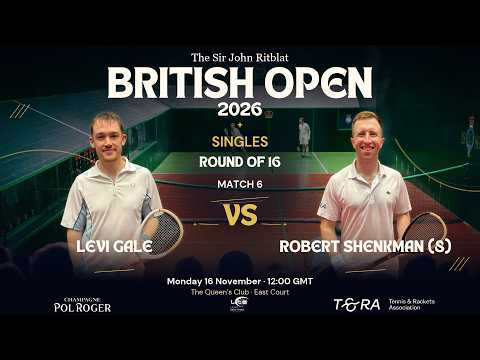
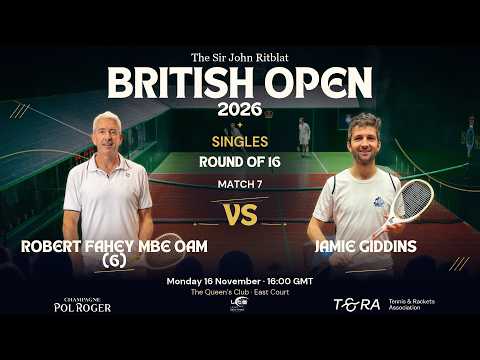
The filter sorts the Review Room embeds and the picture cards above by the keywords in their carried titles (review / analysis / recap and similar, or highlights). It runs entirely in your browser — nothing is sent anywhere.
No hall of fame with a published inductee list is carried for Real Tennis. Sport on Earth does not invent halls or inductees: where a recognised hall publishes its list in a form this site can carry, the full list will appear here with its source named.
The original tennis — its world championship, decided by challenge, is the oldest in sport, dating to about 1740.
The format, from this sport's verified record:
The Real Tennis record book is still thin: beyond the standings, rules and calendar layers on this page, no verified winners roll or honours list is carried yet. The desk adds record material only when a published source can be named for it — never from memory or invention.
More from the desk: the expert guide to Real Tennis · the site-wide Writing Desk · every sport on Earth.
📖 Real Tennis — Tactics & Strategy — every entry, plus the arcade strategy, at the foot of this page.
An arcade take on Real Tennis: set the angle, set the power, and land the shuttle in the far court. Five attempts; the closer to the middle, the more it scores. Arcade distances and a training arc — a game in the spirit of the sport, not a simulation of it.
This page’s own game is the arcade above. Everything else on the site that fits this sport is listed here — and anything borrowed from a similar sport is labelled as that sport’s game, never passed off as this one’s.
The tools on this site that honestly run on Real Tennis — its own record first, then the site-wide general tools that apply. The full Real Tennis toolkit prints the ones that do not apply, with the data reason why.
Site-wide tools, not built for Real Tennis alone: Tournament Planner · My Notebook · The Labs · Design Studio · The Makers’ Bench · Match Day Desk · Play It Near You · Myth-Check Desk · Governing Bodies · Heat & Safety Calculator (WBGT) · Hydration Calculator · Training-Load Planner · Game Clock & Timer · Custom Rulebook Generator · Scout Notes Parser.
Tactics & Strategy — this sport’s book
the racket family’s shared tactics book — the rally-construction craft common to tennis, badminton, table tennis, squash, padel, pickleball and their cousins: depth, width, and the attack on the weaker wing. Each sport’s own signature entries follow the shared book on its page.
12 entries, plus the arcade strategy below. All wording is original coaching-vocabulary prose; nothing is copied from any proprietary playbook.
The family’s first law: a shot hit deep pins the opponent to his back line and buys the court in front of him; width attempted from a short ball is a donation. Build the rally deep, then widen it.
When it’s used: Every rally’s foundation, in every racket code.
The sequence
Most players own one wing that defends worse, returns shorter, and breaks down third in long exchanges: the book says to live there — not exclusively, but as the rally’s home address.
When it’s used: The oldest tactic in the family, and still the default at every level.
The sequence
The rally is a rhythm until someone breaks it: the player who changes the ball’s direction first, from balance, wins the exchange’s geometry — changing it off balance is how errors are manufactured.
When it’s used: Direction changes are earned by footwork, never by hope.
The sequence
The family’s only closed skills are its first plays: the serve is hit to a called target with a called second shot behind it, and the return is positioned and aimed with the same deliberation — rallies are won before they are rallies.
When it’s used: Treat the first two shots as called plays, because they are the only ones you fully control.
The sequence
In the net codes (tennis, badminton’s front court, padel, pickleball’s kitchen line), the approach shot is a play: hit deep and down the line, close behind it, and make the passer hit the shot the volleyer has already covered.
When it’s used: Net play is a contract: the approach buys the volley its terms.
The sequence
The drop pulls the opponent forward; the lob sends him back; played in alternation they saw the opponent’s legs apart — the family’s gentlest and cruellest combination.
When it’s used: Every racket code has its version because every court’s geometry does.
The sequence
The ball’s flight is information you may falsify: heavy spin that looks flat, the slice that floats and skids, the change of pace that arrives a half-beat off the swing’s promise.
When it’s used: Deception in the family is physical, not theatrical — it lives in the ball.
The sequence
A ball driven at the opponent’s hip or dominant-side elbow jams both wings at once: he must choose a side in the time the ball needs to arrive, and either choice is late.
When it’s used: The family’s equaliser against bigger, faster opponents.
The sequence
Defence is a system of anticipation and recovery position: after every shot, recover toward the bisector of the opponent’s possible angles — the geometry of his next shot draws your home position.
When it’s used: The recovery step is the rally’s invisible shot; champions take it, club players admire the ball instead.
The sequence
Scoreboard points are not equal: the family’s closing craft is pattern discipline — your best patterns, served and returned to the scouting you did in the first games, with nothing new attempted at 6-6.
When it’s used: Big points are played from the book’s first pages, not its last.
The sequence
In real tennis, a ball that bounces twice leaves a ’chase’ — a measured mark the opponent must later beat when the ends are changed: points are banked as positions, and the set’s second half replays them as targets.
When it’s used: No other racket game stores its rallies as future plays; the chase is real tennis’s own invention.
The sequence
Real tennis serves are a library of named deliveries — the railroad, fast along the penthouse roof, is the most famous — and the galleries’ openings are scoring targets with their own defending craft.
When it’s used: The court is a building; the playbook is architectural.
The sequence
The arcade cell · strategy
This page’s arcade cell: launch the shuttle at the far court from the back tramline · 44 m (arcade scale). Angle, power, launch — five attempts, and the cell keeps your best.
When it’s used: On this page, in the Play section — and its strategy is the same craft as the book above it, miniaturised.
The sequence
Part of the Sport on Earth Playbooks — a book for every sport and every game on the site.
Behind the Play · Full treatment — from this sport’s own record
The original tennis — its world championship, decided by challenge, is the oldest in sport, dating to about 1740.
Behind the Play takes the decisive actions of Real Tennis apart: how the scoring play is built, which patterns the players are really running, and which rules remade the play into its modern shape.
The format, from this sport's verified record:
Source basis: this sport’s carried record on this page (verified record, rule-changes dossier, history datasets) and the play patterns of its family as written in the site’s guides. Nothing here is invented.