MATCH HIGHLIGHTS: Asuka Sakai vs Eugene Wang| MLTT Week 5 (Charlotte, NC)
YouTube · Major League Table Tennis
Pages
On this page
Sport on Earth › Sports
Sport on Earth · Sport
Hanetsuki: Japan’s New Year paddle game — a carved wooden hagoita, a feathered shuttlecock, and no net at all.
Every embed below was verified playable before listing — the network’s standing rule.
YouTube · Major League Table Tennis
YouTube · NBA
YouTube · ☀️Japan Antique Roadshow
Pages
On this page
No game on this site is made specifically for Hanetsuki yet. The games below are the site's all-sport games, which honestly cover every sport — nothing from another sport has been dressed up as this sport's game.
A new set of questions every day, across every sport this site covers.
Real-athlete Top Sport on Earth decks built from the site’s verified board data.
Hanetsuki's lab is the Physics Lab section on this page — the applied physics of its sport family, with a computed interactive where one honestly fits.
Physics Arena — the general biomechanics & physics teaching sandbox, shared by every sport.
The homepage sport explorer also carries a general Lab tab of small interactive experiments.
Calendar data not yet carried for Hanetsuki — this site does not yet hold schedule data for it, so no dates are shown rather than invented.
Which section of this page should we expand first?
Votes are counted on the Sport on Earth server and the totals shown are every reader’s votes; your own choice is remembered in this browser.
How this game is played, gathered from the record Sport on Earth already carries for Hanetsuki, with the positions taken from the sourced chart cited in that section.
Hanetsuki is a traditional Japanese game played with a rectangular wooden paddle (the hagoita) and a shuttlecock made from a soapberry seed and feathers. Two players rally the shuttlecock back and forth without a net, keeping it in the air as long as they can; it is a game of the New Year season, played in kimono in its classic image, and the ornate hagoita has become a decorative art object in its own right — Tokyo’s hagoita market is a December institution.
Tradition adds its famous forfeit: the player who lets the shuttlecock fall has their face marked with ink — a penalty recorded in the game’s folklore and still played for smiles at New Year gatherings.
How it is played — the rules as this site's record carries them:
Hanetsuki has no fixed positions — its format designates no positional roles.
Format as carried in hidden_files/batchB-nov1/batchb_data.json: "Hanetsuki: Japan’s New Year paddle game — a carved wooden hagoita, a feathered shuttlecock, and no net at all." The format carries no designated positional roles. (Source: Sport on Earth carried sport record.)
Sport on Earth's own analytics: every figure in this panel is computed at build time from the record this site itself carries, with the source named. No outside data is used, and no betting figures of any kind.
Census arithmetic: Hanetsuki sits in the racket sports family — 18 census sports, of which 2 carry a qualifying champions roll in the site's record.
The carried record for Hanetsuki is too thin for computed panels: no champions roll, hall-of-fame list or venue record is carried for it. This panel therefore prints the census arithmetic only — the honest answer rather than a manufactured figure.
Sport on Earth does not yet hold verified dated events for Hanetsuki, and its carried record does not state the season's timing in words — so no calendar is shown rather than an invented one. What the site does carry for this sport is on this page: its verified record, its rules record and its history.
Racket sports are projectile physics with extreme drag: a shuttlecock is the most drag-dominated projectile in sport, a table-tennis ball the lightest — and every ball between is steered by topspin and slice through the Magnus effect, which is why a heavy topspin shot dives late and a slice floats. The calculator below is the core flight model, with assumptions printed: no air resistance, no spin, flat ground — use it to see what gravity alone does, then credit drag and spin for the difference you see on court.
String-bed physics matters too: dwell time, string tension and racket flex set how much energy and spin a stroke can impart.
From this sport's own record: Hanetsuki: Japan’s New Year paddle game — a carved wooden hagoita, a feathered shuttlecock, and no net at all. The lab above treats the physics of the sport's family; no measurement specific to this sport is printed, because the site's verified record for it carries none — parameters are never invented to fill a lab.
Model: R = v²·sin(2θ)/g, flight time T = 2·v·sin(θ)/g, apex H = (v·sin θ)²/(2g), g = 9.81 m/s². Assumptions: no air resistance, no spin, flat ground, launch and landing at the same height. Real balls and shuttles fly shorter and curve — drag and spin are exactly what this model leaves out, so treat the output as the gravity-only ceiling, not a prediction.
The general teaching sandbox for every sport is the Physics Arena on the Games page — the same printed models, with a defender added.
The hands-on lab for Hanetsuki, built entirely from the record this site carries for it — its documented rolls, its halls, its venues, its calendar and its census family. Every figure below is computed from that carried record at build time; nothing is estimated and nothing is pulled live. The companion Physics Lab on this page works the family's physics; this lab works the record.
The honest position: the record this site carries for Hanetsuki is thin — no documented roll, hall, venue set or dated calendar is carried for it yet — so this entry’s lab is its family lab: the computed census of the family it belongs to. When the record grows, the lab grows with it; nothing here is estimated to fill the space.
Computed from the site census: the Racket sports family holds 18 entries on this site. Across the family, the carried record includes documented rolls for 1 of them, Hall of Fame data for 3, venue sets for 7, and dated calendars for 4.
Every other entry in the family: 360ball · Badminton · Crossminton · Frescobol · Gaelic Handball · Matkot · Padbol · Padel · Pelota and Jai Alai · Pickleball · Racketlon · Racquetball · Real Tennis · Squash · Table Tennis · Tamburello · Tennis
Basis: the Sport on Earth census itself — the same 460-entry register the census page prints.
The desk has not verified a sponsorship record for Hanetsuki from published sources, so none is printed. Sponsorship history is added only when a real published source supports it — sponsor by sponsor, deal by deal. Current sponsorship deals across sport are tracked on the Money Desk sponsorship page.
Hanetsuki is a traditional Japanese game played with a rectangular wooden paddle (the hagoita) and a shuttlecock made from a soapberry seed and feathers. Two players rally the shuttlecock back and forth without a net, keeping it in the air as long as they can; it is a game of the New Year season, played in kimono in its classic image, and the ornate hagoita has become a decorative art object in its own right — Tokyo’s hagoita market is a December institution.
Tradition adds its famous forfeit: the player who lets the shuttlecock fall has their face marked with ink — a penalty recorded in the game’s folklore and still played for smiles at New Year gatherings.
KCP International’s account of the hagoita fills in the game’s documented depth: the tradition traces to 14th-century China and reached Japan in the Muromachi period (1337–1587), and the ancient document ’Kanban O-nikki’ describes hanetsuki played by the Imperial Court. The shuttlecock’s dragonfly resemblance carried the New Year wish — dragonflies eat mosquitoes, so playing was a wish that children would not be bitten. In the Edo period the paddles became popular gifts, wishing good fortune for the coming New Year and for baby girls in their first New Year.
Hanetsuki’s paddles trace to a game brought from 14th-century China to Muromachi-period Japan and recorded at the Imperial Court in the ’Kanban O-nikki.’ The game became a New Year rite — its feathered shuttlecock likened to a dragonfly — and in the Edo period the decorated hagoita grew into a good-fortune gift, a status kept today by Asakusa’s December Hagoita-Ichi fair.
The paddle is the hagoita: solid wood, its back often decorated with raised silk pictures of kabuki actors and beauties.
The shuttlecock — the hane — is a black soapberry seed with a crown of feathers.
Hanetsuki is a rally game, not a scoring contest: the rally itself is the play, and the ink-mark forfeit is its traditional stake.
Every late December the Hagoita-Ichi (Battledore Fair) is held at Senso-ji Temple in Asakusa, Tokyo, with dozens of stalls selling hagoita in many sizes and designs.
Hagoita are usually rectangular, lacquer-painted with conventional Japanese symbols and kabuki-drama characters and decorated with silk collages.
The hagoita was also believed to ward off evil spirits during the Sengoku period (mid-15th to early 17th century).
Hanetsuki has no organised results feed this site can carry, so this page is its documentary record only — the game as Japanese custom records it, verified in November 2026 — with no live results.
Sources, verified November 1, 2026: Hanetsuki · KCP International (KCP Japanese Language School) — Hagoita: More than Just for Games
Material from Wikipedia linked above is used under CC BY-SA 4.0.
How the laws of Hanetsuki are governed today — the documented record, stated plainly.
No rule-change record is carried for hanetsuki: it is a game of custom, standardised by tradition rather than by dated codes.
That framework summary is the whole documented record Sport on Earth can verify for this sport — no major dated rule changes are carried, rather than invent any.
Source basis: The governing body’s published framework as summarised in this section (see the framework text).
Sport on Earth carries no results feed for Hanetsuki: no scores or fixtures are published here, rather than inventing them. The sport's documented record is in its history page and the History & Records section of this page.
The historical record for Hanetsuki — past standings, champions, title history and all-time leaders, as deep as verifiable public records go.
Season-by-season standings, historical player statistics and title rolls are not carried for Hanetsuki: no public archive publishes them in a form Sport on Earth can verify, and this site does not invent history. What is carried for this sport is its verified record, its rule-change history and its league history — elsewhere on this page.
The review and analysis videos from Hanetsuki’s verified video pool — every embed below was identity-checked and probed playable before listing, the site’s standing rule. Nothing here is a show Sport on Earth produces; these are the review, post-game and breakdown videos the pool already carries for this sport.
No verified review-show video is carried for this sport yet.
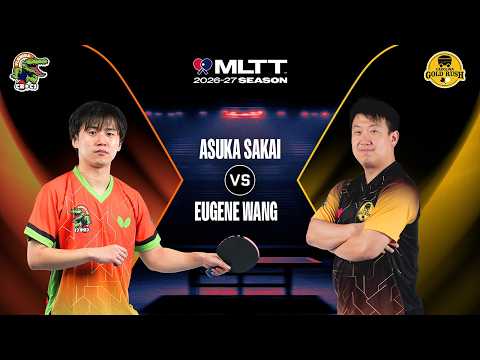

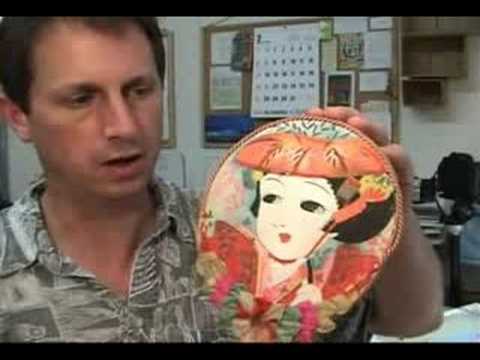
The filter sorts the Review Room embeds and the picture cards above by the keywords in their carried titles (review / analysis / recap and similar, or highlights). It runs entirely in your browser — nothing is sent anywhere.
No hall of fame with a published inductee list is carried for Hanetsuki. Sport on Earth does not invent halls or inductees: where a recognised hall publishes its list in a form this site can carry, the full list will appear here with its source named.
The Hanetsuki record book is still thin: beyond the standings, rules and calendar layers on this page, no verified winners roll or honours list is carried yet. The desk adds record material only when a published source can be named for it — never from memory or invention.
More from the desk: the expert guide to Hanetsuki · the site-wide Writing Desk · every sport on Earth.
An arcade take on Hanetsuki: set the angle, set the power, and land the shuttle in the far court. Five attempts; the closer to the middle, the more it scores. Arcade distances and a training arc — a game in the spirit of the sport, not a simulation of it.
This page’s own game is the arcade above. Everything else on the site that fits this sport is listed here — and anything borrowed from a similar sport is labelled as that sport’s game, never passed off as this one’s.
The tools on this site that honestly run on Hanetsuki — its own record first, then the site-wide general tools that apply. The full Hanetsuki toolkit prints the ones that do not apply, with the data reason why.
No bench tool yet computes from Hanetsuki’s own carried record — the general tools below are the ones that honestly apply.
Site-wide tools, not built for Hanetsuki alone: Tournament Planner · My Notebook · The Labs · Design Studio · The Makers’ Bench · Match Day Desk · Play It Near You · Myth-Check Desk · Governing Bodies · Heat & Safety Calculator (WBGT) · Hydration Calculator · Training-Load Planner · Game Clock & Timer · Custom Rulebook Generator · Scout Notes Parser.
Behind the Play · Full treatment — from this sport’s own record
Hanetsuki: Japan’s New Year paddle game — a carved wooden hagoita, a feathered shuttlecock, and no net at all.
Behind the Play takes the decisive actions of Hanetsuki apart: how the scoring play is built, which patterns the players are really running, and which rules remade the play into its modern shape.
The format, from this sport's verified record:
Source basis: this sport’s carried record on this page (verified record, rule-changes dossier, history datasets) and the play patterns of its family as written in the site’s guides. Nothing here is invented.