Israel: Holy City, Sin City and The Matkot
YouTube · Anki’s Travel TV
Pages
On this page
Sport on Earth › Sports
Sport on Earth · Sport
Matkot: Israel’s beach game — two wooden paddles, one hard little ball, and a rally with no winner but the rally itself.
Every embed below was verified playable before listing — the network’s standing rule.
YouTube · Anki’s Travel TV
YouTube · Ömer Kahraman
YouTube · Dor Weinberger
YouTube · Happy Travelers (Ned and Marc)
YouTube · RiderDiver
YouTube · Jewish Discoveries
YouTube · spacemanrecords
YouTube · ThisIsIsrael.Today
Pages
On this page
No game on this site is made specifically for Matkot yet. The games below are the site's all-sport games, which honestly cover every sport — nothing from another sport has been dressed up as this sport's game.
A new set of questions every day, across every sport this site covers.
Real-athlete Top Sport on Earth decks built from the site’s verified board data.
Matkot's lab is the Physics Lab section on this page — the applied physics of its sport family, with a computed interactive where one honestly fits.
Physics Arena — the general biomechanics & physics teaching sandbox, shared by every sport.
The homepage sport explorer also carries a general Lab tab of small interactive experiments.
Calendar data not yet carried for Matkot — this site does not yet hold schedule data for it, so no dates are shown rather than invented.
Which section of this page should we expand first?
Votes are counted on the Sport on Earth server and the totals shown are every reader’s votes; your own choice is remembered in this browser.
How this game is played, gathered from the record Sport on Earth already carries for Matkot, with the positions taken from the sourced chart cited in that section.
Matkot is the paddle game of Israeli beaches: two players with round wooden paddles (the matkot) strike a small hard ball — a squash ball — back and forth, standing a few metres apart on the sand. In its classic form there is no net, no court and no score: the object is the rally itself, hard and clean and unbroken, a cooperative contest against the dropped ball.
The game is a fixture of the Mediterranean shoreline, played wherever the sand is firm; variants add scoring, but the rally form is the game’s soul and the form its record describes.
How it is played — the rules as this site's record carries them:
Matkot has no fixed positions — its format designates no positional roles.
Format as carried in hidden_files/batchB-nov1/batchb_data.json: "Matkot: Israel’s beach game — two wooden paddles, one hard little ball, and a rally with no winner but the rally itself." The format carries no designated positional roles. (Source: Sport on Earth carried sport record.)
Sport on Earth's own analytics: every figure in this panel is computed at build time from the record this site itself carries, with the source named. No outside data is used, and no betting figures of any kind.
Census arithmetic: Matkot sits in the racket sports family — 18 census sports, of which 2 carry a qualifying champions roll in the site's record.
The carried record for Matkot is too thin for computed panels: no champions roll, hall-of-fame list or venue record is carried for it. This panel therefore prints the census arithmetic only — the honest answer rather than a manufactured figure.
Sport on Earth does not yet hold verified dated events for Matkot, and its carried record does not state the season's timing in words — so no calendar is shown rather than an invented one. What the site does carry for this sport is on this page: its verified record, its rules record and its history.
Racket sports are projectile physics with extreme drag: a shuttlecock is the most drag-dominated projectile in sport, a table-tennis ball the lightest — and every ball between is steered by topspin and slice through the Magnus effect, which is why a heavy topspin shot dives late and a slice floats. The calculator below is the core flight model, with assumptions printed: no air resistance, no spin, flat ground — use it to see what gravity alone does, then credit drag and spin for the difference you see on court.
String-bed physics matters too: dwell time, string tension and racket flex set how much energy and spin a stroke can impart.
From this sport's own record: Matkot: Israel’s beach game — two wooden paddles, one hard little ball, and a rally with no winner but the rally itself. The lab above treats the physics of the sport's family; no measurement specific to this sport is printed, because the site's verified record for it carries none — parameters are never invented to fill a lab.
Model: R = v²·sin(2θ)/g, flight time T = 2·v·sin(θ)/g, apex H = (v·sin θ)²/(2g), g = 9.81 m/s². Assumptions: no air resistance, no spin, flat ground, launch and landing at the same height. Real balls and shuttles fly shorter and curve — drag and spin are exactly what this model leaves out, so treat the output as the gravity-only ceiling, not a prediction.
The general teaching sandbox for every sport is the Physics Arena on the Games page — the same printed models, with a defender added.
The hands-on lab for Matkot, built entirely from the record this site carries for it — its documented rolls, its halls, its venues, its calendar and its census family. Every figure below is computed from that carried record at build time; nothing is estimated and nothing is pulled live. The companion Physics Lab on this page works the family's physics; this lab works the record.
The honest position: the record this site carries for Matkot is thin — no documented roll, hall, venue set or dated calendar is carried for it yet — so this entry’s lab is its family lab: the computed census of the family it belongs to. When the record grows, the lab grows with it; nothing here is estimated to fill the space.
Computed from the site census: the Racket sports family holds 18 entries on this site. Across the family, the carried record includes documented rolls for 1 of them, Hall of Fame data for 3, venue sets for 7, and dated calendars for 4.
Every other entry in the family: 360ball · Badminton · Crossminton · Frescobol · Gaelic Handball · Hanetsuki · Padbol · Padel · Pelota and Jai Alai · Pickleball · Racketlon · Racquetball · Real Tennis · Squash · Table Tennis · Tamburello · Tennis
Basis: the Sport on Earth census itself — the same 460-entry register the census page prints.
The desk has not verified a sponsorship record for Matkot from published sources, so none is printed. Sponsorship history is added only when a real published source supports it — sponsor by sponsor, deal by deal. Current sponsorship deals across sport are tracked on the Money Desk sponsorship page.
Matkot is the paddle game of Israeli beaches: two players with round wooden paddles (the matkot) strike a small hard ball — a squash ball — back and forth, standing a few metres apart on the sand. In its classic form there is no net, no court and no score: the object is the rally itself, hard and clean and unbroken, a cooperative contest against the dropped ball.
The game is a fixture of the Mediterranean shoreline, played wherever the sand is firm; variants add scoring, but the rally form is the game’s soul and the form its record describes.
Hadassah Magazine’s long-form account of the game adds the lived record: matkot is known as kadima in the United States; its paddles were wood for over 50 years and broke easily, while today’s are carbon — more durable, lighter, and, players insist, noisier, because the Israeli racket is hollow. The magazine also records the game’s one hard boundary: players are prohibited by law from playing within 230 feet of a manned lifeguard station, enforced by municipal inspectors. And it profiles the game’s self-appointed kings, Morris Zadok and Amnon Nissim, whose Tel Aviv apartment doubles as a matkot museum of hundreds of paddles.
Matkot has been played on Tel Aviv’s beaches since before the establishment of the State of Israel — documented in Nahum Gutman’s 1932 beach painting, with records suggesting play in the 1920s. Hadassah Magazine (2016) describes it as sometimes called Israel’s national sport: practically no rules, no winners, and rallies that can go on forever.
The paddles are solid wood, round-faced; the ball is a squash ball, small and quick.
Classic matkot has no scoring: a dropped ball ends the rally, and the rally is the achievement.
The game’s name is simply the plural of its paddle (matka).
A 1932 painting by artist Nahum Gutman depicts a pair of matkot players on a Tel Aviv beach; other records suggest the game was already played in the 1920s.
In the United States the game is known as kadima.
Matkot play is prohibited within 230 feet of a manned lifeguard station on Israeli beaches.
Matkot has no organised results feed this site can carry, so this page is its documentary record only — the game as its beach record describes it, verified in November 2026 — with no live results.
Sources, verified November 1, 2026: Matkot · Hadassah Magazine — Matkot, Israel’s Beachside Ball Game
Material from Wikipedia linked above is used under CC BY-SA 4.0.
How the laws of Matkot are governed today — the documented record, stated plainly.
No rule-change record is carried for matkot: a folk game of the shoreline has no dated code to change.
That framework summary is the whole documented record Sport on Earth can verify for this sport — no major dated rule changes are carried, rather than invent any.
Source basis: The governing body’s published framework as summarised in this section (see the framework text).
Sport on Earth carries no results feed for Matkot: no scores or fixtures are published here, rather than inventing them. The sport's documented record is in its history page and the History & Records section of this page.
The historical record for Matkot — past standings, champions, title history and all-time leaders, as deep as verifiable public records go.
Season-by-season standings, historical player statistics and title rolls are not carried for Matkot: no public archive publishes them in a form Sport on Earth can verify, and this site does not invent history. What is carried for this sport is its verified record, its rule-change history and its league history — elsewhere on this page.
The review and analysis videos from Matkot’s verified video pool — every embed below was identity-checked and probed playable before listing, the site’s standing rule. Nothing here is a show Sport on Earth produces; these are the review, post-game and breakdown videos the pool already carries for this sport.
No verified review-show video is carried for this sport yet.
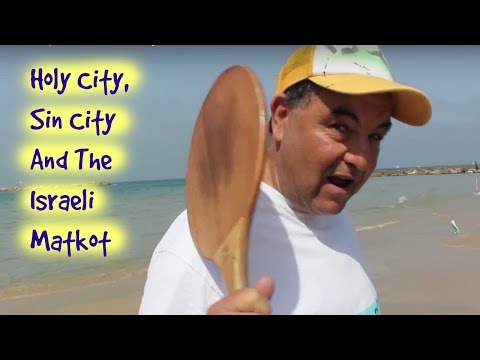
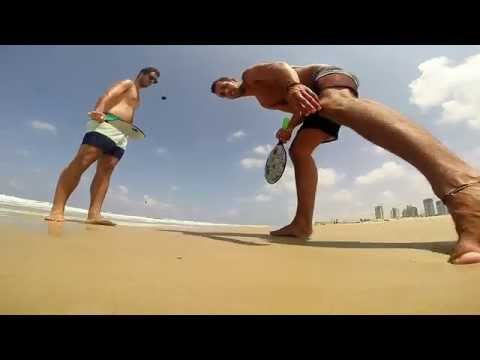
The filter sorts the Review Room embeds and the picture cards above by the keywords in their carried titles (review / analysis / recap and similar, or highlights). It runs entirely in your browser — nothing is sent anywhere.
No hall of fame with a published inductee list is carried for Matkot. Sport on Earth does not invent halls or inductees: where a recognised hall publishes its list in a form this site can carry, the full list will appear here with its source named.
The Matkot record book is still thin: beyond the standings, rules and calendar layers on this page, no verified winners roll or honours list is carried yet. The desk adds record material only when a published source can be named for it — never from memory or invention.
More from the desk: the expert guide to Matkot · the site-wide Writing Desk · every sport on Earth.
An arcade take on Matkot: set the angle, set the power, and land the shuttle in the far court. Five attempts; the closer to the middle, the more it scores. Arcade distances and a training arc — a game in the spirit of the sport, not a simulation of it.
This page’s own game is the arcade above. Everything else on the site that fits this sport is listed here — and anything borrowed from a similar sport is labelled as that sport’s game, never passed off as this one’s.
The tools on this site that honestly run on Matkot — its own record first, then the site-wide general tools that apply. The full Matkot toolkit prints the ones that do not apply, with the data reason why.
No bench tool yet computes from Matkot’s own carried record — the general tools below are the ones that honestly apply.
Site-wide tools, not built for Matkot alone: Tournament Planner · My Notebook · The Labs · Design Studio · The Makers’ Bench · Match Day Desk · Play It Near You · Myth-Check Desk · Governing Bodies · Heat & Safety Calculator (WBGT) · Hydration Calculator · Training-Load Planner · Game Clock & Timer · Custom Rulebook Generator · Scout Notes Parser.
Behind the Play · Full treatment — from this sport’s own record
Matkot: Israel’s beach game — two wooden paddles, one hard little ball, and a rally with no winner but the rally itself.
Behind the Play takes the decisive actions of Matkot apart: how the scoring play is built, which patterns the players are really running, and which rules remade the play into its modern shape.
The format, from this sport's verified record:
Source basis: this sport’s carried record on this page (verified record, rule-changes dossier, history datasets) and the play patterns of its family as written in the site’s guides. Nothing here is invented.