Sport on Earth › Sports
Sport on Earth · Sport
Australian Rules Football
How it’s played
Eighteen a side on a large oval. Kick or handball the ball and score goals (6 points) or behinds (1 point).
History
Developed in Melbourne in 1858 and 1859; the VFL formed in 1897 and became the AFL in 1990.
The pro scene
Professional: AFL and AFLW, plus state leagues like the VFL and SANFL.
College and school: Junior pathways via school and local clubs, then the national draft.
Grassroots and other: Community clubs and Auskick for kids.
Season calendar
AFL season March to September, ending with the Grand Final.
Dates above are recurring patterns, not confirmed fixtures.
League histories
- AFL — founded 1897. The pre-eminent professional competition in Australian rules football.
Leagues
AFL Desk
AFL
17 team views · 20 pieces · 12 videos
News Desk
News stories from around the world, gathered and sourced by the Sport on Earth desk.
No news items filed for this sport yet — the News Desk adds them as the world reports them.
Columns & Stories
Written by Sport on Earth’s journalists — columns, features and interviews from the desk.
AFL Desk · Column
6-6-6: The Rule That Admits the Game Needed Help
Most rule changes pretend to be clarifications. The AFL’s 6-6-6 starting positions, introduced in 2019, are a confession. By fixing six defenders, six midfielders and six forwards at every centre bounce, the league admitted that coaches, left alone, would park the entire game behind the ball — and that the spectacle it sells depended on stopping them. The site’s rules dossier pairs it with the 2021 package: the stand rule and the 75 interchange cap. Three interventions, one diagnosis: the modern game’s problem was congestion, and the cure had to be structural, because no coach was going to volunteer.
November 1, 2026
AFL Desk · Column
The Roll Is the Argument: What VFL/AFL premiers Really Tells Us
Here is the column’s position, stated plainly: the vfl/afl premiers roll — 130 editions, 1897 to 2026, counted from the record this site carries — is a better historian than any panel of experts. Panels argue about eras. The roll just keeps score, and its score says Essendon won 16 of those editions. 12.3% of a competition’s entire history is not a hot streak; it is a structural fact.
November 2, 2026
AFL Desk · Column
Who Gets In, Who Waits: The Australian Football Hall of Fame Standard
The Australian Football Hall of Fame roll this site carries holds 305 names, inducted from 1996 to 2026. Every hall of fame is really two institutions: the one that inducts, and the one that makes the inducted argue about the standard. This column is about the second one.
November 2, 2026
AFL Desk · Column
Institutions Outlive Seasons: A Column on the AFL
A column about a league should begin where the league began: Founded in 1896 as the Victorian Football League, with its first season in 1897; renamed AFL in 1990.. The AFL — The pre-eminent professional competition in Australian rules football. — has since been many things, but it has never stopped being that founding decision, renewed every season.
November 2, 2026
AFL Desk · Column
The AFL Notebook: A League in Its Own Image
Every league desk keeps a notebook that is not really about results. This is ours for the AFL. The census record this site carries describes its sport in one line — Eighteen a side on a large oval. Kick or handball the ball and score goals (6 points) or behinds (1 point). — and files it under Ball & goal, in the goal family of sports. One line is a discipline: before the desk argues about a league, it has to say what the league is.
November 2, 2026
AFL Desk · Column
What the AFL Record Asks of Its Next Season
A new season of the AFL makes three quiet demands, and the record — not the hype — names them. It asks about the roll’s next line: Brisbane Lions won the 2026 edition of the vfl/afl premiers, and South Melbourne’s 93-year wait is the roll’s longest open one; the hall’s next class: the Australian Football Hall of Fame roll stands at 305 names, its most recent from 2026; the institution’s next chapter: a league founded in 1897 that has already survived every previous version of this argument.
November 2, 2026
AFL Desk · Column
The Whole File: A Column on Australian Rules Football
A column about an entire sport, which is an immodest assignment, so begin with the file: this desk covers Australian Rules Football through 1 league desks, 10 news items and the rolls, halls and histories this site carries for it. The file is the column’s subject — what a sport looks like when you keep all of it in one place.
November 2, 2026
AFL Desk · Feature
The Long Roll: VFL/AFL premiers and the Weight of Essendon
Every roll of honor is an argument about time, and the vfl/afl premiers roll — 130 editions counted from the record this site carries, running from 1897 to 2026 — argues louder than most. At the top of it sits Essendon with 16 titles, 12.3% of every edition ever decided. The rest of the roll is the story of everyone who ever tried to move them.
November 2, 2026
AFL Desk · Feature
The First Class: Australian Football Hall of Fame and the 1996 Inductees
Every hall of fame is founded twice: once when the building opens, and once when the first class walks in. For the Australian Football Hall of Fame in Melbourne, Australia, that moment came in 1996, when 102 names were inducted together: Ron Barassi, Haydn Bunton Sr., Roy Cazaly, John Coleman, Jack Dyer, Graham Farmer. The roll this site carries now runs to 305 inductees — and it still begins with them.
November 2, 2026
AFL Desk · Feature
Founded on a Line in the Record: The AFL Story
The AFL file this site carries opens with a single line: Founded in 1896 as the Victorian Football League, with its first season in 1897; renamed AFL in 1990.. Everything else about the league — its identity as The pre-eminent professional competition in Australian rules football. — flows from that founding and what it absorbed along the way: A breakaway from the Victorian Football Association (VFA).
November 2, 2026
AFL Desk · Feature
From the Rule Book: 6-6-6 Starting Positions (Australian Rules Football)
The rule-change dossiers this site carries for Australian Rules Football run to 2 entries. The one filed as “6-6-6 Starting Positions” is dated 2019 and credited to AFL — and it is the rare rule change whose before and after describe two different sports.
November 7, 2026
AFL Desk · Feature
So Close: Fremantle and the VFL/AFL premiers Finals That Got Away
Fremantle has reached 2 vfl/afl premiers finals — 2013, 2026 — and won none of them. On the roll this site carries (130 editions, 1897 to 2026), no name has collected more finals without taking a title home.
November 15, 2026
AFL Desk · Feature
The Streak: Collingwood’s 4 Straight VFL/AFL premiers
Consecutive titles are the hardest currency on any roll, and the vfl/afl premiers roll this site carries holds one clear entry: Collingwood, 4 straight editions from 1927 to 1930. Across 130 editions (1897 to 2026), no other run on the roll is longer.
November 23, 2026
AFL Desk · Interview — the Sport on Earth desk, in its own words
Five Questions With the AFL Desk
The Sport on Earth AFL desk takes questions on the season, the Brownlow and the trade period. The desk answers in its own words — no player is quoted, and nothing here is presented as anyone else’s statement.
AFL Desk · Interview — the Sport on Earth desk, in its own words
Five Questions With the AFL Desk: The VFL/AFL premiers Roll
The Sport on Earth AFL Desk takes questions on the vfl/afl premiers roll. The desk answers in its own words — no player, coach or official is quoted, and nothing here is presented as anyone else’s statement. 130 editions, 1897–2026; most titles Essendon (16); 19 distinct winners.
AFL Desk · Interview — the Sport on Earth desk, in its own words
Five Questions With the AFL Desk: Inside the Australian Football Hall of Fame
The Sport on Earth AFL Desk takes questions on the Australian Football Hall of Fame. The desk answers in its own words — no player, coach or official is quoted, and nothing here is presented as anyone else’s statement. Every figure below is counted from the hall’s own roll as this site carries it.
AFL Desk · Interview — the Sport on Earth desk, in its own words
Five Questions With the AFL Desk: The AFL File
The Sport on Earth AFL Desk takes questions on the AFL file. The desk answers in its own words — no player, coach or official is quoted, and nothing here is presented as anyone else’s statement. The answers draw on the league history this site carries.
AFL Desk · Interview — the Sport on Earth desk, in its own words
Five Questions With the AFL Desk: The AFL Briefing
The Sport on Earth AFL Desk takes questions on the AFL. The desk answers in its own words — no player, coach or official is quoted, and nothing here is presented as anyone else’s statement. A standing briefing, refreshed from the files this site carries.
AFL Desk · Interview — the Sport on Earth desk, in its own words
Five Questions With the AFL Desk: AFL by the Numbers
The Sport on Earth AFL Desk takes questions on the AFL in numbers. The desk answers in its own words — no player, coach or official is quoted, and nothing here is presented as anyone else’s statement. Every answer below is a count taken from the site’s own files.
AFL Desk · Interview — the Sport on Earth desk, in its own words
Five Questions With the AFL Desk: VFL/AFL premiers, Decade by Decade
The Sport on Earth AFL Desk takes questions on the vfl/afl premiers roll by decade. The desk answers in its own words — no player, coach or official is quoted, and nothing here is presented as anyone else’s statement. 130 editions, 1897–2026; most titles Essendon (16); 19 distinct winners.
Writing Desk
Everything the desk has published for Australian Rules Football, organised by section.
Stories
- The Long Roll: VFL/AFL premiers and the Weight of Essendon AFL Desk · November 2, 2026
- The First Class: Australian Football Hall of Fame and the 1996 Inductees AFL Desk · November 2, 2026
- Founded on a Line in the Record: The AFL Story AFL Desk · November 2, 2026
- From the Rule Book: 6-6-6 Starting Positions (Australian Rules Football) AFL Desk · November 7, 2026
- So Close: Fremantle and the VFL/AFL premiers Finals That Got Away AFL Desk · November 15, 2026
- The Streak: Collingwood’s 4 Straight VFL/AFL premiers AFL Desk · November 23, 2026
All stories across every sport →
Columns
- 6-6-6: The Rule That Admits the Game Needed Help AFL Desk · November 1, 2026
- The Roll Is the Argument: What VFL/AFL premiers Really Tells Us AFL Desk · November 2, 2026
- Who Gets In, Who Waits: The Australian Football Hall of Fame Standard AFL Desk · November 2, 2026
- Institutions Outlive Seasons: A Column on the AFL AFL Desk · November 2, 2026
- The AFL Notebook: A League in Its Own Image AFL Desk · November 2, 2026
- What the AFL Record Asks of Its Next Season AFL Desk · November 2, 2026
- The Whole File: A Column on Australian Rules Football AFL Desk · November 2, 2026
All columns across every sport →
Interviews
- Five Questions With the AFL Desk AFL Desk
- Five Questions With the AFL Desk: The VFL/AFL premiers Roll AFL Desk
- Five Questions With the AFL Desk: Inside the Australian Football Hall of Fame AFL Desk
- Five Questions With the AFL Desk: The AFL File AFL Desk
- Five Questions With the AFL Desk: The AFL Briefing AFL Desk
- Five Questions With the AFL Desk: AFL by the Numbers AFL Desk
- Five Questions With the AFL Desk: VFL/AFL premiers, Decade by Decade AFL Desk
Shows
Sport on Earth’s daily and weekly video shows for Australian Rules Football — every episode, newest first.
Australian Rules Football Weekly Weekly show
The first episode is in production and lands here the morning it is produced — no episode is listed until it exists.
Videos
Every embed below was verified playable before listing — the network’s standing rule.
Nick Daicos
Nick Daicos 2026 AFL Highlights | Full Season
#1 on the board · Midfielder · Collingwood
Bailey Smith
Bailey Smith Reminds Everyone How Good He Is | 2025 AFL Highlights
#2 on the board · Midfielder · Geelong
Marcus Bontempelli
Nothing but the Bont | Marcus Bontempelli highlights | AFL
#3 on the board · Midfielder · Western Bulldogs
Jordan Dawson
Jordan Dawson’s Elite Left Foot | 2025 AFL Highlights
#4 on the board · Midfielder · Adelaide
Max Gawn
Season Highlights | 2021 | Max Gawn
#5 on the board · Ruck · Melbourne
View all videos (48)Show fewer videos
Will Ashcroft
Will Ashcroft Looked Like a Star | 2025 AFL Highlights
#6 on the board · Midfielder · Brisbane Lions
Zak Butters
Zak Butters 2025 | Unstoppable AFL Highlights
#7 on the board · Midfielder · Port Adelaide
Isaac Heeney
Isaac Heeney Dominated the AFL | 2025 Highlights
#8 on the board · Midfielder · Sydney
A beginner’s guide to Australian Football | AFL Explained
YouTube · AFL
The Greatest Moments in AFL History (Highlights)
YouTube · StatChat
Fremantle v Brisbane Lions Highlights | 2026 Toyota AFL Grand Final
YouTube · AFL
What is AFL? Aussie Rules Explained
YouTube · AFL
Geelong Cats v Brisbane Lions Highlights | 2025 Toyota AFL Grand Final
YouTube · AFL
Geelong Cats v Carlton Highlights | Elimination Final, 2026 | AFL
YouTube · AFL
Adelaide Crows v Collingwood Highlights | Round 20, 2026 | AFL
YouTube · AFL
Hawthorn v Brisbane Lions Highlights | Preliminary Final, 2026 | AFL
YouTube · AFL
Collingwood v Port Adelaide Highlights | Round 15, 2026 | AFL
YouTube · AFL
Port Adelaide v Adelaide Highlights | Round 16, 2026 | AFL
YouTube · AFL
Sydney Swans v Fremantle Highlights | Preliminary Final, 2026 | AFL
YouTube · AFL
Adelaide Crows v Western Bulldogs Highlights | Elimination Final, 2026 | AFL
YouTube · AFL
Fremantle v Geelong Cats Highlights | Semi Final, 2026 | AFL
YouTube · AFL
North Melbourne v Essendon Highlights | Round 16, 2026 | AFL
YouTube · AFL
Melbourne v Carlton Highlights | Wildcard Final, 2026 | AFL
YouTube · AFL
This Is Australian Rules Football (AFL) - The Greatness of Our Game
YouTube · Aussie Sport
AFL Marks - Great catches from the Australian Football League
YouTube · greenflarevideos
Collingwood v Brisbane Lions Highlights | 2023 Toyota AFL Grand Final
YouTube · AFL
The most remarkable Grand Final finish! | 2026 AFL Grand Final highlights
YouTube · 7AFL
Western Bulldogs v Collingwood Highlights | Wildcard Final, 2026 | AFL
YouTube · AFL
Australian Rules Football & AFL: A brief history of the game
YouTube · The Truth of History
Introducing Australian Football. A 1973 Documentary.
YouTube · 20th Century Oz History
100 Years of Australian Football (1996 - VHS) VFL/AFL Centenary Documentary
YouTube · UGL MEDIA and North Melb Vintage
Our Game: 150 Years of Football – Herald Sun documentary
YouTube · extraverse
THE ENTIRE HISTORY OF AFL RULES (1858-2022)
YouTube · CARDMAN 22
Who invented Aussie Rules Football (AFL)?
YouTube · Foopy
The Rise of the Hawthorn Football Club (AFL Mini Documentary)
YouTube · Flair Footy
Too Old, Too Slow (1993) - Hawthorn Football Club Documentary
YouTube · superPOWER1870
History of Aussie Rules and Gaelic Footy - from 1990 International Rules telecast. Geoffrey Blainey.
YouTube · Rhettrospective
Blood and Glory-Collingwood vs Carlton — War That Built Australian Football | Aussienatics Doc
YouTube · Aussienatics
"Magpie Magic" - Port Adelaide Football Club 125 years doco
YouTube · Rhettrospective
RIVALS: The Wild World of Aussie Rules Football - VICE World of Sports
YouTube · VICE Sports
Norwood v Sturt - Grand Final Hostplus SANFL Match Highlights
YouTube · SANFL
How to Play Australian Football : Australian Rules Football (Aussie Rules) : Sports Encyclopedia
YouTube · Mr.Animate
The Rules of Australian (Aussie Rules) Football - EXPLAINED!
YouTube · Ninh Ly
How to Play Australian Rules Football for Beginners | Ultimate Guide
YouTube · The Ultimate Explainer
Australian Rules Football star Mason Cox explains how to play Aussie Rules
YouTube · 60 Minutes
What is Australian Rules Football? (KICKYWHACK)
YouTube · Matthew Galer
HOW TO PLAY AUSTRALIAN FOOTBALL
YouTube · Wesda
Longest Goal Ever In Australian Rules Football???
YouTube · LD Sport
Everything for Australian Rules Football
Pages
On this page
- How it’s played
- History
- The pro scene
- Season calendar
- League histories
- Leagues
- News Desk
- Columns & Stories
- Writing Desk
- Videos
- Reader comments
- Games, Lab & Calendar
- Story extras
- Season Calendar
- The Physics Lab
- The Record Lab
- Sponsorship History
- How to Play Australian Rules Football
- Analytics — Australian Rules Football
- Rule Changes & Named Rules
- Results & Fixtures
- History & Records
- Review Room — in-game and post-game review & analysis
- Australian Rules Football in pictures & numbers
- Hall of Fame
- Stories from the Record
- On screen
- Tools for Australian Rules Football
- Player & referee associations
- The Australian Rules Football Playbook
- Behind the Play
Games, Lab & Calendar
Games for this sport
No game on this site is made specifically for Australian Rules Football yet. The games below are the site's all-sport games, which honestly cover every sport — nothing from another sport has been dressed up as this sport's game.
Daily Trivia
A new set of questions every day, across every sport this site covers.
Top Sport on Earth
Real-athlete Top Sport on Earth decks built from the site’s verified board data.
The Lab
Australian Rules Football's lab is the Physics Lab section on this page — the applied physics of its sport family, with a computed interactive where one honestly fits.
Physics Arena — the general biomechanics & physics teaching sandbox, shared by every sport.
The homepage sport explorer also carries a general Lab tab of small interactive experiments.
Season calendar
Calendar data not yet carried for Australian Rules Football — this site does not yet hold schedule data for it, so no dates are shown rather than invented.
Story extras
Fan poll
Which desk story should we follow up?
Votes are counted on the Sport on Earth server and the totals shown are every reader’s votes; your own choice is remembered in this browser.
Key numbers — The Long Roll: VFL/AFL premiers and the Weight of Essendon
Bars use only the metrics in the desk's summary data whose values are purely numeric; labels and values are shown verbatim.
How this story developed
Dated desk pieces for Australian Rules Football, newest first, dates exactly as carried in the desk data.
- November 23, 2026 — The Streak: Collingwood’s 4 Straight VFL/AFL premiers (Australian Rules Football)
- November 15, 2026 — So Close: Fremantle and the VFL/AFL premiers Finals That Got Away (Australian Rules Football)
- November 7, 2026 — From the Rule Book: 6-6-6 Starting Positions (Australian Rules Football) (Australian Rules Football)
- November 2, 2026 — The Long Roll: VFL/AFL premiers and the Weight of Essendon (Australian Rules Football)
- November 2, 2026 — The First Class: Australian Football Hall of Fame and the 1996 Inductees (Australian Rules Football)
- November 2, 2026 — Founded on a Line in the Record: The AFL Story (Australian Rules Football)
- November 1, 2026 — 6-6-6: The Rule That Admits the Game Needed Help (Australian Rules Football)
Season Calendar
The season in words
AFL season March to September, ending with the Grand Final.
The Physics Lab
Ball flight, bounces and the geometry of space
Almost every decisive action in an invasion game is a projectile problem: a kicked, thrown or struck ball follows a parabola set by its launch speed, angle and spin, bent by gravity and dragged by air. The calculator below is that core model — the same projectile maths the site’s Physics Arena teaches — with the assumptions printed: no air resistance, no spin, flat ground.
The second physics of invasion games is geometry: passing lanes are lines of sight, and the effective playing area shrinks or grows with team shape. Spin (curl and dip on struck balls) comes from the Magnus effect — a spinning ball deflects toward the side where its surface moves with the airflow.
From this sport's own record: Eighteen a side on a large oval. Kick or handball the ball and score goals (6 points) or behinds (1 point). The lab above treats the physics of the sport's family; no measurement specific to this sport is printed, because the site's verified record for it carries none — parameters are never invented to fill a lab.
Try it: projectile flight calculator
Model: R = v²·sin(2θ)/g, flight time T = 2·v·sin(θ)/g, apex H = (v·sin θ)²/(2g), g = 9.81 m/s². Assumptions: no air resistance, no spin, flat ground, launch and landing at the same height. Real balls and shuttles fly shorter and curve — drag and spin are exactly what this model leaves out, so treat the output as the gravity-only ceiling, not a prediction.
The general teaching sandbox for every sport is the Physics Arena on the Games page — the same printed models, with a defender added.
The Record Lab
The hands-on lab for Australian Rules Football, built entirely from the record this site carries for it — its documented rolls, its halls, its venues, its calendar and its census family. Every figure below is computed from that carried record at build time; nothing is estimated and nothing is pulled live. The companion Physics Lab on this page works the family's physics; this lab works the record.
Champions explorer — VFL/AFL premiers
Computed from the roll itself: 130 editions carried (1897–2026). Most titles in the carried roll:
- Essendon — 16 titles
- Collingwood — 16 titles
- Carlton — 16 titles
- Melbourne — 13 titles
- Richmond — 13 titles
Basis: the documented dataset “VFL/AFL premiers” carried on this site (Sport on Earth’s documented datasets). Counts are computed from the carried rows only — editions the roll does not carry are not estimated.
Hall of Fame explorer
Australian Rules Football carries 1 hall in the site’s record — Australian Football Hall of Fame — with 305 inductees carried, 300 of them with a full verified profile on this site.
Inductions by decade (computed from the carried induction years):
1990s121
2000s71
2010s63
2020s50
Basis: the Hall of Fame record carried on this site — the same rolls and verified profiles the Hall of Fame books print. Inductees a hall lists but the site has not verified stay list-only, exactly as the books state.
The family lab — Invasion field games
Computed from the site census: the Invasion field games family holds 61 entries on this site. Across the family, the carried record includes documented rolls for 8 of them, Hall of Fame data for 10, venue sets for 17, and dated calendars for 9.
Every other entry in the family: American Football · Arena Football · Athletes Unlimited · Atya patya · Beach Handball · Beach Soccer · Bo-taoshi · Boxball · Buroinjin · Buzkashi · Calcio Storico · Camogie · Canadian Football · Cestoball · Chinlone · Circle Rules Football · Cuju · Cycle Ball · Cycle Polo · Dibeke · Dodgeball · Double Ball · Eton Wall Game · Field Hockey · Flag Football · Floorball · Football (Soccer) · Four Square / FS Handball · Futsal · Gaelic Football · Gaga Ball · Goalball · Handball · Hurling · Ice Hockey · Jombola · Jugger · Kabaddi · Kai Wed · Kho kho · Kibasen · Knapan · Kronum · La Soule · Lacrosse · Ladies’ Gaelic Football · Langa · Langdi · Quadball · Ringette · Rollball · Rugby League · Rugby Union · S.P.U.D. · Sepak Manggis · Shinty · Squalleyball · Touch · Ulama · Wheelchair Rugby
Basis: the Sport on Earth census itself — the same 460-entry register the census page prints.
Sponsorship History
The sponsorship record of Australian Rules Football — title sponsors, jersey and kit deals, venue naming rights, firsts and record deals — from published sources only. Current deals are tracked on the Money Desk sponsorship page.
VFL/AFL naming sponsors before Toyota 1980-2003
The VFL/AFL's competition naming sponsors were Carlton & United Breweries (1980-81, 1986, 1989-94 and 2001-03), Holden (1982-83), Nissan (1984-85), Sportsplay (1987), Elders IXL (1988) and Coca-Cola (1995-2000), before Toyota took over in 2004.
Toyota replaces CUB as naming-rights sponsor 2004
Toyota replaced Carlton and United Breweries as the AFL's naming-rights sponsor in 2004, taking naming rights to the home-and-away seasons, finals, Brownlow Medal count and mark and goal of the year. CUB remained as a second-tier sponsor and official alcohol supplier, and AFL chief executive Andrew Demetriou described the deal as one of the largest of its kind in Australian sporting history.
Toyota Premiership Season and Finals naming rights 2004-present
As premier partner since 2004, Toyota holds naming rights to the Toyota AFL Premiership Season, Toyota AFL Finals Series, Toyota AFL Grand Final Parade and Toyota AFL Grand Final. The AFL's 2015 annual report marked Toyota's 11th year as premier partner and called the relationship one of the most successful in Australian sport.
Reported $18.5 million a year: Australia’s largest sponsorship 2019-2023
A new four-year Toyota deal in 2019, extending the partnership to 20 consecutive seasons through 2023, was reported as worth $18.5 million per year and described as the largest sports sponsorship deal in Australian corporate history. Toyota renewed again in 2023, taking the partnership length to 24 years, according to LBB Online.
NAB as AFLW naming-rights sponsor from day one 2017-2028
NAB has been naming-rights sponsor of the NAB AFL Women's competition since its inaugural season in 2017, announced on 10 October 2016. A six-year extension keeps NAB as AFLW naming-rights partner, Auskick naming-rights partner and AFL men's major partner until 2028.
Sponsorship sources: Wikipedia - Australian Football League · AFL.com.au - AFL, Toyota drive on until 2011 · Ministry of Sport - Toyota Creates History With Australia's Largest Sponsorship Deal · AFL.com.au - NAB extends deal as AFLW naming rights partner
How to Play Australian Rules Football
How this game is played, gathered from the record Sport on Earth already carries for Australian Rules Football, with the positions taken from the sourced chart cited in that section.
The game in brief
Eighteen a side on a large oval. Kick or handball the ball and score goals (6 points) or behinds (1 point).
Core rules
The AFL amends its laws almost every season in public, arguing with itself about congestion and scoring. Its modern era of intervention begins with the interchange cap and peaks with the 2019–21 package.
The current rules, as the site's rule-change dossier records them:
- 6-6-6 Starting Positions (AFL, 2019): From 2019, at every centre bounce each team must station six players in its forward 50-metre arc, six in its defensive arc, and six between them (one in the goal square each end). Teams are warned for a first breach, then penalised with a free kick.
- The 2021 Package: the Stand Rule and the 75 Cap (AFL, 2021): Two linked changes for 2021: interchanges cut to 75 per team per match, and the ’stand’ rule — when an umpire calls ’stand,’ the player on the mark must remain essentially stationary (minimal movement on the spot) until ’play on,’ on pain of a 50-metre penalty. The kick-in mark also moved from 10 to 15 metres.
The full dossier — every dated change and named rule, with its source basis — is in this page’s Rule Changes & Named Rules section.
Positions & basic plays
The positions for Australian Rules Football, as carried from the source cited below:
- Back Pocket — Deep defender in the corner of the back line (two, one each side).
- Full-back — Central deep defender, marks the full-forward.
- Half-back Flank — Defender on the half-back line wide (two, one each side).
- Centre Half-back — Central defender on the half-back line.
- Wing — Outside midfielder running the wing (two, one each side).
- Centre — Central midfielder at the centre bounce.
- Half-forward Flank — Attacker on the half-forward line wide (two, one each side).
- Centre Half-forward — Central attacker on the half-forward line.
- Forward Pocket — Deep attacker in the corner of the forward line (two, one each side).
- Full-forward — Central deep attacker, the main marking target near goal.
- Ruckman — Tall follower who contests the ruck taps around the ground.
- Ruck-rover — Mobile follower who roves the ruckman’s taps.
- Rover — Smallest follower, crumbing loose balls at ground level.
Positions source: Australian Football League (AFL) — Laws of Australian Football, section 1.3 ’The Players and Positions’: the 18 named starting positions, including the followers (ruckman, ruck-rover, rover).
Its Playbook — its opening entries, the basic plays, are:
- The Zone Defence (Team Defence) — All eighteen players defend space in a structured web rather than chasing opponents — the zone slides toward the ball side, keeping its shape and conceding only the long, low-percentage switch. When it’s used: The modern AFL’s default state: the whole game is now played inside this web’s logic.
- The Forward Press — After a behind or a stoppage deep in attack, the forwards lock the defence into its own 50 with set positions on every exit lane — the ’forward press’ that defined the modern game’s pressure era. When it’s used: From the late 2000s onward, the press became Australian football’s signature structure.
- The Kick-In Play — From a behind, the designated kicker plays on quickly to a rehearsed pattern — a lead to the pocket, a switch to the fat side — because the defence has only seconds to set its zone. When it’s used: The kick-in is the oval’s restart set play; sides carry three or four versions.
- The Centre Bounce Structure — Four midfielders around the square with set roles — the hit-out target, the defensive sweeper, the front-and-centre crumber — while the ruckman’s tap zones are called before the bounce. When it’s used: The centre bounce is the game’s purest set play: same shape, new answer, thirty times a match.
The full book carries 12 entries — in this page’s Playbook / Tactics & Strategy section, and at the Playbooks hub.
Analytics — Australian Rules Football
Sport on Earth's own analytics: every figure in this panel is computed at build time from the record this site itself carries, with the source named. No outside data is used, and no betting figures of any kind.
Champions-roll concentration
- VFL/AFL premiers: 130 carried editions (1897–2026), 19 different champions; most successful Essendon — 16 (12.3%) (tied: Carlton, Collingwood — 16 each); concentration HHI 0.0901, effective champions 11.10.
Computed from the site's documented champions datasets — the same rolls behind the Parity Tracker.
Hall of Fame record carried: 305 inductees across 1 hall(s); inductions span 1996–2026; the largest induction decade is the 1990s (121 inductees).
Source: the site's carried hall-of-fame record (historical-players.json).
Census arithmetic: Australian Rules Football sits in the goal & invasion games family — 60 census sports, of which 12 carry a qualifying champions roll in the site's record.
Rule Changes & Named Rules
The AFL amends its laws almost every season in public, arguing with itself about congestion and scoring. Its modern era of intervention begins with the interchange cap and peaks with the 2019–21 package.
6-6-6 Starting Positions
Before: At centre bounces, teams could set up however they liked — and increasingly set up to defend: extra men behind the ball (’flooding’), wings parked defensively, so centre clearances ran immediately into a crowded defensive half and scoring sagged through the 2010s.
The change: From 2019, at every centre bounce each team must station six players in its forward 50-metre arc, six in its defensive arc, and six between them (one in the goal square each end). Teams are warned for a first breach, then penalised with a free kick.
Why it happened: The rule was the centrepiece of football boss Steve Hocking’s 2019 anti-congestion package, aimed at the spectacle problem — falling scores and rugby-like scrums — that dominated the Australian game’s self-criticism. Its nickname (the formation’s own numbers) made it the most recognisable law in the country.
In practice today: 6-6-6 guarantees a few seconds of open structure after every centre bounce before formations dissolve; its measurable scoring effect was modest, but it remains the symbol of the AFL’s willingness to legislate aesthetics — and the template for later positional trials in lower leagues.
The 2021 Package: the Stand Rule and the 75 Cap
Before: Rotations had been capped at 120 (2014) then 90 (2016) as the league chased fatigue as an anti-congestion drug; meanwhile the player standing the mark could shuffle, jump and feint laterally, slowing every restart and crowding the ball-carrier’s options.
The change: Two linked changes for 2021: interchanges cut to 75 per team per match, and the ’stand’ rule — when an umpire calls ’stand,’ the player on the mark must remain essentially stationary (minimal movement on the spot) until ’play on,’ on pain of a 50-metre penalty. The kick-in mark also moved from 10 to 15 metres.
Why it happened: Hocking’s department theorised fatigue plus a frozen marker would unlock the corridor: a stationary man on the mark lets the kicker run around him and play on at speed. Coaches warned of farce — players penalised for twitching — and the rule’s first weeks produced exactly those clips before technique adapted.
In practice today: The stand rule measurably sped ball movement (play-on rates rose) and is now simply how marks work; the 75-cap’s fatigue logic remains debated by coaches (Ross Lyon’s later ’break the chains’ campaign argued the cap now limits scoring), making 2021 the rare package still being argued on its own terms.
Source basis: AFL Laws of the Game change announcements (2019, 2021); AFL Football Operations briefings.
Results & Fixtures
Sport on Earth carries no results feed for Australian Rules Football: no scores or fixtures are published here, rather than inventing them. The sport's documented record is in its history page and the History & Records section of this page.
History & Records
The historical record for Australian Rules Football — past standings, champions, title history and all-time leaders, as deep as verifiable public records go.
League history & records
- australian-football — vfl/afl premiers
Review Room — in-game and post-game review & analysis
The review and analysis videos from Australian Rules Football’s verified video pool — every embed below was identity-checked and probed playable before listing, the site’s standing rule. Nothing here is a show Sport on Earth produces; these are the review, post-game and breakdown videos the pool already carries for this sport.
NFL commentator REACTS to Aussie Rules! 🇺🇸 🎙️
YouTube · Collingwood Football Club
AMERICAN REACTS to A beginner’s guide to Australian Football | AFL Explained
YouTube · King Family Reacts
Australian Rules Football in pictures & numbers

Nick Daicos 2026 AFL Highlights | Full Season

Bailey Smith Reminds Everyone How Good He Is | 2025 AFL Highlights
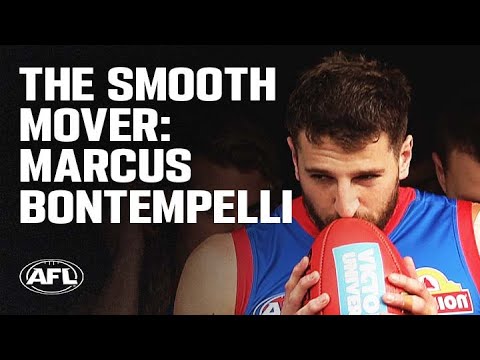
Nothing but the Bont | Marcus Bontempelli highlights | AFL
Chart basis: counts from Sport on Earth’s own carried data files at build time — verified videos carried for this sport (the verified pool: sport-videos.json + the desk league pools), news items carried (news.json), and league pages carried (desk.json). No external or estimated figures.
The filter sorts the Review Room embeds and the picture cards above by the keywords in their carried titles (review / analysis / recap and similar, or highlights). It runs entirely in your browser — nothing is sent anywhere.
Hall of Fame
Australian Football Hall of Fame
Melbourne, Australia
305 inductees — every name on the hall's published list, grouped by class year.
All 305 inductees by class year
1996 — Ron Barassi · Haydn Bunton Sr. · Roy Cazaly · John Coleman · Jack Dyer · Graham Farmer · Leigh Matthews · John Nicholls · Bob Pratt · Dick Reynolds · Bob Skilton · Ted Whitten · Graham Arthur (Player) · Allen Aylett (Player) · Percy Beames (Player) · Vic Belcher (Player) · Percy Bentley (Player) · Francis Bourke (Player) · Peter Burns (Player) · Albert Chadwick (Player) · David Christy (Player) · Jack Clarke (Vic) (Player) · Ron Clegg (Player) · Horrie Clover (Player) · Albert Collier (Player) · Harry Collier (Player) · George Coulthard (Player) · Syd Coventry (Player) · Vic Cumberland (Player) · John Daly (Player) · Bob Davis (Player) · Gary Dempsey (Player) · Bruce Doull (Player) · Wels Eicke (Player) · Graham ’Polly’ Farmer (Player) · Len Fitzgerald (Player) · Tom Fitzmaurice (Player) · Robert Flower (Player) · Les Foote (Player) · Carji Greeves (Player) · Keith Greig (Player) · Lindsay Head (Player) · Reg Hickey (Player) · Allan Hopkins (Player) · Peter Knights (Player) · Phonse Kyne (Player) · Allan La Fontaine (Player) · Dick Lee (Player) · Johnny Lewis (Player) · Tom MacKenzie (Player) · Simon Madden (Player) · Rod McGregor (Player) · Dave McNamara (Player) · Dan Minogue (Player) · Bill Mohr (Player) · George Moloney (Player) · Dan Moriarty (Player) · Graham Moss (Player) · Jack Mueller (Player) · Laurie Nash (Player) · Charlie Pannam (Player) · Bernie Quinlan (Player) · Bob Quinn (Player) · John Rantall (Player) · Jack ’Dinny’ Reedman (Player) · Jack Regan (Player) · Lou Richards (Player) · Bob Rose (Player) · John Schultz (Player) · Walter Scott (Player) · Bernie Smith (Player) · Charlie Sutton (Player) · Mark Tandy (Player) · Vic Thorp (Player) · Albert Thurgood (Player) · Jack Titus (Player) · George Todd (Player) · William Truscott (Player) · Michael Tuck (Player) · Harry Vallence (Player) · Doug Wade (Player) · Ivor Warne-Smith (Player) · Colin Watson (Player) · Jack Worrall (Player) · Roy Wright (Player) · Henry Young (Player) · Haydn Bunton Jr (Coach) · Tom Hafey (Coach) · Frank Hughes (Coach) · Allan Jeans (Coach) · Johnny Leonard (Coach) · Fos Williams (Coach) · Ken Aplin (Umpire) · Henry "Ivo" Crapp (Umpire) · Jeff Crouch (Umpire) · Bill Deller (Umpire) · Jack Elder (Umpire) · Jack McMurray Sr. (Umpire) · Jack McMurray Jr. (Umpire) · Ian Robinson (Umpire) · Bob Scott (Umpire) · Ray Scott (Umpire)
1997 — Ian Stewart · Barry Davis (Player) · Neil Kerley (Player) · Wayne Schimmelbusch (Player)
1998 — Gordon Coventry · Terry Daniher (Player) · Fred Flanagan (Player) · Allan Ruthven (Player) · Len Thompson (Player)
1999 — Peter Hudson · Gary Ayres (Player) · Peter Bedford (Player) · Dermott Brereton (Player) · Jack Clarke (WA) (Player) · Peter Daicos (Player) · Bob Hank (Player) · Peter McKenna (Player) · Stephen Michael (Player) · Garry Wilson (Player)
2000 — Kevin Bartlett · David Dench (Player) · Des Fothergill (Player) · Ross Glendinning (Player) · Bill Goggin (Player) · Gerard Healy (Player) · Geoff Southby (Player) · Tim Watson (Player)
2001 — Barrie Robran · Ken Fraser (Player) · Stephen Kernahan (Player) · Barry Round (Player) · Don Scott (Player) · Jack Sheedy (Player) · Norman Ware (Player) · Dale Weightman (Player) · Greg Williams (Player)
2002 — George Doig (Player) · Geof Motley (Player) · John Newman (Player) · John Cahill (Coach) · David Parkin (Coach)
2003 — Bill Hutchison · Herbie Matthews (Player) · Arthur Olliver (Player) · John Platten (Player) · Wayne Richardson (Player) · Jim Stynes (Player) · John Todd (Coach)
2004 — Carl Ditterich (Player) · Doug Hawkins (Player) · Denis Marshall (Player) · Jack Moriarty (Player) · Phillip Matson (Coach) · Rowan Sawers (Umpire)
2005 — Jock McHale · Gary Ablett Sr. (Player) · Kelvin Moore (Player) · Peter Moore (Player) · Ian Nankervis (Player) · Paul Roos (Player) · Stephen Silvagni (Player) · Stuart Spencer (Player)
2006 — Darrel Baldock · Craig Bradley (Player) · Steve Marsh (Player) · Peter Matera (Player) · John Murphy (Player) · Wilfred Smallhorn (Player) · Robert Walls (Player)
2007 — Norm Smith · Robert DiPierdomenico (Player) · Darren Jarman (Player) · Frank Johnson (Player) · Paul Kelly (Player) · Dean Kemp (Player) · Michael Long (Player) · Murray Weideman (Player)
2008 — Alex Jesaulenko · Gavin Brown (Player) · Garry Hocking (Player) · Glen Jakovich (Player) · Noel Teasdale (Player) · Des Tuddenham (Player) · Tom McArthur (Umpire)
2009 — Mark Bickley (Player) · Peter Carey (Player) · Ken Hands (Player) · Chris Langford (Player) · Guy McKenna (Player) · Bill Morris (Player)
2010 — Kevin Murray · Wayne Carey (Player) · Brian Dixon (Player) · Stan Heal (Player) · Tony Shaw (Player) · Ross Smith (Player) · Gavin Wanganeen (Player)
2011 — Nathan Buckley (Player) · Horrie Gorringe (Player) · James Hird (Player) · Mark Ricciuto (Player) · Michael Voss (Player)
2012 — Glenn Archer (Player) · Graham Cornes (Player) · Shane Crawford (Player) · Chris Grant (Player) · Robert Harvey (Player) · Bob Johnson (Player)
2013 — Royce Hart · Rick Davies (Player) · Matthew Lloyd (Player) · Hassa Mann (Player) · Brian Peake (Player) · Scott West (Player) · Bryan Sheehan (Umpire)
2014 — Ern Henfry (Player) · Brad Johnson (Player) · Anthony Koutoufides (Player) · Andrew McLeod (Player) · Matthew Richardson (Player) · Warren Tredrea (Player)
2015 — Tony Lockett · Jason Akermanis (Player) · Peter Bell (Player) · Michael O’Loughlin (Player) · Neil Roberts (Player) · Austin Robertson Jr. (Player)
2016 — Paul Bagshaw (Player) · Ben Hart (Player) · Verdun Howell (Player) · Nigel Lappin (Player) · Maurice Rioli (Player) · Paul Salmon (Player) · Ray Sorrell (Player)
2017 — Malcolm Blight · Simon Goodwin (Player) · John Halbert (Player) · Barry Hall (Player) · Anthony Stevens (Player) · Ron Todd (Player) · Brett Allen (Umpire)
2018 — Kevin Sheedy · Wayne Johnston (Player) · Bernie Naylor (Player) · David Neitz (Player) · Matthew Scarlett (Player) · Terry Wallace (Player) · Mel Whinnen (Player)
2019 — Trevor Barker (Player) · Jim Deane (Player) · Brad Hardie (Player) · Ken Hunter (Player) · Mick Malthouse (Coach)
2020 — John Kennedy Sr. · John Abley (Player) · Simon Black (Player) · Jonathan Brown (Player) · Dean Cox (Player) · Lenny Hayes (Player) · Greg Phillips (Player)
2021 — Merv McIntosh · Jack Oatey · Nathan Burke (Player) · Chris Judd (Player) · Robert Wiley (Player) · Debbie Lee (Player)
2022 — Russell Ebert · Terry Cashion (Player) · Bill Dempsey (Player) · Mike Fitzpatrick (Player) · Brent Harvey (Player) · Matthew Pavlich (Player) · Michael Taylor (Player) · Ted Tyson (Player)
2023 — Michael Aish (Player) · Jimmy Bartel (Player) · Corey Enright (Player) · Tom Leahy (Player) · Sam Mitchell (Player) · Mark Williams (Player)
2024 — Jason Dunstall · Michael Graham (Player) · Chris McDermott (Player) · Ralph Robertson (Player) · Ray Schofield (Player) · Dane Swan (Player) · Kelvin Templeton (Player)
2025 — Ken Farmer · Peter Darley (Player) · Luke Hodge (Player) · John Leedham (Player) · Garry Lyon (Player) · George Owens (Player) · Nick Riewoldt (Player) · Daisy Pearce (Player) · Erin Phillips (Player)
2026 — Bill Walker · Gary Ablett Jr. (Player) · Tim Evans (Player) · Dustin Fletcher (Player) · David Kantilla (Player) · John Worsfold (Player) · Hayden Kennedy (Umpire)
Source basis: Wikipedia — "Australian Football Hall of Fame" (accessed Nov 1, 2026); parsed mechanically from the article’s published table. Material from Wikipedia is used under CC BY-SA 4.0..
Full inductee profiles → 300 of the 305 inductees above carry a full verified profile — biography, induction record and verified video where one exists. The rest are list-only until a biography can be verified the same way.
📖 The Australian Rules Football Playbook — every entry, plus the arcade strategy, at the foot of this page.
Australian Rules Football Arcade — Penalty Launch
An arcade take on Australian Rules Football: set the angle, set the power, and land the ball in the goal mouth. Five attempts; the closer to the middle, the more it scores. Arcade distances and a training arc — a game in the spirit of the sport, not a simulation of it.
More ways to play Australian Rules Football
This page’s own game is the arcade above. Everything else on the site that fits this sport is listed here — and anything borrowed from a similar sport is labelled as that sport’s game, never passed off as this one’s.
- Quiz track — 8 questions on Australian Rules Football, drawn from this site's own record for the sport: Quiz Tracks (choose “Australian Rules Football”).
- Top Sport on Earth — Australian Rules Football is one of the 455 sport cards in the SPORTS deck: play Top Sport on Earth.
- More in this family — Handball Arcade — Penalty Launch: the game of Handball, a similar sport in Australian Rules Football’s family.
- Everything else the site runs lives on the Games hub.
On screen
2 verified documentaries, films and series about this sport are listed in the site's screen guide: Sport on Screen — Australian Rules Football.
Tools for Australian Rules Football
The tools on this site that honestly run on Australian Rules Football — its own record first, then the site-wide general tools that apply. The full Australian Rules Football toolkit prints the ones that do not apply, with the data reason why.
Tools that run on Australian Rules Football’s own record
- You Are the Referee — Branching decision trees built from this sport’s own rule-changes dossier, each ruling cited to its rule.
- Signals in the Record — The officials’ signals extracted from the rule dossiers, this sport’s included where its dossier documents them.
General tools that also apply
Site-wide tools, not built for Australian Rules Football alone: Tournament Planner · My Notebook · The Labs · Design Studio · The Makers’ Bench · Match Day Desk · Play It Near You · Myth-Check Desk · Governing Bodies · Heat & Safety Calculator (WBGT) · Hydration Calculator · Training-Load Planner · Game Clock & Timer · Custom Rulebook Generator · Scout Notes Parser.
Player & referee associations
Players: AFL Players Association — The representative body for all current and past AFL and AFL Women’s players, established in its current form in 1974, providing a means for the league and clubs to consult with players and lobbying on their behalf.
Officials: AFL Umpires Association (association) — The representative body for Australian Football League umpires, formed in 1909 as the Victorian Football League Umpires Association, renamed the AFLUA in 1990 and extended to AFLW umpires in 2018.
Verified associations for this sport, from the sources listed on the players' associations and referees' associations pages.
The Australian Rules Football Playbook
The Playbook · set plays, systems & situations
Australian rules football’s documented structures — zones, presses and set-shot routines on the big oval.
12 entries, plus the arcade strategy below. All wording is original coaching-vocabulary prose; nothing is copied from any proprietary playbook.
The Zone Defence (Team Defence)
All eighteen players defend space in a structured web rather than chasing opponents — the zone slides toward the ball side, keeping its shape and conceding only the long, low-percentage switch.
When it’s used: The modern AFL’s default state: the whole game is now played inside this web’s logic.
The sequence
- The zone anchors on the ball’s position, weighted to the corridor side.
- The nearest player presses; the web behind him owns every lane to goal.
- A switch of play moves the whole web like a single animal — late sliders are goals.
The Forward Press
Modern · the pressure era
After a behind or a stoppage deep in attack, the forwards lock the defence into its own 50 with set positions on every exit lane — the ’forward press’ that defined the modern game’s pressure era.
When it’s used: From the late 2000s onward, the press became Australian football’s signature structure.
The sequence
- Each exit lane gets a named owner before the kick-in is taken.
- The deepest forward guards the corridor switch; the rest squeeze the arcs.
- The turnover, when it comes, is already inside scoring range — that is the press’s whole design.
The Kick-In Play
From a behind, the designated kicker plays on quickly to a rehearsed pattern — a lead to the pocket, a switch to the fat side — because the defence has only seconds to set its zone.
When it’s used: The kick-in is the oval’s restart set play; sides carry three or four versions.
The sequence
- Leads are staggered: one short to the pocket, one long to the wing.
- The kicker plays on before the zone sets — the whistle is the deadline.
- The second possession is the design’s target: the first is only the key.
The Centre Bounce Structure
Four midfielders around the square with set roles — the hit-out target, the defensive sweeper, the front-and-centre crumber — while the ruckman’s tap zones are called before the bounce.
When it’s used: The centre bounce is the game’s purest set play: same shape, new answer, thirty times a match.
The sequence
- The ruck calls the tap zone by hand signal as he sets.
- The offensive midfielder starts on the move toward that zone’s front.
- The sweeper holds the defensive side — a lost clearance must not become a shot.
The Switch and the Fat Side
The ball is worked to one wing until the zone follows, then switched across the ground to the ’fat side’ — the far wing where the zone’s numbers have thinned to nothing.
When it’s used: The oval is too wide to defend: the switch is how its width is spent.
The sequence
- Short kicks hold the zone’s attention on the skinny side.
- The switch kick travels across the centre square to a free runner.
- From the fat side, the next kick goes inside 50 before the web re-forms.
The Set-Shot Routine
The goal-kicker’s personal liturgy: same steps, same breaths, same ball-drop rehearsal every time — the only play in the book performed entirely inside one player’s head.
When it’s used: Thirty seconds, thirty metres, one kick: routine is what survives the crowd.
The sequence
- The mark is taken and the routine starts — twirl count, step count, breath.
- The approach is straight at the target post; drift is rehearsed out.
- The ball drop is the whole kick: vertical, close, and identical to a thousand practice drops.
The Shepherd and the Block
A team-mate legally bumps an opponent off the ball carrier’s line within five metres of the ball — the shepherd — clearing the carrier’s path the way a pulling guard does in another code.
When it’s used: Unique to this game and policed to the letter: the shepherd must be a block, never a hold or a strike.
The sequence
- The shepherder reads the chase angle, not the carrier.
- Contact is shoulder to shoulder, within the legal distance of the ball.
- The carrier’s job is to trust it and run his line, not dance.
The Flood and the Counter
Classic · the flood era
The Classic defensive emergency: all eighteen retreat inside defensive 50 to strangle space — then, on the turnover, the fastest three sprint forward into the emptied ground.
When it’s used: The flood is defence as weather; its counter-attack is the storm breaking.
The sequence
- Numbers pack the defensive arc, every lead met by two jumpers.
- Contest winners handball backward first — the flood never kicks blind.
- The release players hold the wings: when the ball spills, they are already running.
The Handball Chain (Run and Carry)
Through traffic, the ball moves by handball in a moving chain — each receiver running onto it at pace — so the team advances without kicking into the zone at all.
When it’s used: The answer to the zone that dares you to kick: don’t.
The sequence
- The first handball goes to a runner already moving, never to a standing target.
- Each receiver’s first step is forward — the chain’s speed is its protection.
- The chain’s last link kicks, from inside range, before the web resets.
Boundary Throw-In Set Play
Around a boundary throw-in, the ruckman taps to a called zone where two midfielders have set a screen for the third — the oval’s quietest set play and one of its most rehearsed.
When it’s used: Stoppages on the wing are not restarts; they are called plays with a tap target.
The sequence
- The ruck’s tap zone is signalled as the umpire takes the ball.
- Two mids screen the zone’s defenders; the receiver starts behind them.
- The clearance goes forward first — throw-ins won backward are thrown away.
The Corridor Defence (Guarding the Middle)
Zones are taught to surrender the boundary and defend the corridor — the direct central lane to goal — because every metre of width is cheaper than a metre of middle.
When it’s used: The principle under every AFL structure: the corridor is the kingdom.
The sequence
- The zone’s weight sits a kick inside the boundary line, corridor side.
- Boundary-side leads are allowed; the switch back inside is the trap’s trigger.
- A team forced wide all day kicks at goal from the pockets — the design working as drawn.
Tempo Football (The Chip Game)
Protecting a lead late, the side keeps possession with short uncontested marks, using the full seconds allowed after each — offence as clock management.
When it’s used: The hated, necessary art: tempo is a play call, not a stall.
The sequence
- Every mark is taken by a free man, a kick away from pressure.
- The ball travels backward without shame; the clock is the opponent now.
- One long kick to a contest is scheduled before desperation chooses it.
Playing the Game
Playing the Game — Penalty Launch
The arcade cell · strategy
This page’s arcade cell: launch the ball at the goal mouth from the penalty spot · 46 m (arcade scale). Angle, power, launch — five attempts, and the cell keeps your best.
When it’s used: On this page, in the Play section — and its strategy is the same craft as the book above it, miniaturised.
The sequence
- Set the angle first. The target is the goal mouth, the penalty spot · 46 m (arcade scale) — the angle is chosen for where the ball must finish, not where it starts.
- Set the power second, on the sweeping meter: the scoring zone is a band, not a point, so aim for the middle of the band you can repeat, not the edge you can imagine.
- Launch, and read the result like a rangefinder: every attempt tells you the cell’s wind — there is none, so a miss is a measurement error, and it is yours to correct on the next attempt.
- You have 5 attempts. Goals come at one end of this cell: work the angle that opens the far corner of the target, not the middle the keeper-shaped zone guards.
- The cell’s own honesty line applies: arcade distances; a game, not a simulation.
Part of the Sport on Earth Playbooks — a book for every sport and every game on the site.
Behind the Play
Behind the Play · Full treatment — from this sport’s own record
Eighteen a side on a large oval. Kick or handball the ball and score goals (6 points) or behinds (1 point).
Behind the Play takes the decisive actions of Australian Rules Football apart: how the scoring play is built, which patterns the players are really running, and which rules remade the play into its modern shape.
The shape of the play
The AFL amends its laws almost every season in public, arguing with itself about congestion and scoring. Its modern era of intervention begins with the interchange cap and peaks with the 2019–21 package.
The patterns behind the play
- Control transitions: most goals in invasion games trace back to the seconds after possession changes — organise fastest in those seconds.
- Protect the middle: defences concede the wings and guard the direct lane to goal, because central attacks finish closest.
- Numbers around the ball: attacks create local overloads — one more player than the defence near the ball — rather than attacking evenly everywhere.
- Rest defence: even while attacking, keep enough players behind the ball that one lost pass is not a goal against.
- Set pieces are rehearsed goals: a large share of goals at every level come from restarts, so corners and free kicks are trained as set plays, not interruptions.
- Width stretches, depth threatens: attacks hold width to stretch a defence horizontally and runners in behind to stretch it vertically — a defence can only fully guard one.
Rules that remade the play
6-6-6 Starting Positions (2019). From 2019, at every centre bounce each team must station six players in its forward 50-metre arc, six in its defensive arc, and six between them (one in the goal square each end). Teams are warned for a first breach, then penalised with a free kick.
6-6-6 guarantees a few seconds of open structure after every centre bounce before formations dissolve; its measurable scoring effect was modest, but it remains the symbol of the AFL’s willingness to legislate aesthetics — and the template for later positional trials in lower leagues.
The 2021 Package: the Stand Rule and the 75 Cap (2021). Two linked changes for 2021: interchanges cut to 75 per team per match, and the ’stand’ rule — when an umpire calls ’stand,’ the player on the mark must remain essentially stationary (minimal movement on the spot) until ’play on,’ on pain of a 50-metre penalty. The kick-in mark also moved from 10 to 15 metres.
The stand rule measurably sped ball movement (play-on rates rose) and is now simply how marks work; the 75-cap’s fatigue logic remains debated by coaches (Ross Lyon’s later ’break the chains’ campaign argued the cap now limits scoring), making 2021 the rare package still being argued on its own…
From this page’s Rule Changes & Named Rules dossier, where every entry names its source.
The moves in the book
- Possession
- The period in which one team controls the ball or puck and can build an attack; the other team works to win it back.
- Counter-attack
- A rapid attack launched the moment possession is won, before the defence can reorganise into its shape.
- Pressing
- Defending high and early — closing down the ball carrier near the opponent’s own goal to force turnovers in dangerous areas.
- Marking
- Guarding an opponent: player-to-player marking follows a specific opponent; zonal marking guards an area of the field.
- Formation
- The team’s arranged shape — how its players are distributed between defence, midfield and attack.
Source basis: this sport’s carried record on this page (verified record, rule-changes dossier, history datasets) and the play patterns of its family as written in the site’s guides. Nothing here is invented.