The BEST Beach Handball Goals! 🤾♀️🤾♂️ | #Dakar2026 Highlights
YouTube · Olympic Games
Pages
On this page
Sport on Earth › Sports
Sport on Earth · Sport
Sand handball with spinning shots and double-point goals.
Every embed below was verified playable before listing — the network’s standing rule.
YouTube · Olympic Games
YouTube · Olympic Games
YouTube · Olympic Games
YouTube · Olympic Games
Pages
On this page
Real pinball on a table themed for this sport — the game carries a Handball theme.
A new set of questions every day, across every sport this site covers.
Real-athlete Top Sport on Earth decks built from the site’s verified board data.
Beach Handball's lab is the Physics Lab section on this page — the applied physics of its sport family, with a computed interactive where one honestly fits.
Physics Arena — the general biomechanics & physics teaching sandbox, shared by every sport.
The homepage sport explorer also carries a general Lab tab of small interactive experiments.
Calendar data not yet carried for Beach Handball — this site does not yet hold schedule data for it, so no dates are shown rather than invented.
Which section of this page should we expand first?
Votes are counted on the Sport on Earth server and the totals shown are every reader’s votes; your own choice is remembered in this browser.
Sport on Earth does not yet hold verified dated events for Beach Handball, and its carried record does not state the season's timing in words — so no calendar is shown rather than an invented one. What the site does carry for this sport is on this page: its verified record, its rules record and its history.
Almost every decisive action in an invasion game is a projectile problem: a kicked, thrown or struck ball follows a parabola set by its launch speed, angle and spin, bent by gravity and dragged by air. The calculator below is that core model — the same projectile maths the site’s Physics Arena teaches — with the assumptions printed: no air resistance, no spin, flat ground.
The second physics of invasion games is geometry: passing lanes are lines of sight, and the effective playing area shrinks or grows with team shape. Spin (curl and dip on struck balls) comes from the Magnus effect — a spinning ball deflects toward the side where its surface moves with the airflow.
From this sport's own record: Sand handball with spinning shots and double-point goals. The lab above treats the physics of the sport's family; no measurement specific to this sport is printed, because the site's verified record for it carries none — parameters are never invented to fill a lab.
Model: R = v²·sin(2θ)/g, flight time T = 2·v·sin(θ)/g, apex H = (v·sin θ)²/(2g), g = 9.81 m/s². Assumptions: no air resistance, no spin, flat ground, launch and landing at the same height. Real balls and shuttles fly shorter and curve — drag and spin are exactly what this model leaves out, so treat the output as the gravity-only ceiling, not a prediction.
The general teaching sandbox for every sport is the Physics Arena on the Games page — the same printed models, with a defender added.
The hands-on lab for Beach Handball, built entirely from the record this site carries for it — its documented rolls, its halls, its venues, its calendar and its census family. Every figure below is computed from that carried record at build time; nothing is estimated and nothing is pulled live. The companion Physics Lab on this page works the family's physics; this lab works the record.
The honest position: the record this site carries for Beach Handball is thin — no documented roll, hall, venue set or dated calendar is carried for it yet — so this entry’s lab is its family lab: the computed census of the family it belongs to. When the record grows, the lab grows with it; nothing here is estimated to fill the space.
Computed from the site census: the Invasion field games family holds 61 entries on this site. Across the family, the carried record includes documented rolls for 8 of them, Hall of Fame data for 10, venue sets for 17, and dated calendars for 9.
Every other entry in the family: American Football · Arena Football · Athletes Unlimited · Atya patya · Australian Rules Football · Beach Soccer · Bo-taoshi · Boxball · Buroinjin · Buzkashi · Calcio Storico · Camogie · Canadian Football · Cestoball · Chinlone · Circle Rules Football · Cuju · Cycle Ball · Cycle Polo · Dibeke · Dodgeball · Double Ball · Eton Wall Game · Field Hockey · Flag Football · Floorball · Football (Soccer) · Four Square / FS Handball · Futsal · Gaelic Football · Gaga Ball · Goalball · Handball · Hurling · Ice Hockey · Jombola · Jugger · Kabaddi · Kai Wed · Kho kho · Kibasen · Knapan · Kronum · La Soule · Lacrosse · Ladies’ Gaelic Football · Langa · Langdi · Quadball · Ringette · Rollball · Rugby League · Rugby Union · S.P.U.D. · Sepak Manggis · Shinty · Squalleyball · Touch · Ulama · Wheelchair Rugby
Basis: the Sport on Earth census itself — the same 460-entry register the census page prints.
The desk has not verified a sponsorship record for Beach Handball from published sources, so none is printed. Sponsorship history is added only when a real published source supports it — sponsor by sponsor, deal by deal. Current sponsorship deals across sport are tracked on the Money Desk sponsorship page.
How this game is played, gathered from the record Sport on Earth already carries for Beach Handball, with the positions taken from the sourced chart cited in that section.
Beach handball’s code was written in the 1990s to reward the spectacular — literally, in the scoring column.
The current rules, as the site's rule-change dossier records them:
The full dossier — every dated change and named rule, with its source basis — is in this page’s Rule Changes & Named Rules section.
The positions for Beach Handball, as carried from the source cited below:
Positions source: International Handball Federation (IHF) — Rules of the Game: Beach Handball - four players per team on court (three court players plus goalkeeper); the rules designate the goalkeeper and the specialist (goalkeepers/specialists wear a different-coloured shirt), while pivot and wing are the standard court roles in IHF technical literature.
Its Playbook — its opening entries, the basic plays, are:
The full book carries 13 entries — in this page’s Playbook / Tactics & Strategy section, and at the Playbooks hub.
Sport on Earth's own analytics: every figure in this panel is computed at build time from the record this site itself carries, with the source named. No outside data is used, and no betting figures of any kind.
Census arithmetic: Beach Handball sits in the goal & invasion games family — 60 census sports, of which 12 carry a qualifying champions roll in the site's record.
The carried record for Beach Handball is too thin for computed panels: no champions roll, hall-of-fame list or venue record is carried for it. This panel therefore prints the census arithmetic only — the honest answer rather than a manufactured figure.
Beach handball’s code was written in the 1990s to reward the spectacular — literally, in the scoring column.
Before: Indoor handball scores one point per goal whatever its beauty. Beach handball — born on Italian beaches in the 1990s as the sport’s summer showcase — wanted a code that paid for flair.
The change: In the beach code, creative goals are worth two points: 360-degree spin shots, in-flight (alley-oop) finishes, and specialist/goalkeeper goals all count double; matches are two sets with a shoot-out (goalkeeper-versus-shooter one-on-ones) if sets split.
Why it happened: The rule is authored entertainment: the IHF’s beach commission wrote acrobatics into the tariff so that players would attempt the plays the format existed to display. It worked — the spin shot is beach handball’s brand.
In practice today: The two-point spectacular remains the beach game’s identity and its argument in miniature: a governing body may, when building a new discipline from zero, pay double for the thing it wants to see.
Source basis: IHF Rules of the Game for Beach Handball (spectacular goal provisions).
Sport on Earth carries no results feed for Beach Handball: no scores or fixtures are published here, rather than inventing them. The sport's documented record is in its history page and the History & Records section of this page.
The historical record for Beach Handball — past standings, champions, title history and all-time leaders, as deep as verifiable public records go.
Season-by-season standings, historical player statistics and title rolls are not carried for Beach Handball: no public archive publishes them in a form Sport on Earth can verify, and this site does not invent history. What is carried for this sport is its verified record, its rule-change history and its league history — elsewhere on this page.
The review and analysis videos from Beach Handball’s verified video pool — every embed below was identity-checked and probed playable before listing, the site’s standing rule. Nothing here is a show Sport on Earth produces; these are the review, post-game and breakdown videos the pool already carries for this sport.
No verified review-show video is carried for this sport yet.
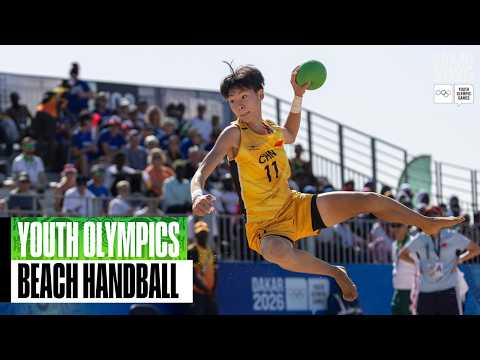
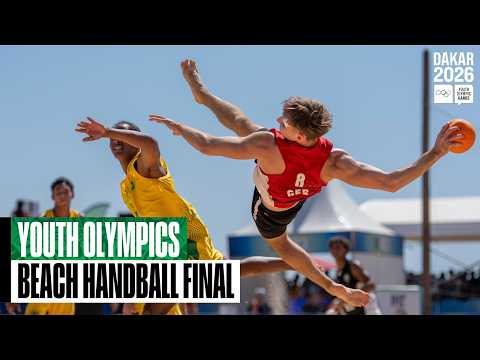
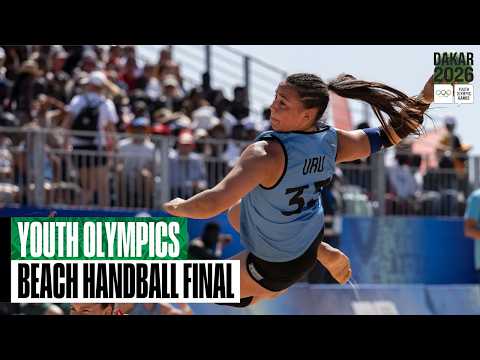
The filter sorts the Review Room embeds and the picture cards above by the keywords in their carried titles (review / analysis / recap and similar, or highlights). It runs entirely in your browser — nothing is sent anywhere.
No hall of fame with a published inductee list is carried for Beach Handball. Sport on Earth does not invent halls or inductees: where a recognised hall publishes its list in a form this site can carry, the full list will appear here with its source named.
Sand handball with spinning shots and double-point goals.
Beach handball’s code was written in the 1990s to reward the spectacular — literally, in the scoring column.
Sport on Earth carries no team or player directory for this sport, because no structured public feed publishes a verifiable one. What is carried is the documented record on this page — history, rules, honours and the calendar — each with its source named.
The Beach Handball record book, as this site carries it: its rule-changes dossier records 1 dated changes and named rules. Every figure above is computed from the lists and dossiers printed on this page, each with its source basis named beside it.
More from the desk: the expert guide to Beach Handball · the site-wide Writing Desk · every sport on Earth.
📖 The Beach Handball Playbook — every entry, plus the arcade strategy, at the foot of this page.
An arcade take on Beach Handball: set the angle, set the power, and land the ball in the goal mouth. Five attempts; the closer to the middle, the more it scores. Arcade distances and a training arc — a game in the spirit of the sport, not a simulation of it.
This page’s own game is the arcade above. Everything else on the site that fits this sport is listed here — and anything borrowed from a similar sport is labelled as that sport’s game, never passed off as this one’s.
The tools on this site that honestly run on Beach Handball — its own record first, then the site-wide general tools that apply. The full Beach Handball toolkit prints the ones that do not apply, with the data reason why.
Site-wide tools, not built for Beach Handball alone: Tournament Planner · My Notebook · The Labs · Design Studio · The Makers’ Bench · Match Day Desk · Play It Near You · Myth-Check Desk · Governing Bodies · Heat & Safety Calculator (WBGT) · Hydration Calculator · Training-Load Planner · Game Clock & Timer · Custom Rulebook Generator · Scout Notes Parser.
The Playbook · set plays, systems & situations
team handball’s documented systems — the fast break, the crossing game and the 6-0/5-1 defences of the indoor classic.
13 entries, plus the arcade strategy below. All wording is original coaching-vocabulary prose; nothing is copied from any proprietary playbook.
The goalkeeper’s save or a steal becomes a goal in four seconds: the keeper’s long throw hits the winger already sprinting, who finishes before the defence crosses halfway.
When it’s used: Handball’s defining play: the first wave scores more than any set offence.
The sequence
If the first wave is covered, the trailing backs arrive against a retreating, unorganised defence — the break continues at speed rather than resetting, hunting the defence’s missing numbers.
When it’s used: The second wave is where disciplined teams separate: their break has a second act.
The sequence
Two backcourt players cross in front of the defence, exchanging positions with the ball, so defenders must swap assignments at speed — the crossing game is handball’s basic way to manufacture a free shooter.
When it’s used: Against man-oriented defences, crossings are arithmetic: swaps made at sprint pace fail somewhere.
The sequence
The line player sets his body between his defender and the back’s path, then rolls to the goal as the back shoots over or around him — handball’s pick and roll, played at six metres.
When it’s used: The pivot is the offence’s second brain: his seal creates the back’s shot or his own.
The sequence
The winger, driven to the corner, jumps inward across the goal area and shoots in the air before landing — the ’impossible angle’ shot is a trained finish, not a prayer.
When it’s used: Corners produce goals in handball because wingers rehearse the geometry of nearly-nothing angles.
The sequence
Classic · the wall
All six defenders on the goal-area line, sliding as a wall, stepping out only to meet a shooter in range — the Classic handball defence the sport’s systems are benchmarked against.
When it’s used: The wall concedes the far shot and defends the six metres with bodies and timing.
The sequence
Five on the line and one hunter up the court, harrying the centre back and cutting the crossing game’s feed lines — the 5-1 trades the wall’s certainty for the playmaker’s misery.
When it’s used: Against a side with one great organiser, the 5-1 makes someone else run the offence.
The sequence
Modern · the seventh man
The keeper is replaced by a seventh court player for a rehearsed possession — a numerical overload with the goal empty behind it and a sprinter assigned to become the emergency keeper on any turnover.
When it’s used: Modern handball’s boldest arithmetic, used by trailing sides and patient ones alike.
The sequence
Classic · the Kempa
The game’s famous party piece, kept because it works: a player jumps into the goal area, catches a team-mate’s pass in the air and shoots before he lands — legal because the ball left his hand in flight.
When it’s used: Named for Bernhard Kempa: a showpiece with a real percentage when the defence watches the floor.
The sequence
Backs shoot around the wall, not through it: the hip shot released at waist height beside the defender’s body, the underarm beneath his raised arms — releases that turn a set defence into a screen for its own keeper.
When it’s used: The shooter’s release point is his real range; these extend it by surprise.
The sequence
With the defence allowed a wall on the 9-metre line, the offence hides its shooter behind a screen of its own players and runs him off it for the free shot at the whistle.
When it’s used: Free throws at nine metres are set plays with a wall on both sides.
The sequence
The keeper is the offence’s first passer: his throws are aimed at sprinting wingers’ hands, and his fakes shape the fast break before it starts — the position is played like a quarterback’s.
When it’s used: Every first wave begins with the keeper’s eyes, not the winger’s legs.
The sequence
Beach handball amends the indoor book for sand and spectacle: sets are won separately (a team can lose the match’s goals and win its sets), the shootout decides drawn matches, and the creative shot (the spin shot, the inflight) is worth two — the book rewards the spectacular by law.
When it’s used: The two-point creative goal is beach handball’s signature: style is a scoring category in the rulebook itself.
The sequence
The arcade cell · strategy
This page’s arcade cell: launch the ball at the goal mouth from the penalty spot · 46 m (arcade scale). Angle, power, launch — five attempts, and the cell keeps your best.
When it’s used: On this page, in the Play section — and its strategy is the same craft as the book above it, miniaturised.
The sequence
Part of the Sport on Earth Playbooks — a book for every sport and every game on the site.
Behind the Play · Full treatment — from this sport’s own record
Sand handball with spinning shots and double-point goals.
Behind the Play takes the decisive actions of Beach Handball apart: how the scoring play is built, which patterns the players are really running, and which rules remade the play into its modern shape.
Beach handball’s code was written in the 1990s to reward the spectacular — literally, in the scoring column.
Two Points for the Spectacular Goal (codified in the modern beach code (1990s–2000s)). In the beach code, creative goals are worth two points: 360-degree spin shots, in-flight (alley-oop) finishes, and specialist/goalkeeper goals all count double; matches are two sets with a shoot-out (goalkeeper-versus-shooter one-on-ones) if sets split.
The two-point spectacular remains the beach game’s identity and its argument in miniature: a governing body may, when building a new discipline from zero, pay double for the thing it wants to see.
From this page’s Rule Changes & Named Rules dossier, where every entry names its source.
Source basis: this sport’s carried record on this page (verified record, rule-changes dossier, history datasets) and the play patterns of its family as written in the site’s guides. Nothing here is invented.