Episode 1 — Oilers’ record 27-3 win at LASB headlines a week of F-liiga routs
Ep. 1 — the week ending Tuesday, November 24, 2026 · 1:15
Pages
On this page
Sport on Earth › Sports
Sport on Earth · Sport
Indoor hockey with light plastic sticks and a hollow ball.
Sport on Earth’s daily and weekly video shows for Floorball — every episode, newest first.
Ep. 1 — the week ending Tuesday, November 24, 2026 · 1:15
Every embed below was verified playable before listing — the network’s standing rule.
YouTube · Floorball Mindset
YouTube · Floorball Mindset
YouTube · SLAP SHOT
YouTube · Floorball Mindset
Pages
On this page
No game on this site is made specifically for Floorball yet. The games below are the site's all-sport games, which honestly cover every sport — nothing from another sport has been dressed up as this sport's game.
A new set of questions every day, across every sport this site covers.
Real-athlete Top Sport on Earth decks built from the site’s verified board data.
Floorball's lab is the Physics Lab section on this page — the applied physics of its sport family, with a computed interactive where one honestly fits.
Physics Arena — the general biomechanics & physics teaching sandbox, shared by every sport.
The homepage sport explorer also carries a general Lab tab of small interactive experiments.
Calendar data not yet carried for Floorball — this site does not yet hold schedule data for it, so no dates are shown rather than invented.
Which section of this page should we expand first?
Votes are counted on the Sport on Earth server and the totals shown are every reader’s votes; your own choice is remembered in this browser.
Sport on Earth does not yet hold verified dated events for Floorball, and its carried record does not state the season's timing in words — so no calendar is shown rather than an invented one. What the site does carry for this sport is on this page: its verified record, its rules record and its history.
Almost every decisive action in an invasion game is a projectile problem: a kicked, thrown or struck ball follows a parabola set by its launch speed, angle and spin, bent by gravity and dragged by air. The calculator below is that core model — the same projectile maths the site’s Physics Arena teaches — with the assumptions printed: no air resistance, no spin, flat ground.
The second physics of invasion games is geometry: passing lanes are lines of sight, and the effective playing area shrinks or grows with team shape. Spin (curl and dip on struck balls) comes from the Magnus effect — a spinning ball deflects toward the side where its surface moves with the airflow.
From this sport's own record: Indoor hockey with light plastic sticks and a hollow ball. The lab above treats the physics of the sport's family; no measurement specific to this sport is printed, because the site's verified record for it carries none — parameters are never invented to fill a lab.
Model: R = v²·sin(2θ)/g, flight time T = 2·v·sin(θ)/g, apex H = (v·sin θ)²/(2g), g = 9.81 m/s². Assumptions: no air resistance, no spin, flat ground, launch and landing at the same height. Real balls and shuttles fly shorter and curve — drag and spin are exactly what this model leaves out, so treat the output as the gravity-only ceiling, not a prediction.
The general teaching sandbox for every sport is the Physics Arena on the Games page — the same printed models, with a defender added.
The hands-on lab for Floorball, built entirely from the record this site carries for it — its documented rolls, its halls, its venues, its calendar and its census family. Every figure below is computed from that carried record at build time; nothing is estimated and nothing is pulled live. The companion Physics Lab on this page works the family's physics; this lab works the record.
The carried global venue dataset holds 14 venues for Floorball across 4 countries. The largest capacity the dataset records for this sport is 14,000 — Scandinavium, .
Basis: the global venue dataset carried on this site (6,438 venues with coordinates; the venue explorer on the sports index and the stadium sun table work the same data). Countries beyond the 25 largest are counted in the totals above but not listed here.
Computed from the site census: the Invasion field games family holds 61 entries on this site. Across the family, the carried record includes documented rolls for 8 of them, Hall of Fame data for 10, venue sets for 17, and dated calendars for 9.
Every other entry in the family: American Football · Arena Football · Athletes Unlimited · Atya patya · Australian Rules Football · Beach Handball · Beach Soccer · Bo-taoshi · Boxball · Buroinjin · Buzkashi · Calcio Storico · Camogie · Canadian Football · Cestoball · Chinlone · Circle Rules Football · Cuju · Cycle Ball · Cycle Polo · Dibeke · Dodgeball · Double Ball · Eton Wall Game · Field Hockey · Flag Football · Football (Soccer) · Four Square / FS Handball · Futsal · Gaelic Football · Gaga Ball · Goalball · Handball · Hurling · Ice Hockey · Jombola · Jugger · Kabaddi · Kai Wed · Kho kho · Kibasen · Knapan · Kronum · La Soule · Lacrosse · Ladies’ Gaelic Football · Langa · Langdi · Quadball · Ringette · Rollball · Rugby League · Rugby Union · S.P.U.D. · Sepak Manggis · Shinty · Squalleyball · Touch · Ulama · Wheelchair Rugby
Basis: the Sport on Earth census itself — the same 460-entry register the census page prints.
The desk has not verified a sponsorship record for Floorball from published sources, so none is printed. Sponsorship history is added only when a real published source supports it — sponsor by sponsor, deal by deal. Current sponsorship deals across sport are tracked on the Money Desk sponsorship page.
How this game is played, gathered from the record Sport on Earth already carries for Floorball, with the positions taken from the sourced chart cited in that section.
Floorball’s IFF rulebook is rewritten in editions, and the 2026 edition — valid from 1 July 2026 — is the first to give the sport a dated dossier of its own: a goalkeeper-protection package, a rethink of coincidental penalties, and shoot-out and scoring freedoms aimed squarely at spectacle.
The current rules, as the site's rule-change dossier records them:
The full dossier — every dated change and named rule, with its source basis — is in this page’s Rule Changes & Named Rules section.
The positions for Floorball, as carried from the source cited below:
Positions source: International Floorball Federation (IFF) — Rules of the Game field five field players and a goalkeeper and do not prescribe a formation; the positions listed are the sport’s standard basic formation (two defenders, a centre, two attackers) per IFF floorball guidance.
Its Playbook — its opening entries, the basic plays, are:
The full book carries 10 entries — in this page’s Playbook / Tactics & Strategy section, and at the Playbooks hub.
Sport on Earth's own analytics: every figure in this panel is computed at build time from the record this site itself carries, with the source named. No outside data is used, and no betting figures of any kind.
Computed from the site's documented champions datasets — the same rolls behind the Parity Tracker.
Venues carried: 14 in 4 countries; the largest carried capacity is 14,000 (Scandinavium).
Source: the site's global venue record (venues-global.json); a capacity is printed only where the record carries a verified one.
Census arithmetic: Floorball sits in the goal & invasion games family — 60 census sports, of which 12 carry a qualifying champions roll in the site's record.
Floorball’s IFF rulebook is rewritten in editions, and the 2026 edition — valid from 1 July 2026 — is the first to give the sport a dated dossier of its own: a goalkeeper-protection package, a rethink of coincidental penalties, and shoot-out and scoring freedoms aimed squarely at spectacle.
Before: Floorball goalkeepers play on their knees, without a stick, in a small goal area — and field players driving at goal could pass through the goalkeeper’s area and collide with a keeper who usually cannot avoid the contact. The IFF identified a growing trend of players charging towards the goal cage at high speed, disregarding the goalkeeper’s safety, with goalkeeper injuries, including concussions, rising as a result.
The change: The 2026 Rules of the Game make three things offences in themselves: a field player must make a reasonable effort to avoid a collision with a goalkeeper inside the goal area, and failure to do so is an offence; a field player is not allowed to pass through the goalkeeper’s area, which is reserved exclusively for the goalkeeper; and a field player may not repeatedly focus on and follow the goalkeeper with the sole intent of blocking the goalkeeper’s view.
Why it happened: Goalkeeper safety was one of the three key areas the IFF named for the 2026 edition (alongside game attractiveness and game climate): the federation’s own summary states that keepers are particularly vulnerable because they play on their knees and usually cannot avoid physical contact with field players.
In practice today: Keepers now have a legally protected workplace: attackers must route around the goal area and check their runs, and a deliberate campaign of screening the goalkeeper is penalised rather than admired as gamesmanship.
Before: When a stoppage-time altercation drew one minor penalty for each team, both penalised players left the rink and the match continued with fewer players on it — a side effect teams learned to use tactically. The IFF’s own summary notes such altercations were sometimes used deliberately when teams preferred reduced-numbers play, including late in matches against a side that had pulled its goalkeeper.
The change: Under the 2026 rules, coincidental penalties no longer affect the number of players on the rink: play continues at full strength. And a new instigating penalty means the player deemed to have initiated the altercation risks an additional minor penalty on top.
Why it happened: The changes sit in the edition’s ’game attractiveness and intensity’ program: minor altercations during stoppages were slowing the game through lengthy interruptions and functioning as a tactical lever, so the federation removed the reward and added a price for starting one.
In practice today: Stoppages no longer double as a numbers game. The instigator rule puts a named cost on the first shove, full-strength play is preserved through altercations, and the late-game provocation gambit lost its point.
Before: A penalty shoot-out began with five different players from each team taking the first five penalty shots, and the rotation discipline ran on into sudden death: a team could not simply return to its best penalty-shot taker, so shoot-outs tested roster depth in a fixed order rather than nerve at the top of the order.
The change: The 2026 rules keep the opening structure — five different players take each team’s first five shots — but if the score remains undecided, any player may take any subsequent penalty shot. A coach can go back to his best taker, repeatedly if he wishes.
Why it happened: The IFF stated the intent directly: to make penalty shoot-outs more exciting to watch and to create memorable moments and heroes after the game.
In practice today: Sudden-death shoot-outs are now a duel of specialists rather than an exercise in rotation management, and the shoot-out’s drama is concentrated exactly where the federation wants it — on the best taker, with the match on the next shot.
Before: In the standard 5v5 game a goalkeeper could not score a goal — a keeper’s long throw that travelled the length of the rink and into the opponents’ goal did not count as a score by the keeper. The exception already existed in the IFF’s 3v3 format, where goalkeepers were allowed to score.
The change: The 2026 Rules of the Game extend the 3v3 position to 5v5 floorball: a goalkeeper can now be the scorer of a goal in the full game.
Why it happened: The IFF framed it as a spectacle rule: when a goalkeeper scores, it will be a rare and exciting moment, adding interest for spectators and media alike.
In practice today: The long throw against an empty or exposed net is now a genuine, if rare, scoring play rather than a disallowed curiosity — and a goalkeeper goal is a legal highlight in the 5v5 game for the first time.
Source basis: International Floorball Federation (IFF), Rules of the Game 2026 edition — IFF’s published ’Rules of the Game 2026 Edition: What’s New?’ summary of the most notable changes (edition valid from 1 July 2026, final decision by the IFF Central Board on 11 December 2025), and the IFF Rules of the Game documents page.
Sport on Earth carries no results feed for Floorball: no scores or fixtures are published here, rather than inventing them. The sport's documented record is in its history page and the History & Records section of this page.
The historical record for Floorball — past standings, champions, title history and all-time leaders, as deep as verifiable public records go.
| Year | Winners | Score | Runners-up | Third place |
|---|---|---|---|---|
| 1996 | 5–0 | Finland | Norway | Czech Republic |
| 1998 | 10–3 | Switzerland | Finland | Denmark |
| 2000 | 5–3 | Finland | Switzerland | Denmark |
| 2002 | 6–4 | Finland | Switzerland | Czech Republic |
| 2004 | 6–4 | Czech Republic | Finland | Switzerland |
| 2006 | 7–6 OT | Finland | Switzerland | Czech Republic |
| 2008 | 7–6 OT | Sweden | Switzerland | Czech Republic |
| 2010 | 6–2 | Sweden | Czech Republic | Switzerland |
| 2012 | 11–5 | Finland | Switzerland | Germany |
| 2014 | 3–2 | Finland | Czech Republic | Switzerland |
| 2016 | 4–3 PSO | Sweden | Switzerland | Czech Republic |
| 2018 | 6–3 | Sweden | Switzerland | Czech Republic |
| 2020 | 6–4 | Finland | Czech Republic | Switzerland |
| 2022 | 9–3 | Czech Republic | Finland | Switzerland |
| 2024 | 5–4 OT | Sweden | Czech Republic | Latvia |
Source basis: Wikipedia — “Men’s World Floorball Championship” (accessed Nov 1, 2026); parsed mechanically from the article’s published table. Material from Wikipedia is used under CC BY-SA 4.0..
The review and analysis videos from Floorball’s verified video pool — every embed below was identity-checked and probed playable before listing, the site’s standing rule. Nothing here is a show Sport on Earth produces; these are the review, post-game and breakdown videos the pool already carries for this sport.
No verified review-show video is carried for this sport yet.
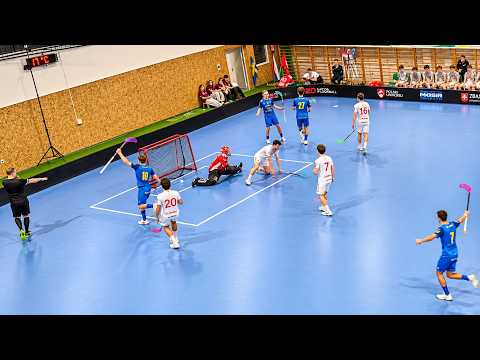
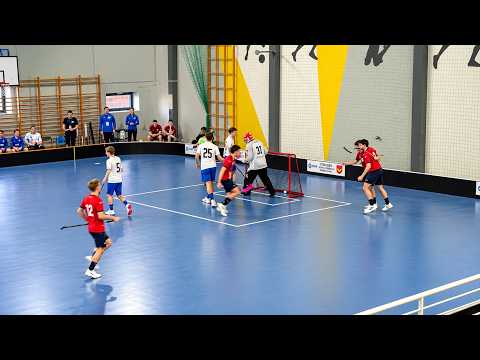

The filter sorts the Review Room embeds and the picture cards above by the keywords in their carried titles (review / analysis / recap and similar, or highlights). It runs entirely in your browser — nothing is sent anywhere.
No hall of fame with a published inductee list is carried for Floorball. Sport on Earth does not invent halls or inductees: where a recognised hall publishes its list in a form this site can carry, the full list will appear here with its source named.
Indoor hockey with light plastic sticks and a hollow ball.
In the wider goal family of sports — ball flight, bounces and the geometry of space, the game turns on: Control transitions: most goals in invasion games trace back to the seconds after possession changes — organise fastest in those seconds.; Protect the middle: defences concede the wings and guard the direct lane to goal, because central attacks finish closest.; Numbers around the ball: attacks create local overloads — one more player than the defence near the ball — rather than attacking evenly everywhere.; Rest defence: even while attacking, keep enough players behind the ball that one lost pass is not a goal against.; Set pieces are rehearsed goals: a large share of goals at every level come from restarts, so corners and free kicks are trained as set plays, not interruptions.; Width stretches, depth threatens: attacks hold width to stretch a defence horizontally and runners in behind to stretch it vertically — a defence can only fully guard one..
Sport on Earth carries no team or player directory for this sport, because no structured public feed publishes a verifiable one. What is carried is the documented record on this page — history, rules, honours and the calendar — each with its source named.
The Floorball record book, as this site carries it: its world floorball championship finals roll carries 15 editions, 1996–2024. Every figure above is computed from the lists and dossiers printed on this page, each with its source basis named beside it.
More from the desk: the expert guide to Floorball · the site-wide Writing Desk · every sport on Earth.
📖 The Floorball Playbook — every entry, plus the arcade strategy, at the foot of this page.
An arcade take on Floorball: set the angle, set the power, and land the ball in the goal mouth. Five attempts; the closer to the middle, the more it scores. Arcade distances and a training arc — a game in the spirit of the sport, not a simulation of it.
This page’s own game is the arcade above. Everything else on the site that fits this sport is listed here — and anything borrowed from a similar sport is labelled as that sport’s game, never passed off as this one’s.
The tools on this site that honestly run on Floorball — its own record first, then the site-wide general tools that apply. The full Floorball toolkit prints the ones that do not apply, with the data reason why.
Site-wide tools, not built for Floorball alone: Tournament Planner · My Notebook · The Labs · Design Studio · The Makers’ Bench · Match Day Desk · Play It Near You · Myth-Check Desk · Governing Bodies · Heat & Safety Calculator (WBGT) · Hydration Calculator · Training-Load Planner · Game Clock & Timer · Custom Rulebook Generator · Scout Notes Parser.
The Playbook · set plays, systems & situations
the stick-and-ball cousins’ shared book — bandy’s vast ice, ringette’s ring and line rules, broomball’s running game and floorball’s gym-court speed, drawn from their common hockey ancestry and each game’s own documented systems.
10 entries, plus the arcade strategy below. All wording is original coaching-vocabulary prose; nothing is copied from any proprietary playbook.
On bandy’s football-sized ice, the switch of play is the master key: the ball is drawn to one side and rapped the full width to a winger skating into open ice.
When it’s used: Bandy is played on the largest rink in sport; its tactics are soccer’s at skating speed.
The sequence
Ringette’s blue lines may not be crossed by a pass’s carrier — the ring must be passed over each line — so attacks are built as relays: a carrier to the line, a pass over it, a fresh carrier beyond.
When it’s used: The rule that defines the sport’s whole attacking grammar.
The sequence
No player may enter the goal crease and the goalkeeper’s clearances restart the chess: attacks probe the crease’s edge with cutters timed to arrive as the ring does, never before.
When it’s used: Ringette scoring is timing made visible: early is illegal, late is covered.
The sequence
Without skates, broomball’s defence is running and angles: defenders set a wall across the slot that shooters must move with fakes, because a clean look from the hash marks is a goal.
When it’s used: Broomball’s game is soccer’s movement played with hockey’s furniture.
The sequence
Floorball’s light ball and curved blade make the screened drag shot its signature: the shooter drags the ball across his body as a team-mate crosses the keeper’s eyes, and releases mid-cross.
When it’s used: On a gym court with a small goal, the keeper’s sightline is the real goal.
The sequence
All four cousins run the extra-man game from a rotating box: four attackers around the zone, the ball moving faster than the three defenders’ triangle can slide.
When it’s used: The extra-man arithmetic is identical across the family; only the furniture changes.
The sequence
The pass-and-follow that every stick sport teaches first: give it, and sprint to where the return makes you a shooter.
When it’s used: From bandy to floorball, the wall pass is the family’s mother tongue.
The sequence
When the ball goes behind the goal or into the corner, all five defenders collapse toward the slot — the cousins agree: shots from the corners are conceded, the middle is not.
When it’s used: The family’s defensive constitution, written once and kept everywhere.
The sequence
Alone on the keeper, the cousins share the same library: the fake shot that freezes, the drag across the body, the quick release before the set — chosen early, sold with the eyes.
When it’s used: Breakaway craft is identical because keepers are: they read commitment, so the play is a lie told early.
The sequence
Each cousin restarts with its own furniture — floorball’s face-off, broomball’s, bandy’s free stroke — and each carries two rehearsed patterns: one to shoot, one to keep.
When it’s used: Restarts inside range are called plays in every member of this family.
The sequence
The arcade cell · strategy
This page’s arcade cell: launch the ball at the goal mouth from the penalty spot · 46 m (arcade scale). Angle, power, launch — five attempts, and the cell keeps your best.
When it’s used: On this page, in the Play section — and its strategy is the same craft as the book above it, miniaturised.
The sequence
Part of the Sport on Earth Playbooks — a book for every sport and every game on the site.
Behind the Play · From the carried record
Indoor hockey with light plastic sticks and a hollow ball.
Behind the Play takes the decisive actions of Floorball apart: how the scoring play is built, which patterns the players are really running, and which rules remade the play into its modern shape.
Source basis: this sport’s carried record on this page (verified record, rule-changes dossier, history datasets) and the play patterns of its family as written in the site’s guides. Nothing here is invented.