Episode 1 — A quiet week: no major flag football fixtures — the world champions were crowned in August
Ep. 1 — the week of Monday, November 23, 2026 · 0:51
Pages
On this page
Sport on Earth › Sports
Sport on Earth · Sport
Five-on-five football without tackling — Olympic at Los Angeles 2028.
News stories from around the world, gathered and sourced by the Sport on Earth desk.
Flag Football is carried on the program for Los Angeles 2028 Olympic Games, 14 – 30 July 2028, in Los Angeles, USA. Five-on-five football without tackling — Olympic at Los Angeles 2028. The desk carries the sport’s full record — guide, calendar and history — on its own page.
LA28 / IOC · Nov 2026
Written by Sport on Earth’s journalists — columns, features and interviews from the desk.
No columns or stories filed for this sport yet.
Everything the desk has published for Flag Football, organised by section.
From the News Desk · all news, every sport →
Sport on Earth’s daily and weekly video shows for Flag Football — every episode, newest first.
Ep. 1 — the week of Monday, November 23, 2026 · 0:51
Every embed below was verified playable before listing — the network’s standing rule.
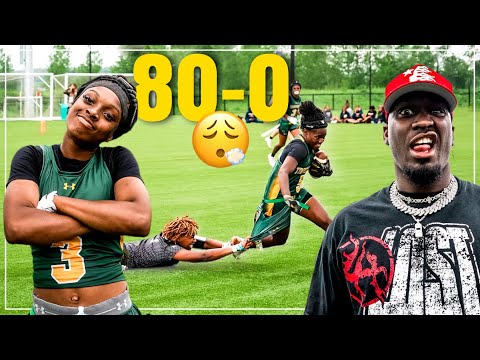
YouTube · Aj Greene
Flag Football is carried on the program for Los Angeles 2028 Olympic Games, 14 – 30 July 2028, in Los Angeles, USA. Five-on-five football without tackling — Olympic at Los Angeles 2028. The desk carries the sport’s full record — guide, calendar and history — on its own page.
LA28 / IOC · Nov 2026
Pages
On this page
No game on this site is made specifically for Flag Football yet. The games below are the site's all-sport games, which honestly cover every sport — nothing from another sport has been dressed up as this sport's game.
A new set of questions every day, across every sport this site covers.
Real-athlete Top Sport on Earth decks built from the site’s verified board data.
Flag Football's lab is the Physics Lab section on this page — the applied physics of its sport family, with a computed interactive where one honestly fits.
Physics Arena — the general biomechanics & physics teaching sandbox, shared by every sport.
The homepage sport explorer also carries a general Lab tab of small interactive experiments.
Calendar data not yet carried for Flag Football — this site does not yet hold schedule data for it, so no dates are shown rather than invented.
Which section of this page should we expand first?
Votes are counted on the Sport on Earth server and the totals shown are every reader’s votes; your own choice is remembered in this browser.
Dated news entries for x179, newest first, dates exactly as carried in the site’s news data.
The flagship competitions on the calendar, with the dates for the current/upcoming cycle. Every date below was verified against the named source on 1 November 2026; dates change, and the source is the authority.
| Event | Dates | Where | Source |
|---|---|---|---|
| Los Angeles 2028 Olympic Games | 14 – 30 July 2028 | Los Angeles, USA | LA28 / IOC — Games dates |
Almost every decisive action in an invasion game is a projectile problem: a kicked, thrown or struck ball follows a parabola set by its launch speed, angle and spin, bent by gravity and dragged by air. The calculator below is that core model — the same projectile maths the site’s Physics Arena teaches — with the assumptions printed: no air resistance, no spin, flat ground.
The second physics of invasion games is geometry: passing lanes are lines of sight, and the effective playing area shrinks or grows with team shape. Spin (curl and dip on struck balls) comes from the Magnus effect — a spinning ball deflects toward the side where its surface moves with the airflow.
From this sport's own record: Five-on-five football without tackling — Olympic at Los Angeles 2028. The lab above treats the physics of the sport's family; no measurement specific to this sport is printed, because the site's verified record for it carries none — parameters are never invented to fill a lab.
Model: R = v²·sin(2θ)/g, flight time T = 2·v·sin(θ)/g, apex H = (v·sin θ)²/(2g), g = 9.81 m/s². Assumptions: no air resistance, no spin, flat ground, launch and landing at the same height. Real balls and shuttles fly shorter and curve — drag and spin are exactly what this model leaves out, so treat the output as the gravity-only ceiling, not a prediction.
The general teaching sandbox for every sport is the Physics Arena on the Games page — the same printed models, with a defender added.
The hands-on lab for Flag Football, built entirely from the record this site carries for it — its documented rolls, its halls, its venues, its calendar and its census family. Every figure below is computed from that carried record at build time; nothing is estimated and nothing is pulled live. The companion Physics Lab on this page works the family's physics; this lab works the record.
Basis: the dated events this entry’s own record carries, as announced by the bodies named in the record. A sport whose record carries no fixed dated calendar says so on its calendar page rather than inventing one.
Computed from the site census: the Invasion field games family holds 61 entries on this site. Across the family, the carried record includes documented rolls for 8 of them, Hall of Fame data for 10, venue sets for 17, and dated calendars for 9.
Every other entry in the family: American Football · Arena Football · Athletes Unlimited · Atya patya · Australian Rules Football · Beach Handball · Beach Soccer · Bo-taoshi · Boxball · Buroinjin · Buzkashi · Calcio Storico · Camogie · Canadian Football · Cestoball · Chinlone · Circle Rules Football · Cuju · Cycle Ball · Cycle Polo · Dibeke · Dodgeball · Double Ball · Eton Wall Game · Field Hockey · Floorball · Football (Soccer) · Four Square / FS Handball · Futsal · Gaelic Football · Gaga Ball · Goalball · Handball · Hurling · Ice Hockey · Jombola · Jugger · Kabaddi · Kai Wed · Kho kho · Kibasen · Knapan · Kronum · La Soule · Lacrosse · Ladies’ Gaelic Football · Langa · Langdi · Quadball · Ringette · Rollball · Rugby League · Rugby Union · S.P.U.D. · Sepak Manggis · Shinty · Squalleyball · Touch · Ulama · Wheelchair Rugby
Basis: the Sport on Earth census itself — the same 460-entry register the census page prints.
The desk has not verified a sponsorship record for Flag Football from published sources, so none is printed. Sponsorship history is added only when a real published source supports it — sponsor by sponsor, deal by deal. Current sponsorship deals across sport are tracked on the Money Desk sponsorship page.
How this game is played, gathered from the record Sport on Earth already carries for Flag Football, with the positions taken from the sourced chart cited in that section.
Flag football is American football without tackling: defenders stop the ball carrier by pulling a flag from their belt. The 5-on-5 format is fast, pass-heavy and global — and it has carried the sport onto the Olympic program for Los Angeles 2028.
The United States has dominated the IFAF world championships, but the gap is closing as the Olympic era approaches.
How 5-on-5 flag works — the rules as this site's record carries them:
The positions for Flag Football, as carried from the source cited below:
Positions source: International Federation of American Football (IFAF) — IFAF Flag Football Rulebook (5v5): the rulebook’s positional designations are snapper, runner and receiver on offence (the quarterback counts as a runner) and blitzer, rusher and defender on defence.
Its Playbook — its opening entries, the basic plays, are:
The full book carries 12 entries — in this page’s Playbook / Tactics & Strategy section, and at the Playbooks hub.
Sport on Earth's own analytics: every figure in this panel is computed at build time from the record this site itself carries, with the source named. No outside data is used, and no betting figures of any kind.
Census arithmetic: Flag Football sits in the goal & invasion games family — 60 census sports, of which 12 carry a qualifying champions roll in the site's record.
The carried record for Flag Football is too thin for computed panels: no champions roll, hall-of-fame list or venue record is carried for it. This panel therefore prints the census arithmetic only — the honest answer rather than a manufactured figure.
Flag football is American football without tackling: defenders stop the ball carrier by pulling a flag from their belt. The 5-on-5 format is fast, pass-heavy and global — and it has carried the sport onto the Olympic program for Los Angeles 2028.
The United States has dominated the IFAF world championships, but the gap is closing as the Olympic era approaches.
The International Federation of American Football (IFAF) runs the Flag Football World Championships (every two years) plus World Games and continental events.
Flag football was voted onto the Los Angeles 2028 Olympic program in October 2023; the NFL has backed the push and voted to allow its players to participate.
At the 2024 worlds in Finland, the USA men and women both took gold — the American women lost the 2025 World Games final to Mexico, the upset that announced the Olympic race is open.
Sport on Earth carries no flag football results feed — this page is the verified record; no fixtures or results are invented.
Sources, verified November 1, 2026: IFAF — Flag Football · Olympics.com — Flag Football
How the laws of Flag Football are governed today — the documented record, stated plainly.
Flag football is governed internationally by IFAF under the 5-on-5 no-contact code (25-by-40-yard fields plus end zones, belt flags, no tackling or blocking) that the federation standardised across its world championships and that becomes an Olympic code at Los Angeles 2028 — the standardisation itself (one world 5v5 code replacing varied national formats) is the sport’s governing story. No single dated law change is carried for flag football.
That framework summary is the whole documented record Sport on Earth can verify for this sport — no major dated rule changes are carried, rather than invent any.
Source basis: The governing body’s published framework as summarised in this section (see the framework text).
Sport on Earth carries no results feed for Flag Football: no scores or fixtures are published here, rather than inventing them. The sport's documented record is in its history page and the History & Records section of this page.
The historical record for Flag Football — past standings, champions, title history and all-time leaders, as deep as verifiable public records go.
Season-by-season standings, historical player statistics and title rolls are not carried for Flag Football: no public archive publishes them in a form Sport on Earth can verify, and this site does not invent history. What is carried for this sport is its verified record, its rule-change history and its league history — elsewhere on this page.
The review and analysis videos from Flag Football’s verified video pool — every embed below was identity-checked and probed playable before listing, the site’s standing rule. Nothing here is a show Sport on Earth produces; these are the review, post-game and breakdown videos the pool already carries for this sport.
No verified review-show video is carried for this sport yet.
Chart basis: counts from Sport on Earth’s own carried data files at build time — verified videos carried for this sport (the verified pool: sport-videos.json + the desk league pools), news items carried (news.json), and league pages carried (desk.json). No external or estimated figures.
The filter sorts the Review Room embeds and the picture cards above by the keywords in their carried titles (review / analysis / recap and similar, or highlights). It runs entirely in your browser — nothing is sent anywhere.
No hall of fame with a published inductee list is carried for Flag Football. Sport on Earth does not invent halls or inductees: where a recognised hall publishes its list in a form this site can carry, the full list will appear here with its source named.
Five-on-five football without tackling — Olympic at Los Angeles 2028.
The format, from this sport's verified record:
📖 The Flag Football Playbook — every entry, plus the arcade strategy, at the foot of this page.
An arcade take on Flag Football: set the angle, set the power, and land the ball in the goal mouth. Five attempts; the closer to the middle, the more it scores. Arcade distances and a training arc — a game in the spirit of the sport, not a simulation of it.
This page’s own game is the arcade above. Everything else on the site that fits this sport is listed here — and anything borrowed from a similar sport is labelled as that sport’s game, never passed off as this one’s.
2 verified documentaries, films and series about this sport are listed in the site's screen guide: Sport on Screen — Flag Football.
The tools on this site that honestly run on Flag Football — its own record first, then the site-wide general tools that apply. The full Flag Football toolkit prints the ones that do not apply, with the data reason why.
No bench tool yet computes from Flag Football’s own carried record — the general tools below are the ones that honestly apply.
Site-wide tools, not built for Flag Football alone: Tournament Planner · My Notebook · The Labs · Design Studio · The Makers’ Bench · Match Day Desk · Play It Near You · Myth-Check Desk · Governing Bodies · Heat & Safety Calculator (WBGT) · Hydration Calculator · Training-Load Planner · Game Clock & Timer · Custom Rulebook Generator · Scout Notes Parser.
The Playbook · set plays, systems & situations
the gridiron family’s other codes — Canadian football’s wider, longer field and three downs, arena football’s walls and rebounds, flag football’s no-contact game — each with the plays its own rules create.
12 entries, plus the arcade strategy below. All wording is original coaching-vocabulary prose; nothing is copied from any proprietary playbook.
Classic · the Canadian game’s gift
Receivers in motion toward the line before the snap — legal and central in the Canadian game — reach full speed at the snap, turning routes into races the defence must start early to run.
When it’s used: The signature of the Canadian offence: pre-snap motion is a weapon, not a decoration.
The sequence
With only three downs, second-and-long is a crisis down: offences split the difference with a draw or screen to make third down manageable, rather than gambling the series on one deep shot.
When it’s used: Canadian play-calling arithmetic: the rouge, the bigger field and three downs change every tendency.
The sequence
A missed field goal or punt that the returner cannot bring out of the end zone scores a single point for the kicking team — so Canadian endgames are played around the end zone itself.
When it’s used: Unique to the Canadian code: kicks are aimed not just to score three, but to pin the returner for one.
The sequence
Classic · the indoor game
In the arena game, kicks and passes that strike the rebound nets stay live: receivers play caroms off the net like basketball players play the glass.
When it’s used: The arena code’s signature skill: the net is a team-mate who never drops anything.
The sequence
Arena rules free one receiver to run full-speed at the line in motion and restrict one linebacker to the box — the offence’s design floods the jack’s small world with decisions.
When it’s used: Every arena offence is built on this rule pair; every arena defence is built to survive it.
The sequence
With no tackling, the ball carrier’s support runners trail for the lateral: a flag pull stops the man, not the play, if the pitch is away first.
When it’s used: Flag football’s flowing signature: the pitch keeps broken plays alive.
The sequence
The centre snaps and becomes a receiver — in most flag codes an eligible and often forgotten one, releasing straight up the seam the rusher vacated.
When it’s used: The rusher must chase the quarterback, leaving the middle the centre runs into.
The sequence
Flag codes limit rushing — a rusher count, a no-run zone near the goal, a seven-second clock — so offences build in the quick throw that the rule’s structure concedes.
When it’s used: Every flag offence starts from what its rulebook allows the defence; the plays are the answers.
The sequence
The tall receiver isolates at the corner of the end zone and the quarterback lofts the ball where only he can climb for it — the same answer in every code of the family.
When it’s used: When the field shrinks and windows close, height is the open receiver.
The sequence
Short fields make recovery kicks more valuable, not less: the kicking side floods the landing zone knowing one bounce in traffic is a coin toss they get to call.
When it’s used: Arena nets, Canadian end zones and flag’s short fields each bend the play their own way.
The sequence
Every code’s passing tree ends at the same place: the back swinging to the flat as the quarterback’s floor — the throw that turns a broken play into second-and-manageable.
When it’s used: Taught identically from peewee to pro because the geometry never changes.
The sequence
The defence answers free motion with a ’banjo’ call: the two nearest defenders divide the motion man’s possible breaks between them instead of chasing him across the formation.
When it’s used: Chasing motion is how coverages die; exchanging it is how they survive.
The sequence
The arcade cell · strategy
This page’s arcade cell: launch the ball at the goal mouth from the penalty spot · 46 m (arcade scale). Angle, power, launch — five attempts, and the cell keeps your best.
When it’s used: On this page, in the Play section — and its strategy is the same craft as the book above it, miniaturised.
The sequence
Part of the Sport on Earth Playbooks — a book for every sport and every game on the site.
Behind the Play · Full treatment — from this sport’s own record
Five-on-five football without tackling — Olympic at Los Angeles 2028.
Behind the Play takes the decisive actions of Flag Football apart: how the scoring play is built, which patterns the players are really running, and which rules remade the play into its modern shape.
The format, from this sport's verified record:
Source basis: this sport’s carried record on this page (verified record, rule-changes dossier, history datasets) and the play patterns of its family as written in the site’s guides. Nothing here is invented.