33rd TRIVENI CUP FOOTBALL TOURNAMENT 2082 || LANGDI DEVI VS NRT MATCH HIGHLIGHTS ||
YouTube · Watch DGO
Pages
On this page
Sport on Earth › Sports
Sport on Earth · Sport
A traditional South Asian field sport combining tag and hopscotch, with chasers hopping on one foot through four nine-minute innings.
Every embed below was verified playable before listing — the network’s standing rule.
YouTube · Watch DGO
YouTube · K MOVIES
YouTube · K MOVIES
YouTube · LPGA
Pages
On this page
No game on this site is made specifically for Langdi yet. The games below are the site's all-sport games, which honestly cover every sport — nothing from another sport has been dressed up as this sport's game.
A new set of questions every day, across every sport this site covers.
Real-athlete Top Sport on Earth decks built from the site’s verified board data.
Langdi's lab is the Physics Lab section on this page — the applied physics of its sport family, with a computed interactive where one honestly fits.
Physics Arena — the general biomechanics & physics teaching sandbox, shared by every sport.
The homepage sport explorer also carries a general Lab tab of small interactive experiments.
Calendar data not yet carried for Langdi — this site does not yet hold schedule data for it, so no dates are shown rather than invented.
Which section of this page should we expand first?
Votes are counted on the Sport on Earth server and the totals shown are every reader’s votes; your own choice is remembered in this browser.
Sport on Earth does not yet hold verified dated events for Langdi, and its carried record does not state the season's timing in words — so no calendar is shown rather than an invented one. What the site does carry for this sport is on this page: its verified record, its rules record and its history.
Almost every decisive action in an invasion game is a projectile problem: a kicked, thrown or struck ball follows a parabola set by its launch speed, angle and spin, bent by gravity and dragged by air. The calculator below is that core model — the same projectile maths the site’s Physics Arena teaches — with the assumptions printed: no air resistance, no spin, flat ground.
The second physics of invasion games is geometry: passing lanes are lines of sight, and the effective playing area shrinks or grows with team shape. Spin (curl and dip on struck balls) comes from the Magnus effect — a spinning ball deflects toward the side where its surface moves with the airflow.
From this sport's own record: A traditional South Asian field sport combining tag and hopscotch, with chasers hopping on one foot through four nine-minute innings. The lab above treats the physics of the sport's family; no measurement specific to this sport is printed, because the site's verified record for it carries none — parameters are never invented to fill a lab.
Model: R = v²·sin(2θ)/g, flight time T = 2·v·sin(θ)/g, apex H = (v·sin θ)²/(2g), g = 9.81 m/s². Assumptions: no air resistance, no spin, flat ground, launch and landing at the same height. Real balls and shuttles fly shorter and curve — drag and spin are exactly what this model leaves out, so treat the output as the gravity-only ceiling, not a prediction.
The general teaching sandbox for every sport is the Physics Arena on the Games page — the same printed models, with a defender added.
The hands-on lab for Langdi, built entirely from the record this site carries for it — its documented rolls, its halls, its venues, its calendar and its census family. Every figure below is computed from that carried record at build time; nothing is estimated and nothing is pulled live. The companion Physics Lab on this page works the family's physics; this lab works the record.
The honest position: the record this site carries for Langdi is thin — no documented roll, hall, venue set or dated calendar is carried for it yet — so this entry’s lab is its family lab: the computed census of the family it belongs to. When the record grows, the lab grows with it; nothing here is estimated to fill the space.
Computed from the site census: the Invasion field games family holds 61 entries on this site. Across the family, the carried record includes documented rolls for 8 of them, Hall of Fame data for 10, venue sets for 17, and dated calendars for 9.
Every other entry in the family: American Football · Arena Football · Athletes Unlimited · Atya patya · Australian Rules Football · Beach Handball · Beach Soccer · Bo-taoshi · Boxball · Buroinjin · Buzkashi · Calcio Storico · Camogie · Canadian Football · Cestoball · Chinlone · Circle Rules Football · Cuju · Cycle Ball · Cycle Polo · Dibeke · Dodgeball · Double Ball · Eton Wall Game · Field Hockey · Flag Football · Floorball · Football (Soccer) · Four Square / FS Handball · Futsal · Gaelic Football · Gaga Ball · Goalball · Handball · Hurling · Ice Hockey · Jombola · Jugger · Kabaddi · Kai Wed · Kho kho · Kibasen · Knapan · Kronum · La Soule · Lacrosse · Ladies’ Gaelic Football · Langa · Quadball · Ringette · Rollball · Rugby League · Rugby Union · S.P.U.D. · Sepak Manggis · Shinty · Squalleyball · Touch · Ulama · Wheelchair Rugby
Basis: the Sport on Earth census itself — the same 460-entry register the census page prints.
The desk has not verified a sponsorship record for Langdi from published sources, so none is printed. Sponsorship history is added only when a real published source supports it — sponsor by sponsor, deal by deal. Current sponsorship deals across sport are tracked on the Money Desk sponsorship page.
How this game is played, gathered from the record Sport on Earth already carries for Langdi, with the positions taken from the sourced chart cited in that section.
Langdi is a traditional South Asian field sport which combines elements of tag and hopscotch, originally played during the Pandiyan Dynasty and called Nondiyaattam at that time. Teams alternate chasing (attacking) and defending roles in each of the four innings of the game, with the chasing team’s players restricted to hopping around on one foot and attempting to score points by tagging as many defenders as possible within the nine minutes of each inning.
Langdi is described by Marathis as a sport with a Marathi ethos, is a popular childhood pastime in Maharashtra, and is considered useful in training for sports like kho kho, volleyball and gymnastics. Its rules have been standardised by the Akhil Maharashtra Sharirik Shikshan Mandal, and the National Langdi Federation received national recognition in 2010.
The rules — the rules as this site's record carries them:
Positions for Langdi are not yet sourced on Sport on Earth: no verified positions chart has been carried for this sport yet, so none is shown here rather than an invented one. That says nothing about whether the sport has positions — only that they have not been sourced for this page yet.
Its Tactics & Strategy book — its opening entries, the basic plays, are:
The full book carries 8 entries — in this page’s Playbook / Tactics & Strategy section, and at the Playbooks hub.
Sport on Earth's own analytics: every figure in this panel is computed at build time from the record this site itself carries, with the source named. No outside data is used, and no betting figures of any kind.
Census arithmetic: Langdi sits in the goal & invasion games family — 60 census sports, of which 12 carry a qualifying champions roll in the site's record.
The carried record for Langdi is too thin for computed panels: no champions roll, hall-of-fame list or venue record is carried for it. This panel therefore prints the census arithmetic only — the honest answer rather than a manufactured figure.
Langdi is a traditional South Asian field sport which combines elements of tag and hopscotch, originally played during the Pandiyan Dynasty and called Nondiyaattam at that time. Teams alternate chasing (attacking) and defending roles in each of the four innings of the game, with the chasing team’s players restricted to hopping around on one foot and attempting to score points by tagging as many defenders as possible within the nine minutes of each inning.
Langdi is described by Marathis as a sport with a Marathi ethos, is a popular childhood pastime in Maharashtra, and is considered useful in training for sports like kho kho, volleyball and gymnastics. Its rules have been standardised by the Akhil Maharashtra Sharirik Shikshan Mandal, and the National Langdi Federation received national recognition in 2010.
The National Langdi Federation received national recognition in 2010, as stated on the page.
The rules of the sport have been standardised by the Akhil Maharashtra Sharirik Shikshan Mandal.
The fourth National Men’s and Women’s Langdi Championship was held in Chandigarh in May 2013, as carried in the page’s record.
Langdi was originally played during the Pandiyan Dynasty under the name Nondiyaattam.
Mumbai University is described on the page as the first Indian university to introduce langdi at college level, for female students.
Langdi has no structured results feed this site can carry, so this page is the verified record only — its recognised national federation, national championship and standardised rules as verified in November 2026 — with no live results.
Sources, verified November 1, 2026: Langdi
Material from Wikipedia linked above is used under CC BY-SA 4.0.
How the laws of Langdi are governed today — the documented record, stated plainly.
Langdi’s rules have been standardised by the Akhil Maharashtra Sharirik Shikshan Mandal, and its national federation received national recognition in 2010. That standardisation and recognition are presented as organisation of a traditional game rather than dated landmark replacements of its one-foot chasing code. No major dated rule change is carried for langdi.
That framework summary is the whole documented record Sport on Earth can verify for this sport — no major dated rule changes are carried, rather than invent any.
Source basis: The governing body’s published framework as summarised in this section (see the framework text).
Sport on Earth carries no results feed for Langdi: no scores or fixtures are published here, rather than inventing them. The sport's documented record is in its history page and the History & Records section of this page.
The historical record for Langdi — past standings, champions, title history and all-time leaders, as deep as verifiable public records go.
Season-by-season standings, historical player statistics and title rolls are not carried for Langdi: no public archive publishes them in a form Sport on Earth can verify, and this site does not invent history. What is carried for this sport is its verified record, its rule-change history and its league history — elsewhere on this page.
The review and analysis videos from Langdi’s verified video pool — every embed below was identity-checked and probed playable before listing, the site’s standing rule. Nothing here is a show Sport on Earth produces; these are the review, post-game and breakdown videos the pool already carries for this sport.
No verified review-show video is carried for this sport yet.
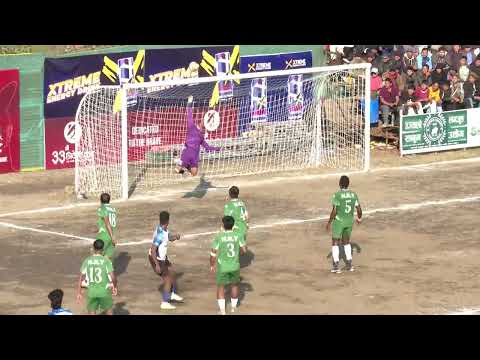
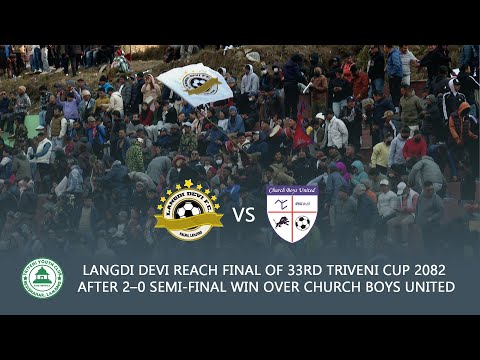
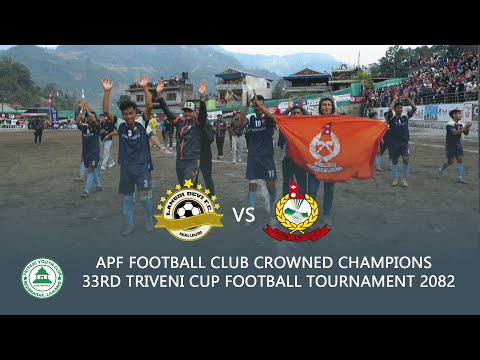
The filter sorts the Review Room embeds and the picture cards above by the keywords in their carried titles (review / analysis / recap and similar, or highlights). It runs entirely in your browser — nothing is sent anywhere.
No hall of fame with a published inductee list is carried for Langdi. Sport on Earth does not invent halls or inductees: where a recognised hall publishes its list in a form this site can carry, the full list will appear here with its source named.
A traditional South Asian field sport combining tag and hopscotch, with chasers hopping on one foot through four nine-minute innings.
The format, from this sport's verified record:
The Langdi record book is still thin: beyond the standings, rules and calendar layers on this page, no verified winners roll or honours list is carried yet. The desk adds record material only when a published source can be named for it — never from memory or invention.
More from the desk: the expert guide to Langdi · the site-wide Writing Desk · every sport on Earth.
📖 Langdi — Tactics & Strategy — every entry, plus the arcade strategy, at the foot of this page.
An arcade take on Langdi: set the angle, set the power, and land the ball in the goal mouth. Five attempts; the closer to the middle, the more it scores. Arcade distances and a training arc — a game in the spirit of the sport, not a simulation of it.
This page’s own game is the arcade above. Everything else on the site that fits this sport is listed here — and anything borrowed from a similar sport is labelled as that sport’s game, never passed off as this one’s.
The tools on this site that honestly run on Langdi — its own record first, then the site-wide general tools that apply. The full Langdi toolkit prints the ones that do not apply, with the data reason why.
No bench tool yet computes from Langdi’s own carried record — the general tools below are the ones that honestly apply.
Site-wide tools, not built for Langdi alone: Tournament Planner · My Notebook · The Labs · Design Studio · The Makers’ Bench · Match Day Desk · Play It Near You · Myth-Check Desk · Governing Bodies · Heat & Safety Calculator (WBGT) · Hydration Calculator · Training-Load Planner · Game Clock & Timer · Custom Rulebook Generator · Scout Notes Parser.
Tactics & Strategy — this sport’s book
8 entries, plus the arcade strategy below. All wording is original coaching-vocabulary prose; nothing is copied from any proprietary playbook.
Langdi’s chaser hops on one leg — the game’s whole identity: his speed is a hop’s rhythm, his turning is a pivot on one foot, and his stamina is a single calf’s argument.
When it’s used: The core craft
The sequence
Defenders sit in a square (chauk) formation, rising to run only within the game’s activation rules, and the chaser must tag them before they complete their circuits of the square’s lanes.
When it’s used: Structure
The sequence
Defenders score survival by completing the marked circuits around the square: the run is a relay of feints between lanes, priced by the chaser’s remaining hop-speed.
When it’s used: Defending craft
The sequence
The tag lands when the defender turns: a one-legged chaser cannot change direction as fast as a runner, so the craft is herding the runner into turns and tagging the turn’s midpoint.
When it’s used: The tackle
The sequence
Innings rotate chasers, and the bench sends them by the defenders’ fatigue map: the fresh hopper faces the defenders who have run the most circuits.
When it’s used: Match craft
The sequence
A defender’s shoulder feint draws the chaser’s hop-commitment, and the real run goes the other way: against one leg, the feint is worth two yards.
When it’s used: Individual craft
The sequence
The seated nine call the chaser’s position for the runners who cannot see him: the square is a commentary team with a stake in the story.
When it’s used: Organisation
The sequence
Langdi fitness is specific: single-leg endurance, ankle strength and the pivot’s balance — trained in hops, because nothing else is the game.
When it’s used: The physical book
The sequence
The arcade cell · strategy
This page’s arcade cell: launch the ball at the goal mouth from the penalty spot · 46 m (arcade scale). Angle, power, launch — five attempts, and the cell keeps your best.
When it’s used: On this page, in the Play section — and its strategy is the same craft as the book above it, miniaturised.
The sequence
Part of the Sport on Earth Playbooks — a book for every sport and every game on the site.
Behind the Play · Full treatment — from this sport’s own record
A traditional South Asian field sport combining tag and hopscotch, with chasers hopping on one foot through four nine-minute innings.
Behind the Play takes the decisive actions of Langdi apart: how the scoring play is built, which patterns the players are really running, and which rules remade the play into its modern shape.
The format, from this sport's verified record:
Source basis: this sport’s carried record on this page (verified record, rule-changes dossier, history datasets) and the play patterns of its family as written in the site’s guides. Nothing here is invented.